

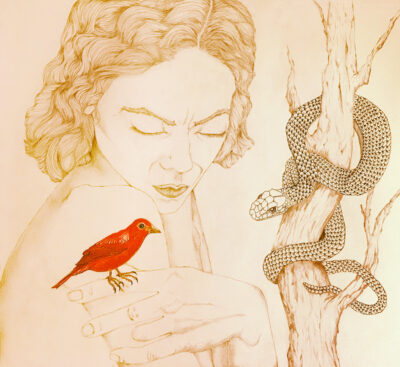
About the Artist:
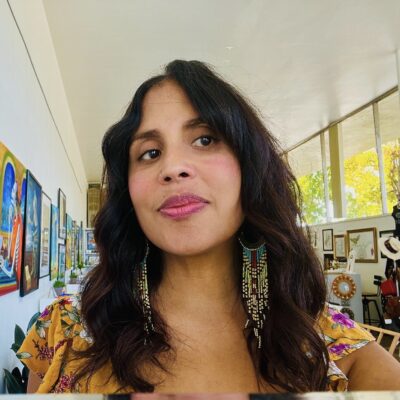
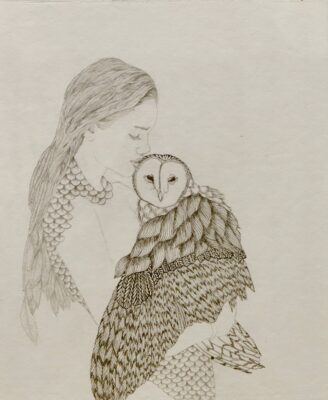
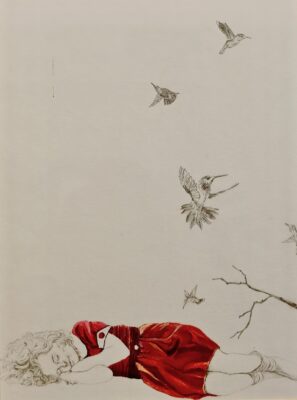
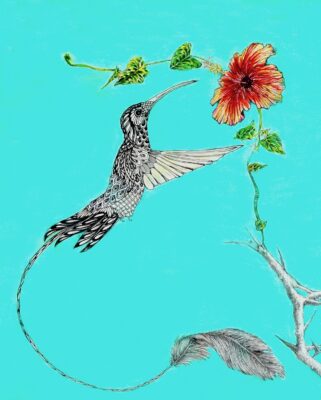
My name is Jessica Jacobsen. I grew up in the projects in New York City. Since I was a little girl, I’ve been drawn to the arts, which served as a distraction from my life circumstance. My curiosity spanned from sewing, to cooking, to dancing. It wasn’t until I was a young adult that I dedicated many waking hours to weaving stories both in art and in writing.
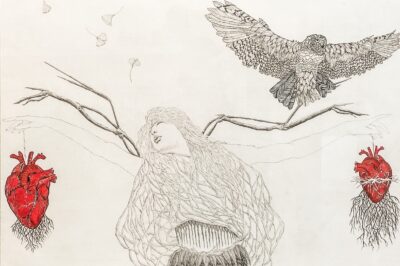
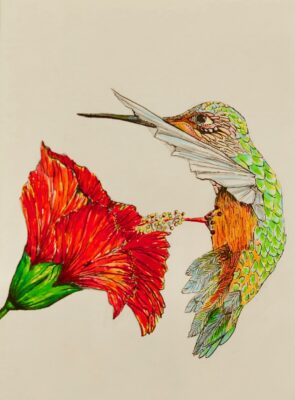
During that exploration, I developed a personal style of storytelling that I still draw upon today. After many twists and turns, I graduated with a BFA in Painting from Sonoma State, where my skills became more finely tuned. My stories, both on canvas and on paper, reflect my inner process as a person, but primarily, a woman.
It’s taken me a long time to feel comfortable sharing these parts of myself with others and I appreciate the encouragement I’ve received from friends and family who believe in me. It’s heartening to see others relate to my work, as this is my hope and intention.
Connect with me:
Instagram: @sheesheeart
Website: sheesheeart.com
 The good life is the simple life. Among philosophical ideas about how we should live, this one is a hardy perennial; from Socrates to Thoreau, from the Buddha to Wendell Berry, thinkers have been peddling it for more than two millennia. And it still has plenty of adherents. Magazines such as Real Simple call out to us from the supermarket checkout; Oprah Winfrey regularly interviews fans of simple living such as Jack Kornfield, a teacher of Buddhist mindfulness; the Slow Movement, which advocates a return to pre-industrial basics, attracts followers across continents.
 Somewhat paradoxically, then, the case for living simply was most persuasive when most people had little choice but to live that way. The traditional arguments for simple living in effect rationalise a necessity. But the same arguments have less purchase when the life of frugal simplicity is a choice, one way of living among many. Then the philosophy of frugality becomes a hard sell.
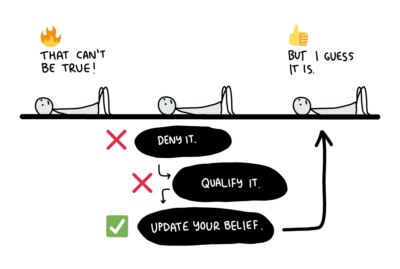 Count me as a Buster Benson fan. His 2016 Cognitive bias cheat sheet is legendary among behavioral designers. I have a framed print out of his codex in my home and I’ve enjoyed his writing on various topics for years. He has extensive experience building products that move people at Slack, Twitter, and Habit Labs.
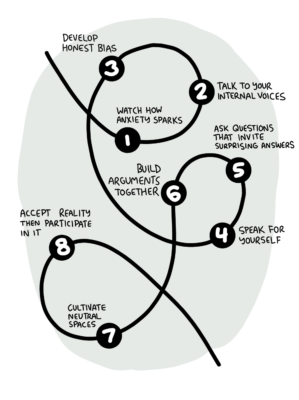 Most people tell you to write a book about what you know. I’ve had a career that has put me in the middle of resolving disagreements for several decades now, but I have to admit that when I came to this book it wasn’t because I had all the answers, but exactly the opposite: I deeply needed these answers, and didn’t know how or where to find them.
 How do you see our collective future unfolding?

 There is an interesting story about how Pablo Picasso, the famous Spanish artist and creative genius, developed the ability to produce remarkable work in just minutes.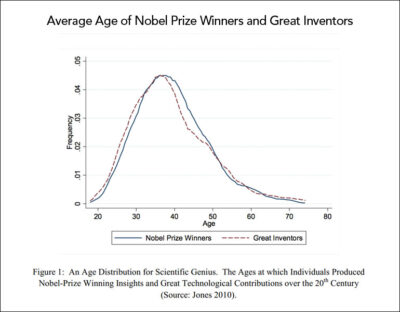
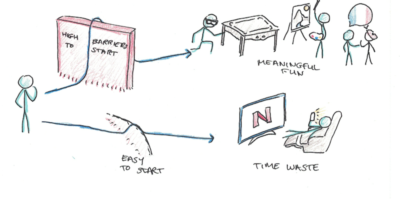
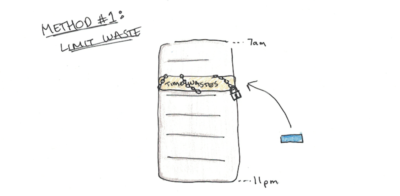
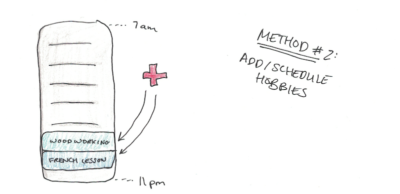
 The idea is not to turn failure into success, per se, but to be open to what our failures have to teach us about who we are and who we aim to be. There may be a “success” inside the failure that you’re not seeing…
 As luck would have it, the puppy and his person are exiting the ballfield just as I am (very slowly) walking by the gate.
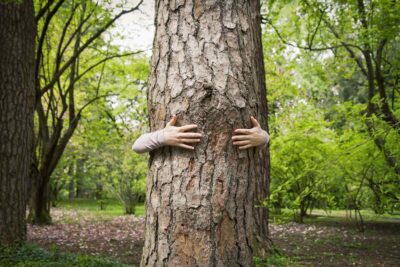 “You remember me?” I exclaim, moving in closer so Tree and I can be heart-to-heart. “How do you do it?” I ask. “How do you stand everything that’s going on?”
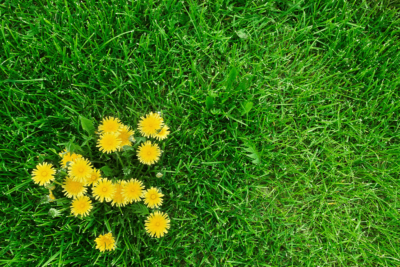 And then another. And another. And another. Soon, I have a whole big pile of weed-parts.
 “Can I say hello to your puppies?” I ask, crouching down to doggie-reception level. Before either their mom or dad can say yes, I’m ready to receive sloppy kisses.
 While the internet had been in existence for some time, it was around the year 2000 that it became globally available to the world. Right around that time I found myself calling into play the sentience of this newly emerging global internet consciousness.
 Infinity: I sure can. I can give you several. For example, do you know that the whales of the world communicate not only with one another as a pack mind across the oceans of the planet, but they also have been communicating with life in other forms throughout the galaxy? I’m not talking here about extraterrestrials soaring in in spaceships. I’m talking about the seed of life that is contained within every living thing. Inside that seed is a spark, a life surge if you will. That spark is a communication device unlike anything that humans have yet understood. It’s how the mycelium networks work in communication with the trees, leaves and grasses of the world. It’s how the oceans are one mind, weaving and dancing their awesome endeavours into many facets to aid life wherever it is needed.