
 You might think that the impact of aging on the brain is something you can’t do much about. After all, isn’t it an inevitability?
To an extent, as we may not be able to rewind the clock and change our levels of higher education or intelligence (both factors that delay the onset of symptoms of aging). But adopting specific lifestyle behaviors–whether you’re in your thirties or late forties–can have a tangible effect on how well you age. Even in your fifties and beyond, activities like learning a new language or musical instrument, taking part in aerobic exercise, and developing meaningful social relationships can do wonders for your brain. There’s no question that when we compromise on looking after ourselves, our aging minds pick up the tab.
THE AGING PROCESS AND COGNITIVE DECLINE
Over time, there is a build-up of toxins such as tau proteins and beta-amyloid plaques in the brain that correlate to the aging process and associated cognitive decline. Although this is a natural part of growing older, many factors can exacerbate it. Stress, neurotoxins such as alcohol and lack of (quality and quantity) sleep can speed up the process.
Neuroplasticity–the function that allows the brain to change and develop in our lifetime–has three mechanisms: synaptic connection, myelination, and neurogenesis. The key to resilient aging is improving neurogenesis, the birth of new neurons. Neurogenesis happens far more in babies and children than adults. A 2018 study by researchers at Columbia University shows that in adults, this type of neuroplastic activity occurs in the hippocampus, the part of the brain that lays down memories. This makes sense as we respond to and store new experiences every day, and cement them during sleep. The more we can experience new things, activities, people, places, and emotions, the more likely we are to encourage neurogenesis.
With all this in mind, we can come up with a three-point plan to encourage “resilient aging” by activating neurogenesis in the brain:
- GET YOUR HEART RATE UP
Aerobic exercise such as running or brisk walking has a potentially massive impact on neurogenesis. A 2016 rat study found that endurance exercise was most effective in increasing neurogenesis. It wins out over HIIT sessions and resistance training, although doing a variety of exercise also has its benefits.
Aim to do aerobic exercise for 150 minutes per week, and choose the gym, the park, or natural landscape over busy roads to avoid compromising brain-derived neurotrophic factor production (BDNF), a growth factor that encourages neurogenesis that aerobic exercise can boost. However, exercising in polluted areas decreases production.
If exercising alone isn’t your thing, consider taking up a team sport or one with a social element like table tennis. Exposure to social interaction can also increase the neurogenesis, and in many instances, doing so lets you practice your hand-eye coordination, which research has suggested leads to structural changes in the brain that may relate to a range of cognitive benefit. This combination of coordination and socializing has been shown to increase brain thickness in the parts of the cortex related to social/emotional welfare, which is crucial as we age.
- CHANGE YOUR EATING PATTERNS
Evidence shows that calorie restriction, intermittent fasting, and time-restricted eating encourage neurogenesis in humans. In rodent studies, intermittent fasting has been found to improve cognitive function and brain structure, and reduce symptoms of metabolic disorders such as diabetes. Reducing refined sugar will help reduce oxidative damage to brain cells, too, and we know that increased oxidative damage has been linked with a higher risk of developing Alzheimer’s disease. Twenty-four hour water-only fasts have also been proven to increase longevity and encourage neurogenesis.
Try any of the following, after checking with your doctor:
- 24-hour water-only fast once a month
- Reducing your calorie intake by 50%-60% on two non-consecutive days of the week for two to three months or on an ongoing basis
- Reducing calories by 20% every day for two weeks. You can do this three to four times a year
- Eating only between 8 a.m. to 8 p.m., or 12 p.m. to 8 p.m. as a general rule
- PRIORITIZE SLEEP
Sleep helps promote the brain’s neural “cleaning” glymphatic system, which flushes out the build-up of age-related toxins in the brain (the tau proteins and beta amyloid plaques mentioned above). When people are sleep-deprived, we see evidence of memory deficits, and if you miss a whole night of sleep, research proves that it impacts IQ. Aim for seven to nine hours, and nap if it suits you. Our need to sleep decreases as we age.
Of course, there are individual exceptions, but having consistent sleep times and making sure you’re getting sufficient quality and length of sleep supports brain resilience over time. So how do you know if you’re getting enough? If you naturally wake up at the same time on weekends that you have to during the week, you probably are. If you need to lie-in or take long naps, you’re probably not. Try practicing mindfulness or yoga nidra before bed at night, a guided breath-based meditation that has been shown in studies to improve sleep quality. There are plenty of recordings online if you want to experience it.
Pick any of the above that work for you and build it up until it becomes a habit, then move onto the next one and so on. You might find that by the end of the year, you’ll feel even healthier, more energized, and motivated than you do now, even as you turn another year older.
Original article here
 Need to know

 I believe this with every fibre of my being and I live it, in myself and witnessing it in others, in every way I can. So what are some of these super powers that we’re seeing these days? I’ll try to encapsulate a few of the ones I’m aware of.
 Dr. James McGaugh remembers that day too. At the time, he was director of UC Irvine’s Center for the Neurobiology of Learning and Memory, the research institute that he founded in 1983. In her email, Jill Price said that she had a problem with her memory. McGaugh responded almost immediately, explaining that he worked at a research institute and not a clinic, and that he’d be happy to direct her to somewhere she could find help.
 Still, he started from a position of scepticism. “In interrogating her, I started with the scientific assumption that she couldn’t do it,” he told me. And even though Price showed that she could, repeatedly, McGaugh was still unmoved. “Yeah, it got my attention, but I didn’t say, ‘Wow.’ We had to do a lot more. So we did a lot more.” (In Price’s recollection, however, her ability to remember “really freaked Dr McGaugh out.”)
 In May 2012, the journal Neurobiology of Learning and Memory published a follow-up study by UCI neuroscience graduate student Aurora LePort and neurobiologist Dr Craig Stark, then the director of the UCI Center for the Neurobiology of Learning and Memory. It was now nearly 12 years since Price first reached out to McGaugh, but researchers were only fractionally closer to finding the answer she was looking for.
 For both Price and Petrella, there is a specific point in their lives that they feel triggered their ability to remember things with extraordinary clarity. For Petrella, it was when he was seven years old and playing a deliriously fun game in his backyard with a childhood friend. The next day, Petrella invited his friend over to play it again, but they only played for a few minutes before getting bored. Petrella realised then that nothing ever stays the same and that it was important that he remember things before they changed. For Price, it was her family’s traumatic move to the West coast. In each case, Price and Petrella say they already had strong memories before this decisive moment, but after it, their ability to remember was transformed.
 I love my family. I was brought up in a very close family. Of course we fight, but we also laugh together. We share everything — all the joys and the pains. And I know the pain I am feeling, my family will feel the same thing. We confide in each other and find comfort in that. When I want to be happy, my family is always there for me.
 I’ve been working in rural areas for the last ten years. And in the women, peasants and farmers I’ve met there, I’ve found another kind of genius. They help me understand that the future is possible.


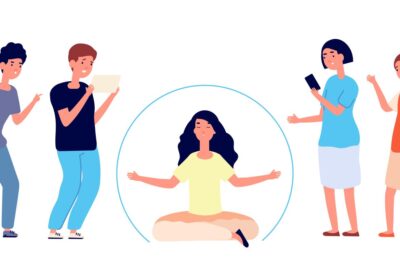
 It’s common to wonder whether talking to yourself is “normal.” Let me be the first to tell you—it’s what got me through the pandemic.
 At first, I was reluctant. I asked my body audibly, “How are you feeling?” when my migraines worsened. Often, my body would flood with anxiety or freeze up with stress. When that happened, I’d ask, “What do you need in order to feel more relaxed?” I would wait and listen, then act on what my body “said” back to me. If my body felt tired, I would nap. If I was anxious, I would meditate. If I needed more information about what my body needed, I asked follow-up questions.
 Being the most talkative person in the room may be a good way to get people’s attention, but it doesn’t necessarily mean you have the best ideas.
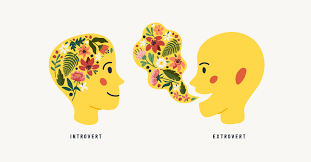 Here’s how managers can create an introvert-friendly workplace: