
 I fast once a month. It’s hard. Even though I’ve been doing it for years, I start dreading my fast day the night before; fretting about how I’m going to be able to pass through the discomfort. And where I’m typically not hungry until around 11am, on a fasting day I wake up hungry. Then, I stumble through what I need to get done as best as I can, given how lousy I’m feeling. Even though I know what to expect, it never seems to get easier.
This week I heard someone say, whether you choose to take care of yourself or not, both are hard. So, pick your hard. This flies in the face of the world we inhabit, where we are constantly being steered towards doing what’s easy, what’s fast and what’s convenient. More to the point, we’ve been educated to believe that nothing has to be hard. We’re all supposed to feel good all the time. We’re all supposed to be winners.
But, here’s the thing. Experiences in life that are difficult, and that we find a way to meet and be strengthened by, give us something to be proud of. These moments give us a sense of who we are and what we are capable of, helping us cultivate an inner strength and grit to turn to when the going gets hard. Best of all, the empowerment that becomes available to us offsets the tendency to be subject to all the forms of escapism the modern day world offers up so we don’t have to feel the sting of living.
That’s why I fast. Because it strengthens my resolve and my determination to embrace what it means to be alive in the times we are living in. The “hard” of fasting helps me to remember and honor the preciousness of food. And it serves as a counterbalance to all the excesses we are constantly being force-fed to indulge in. Best of all, choosing what is hard reminds me of what it takes to walk my talk, even when it feels difficult.
Because here’s the truth:
- It’s hard to have a long overdue conversation, and it’s hard to carry what is unresolved.
- It’s hard to make changes in your life, and it’s hard to not feel good.
- It’s hard to take the time to discover what your offer to the world is, and it’s hard to work at a job you hate.
- It’s hard to admit to the limitations of what you can and cannot influence, and it’s hard to try and control what you cannot control.
- It’s hard to learn about who you are and what makes you tick, and it’s hard to live believing the wrong things about yourself.
So, pick your hard.
Original article here
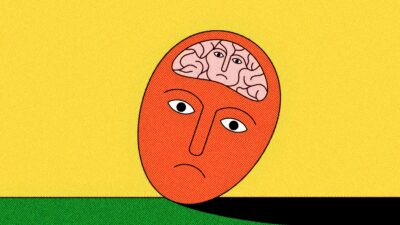 Ever had someone tell you to just cheer up? Did it drive you crazy? Well, turns out that someone telling you to “be happy” isn’t just annoying—it’s also wildly unhelpful.
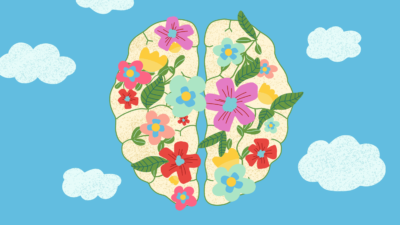 I think the good thing about meditation—mindfulness, concentrating on the present, detaching—is as good anti-anxiety, anti-anger tools. But one of the costs of accepting fate, accepting that you can’t go on and do something good in the future, correlates highly with physical illness, shorter life span, less accomplishment at work. So, it’s a good anti-anxiety tool often, but it’s got a lot of costs as well.
 Whenever I am faced with life’s uncertainty, I ask myself the following questions: Why is this happening? What can I do to make it go away? How can I navigate this effectively? What can I learn from this experience?
 The chorus of the theme song for the movie Fame, performed by actress Irene Cara, includes the line “I’m gonna live forever.” Cara was, of course, singing about the posthumous longevity that fame can confer. But a literal expression of this hubris resonates in some corners of the world—especially in the technology industry. In Silicon Valley, immortality is sometimes elevated to the status of a corporeal goal. Plenty of big names in big tech have sunk funding into ventures to solve the problem of death as if it were just an upgrade to your smartphone’s operating system.
 The researchers also found that with age, the body’s response to insults could increasingly range far from a stable normal, requiring more time for recovery. Whitson says that this result makes sense: A healthy young person can produce a rapid physiological response to adjust to fluctuations and restore a personal norm. But in an older person, she says, “everything is just a little bit dampened, a little slower to respond, and you can get overshoots,” such as when an illness brings on big swings in blood pressure.
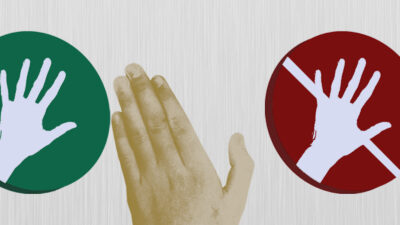 Many people cheat on taxes — no mystery there. But many people don’t, even if they wouldn’t be caught — now, that’s weird. Or is it? Psychologists are deeply perplexed by human moral behavior, because it often doesn’t seem to make any logical sense. You might think that we should just be grateful for it. But if we could understand these seemingly irrational acts, perhaps we could encourage more of them.
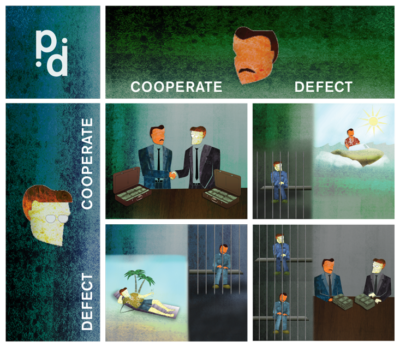
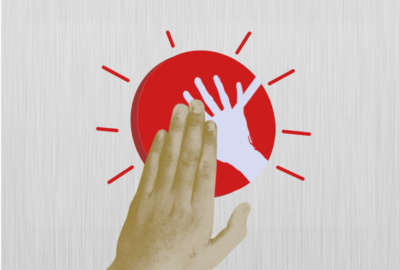 When it comes to getting people to cooperate more, Rand’s work brings good news. Our intuitions are not fixed at birth. We develop social heuristics, or rules of thumb for interpersonal behavior, based on the interactions we have. Change those interactions and you change behavior.
 If you want to learn something about change there is no better place to look than evolution. Nothing represents a continuous and unrelenting cycle of order, disorder, and reorder on a grander scale. For long periods of time, Earth is relatively stable. Sweeping changes—warming, cooling, or an asteroid falling from space, for example—occur. These inflection points are followed by periods of disruption and chaos. Eventually, Earth, and everything on it, regains stability, but that stability is somewhere new.
 The more you define yourself by any one activity, the more fragile you become. If that activity doesn’t go well or something changes unexpectedly, you lose a sense of who you are. But with self-complexity, you have develop multiple components to your identity.
 In approximately one month and 10 days, I’ll be on my way to making one of the larger decisions of my adult life (so far, anyway); I’m moving to Austin, Texas, approximately 2,000 miles and one hell of a road trip away from my family and almost my entire friend group back in New York. While I have many questions about my move—chief among them, “How much should a mattress cost?” and “Will everyone hate me for being a Brooklyn transplant?”—nothing has loomed larger in my mind than the question of friendship, or, more specifically, how a full-grown adult goes about making new friends with no partner or kids to act as built-in buffers.
 For Hannah Smith, 27, friendship began at home—quite literally—when she moved to San Francisco in 2019 without knowing anyone. Smith sublet three different rooms through Craigslist before she finally signed a month-to-month lease in the perfect place (which she also found through Craigslist), eventually turning a roommate from her final apartment into one of her best friends. “Low-commitment living situations can be a great way to get to know people in a new place,” says Smith, although she adds that this strategy might be somewhat complicated by the ongoing effects of COVID-19.
 We called them fairy rocks. They were just colorful specks of gravel—the kind you might buy for a fish tank—mixed into my preschool’s playground sand pit. But my classmates and I endowed them with magical properties, hunted them like treasure, and carefully sorted them into piles of sapphire, emerald, and ruby. Sifting the sand for those mystical gems is one of my earliest memories. I was no older than 3 at the time. My memory of kindergarten has likewise been reduced to isolated moments: tracing letters on tan paper with pink dashed lines; watching a movie about ocean creatures; my teacher slicing up a giant roll of parchment so we could all finger-paint self-portraits.
 We’re surrounded by negativity everywhere we turn. The news we read, social media we peruse, and conversations we have and overhear. We absorb stress from our family, friends, and coworkers. And, it’s taking a toll.
 Watch what you say out loud. Negative language is particularly insidious and potent. Be mindful of what you’re thinking and saying. Yes, those around you influence you and your mood, but we have more control over our thoughts and feelings than anyone else. And what we say out loud also carries significant weight. According to Trevor Moawad, a mental conditioning coach who works primarily with elite athletes, it’s ten times more damaging to our sense of thriving if we verbalize a thought than if we just think it.
 Manage your energy. You can also increase your resilience in the face of negativity and encourage thriving by exercising, eating well, and getting enough sleep — all things we know we’re supposed to do but we often fail to when we’re bombarded with negativity. When we exercise, our muscles pump “hope molecules” into our bodily systems that are good for our mental and physical health. You can amplify these effects by exercising outside, with others, or to music.