Artist Statement: Nathalie Arini
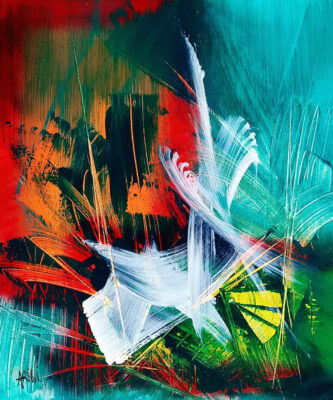
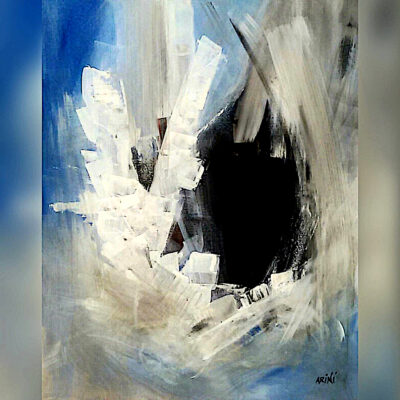
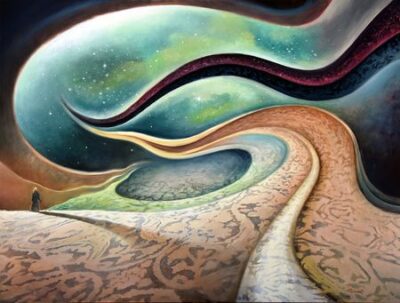
I’m a self-taught professional artist from France, specializing in acrylic (on canvas and paper), which allows me to express my inner feelings, visions, as well as other realms and the multiplicity of dimensions we are living in. I love to paint the unseen planes. I follow my intuition, trying to create beauty and harmony in colors and shapes. I also paint watercolors.
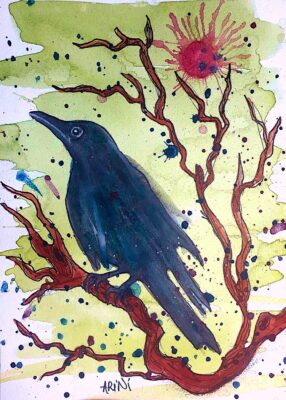
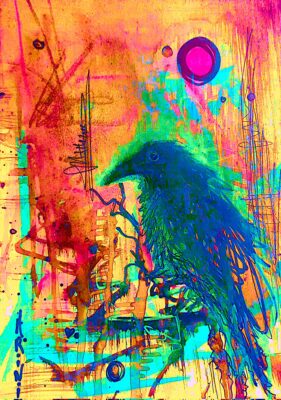
My favourite subjects are ravens, trees and the journey of soul in the infinite circle of life and death (samsara). I’m also a Tarot reader and a musician. Painting and music are linked in a subtle way: they always dance together! I’ve had many exhibitions in France and in India, from where my paintings have found collectors all over the world. Art has been my passion since childhood, and also nature, which is my temple. To me the act of creating is spiritual, it’s a meditation.
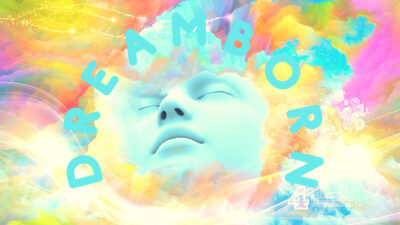
Recently I’ve also begun creating NFT art, always from my original paintings. I like to play with digital effects to create colorful trippy spaces!
Twitter @AriniNathalie
Instagram @arini_art_
télégram https://t.me/NathalieArini
opensea http://opensea.io/AriniNath

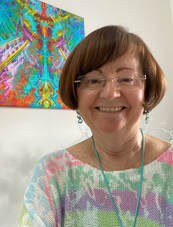
 Here we are, standing at long last smack dab in the new reality we’ve been dreaming of and co-creating for years now.
 I am the mother of twins, a lovely daughter and a sweet son. They will be 19 years old in August. They are starting to live independent lives, one is going to university and the other one is already working.
 My spiritual path has allowed me to share with my kids those internal powers we all have, and I have made sure to repeat myself many times over. Of course, on several occasions I get those teenage looks and eyes rolling, but I know that one day, they will remember my words and tools and apply them.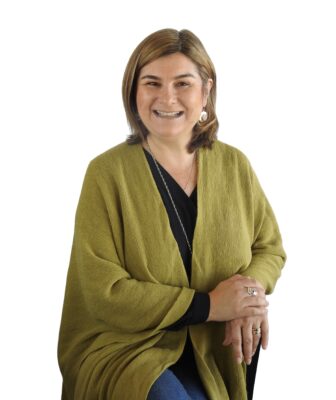
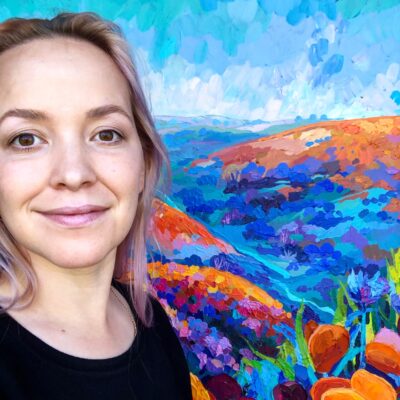 I was born on 12/24/1988 in Russia. I’ve been painting for as long as I can remember. I always knew that I would be an artist, only the direction changed: at one time I wanted to be an architect, then a sculptor, a portrait painter, an animator. As a result, I received higher education as a shoe designer and even managed to work for three years in this specialty.

 Forgiveness is often viewed as the “happily ever after” ending in a story of wrongdoing or injustice. Someone enacts harm, the typical arc goes, but eventually sees the error of their ways and offers a heartfelt apology. “Can you ever forgive me?” Then you, the hurt person, are faced with a choice: Show them mercy — granting yourself peace in the process — or hold a grudge forever. The choice is yours, and it’s one many of us assume starts with remorse and a plea for grace.
 Enright defines forgiveness as a moral virtue. Moral virtues (like kindness, honesty, and patience) are typically focused on how they benefit others; these are things you do primarily for another person’s sake, regardless of whether or not they have “earned” it.
 Enright has studied forgiveness extensively. He says his research group at the University of Wisconsin Madison was the first to publish a scientific study on forgiveness, in 1989; in 1993, they became the first to publish a scientific study of forgiveness therapy. Their research has led to the development of a step-by-step process for forgiveness, which can happen in therapy (ideally with someone who is trained in forgiveness therapy), or through a self-guided process using his workbook.
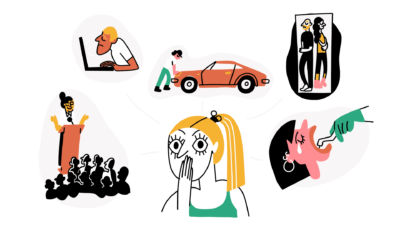 Let’s play a game of “would you rather.”
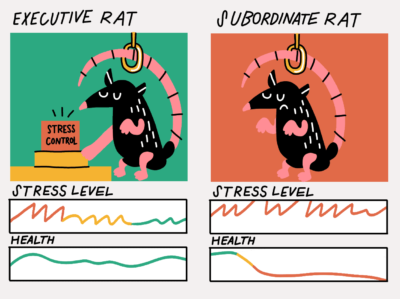 The rat with the lever in its cage is called “the executive rat,” because it has control. It has the power to turn off the electric current flowing through the cage. The rat with no control is called the “subordinate rat.”
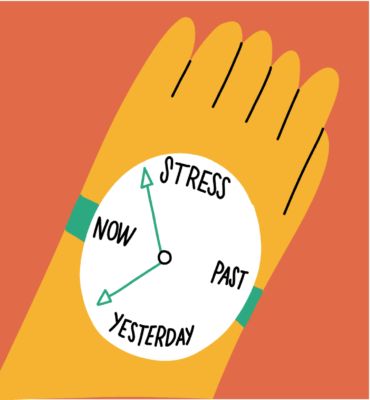 Are you facing the stress of an uncertain future? If so, it helps to focus on what you can control. Sometimes that means bringing the finish line closer by setting goals for today or this week instead of trying to figure out what you’ll do if you lose your job three months from now. Sometimes, it means making a list of 10 ways you can stay connected with friends and choosing the best one to put into action.
 For example, an entrepreneur who feels constantly pressed for time during her nine-hour workday might experiment with doing a 14-hour workday once per week for three weeks. Each of these long workdays is followed by a shortened workday of only six hours. In this case, she is stretching her sense of what’s possible by working longer than what feels comfortable. Then she recovers, taking it easy the next day.
 The world is full of outsiders: students away at a university far from home, immigrants to a new country, and people who go abroad for work or extended travel. Over the past year, more than 4.4 million American workers quit their jobs in the “Great Resignation,” and many of them became outsiders by joining a different company or moving to a new place, which they perhaps imagined might be friendlier to their personal needs and tastes.
 A friend of mine spends 20 to 30 minutes a day solving Sudoku puzzles. He says it improves his speed of mental processing and makes him, well, smarter.
 No matter what is or isn’t happening in the world right now, you and I and all of Creation is loved beyond belief. No matter what is or isn’t happening in your life right now, you are loved beyond belief. No matter what will happen or won’t happen, it does not matter…we are loved beyond belief. No matter what, we are that Love, and we emerged from that Love by choice-desire-curiosity.