
In the 1950s, scholars worried that, thanks to technological innovations, Americans wouldn’t know what to do with all of their leisure time.
Yet today, as sociologist Juliet Schor notes, Americans are overworked, putting in more hours than at any time since the Depression and more than in any other in Western society.
It’s probably not unrelated to the fact that instant and constant access has become de rigueur, and our devices constantly expose us to a barrage of colliding and clamoring messages: “Urgent,” “Breaking News,” “For immediate release,” “Answer needed ASAP.”
It disturbs our leisure time, our family time – even our consciousness.
Over the past decade, I’ve tried to understand the social and psychological effects of our growing interactions with new information and communication technologies, a topic I examine in my book “The Terminal Self: Everyday Life in Hypermodern Times.”
In this 24/7, “always on” age, the prospect of doing nothing might sound unrealistic and unreasonable.
But it’s never been more important.
Acceleration for the Sake of Acceleration
In an age of incredible advancements that can enhance our human potential and planetary health, why does daily life seem so overwhelming and anxiety-inducing?
Why aren’t things easier?
It’s a complex question, but one way to explain this irrational state of affairs is something called the force of acceleration.
According to German critical theorist Hartmut Rosa, accelerated technological developments have driven the acceleration in the pace of change in social institutions.
We see this on factory floors, where “just-in-time” manufacturing demands maximum efficiency and the ability to nimbly respond to market forces, and in university classrooms, where computer software instructs teachers how to “move students quickly” through the material. Whether it’s in the grocery store or in the airport, procedures are implemented, for better or for worse, with one goal in mind: speed.
Noticeable acceleration began more than two centuries ago, during the Industrial Revolution. But this acceleration has itself … accelerated. Guided by neither logical objectives nor agreed-upon rationale, propelled by its own momentum, and encountering little resistance, acceleration seems to have begotten more acceleration, for the sake of acceleration.
To Rosa, this acceleration eerily mimics the criteria of a totalitarian power: 1) it exerts pressure on the wills and actions of subjects; 2) it is inescapable; 3) it is all-pervasive; and 4) it is hard or almost impossible to criticize and fight.
The Oppression of Speed
Unchecked acceleration has consequences.
At the environmental level, it extracts resources from nature faster than they can replenish themselves and produces waste faster than it can be processed.
At the personal level, it distorts how we experience time and space. It deteriorates how we approach our everyday activities, deforms how we relate to each other and erodes a stable sense of self. It leads to burnout at one end of the continuum and to depression at the other. Cognitively, it inhibits sustained focus and critical evaluation. Physiologically, it can stress our bodies and disrupt vital functions.

For example, research finds two to three times more self-reported health problems, from anxiety to sleeping issues, among workers who frequently work in high-speed environments compared with those who do not.
When our environment accelerates, we must pedal faster in order to keep up with the pace. Workers receive more emails than ever before – a number that’s only expected to grow. The more emails you receive, the more time you need to process them. It requires that you either accomplish this or another task in less time, that you perform several tasks at once, or that you take less time in between reading and responding to emails.
American workers’ productivity has increased dramatically since 1973. What has also increased sharply during that same period is the pay gap between productivity and pay. While productivity between 1973 and 2016 has increased by 73.7 percent, hourly pay has increased by only 12.5 percent. In other words, productivity has increased at about six times the rate of hourly pay.
Clearly, acceleration demands more work – and to what end? There are only so many hours in a day, and this additional expenditure of energy reduces individuals’ ability to engage in life’s essential activities: family, leisure, community, citizenship, spiritual yearnings and self-development.
It’s a vicious loop: Acceleration imposes more stress on individuals and curtails their ability to manage its effects, thereby worsening it.
Doing Nothing and ‘Being’
In a hypermodern society propelled by the twin engines of acceleration and excess, doing nothing is equated with waste, laziness, lack of ambition, boredom or “down” time.
But this betrays a rather instrumental grasp of human existence.
Much research – and many spiritual and philosophical systems – suggest that detaching from daily concerns and spending time in simple reflection and contemplation are essential to health, sanity and personal growth.
Similarly, to equate “doing nothing” with non-productivity betrays a shortsighted understanding of productivity. In fact, psychological research suggests that doing nothing is essential for creativity and innovation, and a person’s seeming inactivity might actually cultivate new insights, inventions or melodies.
As legends go, Isaac Newton grasped the law of gravity sitting under an apple tree. Archimedes discovered the law of buoyancy relaxing in his bathtub, while Albert Einstein was well known for staring for hours into space in his office.
The academic sabbatical is centered on the understanding that the mind needs to rest and be allowed to explore in order to germinate new ideas.
Doing nothing – or just being – is as important to human well-being as doing something.
The key is to balance the two.
Taking Your Foot Off the Pedal
Since it will probably be difficult to go cold turkey from an accelerated pace of existence to doing nothing, one first step consists in decelerating. One relatively easy way to do so is to simply turn off all the technological devices that connect us to the internet – at least for a while – and assess what happens to us when we do.
Danish researchers found that students who disconnected from Facebook for just one week reported notable increases in life satisfaction and positive emotions. In another experiment, neuroscientists who went on a nature trip reported enhanced cognitive performance.
Different social movements are addressing the problem of acceleration. The Slow Food movement, for example, is a grassroots campaign that advocates a form of deceleration by rejecting fast food and factory farming.
As we race along, it seems as though we’re not taking the time to seriously examine the rationale behind our frenetic lives – and mistakenly assume that those who are very busy must be involved in important projects.
Touted by the mass media and corporate culture, this credo of busyness contradicts both how most people in our society define “the good life” and the tenets of many Eastern philosophies that extol the virtue and power of stillness.
French philosopher Albert Camus perhaps put it best when he wrote, “Idleness is fatal only to the mediocre.”
Original article here
 In 1905, the 26-year-old Albert Einstein proposed something quite outrageous: that light could be both wave or particle. This idea is just as weird as it sounds. How could something be two things that are so different? A particle is small and confined to a tiny space, while a wave is something that spreads out. Particles hit one another and scatter about. Waves refract and diffract. They add on or cancel each other out in superpositions. These are very different behaviors.
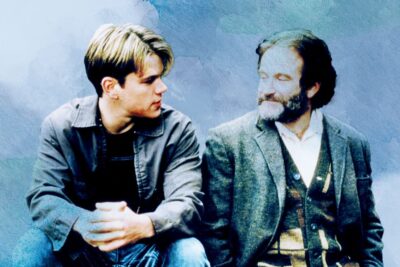 Brian was just a kid when he first saw the movie Good Will Hunting and wasn’t thinking about therapy or his mental health. The 29-year-old engineer was mostly just fascinated by stories about repressed geniuses and Matt Damon’s background story of being a Harvard dropout. He also thought it was pretty rad that the original script was intended to be a spy-thriller.
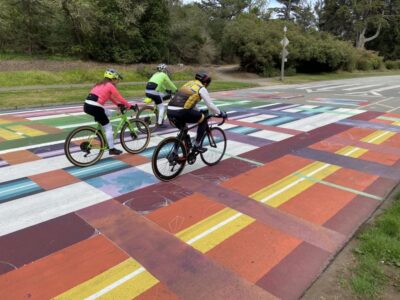 What happens when you close down a city street to cars? More people do non-driving things, like walking, biking, strolling, skating and frolicking in the space normally reserved for motor vehicles. Car-free advocates would say that as greenhouse gas emissions and traffic violence go down, happiness and connection go up — it’s hard to connect with your neighbors while ensconced in two tons of steel.
 The data are stark: the typical American diet is shortening the lives of many Americans. Diet-related deaths outrank deaths from smoking, and about half of U.S. deaths from heart disease – nearly 900 deaths a day – are linked to poor diet. The pandemic highlighted the problem, with much worse outcomes for people with obesity and other diet-related diseases.
 Expand access to dietary and lifestyle counseling
 We think we want to be happy. Yet many of us are actually working toward some other end, according to cognitive psychologist Daniel Kahneman, winner of the 2002 Nobel Prize in economics.
 A few months ago, I was introduced over email to a consultant, who I’ll call Brad. The person who made the introduction thought Brad would make a good contributor to Harvard Business Review, where I work as an editor. I receive a good number of these introductions, and when this one came in, I was particularly overwhelmed with requests. Brad asked if we could get on the phone to talk. I courteously declined and let him know that an editor would be in touch about the draft he submitted.
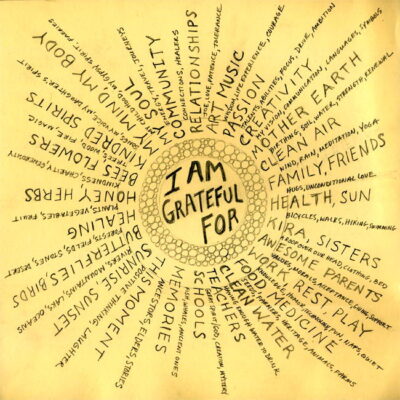 In Sidetracked: Why Our Decisions Get Derailed, and How We Can Stick to the Plan, Francesca Gino, an associate professor at Harvard Business School, explores a range of fascinating subjects, including how emotions influence decisions and the often-thorny matter of understanding the perspectives of others. Blending social science and real-world examples, Gino’s book also highlights the science of gratitude.
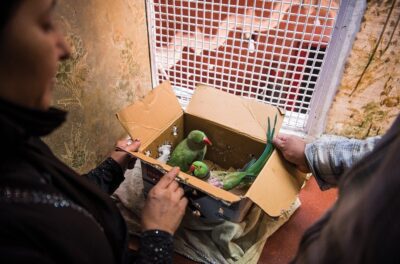
 Amid the human crush of Old Delhi, on the edge of a medieval bazaar, a red structure with cages on its roof rises three stories above the labyrinth of neon-lit stalls and narrow alleyways, its top floor emblazoned with two words: birds hospital.
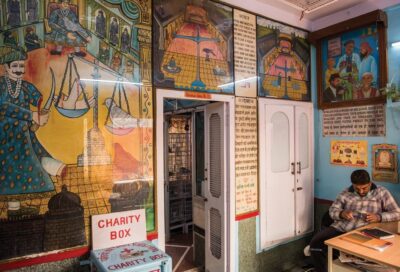 I’d come to the bird hospital, and to India, to see firsthand the Jains’ moral system at work in the world. Jains make up less than 1 percent of India’s population. Despite millennia spent criticizing the Hindu majority, the Jains have sometimes gained the ear of power. During the 13th century, they converted a Hindu king, and persuaded him to enact the subcontinent’s first animal-welfare laws. There is evidence that the Jains influenced the Buddha himself. And when Gandhi developed his most radical ideas about nonviolence, a Jain friend played philosophical muse.
 In the West, consciousness was long thought to be a divine gift bestowed solely on humans. Western philosophers historically conceived of nonhuman animals as unfeeling automatons. Even after Darwin demonstrated our kinship with animals, many scientists believed that the evolution of consciousness was a recent event. They thought the first mind sparked awake sometime after we split from chimps and bonobos. In his 1976 book, The Origin of Consciousness in the Breakdown of the Bicameral Mind, Julian Jaynes argued that it was later still. He said the development of language led us, like Virgil, into the deep cognitive states capable of constructing experiential worlds.
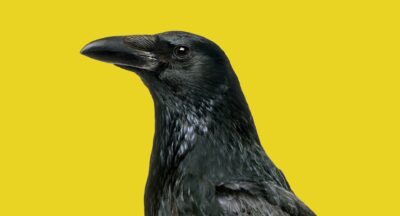
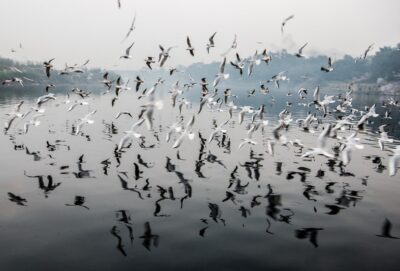 Crows are not among the shoulder-perchers, but Singh sometimes sees former crow patients hovering around the hospital. They might be looking for him. Crows recognize individual human faces. They are known to blare vicious caws at people they dislike, but for favored humans, they sometimes leave gifts—buttons or shiny bits of glass—where the person will be sure to notice, like votive offerings.
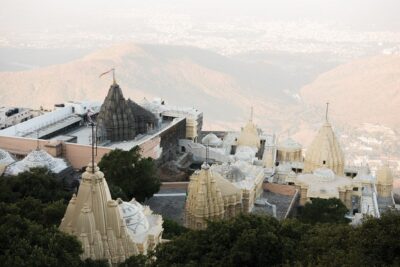 The trail was only 50 miles from Gir National Park, where, the day before, I’d seen two Asiatic lions, nearly indistinguishable cousins of Africa’s lions. Once the region’s apex predator, the Asiatic lion almost went extinct during the British empire’s colonization of India, when no viceroy could visit a maharaja’s palace without a hunt in the local forest. Even today, the Asiatic lion still ranks among the rarest of the large feline predators, rarer even than its neighbor to the north, the snow leopard, which is so scarce that a glimpse of one padding down a jagged Himalayan crag is said to consummate a spiritual pilgrimage.
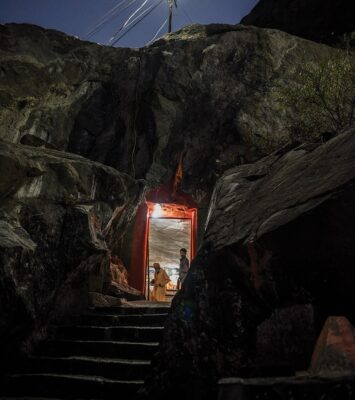 The monk was a white dot some six switchbacks up by the time I hopped off the wall and continued the climb, my legs stiffened by the break. I reached the entrance to the temple complex with only 15 minutes to spare. Its marble courtyard shone brilliant white, as though bleached by the mountain sun.