 We’re surrounded by negativity everywhere we turn. The news we read, social media we peruse, and conversations we have and overhear. We absorb stress from our family, friends, and coworkers. And, it’s taking a toll.
The Mighty, a community platform (founded by Mike) that provides health information and brings people together around specific health issues, has surveyed more than 70,000 readers and community members since March around their awareness, perceptions, and experience with the coronavirus crisis. In September, respondents reported their top three emotions were frustration, worry, and anger. The number of respondents choosing anger as one of their top emotions has more than doubled since March — rising from 20% then to 45% in September.
Negativity can have toxic effects. In fact, Christine’s research has shown over and over that we falter when exposed to negativity or rudeness. Witnessing rudeness interferes with our working memory and decreases our performance. Mere exposure to rude words reduces our ability to process and recall information. We tend to shut down, stop communicating, and cease being helpful to others. Dysfunctional and aggressive thoughts (and sometimes actions) skyrocket.
Fortunately, Christine’s research also shows that there is a productive way to counter those effects. It’s called thriving — the psychological state in which people experience a sense of both vitality and learning. Thriving individuals are growing, developing, and energized rather than feeling stagnated or depleted.
In studies conducted across a range of industries, Christine has found that people who experience a state of thriving are healthier, more resilient, and more able to focus on their work. When people feel even an inkling of thriving, it tends to buffer them from distractions, stress, and negativity. In a study of six organizations across six different industries, employees characterized as highly thriving demonstrated 1.2 times less burnout compared with their peers. They were also 52% more confident in themselves and their ability to take control of a situation. They were far less likely to have negativity drag them into distraction or self-doubt.
So how do you increase your thriving especially when it feels like you’re drowning in negativity? Our research points to some tactics.
Avoid negativity. Pay attention to what you’re ingesting: what information you chose to read, the media you consume, the music you listen to, the people you choose to spend time with, and the people you look up to. Negativity seeps into our pores through these sources. So make simple choices away from negativity and toward positivity.
 Watch what you say out loud. Negative language is particularly insidious and potent. Be mindful of what you’re thinking and saying. Yes, those around you influence you and your mood, but we have more control over our thoughts and feelings than anyone else. And what we say out loud also carries significant weight. According to Trevor Moawad, a mental conditioning coach who works primarily with elite athletes, it’s ten times more damaging to our sense of thriving if we verbalize a thought than if we just think it.
So, think twice about how you’re framing and speaking about a situation. Instead of saying, “This is the worst I’ve ever seen,” or “It’s catastrophic,” (or “devastating” or “terrible”), tweak your language to be more neutral. You might say, “This situation is challenging,” which recognizes the opportunity for growth or learning. You can — and should — acknowledge the truth, while minimizing its power to drag you down.
Adopt a neutral mindset. Negative thoughts and worries take us off track. We’re more likely to struggle on basic tasks. Long term, repetitive negative thinking is associated with cognitive decline and Alzheimer’s disease. It also hurts others because they are then exposed to our negativity. Of course, it’s all too easy to dwell on toxic people or situations. We might play the blame game, ruminate, or overanalyze the situation. It’s far better to adopt a proactive mindset, focusing on what we can control and what we should do next.
Moawad suggests using neutral thinking — a nonjudgmental, nonreactive way of assessing problems and analyzing crises. This includes staying in the moment, reacting to each moment as it unfolds, and keeping your focus on how you can influence your next action. Don’t get sucked into analyzing past failures or hijacked by future fears or thoughts. Take one play at a time.
Practice gratitude consistently. There is a lot to be said about the benefits of gratitude. Gratitude reduces our stress, makes us happier, and helps us reach our goals. Routinely feeling grateful increases the social support we receive, which further reduces stress and its negative effects. It’s especially powerful when practiced alongside neutral thinking. Seattle Seahawk quarterback and Super Bowl winner Russell Wilson has talked about how he has used this combination to navigate the death of his father, a gut-wrenching Super Bowl loss, the impact of Covid on his life and profession, and other challenges. Wilson says that with an “attitude of gratitude” you can be thankful for a challenge, and get through it.
His advice spurred our family to think about some of the positives that the pandemic brought. For example, like many families, we started a weekly Zoom meeting, uniting family members spread across the globe that hadn’t been in regular touch previously.
 Manage your energy. You can also increase your resilience in the face of negativity and encourage thriving by exercising, eating well, and getting enough sleep — all things we know we’re supposed to do but we often fail to when we’re bombarded with negativity. When we exercise, our muscles pump “hope molecules” into our bodily systems that are good for our mental and physical health. You can amplify these effects by exercising outside, with others, or to music.
Healthy eating also helps you stave off negativity. How well do you respond to frustration when you’re hungry? We lack the self-control required to respond patiently. Sleep is also important. A lack of it impairs self-regulation and self-control, which can produce more negativity. Research has linked poor sleep to frustration, impatience, hostility, anxiety, low levels of joviality, lower levels of trust, workplace deviance, and unethical behavior. Sleep deprivation also hurts the relationship between leaders and their followers, and diminishes how much help people provide to others.
Seek out positive relationships — inside and outside of work. Christine’s research found that de-energizing relationships — in which one person possesses an enduring, recurring set of negative judgments, feelings, and intentions toward another person — have four to seven times greater impact on an employee’s sense of thriving than energizing, positive relationships. To offset these effects, surround yourself and spend more time with energizers — the people in your life who make you smile and laugh, and lift your spirits.
You may not be able to stop the flow of negativity in your life, especially right now, but you can resist its toxic effects by making smart choices about who and what you surround yourself with, the mindset you adapt, and the information you consume. Not only will you be better off because of these choices — those around you will too.
Original article here
 Pandemic life had a way of revealing our weaknesses. For those of us of a certain age, I mean that literally. If you are feeling like certain household activities — toting groceries, hoisting children, moving furniture, carrying laundry — are more difficult than they were in the past, you aren’t alone. And you aren’t imagining it.
 Why? Strength training improves your “economy of movement,” Metzl says, meaning the amount of energy you expend to complete a task, and it “offloads joints, so you can do the same amount of work with less pain and lower risk of injury. You’re essentially getting more juice out of your muscles.” Metzl is personally vested in this quest: He has run 35 marathons and competed in Iron Man triathlons, and he says he aspires, even as he approaches his mid-50s, “to keep going forever.”
 Both Stanforth and Metzl recommend building muscle by performing a high number of reps of a lighter weight — i.e., one you can lift at least 15 times before failure, the fitness term for can’t . . . do . . . one . . . more.
 If Socrates was the wisest person in Ancient Greece, then large language models must be the most foolish systems in the modern world.
 And bullshit is dangerous, warned Frankfurt. Bullshit is a greater threat to the truth than lies. The person who lies thinks she knows what the truth is, and is therefore concerned with the truth. She can be challenged and held accountable; her agenda can be inferred. The truth-teller and the liar play on opposite sides of the same game, as Frankfurt puts it. The bullshitter pays no attention to the game. Truth doesn’t even get confronted; it gets ignored; it becomes irrelevant.
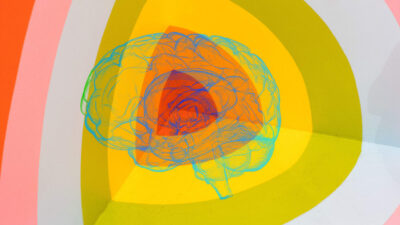 You might think that the impact of aging on the brain is something you can’t do much about. After all, isn’t it an inevitability?
 You might think that after centuries of studying light, we know pretty much everything about it. It’s true we’ve had breakthrough after breakthrough in using it, from illumination to communication, from examining the micro- and macro-universes to scanning our own bodies. We understand that light is an electromagnetic wave, thanks to James Clerk Maxwell, whose equations established that in 1865; and that it also appears as quantum packets of electromagnetic energy called photons, as Albert Einstein recognized in 1905. But the more we look into light, the more we see and the more we learn. The classical view of light as a wave still produces new science as light waves interact with artificial “metamaterials”; and we are still exploring light as a quantum particle. Both approaches provide ways to manipulate light that were once only science fiction. Here are five recent marvels.
 In ghost imaging, one of each of a swarm of entangled photon pairs interacts with the object and encounters a detector that simply registers its arrival. A second beam of the corresponding entangled partners never touches the object but goes straight to a sensitive multi-pixel detector. Computer analysis of the correlations between the two detector results creates a high-quality image of the object, even with weak illumination. This approach has uses such as converting images covertly taken by invisible infrared light to visible images detected by a high-resolution camera; or obtaining good quality X-ray images from a patient exposed to a low, relatively safe X-ray dose.
 Need to know
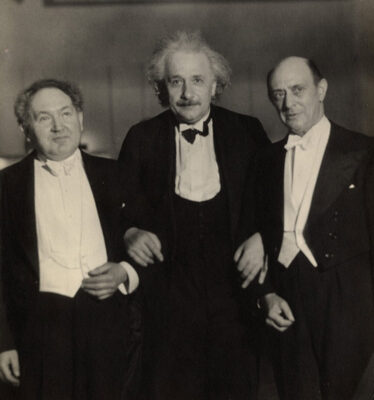 But in the second half of the 19th century, composers gradually began to deviate from a strict adherence to the principle of tonality, making it difficult to sense where the music stood in relation to the tonic. Schoenberg, believing that tonality had run its course, was determined to supplant it with the series, or tone row. In a series, each of the 12 notes of the chromatic scale of semitones appears exactly once; a note could be repeated only after the series had been completed. This gave a composer a staggering number of combinations to choose from: 1 x 2 x 3 x … x 12 = 479,001,600, to be exact (not counting shifts by octaves, which Schoenberg allowed). In serial music, complete democracy ruled: no single note held any preferred status over the others. Every note was related only to its immediate predecessor in the series; gone were the roles that different notes had played in relation to the tonic. At its heart it was a mathematical system, and Schoenberg was determined to impose it on music.



 Dr. James McGaugh remembers that day too. At the time, he was director of UC Irvine’s Center for the Neurobiology of Learning and Memory, the research institute that he founded in 1983. In her email, Jill Price said that she had a problem with her memory. McGaugh responded almost immediately, explaining that he worked at a research institute and not a clinic, and that he’d be happy to direct her to somewhere she could find help.
 Still, he started from a position of scepticism. “In interrogating her, I started with the scientific assumption that she couldn’t do it,” he told me. And even though Price showed that she could, repeatedly, McGaugh was still unmoved. “Yeah, it got my attention, but I didn’t say, ‘Wow.’ We had to do a lot more. So we did a lot more.” (In Price’s recollection, however, her ability to remember “really freaked Dr McGaugh out.”)
 In May 2012, the journal Neurobiology of Learning and Memory published a follow-up study by UCI neuroscience graduate student Aurora LePort and neurobiologist Dr Craig Stark, then the director of the UCI Center for the Neurobiology of Learning and Memory. It was now nearly 12 years since Price first reached out to McGaugh, but researchers were only fractionally closer to finding the answer she was looking for.
 For both Price and Petrella, there is a specific point in their lives that they feel triggered their ability to remember things with extraordinary clarity. For Petrella, it was when he was seven years old and playing a deliriously fun game in his backyard with a childhood friend. The next day, Petrella invited his friend over to play it again, but they only played for a few minutes before getting bored. Petrella realised then that nothing ever stays the same and that it was important that he remember things before they changed. For Price, it was her family’s traumatic move to the West coast. In each case, Price and Petrella say they already had strong memories before this decisive moment, but after it, their ability to remember was transformed.
 I love my family. I was brought up in a very close family. Of course we fight, but we also laugh together. We share everything — all the joys and the pains. And I know the pain I am feeling, my family will feel the same thing. We confide in each other and find comfort in that. When I want to be happy, my family is always there for me.
 I’ve been working in rural areas for the last ten years. And in the women, peasants and farmers I’ve met there, I’ve found another kind of genius. They help me understand that the future is possible.