
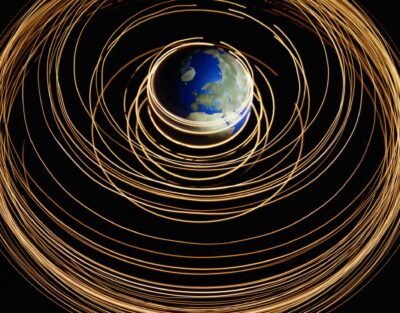
 Atomic clocks, combined with precise astronomical measurements, have revealed that the length of a day is suddenly getting longer, and scientists don’t know why.
This has critical impacts not just on our timekeeping, but also things like GPS and other technologies that govern our modern life.
Over the past few decades, Earth’s rotation around its axis – which determines how long a day is – has been speeding up. This trend has been making our days shorter; in fact, in June 2022 we set a record for the shortest day over the past half a century or so.
But despite this record, since 2020 that steady speedup has curiously switched to a slowdown – days are getting longer again, and the reason is so far a mystery.
While the clocks in our phones indicate there are exactly 24 hours in a day, the actual time it takes for Earth to complete a single rotation varies ever so slightly. These changes occur over periods of millions of years to almost instantly – even earthquakes and storm events can play a role.
It turns out a day is very rarely exactly the magic number of 86,400 seconds.
The ever-changing planet
Over millions of years, Earth’s rotation has been slowing down due to friction effects associated with the tides driven by the Moon. That process adds about 2.3 milliseconds to the length of each day every century. A few billion years ago an Earth day was only about 19 hours.
For the past 20,000 years, another process has been working in the opposite direction, speeding up Earth’s rotation. When the last ice age ended, melting polar ice sheets reduced surface pressure, and Earth’s mantle started steadily moving toward the poles.
Just as a ballet dancer spins faster as they bring their arms toward their body – the axis around which they spin – so our planet’s spin rate increases when this mass of mantle moves closer to Earth’s axis. And this process shortens each day by about 0.6 milliseconds each century.
Over decades and longer, the connection between Earth’s interior and surface comes into play too. Major earthquakes can change the length of day, although normally by small amounts. For example, the Great Tōhoku Earthquake of 2011 in Japan, with a magnitude of 8.9, is believed to have sped up Earth’s rotation by a relatively tiny 1.8 microseconds.
Apart from these large-scale changes, over shorter periods weather and climate also have important impacts on Earth’s rotation, causing variations in both directions.
The fortnightly and monthly tidal cycles move mass around the planet, causing changes in the length of day by up to a millisecond in either direction. We can see tidal variations in length-of-day records over periods as long as 18.6 years. The movement of our atmosphere has a particularly strong effect, and ocean currents also play a role. Seasonal snow cover and rainfall, or groundwater extraction, alter things further.
Why is Earth suddenly slowing down?
Since the 1960s, when operators of radio telescopes around the planet started to devise techniques to simultaneously observe cosmic objects like quasars, we have had very precise estimates of Earth’s rate of rotation.
 A comparison between these estimates and an atomic clock has revealed a seemingly ever-shortening length of day over the past few years.
But there’s a surprising reveal once we take away the rotation speed fluctuations we know happen due to the tides and seasonal effects. Despite Earth reaching its shortest day on June 29 2022, the long-term trajectory seems to have shifted from shortening to lengthening since 2020. This change is unprecedented over the past 50 years.
The reason for this change is not clear. It could be due to changes in weather systems, with back-to-back La Niña events, although these have occurred before. It could be increased melting of the ice sheets, although those have not deviated hugely from their steady rate of melt in recent years. Could it be related to the huge volcano explosion in Tonga injecting huge amounts of water into the atmosphere? Probably not, given that occurred in January 2022.
Scientists have speculated this recent, mysterious change in the planet’s rotational speed is related to a phenomenon called the “Chandler wobble” – a small deviation in Earth’s rotation axis with a period of about 430 days. Observations from radio telescopes also show that the wobble has diminished in recent years; the two may be linked.
One final possibility, which we think is plausible, is that nothing specific has changed inside or around Earth. It could just be long-term tidal effects working in parallel with other periodic processes to produce a temporary change in Earth’s rotation rate.
Do we need a ‘negative leap second’?
Precisely understanding Earth’s rotation rate is crucial for a host of applications – navigation systems such as GPS wouldn’t work without it. Also, every few years timekeepers insert leap seconds into our official timescales to make sure they don’t drift out of sync with our planet.
If Earth were to shift to even longer days, we may need to incorporate a “negative leap second” – this would be unprecedented, and may break the internet.
The need for negative leap seconds is regarded as unlikely right now. For now, we can welcome the news that – at least for a while – we all have a few extra milliseconds each day.
Original article here
 In February 2015, a Scottish woman uploaded a photograph of a dress to the internet. Within 48 hours the blurry snapshot had gone viral, provoking spirited debate around the world. The disagreement centred on the dress’s colour: some people were convinced it was blue and black while others were adamant it was white and gold.
 “It fits with the tendency of the Dutch language to create verbs out of nouns. From from ‘voetbal’ (football) to voetballen (playing football), from ‘internet’ to internetten, from ‘whatsapp‘ to whatsappen etc. I think this is something that happens in Dutch in particular,” said Monique Flecken, a psycholinguist at the University of Amsterdam, who researches how the languages we speak affect the way we see the world. Essentially, it’s much less work to say “niksen” instead of “to do nothing”. “The Dutch are a practical, direct people and their language reflects that,” she said.
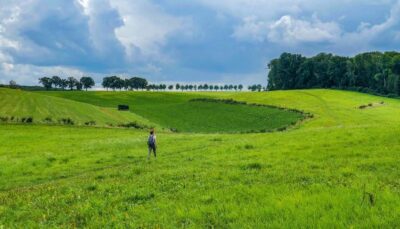 Locals like spending their time in active ways, such as cycling or hiking, allowing time for clearing the mind. And each time the sun comes out, the Dutch flock to cafes and terraces en masse, even in the winter. For me, these are perfect places for doing nothing.

 Since last fall, artificial intelligence — in particular ChatGPT and its recently unveiled successor, GPT-4 — has taken center stage in conversations about the future of business, work, and learning. ChatGPT became the fastest-growing consumer application in history — outpacing Instagram and even TikTok — and Google lost $100 billion in market cap after a botched AI product demonstration raised questions about its ability to compete.
 One of the simplest ways we can help our bodies thrive and prevent over-eating is to change the order in which we eat our food. Reaching for the bread basket or bowl of crisps at the start of a meal results in a rapid increase in blood glucose levels and a subsequent insulin response. This will likely leave you feeling tired, hungry and irritable just a few hours later. This is because glucose is rapidly absorbed from starchy foods, and this is even quicker on an empty stomach.
 The colours in our plants are there thanks to chemicals called polyphenols, also known as phytonutrients. These chemicals are produced by plants to protect themselves against environmental stressors, including drought, cold weather, hot weather, insects and parasites. A great example of this is the dark red colour of the oranges which grow in the foothills of Mount Etna in Sicily, where the nights are very cold and the days are very hot and dry.
 Before doing the ZOE programme, I thought my breakfast of muesli with skimmed milk was exactly what I needed for the day ahead. I soon learned that this breakfast, washed down with a glass of orange juice, pushed my blood sugar to diabetic levels and I quickly changed the menu. Adding mixed nuts and seeds to plain natural yoghurt with some polyphenol-rich berries is a great way to enjoy a nutritious breakfast that won’t spike your blood sugar.
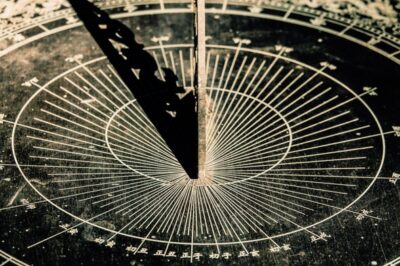 In modern times, clocks underpin everything people do, from work to school to sleep. Timekeeping is also the invisible structure that makes modern infrastructure work. It forms the foundation of the high-speed computers that conduct financial trading and even the GPS system that pinpoints locations on Earth’s surface with unprecedented accuracy.
 Not getting enough sleep is detrimental to both your health and productivity. Yawn. We’ve heard it all before. But results from one study impress just how bad a cumulative lack of sleep can be on performance. Subjects in a lab-based sleep study who were allowed to get only six hours of sleep a night for two weeks straight functioned as poorly as those who were forced to stay awake for two days straight. The kicker is the people who slept six hours per night thought they were doing just fine.
 If you think you sleep seven hours a night, as one out of every three Americans does, it’s entirely possible you’re only getting six.