
 As the director of the Energy Metabolism Laboratory at the USDA Nutrition Center Tufts University, Massachusetts, Susan Roberts has spent much of the past two decades studying ways to fight the obesity epidemic that continues to plague much of the western world.
But time and again, Roberts and other obesity experts around the globe have found themselves faced with a recurring problem. While getting overweight individuals to commit to shedding pounds is often relatively straightforward in the short term, preventing them from regaining the lost weight is much more challenging.
According to the University of Michigan, about 90% of people who lose significant amounts of weight, whether through diets, structured programmes or even drastic steps such as gastric surgery, ultimately regain just about all of it.
Why is this? Scientists believe that the answer lies in the workings of our metabolism, the complex set of chemical reactions in our cells, which convert the calories we eat into the energy our body requires for breathing, maintaining organ functions, and generally keeping us alive.
When someone begins a new diet, we know that metabolism initially drops – because we are suddenly consuming fewer calories, the body responds by burning them at a slower pace, perhaps an evolutionary response to prevent starvation – but what then happens over the following weeks, months, and years, is less clear.
“Does metabolism continue to go down, more than it should,” asks Roberts, “or does it initially go down, and then bounce back? This is an enormously controversial topic, and one that we’re looking to address.”
Over the next three to four years, we may get some answers. Roberts is co-leading a new study, funded by the National Institutes of Health in the US, which will follow 100 individuals over the course of many months as they first lose and then regain weight, measuring everything from energy expenditure to changes in the blood, brain and muscle physiology, to try to see what happens.
The implications for how we tackle obesity could be enormous. If metabolism drops and continues to stay low during weight loss, it could imply that dieting triggers innate biological changes that eventually compel us to eat more. If it rebounds to normal levels, this suggests that weight regain is due to the recurrence of past bad habits, with social and cultural factors tempting us to go back to overeating.
“If someone’s metabolism really drops during weight loss and doesn’t recover, it shows we have to put all of our money on preventing weight gain in the first place,” says Roberts. “Because once it’s happened, you’re doomed. If metabolism rebounds, it means that the lessons about eating less because you’ve now got a smaller body haven’t been learned effectively. So we might need to encourage people who have lost weight to see psychologists to work on habit formation. These are such different conclusions that we really need to get it right.”
This is just one of many ways in which our understanding of metabolism is evolving. In recent years, many of the traditional assumptions, which had long been accepted as truth – that exercise can ramp up metabolism, that metabolism follows a steady decline from your 20s onwards – have been challenged. For scientists at the forefront of this field, these answers could go on to change many aspects of public health.
The age myth
In mid-August, a paper emerged in the journal Science that appeared to challenge one of metabolism’s universal truths. For decades, scientists have accepted that metabolism begins to slow down in early adulthood, initiating a steady descent that continues through middle age and later life, inevitably resulting in the phenomenon known as “middle-aged spread”.
 But this may not actually be true. Over the past few years, Herman Pontzer, an associate professor of evolutionary anthropology at Duke University, North Carolina, and more than 80 other scientists have compiled data from more than 6,400 individuals – from eight days to 95 years old – that shows something very different.
It appears that between the ages of 20 and 60 our metabolism stays almost completely stable, even during major hormonal shifts such as pregnancy and menopause. Based on the new data, a woman of 50 will burn calories just as effectively as a woman of 20.
Instead, there are just two major life shifts in our metabolism, with the first occurring between one and 15 months old. The Science study showed that infants burn energy at such a rate to support their development that their metabolism at one year old is more than 50% higher than an adult’s. The second transition takes place at about the age of 60, when our metabolism begins to drop again, continuing to do so until we die.
“For much of your life, your body’s kind of chugging along on a trajectory for how busy your cells are going to be,” says Pontzer. “Your cells are following a roadmap, and it’s very hard to bump them off that roadmap.”
So what does this mean? Much of the ageing process, and the commonly observed middle-aged weight gain, is not because of declining metabolism but genetics, hormone changes and lifestyle factors such as stress, sleep, smoking and, perhaps most crucially, diet. Pontzer argues that if the calories we burn stay largely the same throughout life, then the real source of obesity has to be the amount we’re eating, and particularly the heavy consumption of highly processed foods.
Over the years, one of the main marketing tools used to promote different exercise regimes and wellness supplements has been claims that they boost your metabolism. Pontzer says that this is mostly nonsense.
Studies that have compared indigenous tribes of hunter-gatherers in northern Tanzania – who walk an average of 19,000 steps a day – with sedentary populations in Europe and the US have found that their total number of calories burned is largely the same. Other studies looking at whether metabolism changes if you put a mouse on an exercise regime, or comparing non-human primates living in a zoo or the rainforest, have found a similar pattern.
Some scientists believe that this is because the body is programmed to keep its average daily energy expenditure within a defined range. While there are day-to-day fluctuations, the body still burns the same number of calories overall, but it adjusts how they are used, depending on our lifestyle. To explain the theory, Pontzer gives the example of a keen amateur cyclist who takes part in 100km bike rides at weekends. Overall, that individual still won’t burn more calories on average than a sedentary person, but their average energy expenditure will be skewed towards providing fuel for the muscles. The sedentary person will burn a similar number of calories, but on background bodily functions which we do not notice, including less healthy outlets such as producing inflammation and stress.
“I think there is a deep evolutionary reason to this,” says Pontzer. “In the industrialised world, burning more energy than you eat would be great, but in the wild, that’s a bad strategy. The reason we’re gaining weight is not only because there’s more food available than we have evolved to expect, but because they’re modern, industrialised foods, designed to be overeaten. So you’ve got this perfect storm for making people obese.”
But these new findings on metabolism are not only changing our understanding of how to tackle obesity: they have ramifications across the world of medicine. Given that metabolism slows markedly beyond the age of 60, doctors now need to know whether older adults should receive slightly different medicinal doses, while the research will prompt questions about the connection between a slower metabolism and the onset of chronic disease in older adults.
Individual differences
While the Science paper illustrated general population trends for metabolism across the age spectrum, we still know relatively little about individual differences, and what they might represent. Do babies with a particularly rapid metabolism develop quicker and in a better way? And do variations in the environment in which they grow up, such as social deprivation, mean that they have a slightly slower metabolism than their peers?
This is all speculation for now, but scientists know that metabolism can still vary significantly from one person to another, even after you account for factors such as size and body composition. We still don’t know exactly why this variation occurs, but there are thought to be a whole range of factors, from genetics to organ sizes, the immune system, and even the species of bacteria in their gut microbiome.
Even with the latest digital technologies, it is very difficult for people to track their own metabolic rate. Pontzer says this is because none of the current apps on the market can account for individual differences in resting metabolic rate.
However, one of the key questions is whether these variations can confer susceptibility to disease, especially illnesses linked to metabolic dysfunction such as cancer and type 2 diabetes. “There are so many metabolic health conditions,” says Eric Ravussin, director of the Nutrition Obesity Research Center at the Pennington Biomedical Research Centre in Baton Rouge, Louisiana. “These are influenced by your diet and your weight. As you gain weight, you’re more likely to have hypertension, you’re more likely to have inflammation.”
A whole variety of startups around the world are now investigating ways of using our knowledge of metabolism to assist with developing personalised treatment programmes. Because our gut microbes play such a crucial role in energy metabolism, by breaking down the food we eat, dysfunctional imbalances in the gut microbiome have been linked to the development of a number of metabolic illnesses.
Oslo-based Bio-Me is profiling the gut microbiomes of patients with type 2 diabetes, coeliac disease, inflammatory bowel disease and certain types of cancer, using DNA sequencing of faecal samples to identify the exact species of bacteria present in their intestines. It can then compare that information with existing microbiome data on that group of patients, available in population biobanks, and use this to predict dietary regimes or treatment interventions that could be particularly beneficial for those individuals.
Bio-Me CEO Morten Isaksen says that this can be used to predict whether common medications, such as the diabetes drug metformin, will work well for that particular patient. “It was discovered that metformin only works because the gut bacteria change the medicine into its active form,” says Isaksen. “So if you don’t have the right bacteria in the gut, the medicine won’t work. So knowing which bacteria are present is really important for identifying the right treatments.”
Because dysfunctional cell metabolism is central to cancer, determining how tumours form, as well as how fast they grow and spread, indications of metabolic dysfunction could be used for early diagnosis of certain cancers. The Stockholm-based biotech firm Elypta is trialling a system that detects small molecules, known as metabolites, which are produced by kidney cancer cells. In future, this could be used as part of a liquid biopsy for the disease.
“Once cancer cells begin to proliferate, what really changes is the metabolic requirements, compared with healthy cells,” says Francesco Gatto, co-founder of Elypta. “So we think we can use this layer of information from metabolism, to help identify multiple types of cancer early in a non-invasive manner.”
Pontzer is now planning to follow up the Science study by delving further into the extremes of metabolism, both in the young and the old. “We’re going to try to look at that variability both in very young children and the over-60s,” he says. “We want to try to understand whether in people whose metabolism is changing more or less, or faster or slower, does that predict anything about their health or how their bodies develop? Or maybe it’s not related at all. So we’re going to try to find out these things.”
Original story here
 Small changes go a long way in creating a healthier planet for years to come. Whether you rent an apartment or an entire house, there are several ways you can lead a more sustainable lifestyle.
 Some people are incredibly likable because of the things they do. Some people are incredibly charismatic because of the things they do.
 If you’ve been stressed out and ignoring it—isn’t everyone stressed right now?— it could be time to do something about it. That’s because even though you may be basically healthy, tension is doing its stealthy damage. The latest evidence? Researchers have linked high levels of the stress hormone cortisol to brain shrinkage and impaired memory in healthy middle-aged adults. And get this: The effect was more pronounced in women than in men.
 Priem has found that problems arise between couples when each person has a different perception of what’s stressful. The result: When people are really tense, their partners aren’t necessarily motivated to offer support if they think, If I were in this situation, I wouldn’t consider it that big a deal. So how do you get the response you want when you need it?
 There are a number of different factors in your day-to-day life that can make it difficult to get to sleep, from stress to our central heating. People are reporting sleep disturbances more than ever: the average person is losing two hours of sleep a night and 37% of people in Britain are sleep deprived, according to 2021 research from fitness tech brand Zepp.
 Some ingredients may not always be a good idea to eat close to bedtime due to their energising nature. Both Brielle and Dr Iqbal particularly warn against the consumption of caffeine too late in the day, “because it stimulates the brain and gives you energy, thus keeping you awake”, says Brielle.
 A dear friend — a friend I admire for her ability to guide others — recently admitted to suffering from a bout of the “shoulds.” She pointed out that every time she told herself she “should” have done something or “should” be doing something, she was essentially flagellating and shaming herself.
 A propensity toward a “should” mindset can come from early neural imprinting within fear-driven cultures, says neuroscientist Tara Swart, author of The Source: The Secrets of the Universe, the Science of the Brain. “Cultures can mean family, society, school, or religion. Even in adulthood, the ‘shoulds’ are about the things you had to do to survive without punishment, which can be literal or be shame, guilt, or humiliation.” Telling ourselves we “should” be doing this or “should” be doing that subconsciously brings up the shame or guilt that would have been the punishment for not behaving as expected during childhood, says Swart.
 Barna Abel says, situation permitting, her first step in quelling the inner “shoulds” is to check in with herself and ask what would it look like to let go of what she thinks she should do and actually start to do what she wants to do. “It’s just stopping and being honest with yourself about your resistance. A lot of times, what gets stuck in the ‘shoulds’ are things that we’re not good at. There are things you may have been putting off because they aren’t things you really want to do, or are things that you may find difficult,” Barna Abel says. Then, actually plot out your options. “Ask yourself: If I knew I couldn’t fail, success was assured, and money was no object, what would happen? This gets you to open up in terms of possibility and alternate solutions,” she adds.
 Welcome to Summer! Welcome to Winter! Completely depends on whether you’re in the Northern or Southern Hemispheres, doesn’t it? Still, happy Solstice to one and all.
 We are currently the only species on this planet in which everyone must “earn” their living. Do you even ever question that assumption? I do…a lot. Jobs were created when the Industrial Age started. Before that everyone had a trade or vocation. People specialized, whether they were the baker, butcher, or candlestick maker. Everyone was sort of an entrepreneur. Before that, we lived in cooperative communities in which everyone contributed to the mutual welfare and survival of all the members of the group. Concepts such as hoarding and “not enough” were unknown. Yes, there were tough times; when the hunting was poor, or there was a drought. But the fluctuations were part of the planetary ecosphere evolving, not because someone somewhere saw a way to make a quick buck speculating in the commodities market. We might well ask what changed to cause us to abandon the natural equilibrium we had with Nature and when and how did it change. Is what we see in front of us now really fair and working for you and me?
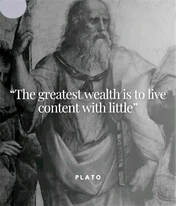 A new thought teacher by the name of Catherine Ponder once said, “abundance is having just enough to share.” When we share from our blessings, no matter how meager, we are sending out a message to the Universe. We have cast our “bread on the waters” which will return to us when we may be in need. As we give to others, we give to ourselves.
 Tina was at a crossroads. Her daughter had recently left for college, and her husband had his own pursuits. And although she’d once enjoyed banking, she now bore little interest in her work. For some time, she had been asking herself whether she should quit. But what would her colleagues and bosses think of her?
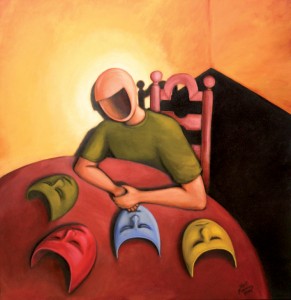 The idea of a “true self” and a “false” or “shadow” self has long preoccupied psychologists. For example, Carl Jung introduced the notion of the shadow side of our personality. He viewed “the shadow” as our unknown, dark side—made up of the primitive, negative, socially depreciated human emotions such as sexuality, striving for power, selfishness, greed, envy, jealousy, and anger. But although the shadow personifies everything that we fear, and therefore refuse to acknowledge, it remains a part of us. Jung believed that unless we come to terms with our shadow side, we are condemned to become its unwitting victim.
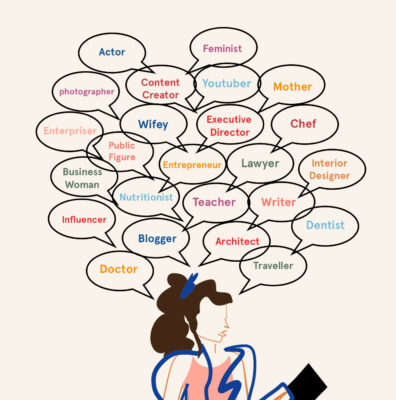 If there is too great a discrepancy between the “true” and the “false” self, it will make for a vulnerable sense of identity. And if we are unable to acquire a stable sense of identity—we may end up one day unraveling as Tina did. After a lifetime of complying to others’ expectations, Tina was experiencing what Erikson would call a delayed identity crisis. At a certain point in her life, it became difficult for her keep up the lie.
 Believe it or not, strawberry tops—the part you cut off and toss into the garbage or compost—can be repurposed in a variety of creative ways. While munching on the green tops itself doesn’t sound all that appetizing, you’ll be surprised at how they can be used.
 Yes, I have blatantly plagiarized the title of a recently released film starring Michelle Yeoh. I’ve not even had the pleasure of seeing this work of cinematic art yet, but I am familiar enough with the plot to know that the central character could represent any one of us. If you’ve seen it, you will know what Michelle’s character is facing. An audit by the Internal Revenue Service, and dilapidated laundry business barely able to provide a living for her and her bumbling husband, and strangers popping in from the future asking for her help to save the world. All in a day’s work I’d say!
 The other side of this circus is the possible reality that unity consciousness might bring to us if we had every barrier to it suddenly lifted. We just might flame out and disappear with the sheer immensity of seeing, knowing, and feeling everything, everywhere, all at once. Is that what Spirit/God/Goddess/All That Is experiences? How can one know for sure? How in the heck does the Great Spirit cope with all that anyway? These are some of the questions that I entertain when I wake up in the middle of the night.
 On June 11th at 11:51pm BST (10:51pm UT) transiting Venus meets up with and kisses Uranus at 16 degrees of Taurus. Can you say “unusual” or “unconventional” when it comes to sexual loving, flings with the opposite or same sex, and coming to terms with what our true natural values and needs are as regards our sexuality? I knew you could. This transit is brief but can certainly upend your own status quo regarding sexuality, which may lead you into unusual encounters with possible partners or with society at large (“…that is indecent and immoral, and you need to stop that now!”). You get my drift. Judgment always crops up when Uranus is in town and is wearing a bull costume. You may also have unusual and possibly revelatory experiences with your own sexual nature. Uranus encourages exploration and trying new things, so this weekend could be interesting! If you in fact have any aspects to anything at 16 degrees of Taurus, Scorpio, Aquarius or Leo, you may feel this “hit home”. The potential stinger in this conjunction could be a further eroding of the value of Bitcoin, fiat currencies (paper money), and digital money (the M3 money supply). The almost hyperinflation happening is definitely tied to Uranus in Taurus, as is the deflation of cryptocurrency values.