

 There’s a conversation you’re avoiding. It feels important, the stakes are high, there are strong feelings involved and you are putting it off: “The time isn’t right”; “I can’t find the words”; “I don’t want to get emotional”.
But delaying doesn’t solve anything and anticipation is often far more uncomfortable than the conversation itself. Getting started might involve some awkward moments, but, after that, the situation is open for discussion and exploration.
Tried and tested approaches can help to smooth the way. Here are 10 useful tips from my experience as a psychotherapist and doctor, developed while working in some of the highest-stakes discussions – the tender conversations taking place as people face the end of life. These principles apply whether you are chatting in person, over the phone or during a video call. You can even use them in text message conversations.
Instead of “difficult” conversations, I call them “tender” – and that attitude can make all the difference.
Invite, don’t insist
Make sure the conversation is a shared endeavour by starting with an invitation, rather than launching straight in. Try something like: “I’ve got something on my mind I’d like to chat about. When would be a good time for you?” or “You seem worried about something and I wondered whether you’d like to talk about it some time?” They may agree to talk there and then. If there’s a delay, check you are not leaving them anxious about the discussion. Inviting the other person allows them to consider and to prepare.
Being prepared also applies if someone catches you off-guard: it’s fine to say, “This is really important and I need some time to think before we have this conversation.”
Pace yourself
Important conversations can go wrong if participants talk themselves to exhaustion. Plan to chat for 10 minutes, or agree to press pause at a particular point, ready to return to the conversation later. Remember, too, that sick or recently bereaved people have limited energy.
When you reach a good stopping point, say something like: “There’s lots to talk about. Shall we leave it there and chat again tomorrow/next week?”
Listen to understand
The most effective discussions are when we listen carefully to the other person and try to understand. Instead of working out what to say next while the other person is speaking, just listen. Have you listened well enough to say it back to them? Check your understanding by repeating what you heard with empathy, starting with something like: “Have I got this right? You feel …”
Repeating their viewpoint back also helps the other person to feel heard and respected. In conversations about disagreement, try to present the most positive aspects of the other person’s view: it helps both of you to find common ground.
Be curious, not opinionated
What is the person you are speaking to telling you that you didn’t know before? How do they see the situation? How are they feeling? Use your curiosity to ask questions about their ideas, hopes and fears. Teenagers, in particular, often feel misunderstood and “talked at” rather than listened-to, but demonstrating genuine curiosity can help them to explore their own experiences.
Don’t be afraid to ask whether a distressed person feels safe: this question can unlock conversations about escalating tensions at home, school or work, fear of (or actual) abuse, thoughts of self-harm, worries about a terminal illness etc. Talking about these fears won’t make them a reality, and it may also encourage someone to access more specialist support.
Give unwelcome news gradually
Rather than causing shock by blurting out news that is unexpected, begin by giving the background or (often better) by asking the other person to tell “the story so far”. For example, you could say: “I want to talk about Mum’s health. Tell me how you think she’s been recently … ”. That initial recap creates a space where the new, unwelcome information is less unexpected. Now you can add the bad news, beginning with: “I’m sorry to tell you … ”
Even if you are to blame in some way for the unwelcome news – such as in a breakup, for example – a stepwise approach to confessing bad behaviour or even ending a relationship gives the other person an opportunity to anticipate the information and manage their response to it.
Sit with distress without trying to ‘make it better’
It’s not a bad thing if strong emotions are expressed during a difficult discussion: don’t try to close them down by offering reassurance or advice. Be a quiet companion to those in distress; if they cry or rage, or fall helplessly silent, stay present and validate what they feel. Useful phrases include: “It’s OK to feel like this”, “I’m sorry this is so upsetting” or “I’m glad you can talk about this with me”.
A condolence visit may involve listening to sorrows and “what-ifs”. A sick relative may want to discuss end-of-life wishes or regrets. Your attention is far more helpful than platitudes. Respect the fact that some things cannot be made better.
Don’t interrupt the silence
Silence is often where we do our thinking. We can support someone without interrupting their flow of thoughts by saying simple phrases that show we are maintaining attention: “Take your time”; “I’m not in a hurry”; “This needs some thought”. This is especially helpful when you can’t see each other – for example, during a phone call.
Respecting silence can be a challenge if there are several people in the conversation. You may need to be explicit, saying: “Let’s give each other time to think” or “I think we need a moment of quiet now”.
Support, don’t ‘fix’
We can disempower people by taking over – but if the solution was easy, they would have solved their difficulty by now. Instead of proposing ways to fix a problem, ask instead what solutions they have considered or what they would advise someone else in their situation to do. It’s surprising how often a person feeling completely stuck can tell you the great advice they would give a friend in the same position.
End on a positive note
Giving a time warning is helpful if you know one or other of you needs to finish the discussion soon. “Thank you” is a good note to finish on: even in a disagreement, giving thanks for their honesty and time shows appreciation and respect. Your disagreement need not become a ruptured relationship.
Look after yourself
If you are left feeling unsettled by a conversation, remember to treat yourself kindly. Some people take five minutes to walk outdoors or to focus on their breathing. These “mindful moments” help us to re-centre ourselves. Confidential debriefing with someone else can also be a helpful practice.
Don’t pick up the other person’s burden: the solution is for them to find, but compassionate conversation can help others to process their experiences. That is often help enough.
Original article here
 Over the course of human history, scientists believe that humans have cultivated more than 6,000 different plant species. But over time, farmers gravitated toward planting those with the largest yields. Today, just three crops – rice, wheat and corn – provide nearly half of the world’s calories.
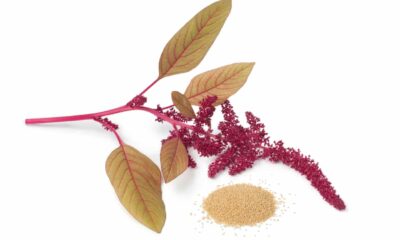 From leaf to seed, the entirety of the amaranth plant is edible. Standing up to eight feet tall, amaranth stalks are topped off with red, orange or green seed-filled plumes. Across Africa and Asia, amaranth has long been eaten as a vegetable – whereas Indigenous Americans also ate the plant’s seed: a pseudo-cereal like buckwheat or quinoa.
 For thousands of years, farmers across West Africa have cultivated fonio – a kind of millet that tastes like a slightly nuttier couscous or quinoa. Historically, fonio is considered to be Africa’s oldest cultivated cereal and was regarded by some as the food of chiefs and kings. In countries such as Senegal, Burkina Faso and Mali, fonio would be served on holy days, like at weddings and during the month of Ramadan.
 In the 1940s, more than 5m acres of cowpeas were grown in the US – the majority, as their name suggests, for hay to feed livestock. But long before cowpeas – also called southern peas or black-eyed peas – came to the Americas, they were grown for human consumption in West Africa. Although cowpea production has declined in the US in recent decades, the crop is hugely important in much of Africa. Nigeria is the world’s largest cowpea producer.
 In the tropics of Southeast Asia and Polynesia, taro has long been grown as a root vegetable, not unlike the potato. But as rising temperatures threaten cultivation of the crop in its natural habitat, farmers in the continental US are trying to adapt the tropical perennial to grow as a temperate annual, because it cannot survive the cold of US winters.
 While many alternative crops are just plants that were grown somewhere else in the world generations ago, others have been cultivated specifically to withstand climate change.
 At this point, it’s obvious that our smartphones and computers are data-leakers. Plenty of us now cover our laptops’ webcams (although we always forget about the mics), while our smartphones track our locations with us wherever we go. Unfortunately, these tools are so indispensable in modern life, we accept the privacy hit in order to function with the rest of society, and do what we can to keep our data secure.
 From a privacy perspective, these settings pages are essential to comb through if you want to limit the amount of data you’re feeding your smart home. Don’t forget to check the systems setting for the app as well: On iPhone, for example, you need to go to the app’s name in Settings to find additional privacy settings, including network connections like Bluetooth, Local Network, and Cellular Data. If I could, I would disable all these connections for my smart lights, but then, unfortunately, I wouldn’t be able to adjust my lights from my phone, defeating the purpose. (Although I don’t give them my location, so that’s something, right?)
 The night is going well. Everyone is laughing, and there is a happy energy in the air. The conversation flows easily and you’re the merry, relaxed kind of drunk. Then Josh swaggers over with a tray of something. Then you see what it is. Oh no.
 Our eyes are continuously bombarded by an enormous amount of visual information – millions of shapes, colours and ever-changing motion all around us. For the brain, this is no easy feat. On the one hand, the visual world alters continuously because of changes in light, viewpoint and other factors. On the other, our visual input constantly changes due to blinking and the fact that our eyes, head and body are frequently in motion.
 The effect of exercise on health is profound. It can protect you from a range of conditions, including heart disease, type 2 diabetes and some cancers. But the type and amount of exercise you should do changes as you age. To ensure that you are doing the right type of exercise for your age, follow this simple guide.
 Most people start to put on weight in their 40s. Resistance exercise is the best way to optimise calorie burning to counteract fat accumulation and reverse the loss of three to eight percent of muscle mass per decade. Ten weeks of resistance training could increase lean weight by 1.4kg, increase resting metabolic rate by 7 percent and decrease fat weight by 1.8kg.
 Typically, people accumulate more chronic conditions as they get older, and ageing is a major risk factor for cancer. Maintaining a high level of physical activity can help prevent cancers, such as post-menopausal breast cancer, colon cancer and cancer of the womb, and it reduces the risk of developing chronic conditions, such as heart disease and type 2 diabetes.
 If you’ve ever tried to make new friends as an adult, you’ll probably see why loneliness is at an all-time high. Making new friends feels just plain hard.
 This won’t be news to many of us. When we have demanding work schedules, very involved family lives or a combination of the two, our time for investing in friendships drops. Even when we meet a promising new friend, it can be hard to carve out time to invest in it. This is a bigger problem for older adults, given most people find their obligations increase with age.
 For many of us, decluttering serves as a sort of mental palette cleanser. Stressed out? Tidy your apartment. Unfocused and frazzled? Clear the mess on your desk. Down in the dumps? Reorganize your closet for a sense of accomplishment.
 Believe it or not, you may find yourself looking for your next organizational project after just seven days or so. “System creation can provide ongoing motivation—it builds on itself,” Dorfman notes. “If you design an entryway space equipped with a place for your coat, keys, and bag, you’ve mitigated future misplacements. The sense of mastery and competence prompts the mind to want more.”