
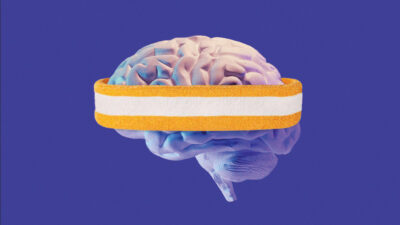
We’ve often thought about muscle as a thing that exists separately from intellect—and perhaps that is even oppositional to it, one taking resources from the other. The truth is, our brains and muscles are in constant conversation with each other, sending electrochemical signals back and forth. In a very tangible way, our lifelong brain health depends on keeping our muscles moving.
Skeletal muscle is the type of muscle that allows you to move your body around; it is one of the biggest organs in the human body. It is also an endocrine tissue, which means it releases signaling molecules that travel to other parts of your body to tell them to do things. The protein molecules that transmit messages from the skeletal muscle to other tissues—including the brain—are called myokines.
Myokines are released into the bloodstream when your muscles contract, create new cells, or perform other metabolic activities. When they arrive at the brain, they regulate physiological and metabolic responses there, too. As a result, myokines have the ability to affect cognition, mood, and emotional behavior. Exercise further stimulates what scientists call muscle-brain “cross talk,” and these myokine messengers help determine specific beneficial responses in the brain. These can include the formation of new neurons and increased synaptic plasticity, both of which boost learning and memory.
In these ways, strong muscles are essential to healthy brain function.
In young muscle, a small amount of exercise triggers molecular processes that tell the muscle to grow. Muscle fibers sustain damage through strain and stress, and then repair themselves by fusing together and increasing in size and mass. Muscles get stronger by surviving each series of little breakdowns, allowing for regeneration, rejuvenation, regrowth. As we age, the signal sent by exercise becomes much weaker. Though it’s more difficult for older people to gain and maintain muscle mass, it’s still possible to do so, and that maintenance is critical to supporting the brain.
Even moderate exercise can increase metabolism in brain regions important for learning and memory in older adults. And the brain itself has been found to respond to exercise in strikingly physical ways. The hippocampus, a brain structure that plays a major role in learning and memory, shrinks in late adulthood; this can result in an increased risk for dementia. Exercise training has been shown to increase the size of the hippocampus, even late in life, protecting against age-related loss and improving spatial memory.
Further, there is substantial evidence that certain myokines have sex-differentiated neuroprotective properties. For example, the myokine irisin is influenced by estrogen levels, and postmenopausal women are more susceptible to neurological diseases, which suggests that irisin may also have an important role in protecting neurons against age-related decline.
Studies have shown that even in people with existing brain disease or damage, increased physical activity and motor skills are associated with better cognitive function. People with sarcopenia, or age-related muscle atrophy, are more likely to suffer cognitive decline. Mounting evidence shows that the loss of skeletal muscle mass and function leaves the brain more vulnerable to dysfunction and disease; as a counter to that, exercise improves memory, processing speed, and executive function, especially in older adults. (Exercise also boosts these cognitive abilities in children.)
There’s a robust molecular language being spoken between your muscles and your brain. Exercise helps keep us fluent in that language, even into old age.
Original article here
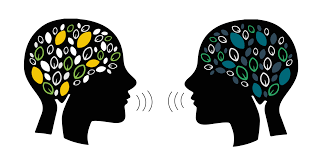 There’s a conversation you’re avoiding. It feels important, the stakes are high, there are strong feelings involved and you are putting it off: “The time isn’t right”; “I can’t find the words”; “I don’t want to get emotional”.
 The night is going well. Everyone is laughing, and there is a happy energy in the air. The conversation flows easily and you’re the merry, relaxed kind of drunk. Then Josh swaggers over with a tray of something. Then you see what it is. Oh no.
 The effect of exercise on health is profound. It can protect you from a range of conditions, including heart disease, type 2 diabetes and some cancers. But the type and amount of exercise you should do changes as you age. To ensure that you are doing the right type of exercise for your age, follow this simple guide.
 Most people start to put on weight in their 40s. Resistance exercise is the best way to optimise calorie burning to counteract fat accumulation and reverse the loss of three to eight percent of muscle mass per decade. Ten weeks of resistance training could increase lean weight by 1.4kg, increase resting metabolic rate by 7 percent and decrease fat weight by 1.8kg.
 Typically, people accumulate more chronic conditions as they get older, and ageing is a major risk factor for cancer. Maintaining a high level of physical activity can help prevent cancers, such as post-menopausal breast cancer, colon cancer and cancer of the womb, and it reduces the risk of developing chronic conditions, such as heart disease and type 2 diabetes.










 For many of us, decluttering serves as a sort of mental palette cleanser. Stressed out? Tidy your apartment. Unfocused and frazzled? Clear the mess on your desk. Down in the dumps? Reorganize your closet for a sense of accomplishment.
 Believe it or not, you may find yourself looking for your next organizational project after just seven days or so. “System creation can provide ongoing motivation—it builds on itself,” Dorfman notes. “If you design an entryway space equipped with a place for your coat, keys, and bag, you’ve mitigated future misplacements. The sense of mastery and competence prompts the mind to want more.”
 As the director of the Energy Metabolism Laboratory at the USDA Nutrition Center Tufts University, Massachusetts, Susan Roberts has spent much of the past two decades studying ways to fight the obesity epidemic that continues to plague much of the western world.
 But this may not actually be true. Over the past few years, Herman Pontzer, an associate professor of evolutionary anthropology at Duke University, North Carolina, and more than 80 other scientists have compiled data from more than 6,400 individuals – from eight days to 95 years old – that shows something very different.