

Some people seem to spend their whole lives dissatisfied, in search of a purpose. But philosopher Iddo Landau suggests that all of us have everything we need for a meaningful existence.
According to Landau, a philosophy professor at Haifa University in Israel and author of the 2017 book Finding Meaning in an Imperfect World, people are mistaken when they feel their lives are meaningless. The error is based on their failure to recognize what does matter, instead becoming overly focused on what they believe is missing from their existence. He writes in The Philosopher’s Magazine:
To my surprise, most of the people with whom I have talked about the meaning of life have told me that they did not think that their lives were meaningful enough. Many even presented their lives as outright meaningless. But I have often found the reasons my interlocutors gave for their views problematic. Many, I thought, did not pose relevant questions that might have changed their views, or take the actions that might have improved their condition. (Some of them, after our discussions, agreed with me.) Most of the people who complained about life’s meaninglessness even found it difficult to explain what they took the notion to mean.
In other words, Landau thinks that people who feel purposeless actually misunderstand what meaning is. He is among many thinkers over the ages who’ve wrestled with the difficult question, “What is a meaningful life?
The Question of Meaning
Philosophers’ answers to this question are numerous and varied, and practical to different degrees. The 19th-century philosopher Friedrich Nietzsche, for example, said the question itself was meaningless because in the midst of living, we’re in no position to discern whether our lives matter, and stepping outside of the process of existence to answer is impossible.
Those who do think meaning can be discerned, however, fall into four groups, according to Thaddeus Metz, writing in the Stanford Dictionary of Philosophy. Some are god-centered and believe only a deity can provide purpose. Others ascribe to a soul-centered view, thinking something of us must continue beyond our lives, an essence after physical existence, which gives life meaning. Then there are two camps of “naturalists” seeking meaning in a purely physical world as known by science, who fall into “subjectivist” and “objectivist” categories.
The two naturalist camps are split over whether the human mind makes meaning or these conditions are absolute and universal. Objectivists argue that there are absolute truths that have value, though they may not agree on what they are. For example, some say that creativity offers purpose, while others believe that virtue, or a moral life, confers meaning.
Subjectivists—Landau among them—think that those views are too narrow. If meaning happens through cognition, then it could come from any number of sources. “It seems to most in the field not only that creativity and morality are independent sources of meaning, but also that there are sources in addition to these two. For just a few examples, consider making an intellectual discovery, rearing children with love, playing music, and developing superior athletic ability,” Metz proposes.
For subjectivists, depending on who and where we are at any given point, the value of any given activity varies. Life is meaningful, they say, but its value is made by us in our minds, and subject to change over time. Landau argues that meaning is essentially a sense of worth which we may all derive in a different way—from relationships, creativity, accomplishment in a given field, or generosity, among other possibilities.
Reframing Your Mindset
For those who feel purposeless, Landau suggests a reframing is in order. He writes, “A meaningful life is one in which there is a sufficient number of aspects of sufficient value, and a meaningless life is one in which there is not a sufficient number of aspects of sufficient value.”
Basically, he’s saying meaning is like an equation—add or subtract value variables, and you get more or less meaning. So, say you feel purposeless because you’re not as accomplished in your profession as you dreamed of being. You could theoretically derive meaning from other endeavors, like relationships, volunteer work, travel, or creative activities, to name just a few. It may also be that the things you already do really are meaningful, and that you’re not valuing them sufficiently because you’re focused on a single factor for value.
He points to the example of existentialist psychologist Viktor Frankl, who survived imprisonment in Nazi concentration camps in World War II and went on to write a book, Man in Search of Meaning. Frankl’s purpose, his will to live despite imprisonment in the harshest conditions, came from his desire to write about the experience afterward. Frankl noted, too, that others who survived the camps had a specific purpose—they were determined to see their families after the war or to help other prisoners live, maintaining a sense of humanity.
Landau argues that anyone who believes life can be meaningless also assumes the importance of value. In other words, if you think life can be meaningless, then you believe that there is such a thing as value. You’re not neutral on the topic. As such, we can also increase or decrease the value of our lives with practice, effort, action, and thought. “I can ruin or build friendships, upgrade or downgrade my health, and practice or neglect my German. It would be surprising if in this particular sphere of value, the meaning of life, things were different from how they are in all the other spheres,” he writes.
For a life to be valuable, or meaningful, it needn’t be unique. Believing that specialness is tied to meaning is another mistake many people make, in Landau’s view. This misconception, he believes, “leads some people to unnecessarily see their lives as insufficiently meaningful and to miss ways of enhancing meaning in life.”
He notes too that things change all the time: We move, meet new people, have fresh experiences, encounter new ideas, and age. As we change, our values transform, and so does our sense of purpose, which we must continually work on.
You Are, Therefore You Matter
Some might protest that Landau’s being simplistic. Surely there must be more to existence than simply assigning a value to what we already have and thinking differently if we fail to recognize purpose in our lives.
In fact, there are even less complex approaches to meaningfulness. In Philosophy Now, Tim Bale, a professor of politics at Queen Mary University of London in the UK, provides an extremely simple answer: “The meaning of life is not being dead.”
While that may sound coy, many philosophers offer similar responses, although few as pithy. Philosopher Richard Taylor proposes that efforts and accomplishments aren’t what make life matter, writing in the 1970 book Good and Evil, “the day was sufficient to itself, and so was the life.” In other words, because we live, life matters.
It can be disconcerting, perhaps, to have such an easy answer. And detractors might argue that nothing can matter, given the immensity of the universe and the brevity of our lives. But this assumes our purpose is fixed, rigid and assigned externally, and not flexible or a product of the mind.
The Question is the Answer
There are other approaches, too. Casey Woodling, a professor of philosophy and religious studies at Coastal Carolina University in South Carolina, proposes in Philosophy Now that the question of meaningfulness itself offers an answer. “What makes a human life have meaning or significance is not the mere living of a life, but reflecting on the living of a life,” he writes.
Pursuing ends and goals—fitness, family, financial success, academic accomplishment—is all fine and good, yet that’s not really meaningful, in Woodling’s view. Reflecting on why we pursue those goals is significant, however. By taking a reflective perspective, significance itself accrues. “This comes close to Socrates’ famous saying that the unexamined life is not worth living,” Woodling writes, “I would venture to say that the unexamined life has no meaning.”
Mystery is Meaning
In the Eastern philosophical tradition, there’s yet another simple answer to the difficult question of life’s meaning—a response that can’t be articulated exactly, but is sensed through deep observation of nature. The sixth-century Chinese sage Lao Tzu—who is said to have dictated the Tao Te Ching before escaping civilization for solitude in the mountains—believed the universe supplies our value.
Like Woodling, he would argue that goals are insignificant, and that accomplishments are not what makes our lives matter. But unlike Woodling, he suggests meaning comes from being a product of the world itself. No effort is necessary.
Instead of reflection, Lao Tzu proposes a deep understanding of the essence of existence, which is mysterious. We, like rivers and trees, are part of “the way,” which is made of everything and makes everything and cannot ever truly be known or spoken of. From this perspective, life isn’t comprehensible, but it is inherently meaningful—whatever position we occupy in society, however little or much we may do.
Life matters because we exist within and among living things, as part of an enduring and incomprehensible chain of existence. Sometimes life is brutal, he writes, but meaning is derived from perseverance. The Tao says, “One who persists is a person of purpose.”
Original post here
 This past week I did a call with my Miraculous Maestro buddies where we explored next level Quantum Energy. I believe we have recently moved to a whole new level of energetic play, so thought I’d pass it on for you to enjoy . . .
 Visualisation is the process of creating an image of something or someone in our minds, according to dictionary definitions. Nowadays the word visualisation is everywhere, very much associated with the Law Of Attraction. However, visualisation is a tool in itself that has to be used wisely.

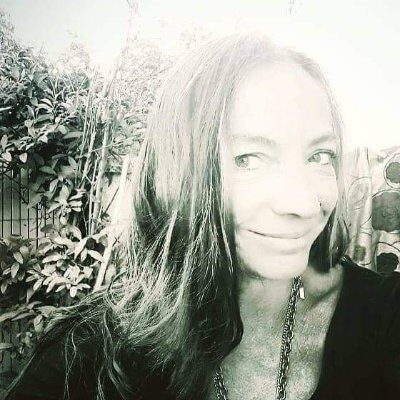




 Sara Inés Lara, leader of Colombia-based bird conservation organization Fundación ProAves, got her first taste of conservation’s potential more than 30 years ago. She grew up in one of the most biodiverse places in the world, seeking refuge in the forests, mountains, and pools of the Andes. Then, in 1998, she learned about the yellow-eared parrot.
 Women for Conservation also faced resistance from its peers in the environmental world. Lara remembers other conservation leaders telling her that working with women was nice, but it was not a priority. Whenever she spoke about the link between a growing population, increasing poverty, and environmental impacts, she was told to avoid talking about population.
 During these times the views of Louis Pasteur and Dr. Antoine Bechamp came into heated confrontation with one other. Pasteur maintained the new epidemics were caused by microorganisms, or viruses (literal translation — poisons). Bechamp claimed that they were the result of unsanitary living conditions of the times — contaminated water supplies, bad waste management, poor diet, etc. The debate went quiet after Pasteur’s death, with most western medical authorities aligning with his theories. The French medical authorities probed Pasteur’s legacy and found most of his findings were based on prejudicial opinions and thin on facts and proof. Many of his experiment’s results were found to be fraudulent. On Pasteur’s deathbed he declared Bechamp’s Terrain theory as everything and his own theory “as nothing.”
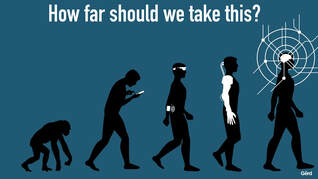 “The dream of the individual that his life could run automatically like an efficient machine, has begun to assume the proportions of a corporate nightmare in which automation unleashes its suffocating powers of standardization, over-regimentation, and depersonalization. Arthur Miller’s trenchant remark that we live in an “air-conditioned nightmare,” implies the unhappy co-existence of technological progress and spiritual regress. Like real nightmares, it takes place within a profound collective sleep therefore offering little chance of discovering either its cause or its cure. Technology can have an anaesthetic effect on man, dulling his moral consciousness and his capacity to enter fundamental, meditative thinking.”
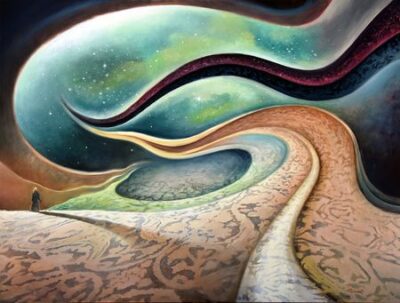
 If you’re getting tired of the drudge of it all, then there is only one option. Opting out and going off grid. That may become a necessity as the new digital currency systems are rolled out, making all transactions trackable and not as anonymous as we are told. Everything will be stored in your digital I.D., and I do mean everything. Social credit systems are coming to the West courtesy of China’s experiment with it, and that is the stated agenda in the World Economic Forum’s “Great Reset”. It is possible to create a parallel economy, and it’s been done before, back before the 20th Century. The nightmarish artwork to the right was created by an A.I. program. It exemplifies everything that John Lash ascribes to Archontic consciousness…chaos is the agenda (link below). Is this what we truly want our lives to be ensconced in?
 Forgiveness is often viewed as the “happily ever after” ending in a story of wrongdoing or injustice. Someone enacts harm, the typical arc goes, but eventually sees the error of their ways and offers a heartfelt apology. “Can you ever forgive me?” Then you, the hurt person, are faced with a choice: Show them mercy — granting yourself peace in the process — or hold a grudge forever. The choice is yours, and it’s one many of us assume starts with remorse and a plea for grace.
 Enright defines forgiveness as a moral virtue. Moral virtues (like kindness, honesty, and patience) are typically focused on how they benefit others; these are things you do primarily for another person’s sake, regardless of whether or not they have “earned” it.
 Enright has studied forgiveness extensively. He says his research group at the University of Wisconsin Madison was the first to publish a scientific study on forgiveness, in 1989; in 1993, they became the first to publish a scientific study of forgiveness therapy. Their research has led to the development of a step-by-step process for forgiveness, which can happen in therapy (ideally with someone who is trained in forgiveness therapy), or through a self-guided process using his workbook.
 Let’s play a game of “would you rather.”
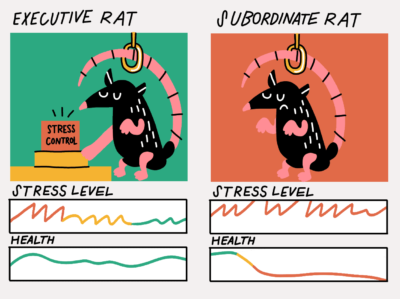 The rat with the lever in its cage is called “the executive rat,” because it has control. It has the power to turn off the electric current flowing through the cage. The rat with no control is called the “subordinate rat.”
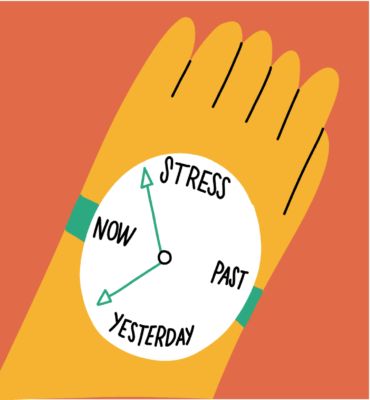 Are you facing the stress of an uncertain future? If so, it helps to focus on what you can control. Sometimes that means bringing the finish line closer by setting goals for today or this week instead of trying to figure out what you’ll do if you lose your job three months from now. Sometimes, it means making a list of 10 ways you can stay connected with friends and choosing the best one to put into action.
 For example, an entrepreneur who feels constantly pressed for time during her nine-hour workday might experiment with doing a 14-hour workday once per week for three weeks. Each of these long workdays is followed by a shortened workday of only six hours. In this case, she is stretching her sense of what’s possible by working longer than what feels comfortable. Then she recovers, taking it easy the next day.
 The world is full of outsiders: students away at a university far from home, immigrants to a new country, and people who go abroad for work or extended travel. Over the past year, more than 4.4 million American workers quit their jobs in the “Great Resignation,” and many of them became outsiders by joining a different company or moving to a new place, which they perhaps imagined might be friendlier to their personal needs and tastes.