
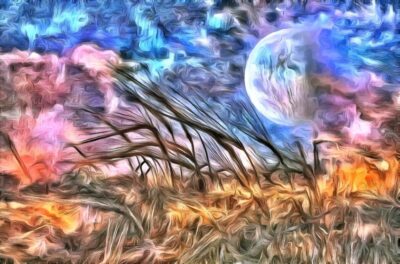
 Last year, I met an extremely gifted medium in California: Allie Barkalow. If you don’t know what a medium is, it’s a person who communicates with spirits from the other side. I heard about Allie from my dear friend, Carolyn Miller, who is a psychic and known for her amazing tarot and aura photography readings. Carolyn told me that Allie is one of the best psychics she knows, and I figured if she’s anything like Carolyn I had to meet her.
I was immediately drawn to Allie with her bold and honest demeanor and witty sense of humor. She reminds me of a favorite aunt or wise-woman that calls the shots as she sees them with practical, straightforward advice. After the reading (which was astounding), we struck up a conversation and she shared some really useful information. She told me how to clear a house of negative energy using her sea salt smudge recipe and how she protects herself energetically during a psychic session. She told me why it’s important to sage your pillows every month since, apparently, we dump a lot of psychic stuff into our beds when we sleep!
At the end of our talk, I mentioned the full moon coming up and how I could really use a simple ritual to do with some friends (it was right before the pandemic when we could still gather). Of course, she had one. In fact, she shared with me a tried and true ritual she’d been doing for over 40 years. I was giddy with excitement and needless to say my friends and I had an amazing little shindig that weekend under the full moon in my backyard with Aunt Allie’s recipe.
I’d like to share her full moon ritual with you here — Allie said it’s okay. This ritual is specifically for letting things go. I hope you tuck it away and enjoy it for many moons ahead.
I was reminded that not everyone knows about rituals and how to do one. Rituals are an ancient way to honor the sacredness of high holy days and important moons — full and new — and to clear and to invite.
The full moon is the time of ending and releasing. It is the perfect time to end cycles, release old patterns, habits, behaviors, and thought-forms. If you are working on your ascension, such as trying to elevate your vibration, be a better person, etc., the full moon is a fabulous opportunity to let go and use your consciousness to move forward, get lighter in being, and take back your power. This is not the time to ask for anything!! That is the new moon.
This ritual is a simple one, in accordance with the native way of honoring this sacred time. Feel free to use your own prayers, words, and/or name of God.
Full Moon Ritual
What you’ll need:
- Paper and pen for yourself and extras for friends if doing this as a group
- 1 tea light candle and a fireproof container, such as a cast iron skillet
- 4 extra tea light candles and 4 small bowls to place the candles in to make a sacred circle on the ground
- 1 stick of incense
- Cup of water
- Pinch of tobacco
- Handful of cornmeal
- Smudge stick such as sage, cedar, or palo santo
- Lighter or matches
- Compass to determine the directions
Directions:
- Make a list of what you are ready to let go of in your life. This may be personally, professionally, physically, mentally, emotionally, spiritually, financially, etc.
- Make sure you know when the exactitude of the full moon is. Go outside one-half hour before with everything on a tray. If you cannot go outside find a quiet place in your house where you will be undisturbed.
- Light the smudge stick and smudge yourself, fanning the smoke from the top of your body and going downwards, getting the back of your body and under your feet. If doing this in a group, have your friends do the same. (This is important to do at the start of any ritual).
- Make a rough circle, then place the four candles in the four bowls at the four points: north, south, east and west. Pour a tiny bit of water into the bottom of the bowls.
- Cast the circle by lighting each of the candles at the four cardinal points and invoke the angel/guardian of each direction. When done face west, the direction of endings.
- Ground yourself, bringing attention to what you are about to do. Invite your highest self, teachers, guides, and angels to witness.
- Smudge the four directions, starting first with the east. Next, smudge Mother Earth, and make a tobacco offering. Smudge to Father Sky / God / Goddess
- Turn to face west. Hold your hands up and face the palms out. Take a deep breath and say: “At this time of endings and completions, I now release <insert list.>”
- When you are finished with your list you might also include war, hunger, pollution, ignorance, poverty, lack, and loss, fear, etc. for yourself and the entire world.
- Make a cornmeal offering to the Earth spirits and devas. Make a water offering to the water spirits and devas. Light your incense and make it an offering to the air spirits and devas.
- Finally, light your tea light. If it blows out after you light it, just put it down. It has been accepted by the fire beings. If it stays lit, make sure it is in a container that will not tip over or start a fire.
- Ground yourself again. Make sure you have included every area and everything you are ready, able, and willing to release from your life experience.
- Thank the angels, teachers, guides, devas, Mother Earth, and divine self for witnessing. Ask their help in releasing and clearing those vibrations from your life and your aura. Ask their assistance in keeping those things away from you re-taking them back.
- Bless yourself, Mother Earth, and your life. Release the circle by walking from the east counterclockwise one full circle and ending in the west.
Turn around, and do not look back. You can go out tomorrow to pick up the candleholders. Your magic is now set and working! Blessed Be! Love, Allie
Kristen Bala is the founder of the Deep End, an online community that supports spiritual learning and well-being. She enjoys writing about her many passions including astrology and holistic healing. To learn more about her work, visit www.findyourdeepend.com or contact her at kristenbala@gmail.com
Original article here
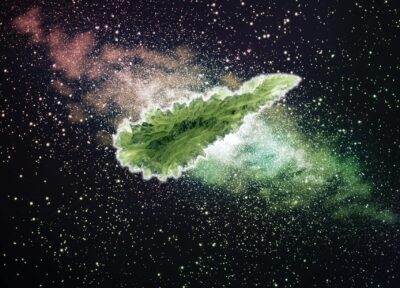 Moldavite is a member of the tektite group, a glassy mixture of silicon dioxide, aluminum oxide and other metal oxides, with a hardness of 5.5 to 6. Its crystal system is amorphous. The color of most specimens is a deep forest green, though some pieces are pale green and others, especially those from Moravia, are greenish brown. A few rare gem grade pieces are almost an emerald green.
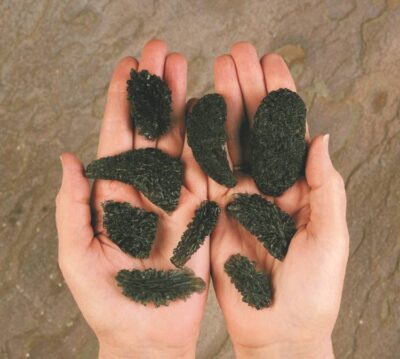 People who hold moldavite for the first time most often experience its energy as warmth or heat, usually felt first in one’s hand and then progressively throughout the body. In some cases, there is an opening of the heart chakra, characterized by strange (though not painful) sensations in the chest, an upwelling of emotion and a flushing of the face. This has happened often enough to have earned a name — the “moldavite flush.” Moldavite’s energies can also cause pulsations in the hand, tingling in the third eye and heart chakras, a feeling of light-headedness or dizziness, and occasionally the sense of being lifted out of one’s body. Most people feel that moldavite excites their energies and speeds their vibrations, especially for the first days or weeks, until they become acclimated to it.
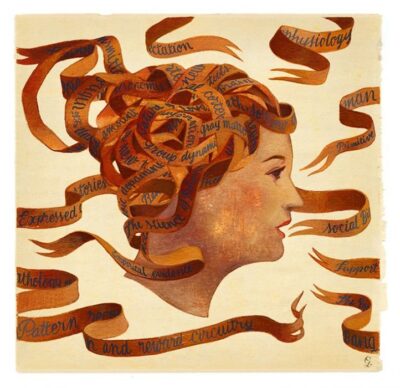 We are all storytellers; we make sense out of the world by telling stories. And science is a great source of stories. Not so, you might argue. Science is an objective collection and interpretation of data. I completely agree. At the level of the study of purely physical phenomena, science is the only reliable method for establishing the facts of the world.
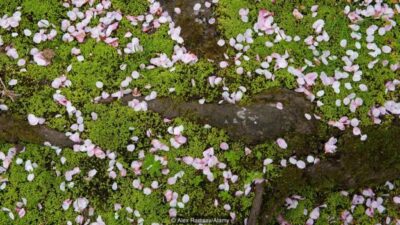 Withdrawing my hands reluctantly from the slowly spinning bowl, I watched its uneven sides slowly come to a stop, wishing I could straighten them out just a little more. I was in the ancient pottery town of Hagi in rural Yamaguchi, Japan, and while I trusted the potter who convinced me to let it be, I can’t say I understood his motives.
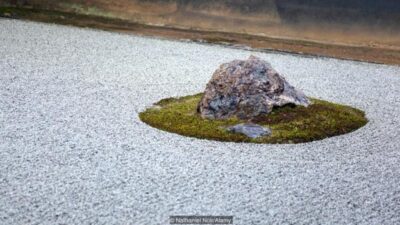 Wabi, which roughly means ‘the elegant beauty of humble simplicity’, and sabi, which means ‘the passing of time and subsequent deterioration’, were combined to form a sense unique to Japan and pivotal to Japanese culture. But just as Buddhist monks believed that words were the enemy of understanding, this description can only scratch the surface of the topic.
 It is the inevitable mortality embound in nature, however, that is key to a true understanding of wabi-sabi. As author Andrew Juniper notes in his book Wabi Sabi: The Japanese Art of Impermanence, “It… uses the uncompromising touch of mortality to focus the mind on the exquisite transient beauty to be found in all things impermanent”. Alone, natural patterns are merely pretty, but in understanding their context as transient items that highlight our own awareness of impermanence and death, they become profound.
 “You have different feelings when you’re young – everything new is good, but you start to see history develop like a story. After you’ve grown up, you see so many stories, from your family to nature: everything growing and dying and you understand the concept more than you did as a child.”
 I’ve been studying, teaching, coaching and writing about transformation for the last 35 years. It fascinates me … always has, even as teenager. How can someone fulfill their potential and become the best of themselves in life?
 I finally realised joy in my life and began to play with effortless abundance. I laugh a lot now and am breathtaken by the beauty of this world and the people and life forms in it. I am undefinable, ever morphing into the next new levels of what is possible for me and for us all. As I do this I realise that I am part of the redesign of what it is is to be human on Earth. I call us Earthians as a new way to talk about loving being alive on Earth while being an infinite creator of possibilities for life. The term Earthian also allows me to feel a kinship with other life forms on Earth, whereas the term human tends, in my view, to make us feel separate from other inhabitants of this wonderful world.

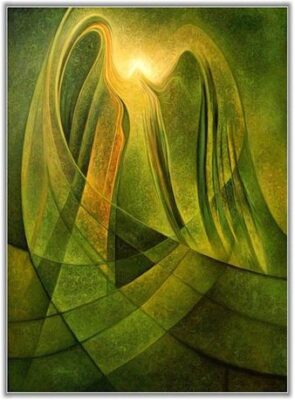

 The belief that everything in the universe is part of the same fundamental whole exists throughout many cultures and philosophical, religious, spiritual, and scientific traditions, as captured by the phrase ‘all that is.’ The Nobel winner Erwin Schrodinger once observed that quantum physics is compatible with the notion that there is indeed a basic oneness of the universe. Therefore, despite it seeming as though the world is full of many divisions, many people throughout the course of human history and even today truly believe that individual things are part of some fundamental entity.