
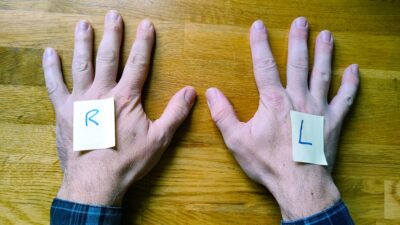
It can seem like an almost childish mistake, but a surprising number of adults confuse left from right and scientists are only just starting to understand why.
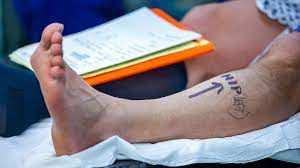
When British brain surgeon Henry Marsh sat down beside his patient’s bed following surgery, the bad news he was about to deliver stemmed from his own mistake. The man had a trapped nerve in his arm that required an operation – but after making a midline incision in his neck, Marsh had drilled out the nerve on the wrong side of his spinal column.
Preventable medical mistakes frequently involve wrong-sided surgery: an injection to the wrong eye, for example, or a biopsy from the wrong breast. These “never events” – serious and largely preventable patient safety accidents – highlight that, while most of us learn as children how to tell left from right, not everyone gets it right.
While for some people, telling left from right is as easy as telling up from down, a significant minority – around one in six people, according to a recent study – struggle with the distinction. Even for those who believe they have no issues, distractions such as ambient noise, or having to answer unrelated questions, can get in the way of making the right choice.
“Nobody has difficulty in saying [something is] front and back, or top and bottom,” says Ineke van der Ham, professor of neuropsychology at Leiden University in the Netherlands. But telling left from right is different, she says. “It’s because of the symmetry, and because when you turn around, it’s the other way around, and that makes it so confusing.”
Left-right discrimination is actually quite a complex process, calling upon memory, language, visual and spatial processing, and mental rotation. In fact, researchers are only just beginning to get to the bottom of exactly what’s going on in our brains when we do it – and why it’s much easier for some people than others.
“Some individuals can tell right from left innately, just can do it without thinking,” says Gerard Gormley, a GP and clinical professor at Queen’s University Belfast in Northern Ireland. “But others have to go through a process.” In an effort to understand what happens in wrong-sided medical errors, Gormley and his colleagues have conducted research on medical students’ experience of making left-right decisions and examined the process.
“First of all, you have to orient right from left in yourself,” he says. When the answer doesn’t come instantly, participants described various techniques, from making an L shape with their thumb and index finger, to thinking about which hand they use to write, or strum a guitar. “For some people it’s a tattoo on their body or a piercing,” Gormley says.
Then, when figuring out which side is someone else’s left or right, the next step is mentally rotating yourself so you’re facing in the same direction as the other person. “If I’m facing you, my left hand will be opposite your right hand,” says Gormley. “That idea of mentally rotating an object adds an extra degree of complexity.” Other research shows that people tend to find it easier to judge if an image shows a left or right hand by imagining their own hand or body rotating.
Research published by Van der Ham and her colleagues in 2020 found that around 15% of people rate themselves as insufficient when it comes to identifying left and right. Almost half of the four hundred participants in the study said they used a hand-related strategy to identify which is which.
The more asymmetrical someone’s body is – in terms of writing hand preference, for example – the easier they find it to tell left and right apart
The researchers used something called the Bergen right-left discrimination test to dig deeper into how these strategies work. Participants looked at pictures of stick people either facing toward or away from them, with their arms in various positions, and had to identify their highlighted hand as their left or right. “It seems simple, but it’s kind of frustrating if you have to do a hundred of these as quickly as you can,” says Van der Ham.
In the first experiment, the participants sat with their hands on a table in front of them. “There was a very clear effect from how this little stick figure was positioned,” says Van der Ham. “If you were looking at the back of the head, so it was aligned with you, people were a lot faster and more accurate.” Similarly, when the stick person was facing the participant but had their hands crossed, so their left hand was on the same side as the participant’s left hand, people tended to do better.
“That tells us that the body really is involved in this,” says Van der Ham. The next question was whether participants were using cues from their body at the time of the test to identify left and right, or referring to a stored idea of their body instead.
To answer that, the researchers repeated their experiment, but this time tested four different scenarios: participants sat with their hands either crossed or uncrossed on the table in front of them, and had their hands either visible during the test, or covered with a black cloth.
But the researchers found that none of those changes influenced test performance. In other words, participants didn’t need to actually see their hands in order to use their own body to distinguish right from left.
“We haven’t completely solved the issue,” says Van der Ham. “But we were able to identify our bodies as being a key element in identifying left from right, and that we consult our body representation as we have it in a more static way.”
In Van der Ham’s experiments, the boost in performance that came from being in line with the stick person was more pronounced in people who said they use a hand-related strategy to tell left from right in their daily lives, as well as in women generally. The researchers also found that men tended to be faster in responding than women, but the data did not back up previous research showing that men perform better overall in left-right discrimination tests.
Exactly why people differ in their ability to tell left from right isn’t clear, though research suggests that the more asymmetrical someone’s body is (in terms of writing hand preference, for example) the easier they find it to tell left and right apart. “If one side of your brain is slightly larger than the other, you tend to have a better right-left discrimination,” says Gormely.
But it could also be something that we learn in childhood, like other aspects of spatial cognition, says Van der Ham. “If kids are in charge of finding the way around, if you just let them walk in front of you for a couple of metres and make the decisions, those are the kids that ended up being better navigators,” she says.
Research by Alice Gomez and colleagues at the Lyon Neuroscience Research Center in France hints that left-right discrimination is something that children can pick up quickly. Gomez designed a two-week intervention programme, delivered by teachers, designed to increase five-to-seven-year-olds’ body representation and motor skills.
When they were tested on their ability to locate the correct body part on themselves or a partner – their right knee, for example – after the programme, the number of left-right discrimination errors were almost halved. “It was very easy for us to increase the abilities of children to be able to locate the [body part] on the basis of the name,” says Gomez.
One reason for this might be that the children were taught a strategy – to think about their writing hand – for when they couldn’t remember right and left. The programme’s focus on children’s own bodies is another possible explanation, especially as other research shows that an egocentric reference frame is key when we make left-right decisions.
In a typical classroom, children might label body parts on a diagram rather than their own bodies, because the latter is more time-consuming and difficult to assess for a teacher, says Gomez. “It’s very rare that they will have the time to be egocentric,” she says.
While there are plenty of everyday scenarios where knowing left from right is important, there are some situations where it’s absolutely critical. Brain surgeon Marsh was able to put right his wrong-sided trapped nerve surgery – but a surgeon removing the wrong kidney or amputating the wrong limb, for example, would have devastating consequences.
 Medicine is not the only field where left-right errors can make the difference between life and death: it’s possible that a steersman turning the ship right instead of left was a contributing factor in the sinking of the Titanic.
But while some people have to put in more effort to judge left and right, everybody has the ability to get left-right decisions wrong, says Gormley. He hopes that more awareness of how easy it is to make such a mistake will lead to less stigma for those who need to double check their decision.
“As health care professionals, we spend a lot of time labeling spatial orientations: proximal, distal, superior, inferior, but really pay no attention to right or left,” he says. “But actually, of all the spatial orientations, that is the most challenging.”
Original article here
 As luck would have it, the puppy and his person are exiting the ballfield just as I am (very slowly) walking by the gate.
 “You remember me?” I exclaim, moving in closer so Tree and I can be heart-to-heart. “How do you do it?” I ask. “How do you stand everything that’s going on?”
 And then another. And another. And another. Soon, I have a whole big pile of weed-parts.
 “Can I say hello to your puppies?” I ask, crouching down to doggie-reception level. Before either their mom or dad can say yes, I’m ready to receive sloppy kisses.
 We all want to feel inner peace. We look for it throughout our entire lives, as being at peace allows us to dream and to actually follow those dreams. When we are at peace with ourselves, we are more understanding and loving towards others, we are able to embody the concept of being One, and therefore we create deeper and more meaningful connections with family, friends and people in general.
 Meditation has been found to have numerous scientific benefits. For example, it reduces stress, improves concentration, boosts creativity, and increases happiness. Meditation affects our mental health in a positive manner, decreasing anxiety and depression, improving sleep, and enhancing self-awareness
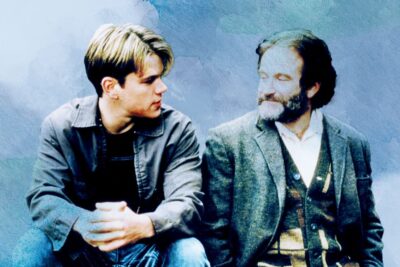 Brian was just a kid when he first saw the movie Good Will Hunting and wasn’t thinking about therapy or his mental health. The 29-year-old engineer was mostly just fascinated by stories about repressed geniuses and Matt Damon’s background story of being a Harvard dropout. He also thought it was pretty rad that the original script was intended to be a spy-thriller.
 The data are stark: the typical American diet is shortening the lives of many Americans. Diet-related deaths outrank deaths from smoking, and about half of U.S. deaths from heart disease – nearly 900 deaths a day – are linked to poor diet. The pandemic highlighted the problem, with much worse outcomes for people with obesity and other diet-related diseases.
 Expand access to dietary and lifestyle counseling
 A few months ago, I was introduced over email to a consultant, who I’ll call Brad. The person who made the introduction thought Brad would make a good contributor to Harvard Business Review, where I work as an editor. I receive a good number of these introductions, and when this one came in, I was particularly overwhelmed with requests. Brad asked if we could get on the phone to talk. I courteously declined and let him know that an editor would be in touch about the draft he submitted.
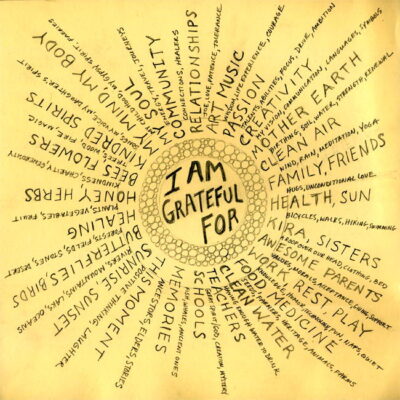 In Sidetracked: Why Our Decisions Get Derailed, and How We Can Stick to the Plan, Francesca Gino, an associate professor at Harvard Business School, explores a range of fascinating subjects, including how emotions influence decisions and the often-thorny matter of understanding the perspectives of others. Blending social science and real-world examples, Gino’s book also highlights the science of gratitude.
 Amid the human crush of Old Delhi, on the edge of a medieval bazaar, a red structure with cages on its roof rises three stories above the labyrinth of neon-lit stalls and narrow alleyways, its top floor emblazoned with two words: birds hospital.
 I’d come to the bird hospital, and to India, to see firsthand the Jains’ moral system at work in the world. Jains make up less than 1 percent of India’s population. Despite millennia spent criticizing the Hindu majority, the Jains have sometimes gained the ear of power. During the 13th century, they converted a Hindu king, and persuaded him to enact the subcontinent’s first animal-welfare laws. There is evidence that the Jains influenced the Buddha himself. And when Gandhi developed his most radical ideas about nonviolence, a Jain friend played philosophical muse.
 In the West, consciousness was long thought to be a divine gift bestowed solely on humans. Western philosophers historically conceived of nonhuman animals as unfeeling automatons. Even after Darwin demonstrated our kinship with animals, many scientists believed that the evolution of consciousness was a recent event. They thought the first mind sparked awake sometime after we split from chimps and bonobos. In his 1976 book, The Origin of Consciousness in the Breakdown of the Bicameral Mind, Julian Jaynes argued that it was later still. He said the development of language led us, like Virgil, into the deep cognitive states capable of constructing experiential worlds.
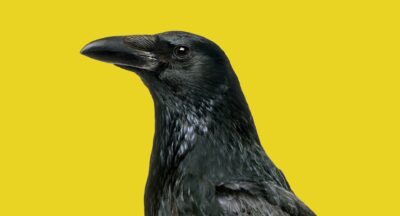
 Crows are not among the shoulder-perchers, but Singh sometimes sees former crow patients hovering around the hospital. They might be looking for him. Crows recognize individual human faces. They are known to blare vicious caws at people they dislike, but for favored humans, they sometimes leave gifts—buttons or shiny bits of glass—where the person will be sure to notice, like votive offerings.
 The trail was only 50 miles from Gir National Park, where, the day before, I’d seen two Asiatic lions, nearly indistinguishable cousins of Africa’s lions. Once the region’s apex predator, the Asiatic lion almost went extinct during the British empire’s colonization of India, when no viceroy could visit a maharaja’s palace without a hunt in the local forest. Even today, the Asiatic lion still ranks among the rarest of the large feline predators, rarer even than its neighbor to the north, the snow leopard, which is so scarce that a glimpse of one padding down a jagged Himalayan crag is said to consummate a spiritual pilgrimage.
 The monk was a white dot some six switchbacks up by the time I hopped off the wall and continued the climb, my legs stiffened by the break. I reached the entrance to the temple complex with only 15 minutes to spare. Its marble courtyard shone brilliant white, as though bleached by the mountain sun.