
Did you know that dancing is not just about grooving to the rhythm but can also be a profound tool for manifesting our desires?
When we surrender ourselves to the music and let our bodies sway, we create a harmonious connection between our physical and energetic selves.
By moving our bodies through dance, we unlock a realm of boundless potential and we:
- Amplify our energy. Dancing raises our vibrations to align with the frequencies of our desires. As we lose ourselves in the rhythm, our movements become a physical representation of our intentions, sending powerful signals to the universe.
- Embody our visualizations. With each step, twirl, or leap, we can imagine ourselves already living our desired reality. This visualization helps to reinforce our intentions and brings them closer to manifestation.
- Release our emotions. When we dance, we tap into our deepest feelings, allowing any stagnant energy or limiting beliefs to be released. By releasing what no longer serves us, we create space for abundance and positive transformations.
- Align through joy. When we move our bodies freely, we connect with our true essence and align ourselves with the frequency of joy. Joy is a powerful magnet for manifesting our desires, attracting experiences that resonate with our happiness.
Use These 8 Steps To Boost Your Manifestations Through Dance
- Set Your Intention. Clarify what it is that you want to manifest. Write it down or hold it firmly in your mind.
- Choose Uplifting Music. Select music that resonates with your intention and uplifts your spirits.
- Create Sacred Space. Find a quiet and comfortable space where you can move freely without distractions.
- Tune Into Your Body. Close your eyes, take a few deep breaths, and center yourself. Allow yourself to be fully present and become aware of any sensations or emotions within you.
- Let the Music Guide You. Start playing your chosen music and let the rhythm guide your movements. Trust your body’s natural instincts and let it express itself authentically.
- Visualize Your Intention. As you dance, visualize your intention as if it has already manifested. See yourself living the reality you desire. Imagine the details and emotions, and immerse yourself fully in the visualization.
- Express Emotion and Gratitude. Allow yourself to express your emotions through movement, whether joy, passion, sadness, or frustration. Also, use the dance to express gratitude for the manifestation already on its way.
- Close with Stillness. After your dance, take a moment to stand still and absorb the energy you’ve created. Reflect on the experience and feel the vibrations of your intention radiating throughout your body.
So, let the music guide your intentions, and start moving, shaking, and swirling to get your manifestations in motion.
Original article here
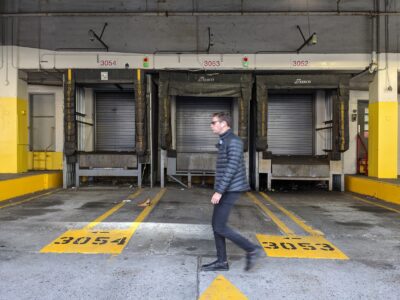 Chances are, you learned to walk when you were just a toddler and you haven’t really thought about it much since. It’s easy to nerd out on other fitness activities, like running or weight lifting. But, walking is something we often take for granted.
 Tina was at a crossroads. Her daughter had recently left for college, and her husband had his own pursuits. And although she’d once enjoyed banking, she now bore little interest in her work. For some time, she had been asking herself whether she should quit. But what would her colleagues and bosses think of her?
 If there is too great a discrepancy between the “true” and the “false” self, it will make for a vulnerable sense of identity. And if we are unable to acquire a stable sense of identity—we may end up one day unraveling as Tina did. After a lifetime of complying to others’ expectations, Tina was experiencing what Erikson would call a delayed identity crisis. At a certain point in her life, it became difficult for her keep up the lie.
 For 30 years Isabelle Arnulf, head of the sleep disorders clinic at Pitié-Salpêtrière Hospital in Paris, has studied sleep and its associated disorders. During her career, Arnulf, who is also a professor of neurology at Sorbonne University in France, has researched a broad range of sleep conditions: sleepwalking, rapid eye movement (REM) sleep behavior disorder, lucid dreaming, sleep in Parkinson’s disease and hypersomnia, or excessive daytime sleepiness. As part of these studies, Arnulf investigated how these disorders affect dream states. In an interview with Scientific American’s French-language sister publication Pour la Science, the neurologist talks about whether depression or trauma affects dreaming and whether one should worry about recurring nightmares.
 In depression, dreams are very negative, mirroring the mental state of depressed people during the day. This parallel was brought to light in the early 2000s by researcher Dieter Riemann and his colleagues at the University of Freiburg in Germany. By analyzing the dreams of depressed patients treated with antidepressants, they discovered that as the treatment began to take effect after several weeks, the content of these dreams became less and less gloomy, and the mood of the patients improved.
 For a long time, we approached recurring nightmares through the prism of psychoanalysis, [which explained them as] unresolved trauma that we would have to work to resolve. But the fact is: we don’t know.
 “It fits with the tendency of the Dutch language to create verbs out of nouns. From from ‘voetbal’ (football) to voetballen (playing football), from ‘internet’ to internetten, from ‘whatsapp‘ to whatsappen etc. I think this is something that happens in Dutch in particular,” said Monique Flecken, a psycholinguist at the University of Amsterdam, who researches how the languages we speak affect the way we see the world. Essentially, it’s much less work to say “niksen” instead of “to do nothing”. “The Dutch are a practical, direct people and their language reflects that,” she said.
 Locals like spending their time in active ways, such as cycling or hiking, allowing time for clearing the mind. And each time the sun comes out, the Dutch flock to cafes and terraces en masse, even in the winter. For me, these are perfect places for doing nothing.

 One of the simplest ways we can help our bodies thrive and prevent over-eating is to change the order in which we eat our food. Reaching for the bread basket or bowl of crisps at the start of a meal results in a rapid increase in blood glucose levels and a subsequent insulin response. This will likely leave you feeling tired, hungry and irritable just a few hours later. This is because glucose is rapidly absorbed from starchy foods, and this is even quicker on an empty stomach.
 The colours in our plants are there thanks to chemicals called polyphenols, also known as phytonutrients. These chemicals are produced by plants to protect themselves against environmental stressors, including drought, cold weather, hot weather, insects and parasites. A great example of this is the dark red colour of the oranges which grow in the foothills of Mount Etna in Sicily, where the nights are very cold and the days are very hot and dry.
 Before doing the ZOE programme, I thought my breakfast of muesli with skimmed milk was exactly what I needed for the day ahead. I soon learned that this breakfast, washed down with a glass of orange juice, pushed my blood sugar to diabetic levels and I quickly changed the menu. Adding mixed nuts and seeds to plain natural yoghurt with some polyphenol-rich berries is a great way to enjoy a nutritious breakfast that won’t spike your blood sugar.
 Not getting enough sleep is detrimental to both your health and productivity. Yawn. We’ve heard it all before. But results from one study impress just how bad a cumulative lack of sleep can be on performance. Subjects in a lab-based sleep study who were allowed to get only six hours of sleep a night for two weeks straight functioned as poorly as those who were forced to stay awake for two days straight. The kicker is the people who slept six hours per night thought they were doing just fine.
 If you think you sleep seven hours a night, as one out of every three Americans does, it’s entirely possible you’re only getting six.