

“Are you the most tired you can ever remember being?” asks a friend. Well, yes. I have it easy – my caring responsibilities are limited and my work is physically undemanding and very low stakes – but I am wrecked. The brain fog, tearful confusion and deep lethargy I feel seems near universal. A viral tweet from February asked: “Just to confirm … everyone feels tired ALL the time no matter how much sleep they get or caffeine they consume?” The 71,000-plus retweets seemed to confirm it’s the case.
But when we say we are exhausted, or Google “Why am I tired all the time?” (searches were reportedly at an all-time high between July and September this year), what do we mean? Yes, pandemic living is, objectively, exhausting. Existing on high alert is physically and mentally depleting; our sleep has suffered and many of us have lost a sense of basic safety, affecting our capacity to relax. But the circumstances and stresses we face are individual, which means the remedy is probably also individual.
The need for a more granular, analytical approach to fatigue is partly what prompted Dr Saundra Dalton-Smith, a physician and the author of Sacred Rest: Recover Your Life, Renew Your Energy, Restore Your Sanity, to start researching and writing. “I wanted people to take a more diagnostic approach to their fatigue. When someone comes in and they say they’re hurt, I can’t treat that without having more details: what hurts, where does it hurt, when does it hurt?”
Sacred Rest dates from before the pandemic, when Dalton-Smith’s practice was already full of tired patients. “People would come in saying: ‘I’m tired all the time’, ‘I don’t have energy’ … lots of non-specific complaints. Nothing where you could give them a pill; things that needed lifestyle changes.” Simultaneously, Dalton-Smith was struggling to combine intense career pressure with parenting two toddlers. “I was experiencing some burnout-type symptoms,” she says. The book starts with an extremely relatable account of her lying on the floor, her kids snacking in front of the TV. “I never knew how hauntingly healing cold wooden planks could be,” she writes.
Her fatigue prescription is to incorporate seven types of rest into your life: physical, mental, emotional, social, sensory, creative and spiritual. I am dubious. Sacred Rest has a classic off-putting self-help book cover (a jetty shrouded in mist), talks about the “bread of self-disclosure and the wine of community”, and focuses heavily on God (there’s a clue in the title). Then there is the fact that any attempt to take a break over the past 18 overloaded months has left me feeling miserable and unmoored. I confess this when I speak to Dalton-Smith over Zoom.
 “I don’t like resting,” I tell her. “I get listless and sad and feel a failure.” She is not surprised. “For some people, rest is almost uncomfortable. It’s almost as if their psyche fights back against it because of the new sensation.” She would never, she says, recommend a three-day silent retreat to a completely frazzled patient. “For someone who is actively burned out, that’s almost traumatic.”
The book is not, in fact, about that kind of complete withdrawal; it is about incorporating enough moments of rest to stay functional. That may be a depressing indictment of end-stage capitalism: Dalton-Smith is thoughtfully critical of society’s inability to take a preventive approach to its “burnout culture”, commoditising sleep (“It’s a billion-dollar industry, we have speciality pillows, weighted blankets, all of this stuff”) rather than focusing on the root problem. It is, however, refreshingly realistic. I gave the seven types of rest a whirl over a week, to see whether I would feel less tired – whatever that actually means – afterwards.
Physical
As a lazy, desk-based homeworker, I am rarely physically tired. I do, however, get stiff and achy, sit for far too long and pretzel my body into terrible shapes. Dalton-Smith advises incorporating “body fluidity” into my day with hourly small movements. It’s easy and rewarding to set a phone reminder to roll my neck, clench and unclench my hands, or stand up and rock on my heels. Even better is the advice to “choose to be still on purpose for five minutes while lying down.” I do this on the sofa, under a blanket; the hardest part is getting up after five minutes.
I am a poor sleeper, so Dalton-Smith’s “bedroom routine” advice (the usual: dim lights, comfy clothes and no bedtime screens) is mainly stuff I do already. I follow her recommendation to add some stretches before bed; I sleep well the first night but after that I am back to my usual tossing and turning.
Mental
Mental fatigue – that befuddled, nervy, brain-fog feeling; forgetting what I was doing, and missing important things because my concentration is shot – is my constant companion. “Brain like damp Weetabix,” a friend calls it, which feels about right.

It is chastening how easy it is to improve my focus with a basic technique: time spent blocking out “low-yield activities”, such as email and social media, and periods of concentration. It dovetails well with the hourly movement breaks from physical rest, too. I am quickly conscious of how instinctively reactive I am to the most recent – not the most urgent, or the most important – demand; how the chime of a WhatsApp message chips 10 minutes off my concentration, leaving me foggier. I feel idiotic not to have realised this before. Usually when I try something for an article, however beneficial, I abandon it instantly once I finish, but the 25-minute focus, five-minute distraction timers on my phone have become a permanent fixture.
Emotional
Dalton-Smith has an online “rest quiz” to work out your rest deficits; by far my worst score is for emotional rest. It also turns out to be the area I find hardest to address. One suggestion is to identify people who “drain” you; as an introvert, I fear that’s everyone. Another tip is to “risk vulnerability”, against which I have an almost physical reaction: my mask is there for a reason! The third is to “cease comparison”, but comparing myself unfavourably to others is my main hobby. None of these are exactly quick fixes. I probably need therapy, but failing that, I ask Dalton-Smith for help.
She suggests writing down what I am feeling, if confiding in others feels too exposed. I sit in a cafe and write down everything I can think of that makes me feel angry, scared, ashamed and sad. It takes a while and I really hate it: it feels as if I have forced all my worst thoughts to the surface without any plan for what to do with them. Maybe it doesn’t have to feel good to do me good, and maybe if I sustain it for a while, I’ll feel the benefit? I am reserving judgment.
Social
I assumed “social rest” would mean opting out of socialising for a while, but Dalton-Smith’s social rest means spending time with people with whom you can be your unvarnished self.
Thankfully I am seeing my hairdresser this week (as a wig wearer, this is a very rare treat). We have known each other for 25 years and he sees me at my most vulnerable: bald and scared of what he’s about to do with his scissors. He is also wonderful company. Punctuated by the totally misused phrase “long story short, Em”, he treats me to a two-hour monologue on a variety of feuds, scandals and gossip so entertaining I leave feeling more energised than if I had had a transfusion of something unethical in a Swiss clinic.
After that, I have a leisurely lunch with my best friend, the woman who knows my worst qualities and nastiest thoughts. We eat like pigs, lapse frequently into silence, and discuss both really important stuff and the rising tide of water in the bottom of our fridges. It’s deeply restorative. She’s my emotional rest too, I realise.
Sensory
I know exactly what sensory input exhausts me: sound. Almost any noise – the battery bleep from a neighbour’s fire alarm, a distant engine, the bathroom fan – can obliterate my focus (while writing that sentence, I told the dog off for licking himself too loudly). My husband has been a brilliant WFH pandemic colleague, but the man is loud: a volcanic sneezing, expansive yawning, loudspeaker telephoning one-man band. It has been challenging.
 This is no surprise to Dalton-Smith. Analysing data from her quiz during the pandemic, she saw “a huge uptick in the number of people who were experiencing sensory rest deficits”. People confined to the house with small children in particular, she says, were exposed to constant noise and even some adults “irritated each other to death. That non-stop hum of somebody talking in the background causes you to get agitated. That’s what sensory overload does to us.”
I am pretty much on top of my noise sensitivity: this article comes courtesy of a “peaceful piano” playlist that masks my least favourite noises without commanding my attention. But this week, I also try to ensure I appreciate the moments of silence when they happen, and to be conscious that when I feel depleted and stressed, noise is often the reason.
Creative
I haven’t had a decent idea for at least two years, so I think it’s fair to say I am creatively burnt out. I instantly love Dalton-Smith’s advice to “build sabbaticals into your life”. That’s not a month-long writer’s retreat; it can be as little as 30 minutes, doing something you choose, away from the grind.
I decide on lunch at my favourite cafe, then a gallery trip. After checking my email on the bus – a mistake – my lunch becomes a working one, as I do an urgent job. But after that the fun starts. I wander slowly around a ceramics exhibition, which is both transporting and inspiring. Afterwards, I drink a hot chocolate as the late autumn light fades, looking at people and shop windows and even having a conversation with a man about his dog. I feel like a different person for a while, as if there is more space in my head. I still have no good ideas, but looking beyond my usual environment and doing something I have chosen feels wonderful.
Spiritual
Dalton-Smith is clear that you don’t need to share her – or any – faith to incorporate “spiritual” rest into your life. “At the core of spiritual rest is that feeling that we all have of needing to be really seen, of feeling that we belong, that we’re accepted, that our life has meaning.” That might come through voluntary work, or other activities.
I have no faith, and finding what gives me those feelings seems a longer-term undertaking. Instead, I turn to the only spiritual thing I know well: a Quaker silent meeting. I was educated by the Quakers, a faith group whose conception of God is simultaneously so expansive and so minimalist (they believe there is “that of God in everyone”), it’s hard to feel uncomfortable about it. Silent meeting – an hour of silence, interrupted occasionally by anyone who feels moved to speak – is the only kind of meditation I can manage. I turn up, get a warm, no-fuss welcome, sit down, and enjoy the silence. Sometimes I examine my thoughts; sometimes I look at people’s jumpers. I can see the blue sky out of a window; mainly I look at that. It’s the deepest peace I feel all week.
Do I feel more rested? I am not miraculously restored and razor-sharp, but that’s not a realistic goal, or even the aim of the book. It is another week of poor sleep, but I feel as if I have a bit more in the tank than usual, which is pleasant. I find it useful, too, to analyse what sort of tired I am, and to have a toolkit to address at least some kinds of fatigue.
Of course, there is an unavoidable flaw in this experiment: I am resting for work purposes. That gives me sort of “permission” to rest, while still, actually, working. Could I embrace rest purely for myself? I should: this is basic maintenance, not self-indulgence. We can’t function forever fuelled by adrenalin and caffeine, fogged brains scrabbling to function, nerves frayed like a cheap phone cable. Sure, we can sleep when we’re dead, but a little rest before that would be nice.
Original article here
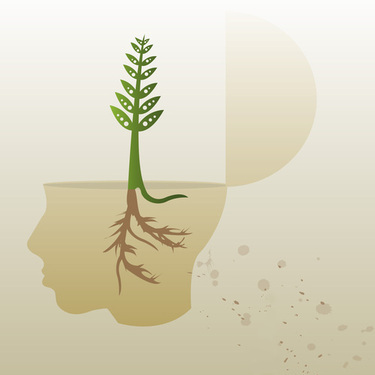 All over the world, people are awakening to the fact that we are more than bones and flesh. We sense that there is more to life than what we see. The word “consciousness” is losing its unreachable meaning, and we look for ways to go inside ourselves and find inner peace.
 It was powerful beyond time to enter that great living pulsing stony timeless being of light. It was vast beyond my understanding, as it seemed to extend beyond the sky into the stars that night. As I stood in the entrance to the great pyramid giving thanks for being there I learned more in that 1 minute passing through the entrance of the great Pyramid then I had accumulated in my entire life. Everything was shown to me in an instant like a life review and then the slate was cleared empty, awaiting being filled again. I entered the Great Pyramid as pure as a Virgin stripped of everything she once knew herself to be. The empty chalice of me at that moment in timelessness was ready to fill with the gifts of the great pyramid, which were beyond my ability to fully consume.
 Everything on earth is defined by a numerical configuration. All life can be reduced and explained by numbers. The currents of these numerical sequences bring into alignment a series of new considerations that will help earth to adjust and balance. Each numerical infusion is tailored to fit the needs of each human. As the brain adjusts to these new energies a lifting occurs allowing the individual to exit the human/animal ratio and be lifted into the human/light equation. Numbers and humans go hand in hand. From the beginning of time known we have been defined by a numerical equation whether age, birth date, weight, or the number of wives and camels we have. Numbers have always seemed to be our not so silent partners.
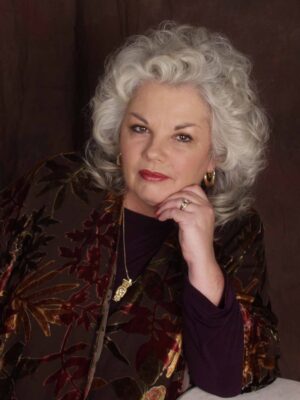 Gillian Macbeth Louthan is a Visionary, a Seer, born with the gift of knowing. She is a clairvoyant psychic with advanced channeling abilities since an early age. She has been a Metaphysical Teacher, Messenger and world known Trance-Channel, for over 40 years She works with the Councils of Light, Mary Magdalene, Merlin, White Buffalo Calf Woman, Mother Mary, the Pleiadians and many other energies of the Christ Light.
 Last year, I met an extremely gifted medium in California: Allie Barkalow. If you don’t know what a medium is, it’s a person who communicates with spirits from the other side. I heard about Allie from my dear friend, Carolyn Miller, who is a psychic and known for her amazing tarot and aura photography readings. Carolyn told me that Allie is one of the best psychics she knows, and I figured if she’s anything like Carolyn I had to meet her.
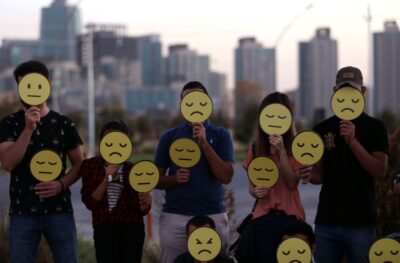 Much of modern economic theory is based around a simple idea: Human beings maximize utility. But what is utility? Many people think of it as happiness or pleasure; British philosopher Jeremy Bentham, the inventor of utilitarianism, conceived of it this way. But this isn’t how modern economists think of the concept. To an economist, utility simply means how much people want something. If an economist observes people working hard and making sacrifices to buy houses, then the conclusion is that houses must have lots of utility to those people.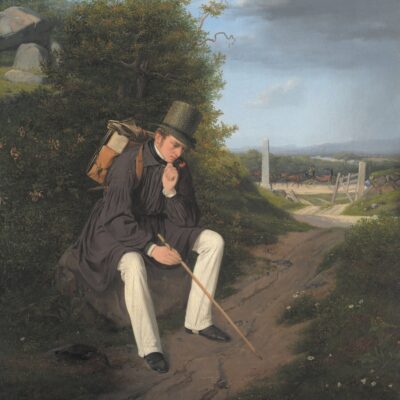
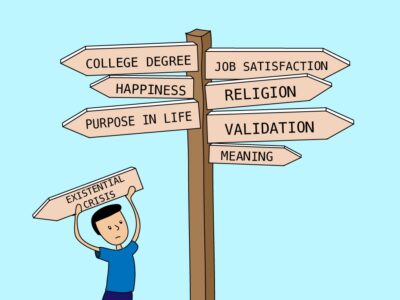 Don Giovanni – the protagonist of Mozart’s opera Don Giovanni (1787), a legendary seducer who is also sometimes known as Don Juan – is, Kierkegaard suggested, the ultimate archetype of the aesthetic mode because he lives for immediate sexual gratification and sensuality. Don Giovanni is a player. He is handsome, seductive and exciting. Women find him irresistible: he has slept with more than 2,000 women whose names he records in his not-so-little black book. Don Giovanni seeks pleasure above all else, and dances through his hedonistic life.
 Kierkegaard’s leap was guided by the commandment to ‘love thy neighbour’. In Works of Love(1847), written under Kierkegaard’s real name, he proposes that universal love, or agapē, is the secret to happiness because it overcomes the fleetingness and insecurity of aesthetic and ethical relationships. Love is Ariadne’s thread of life because, as long as you love, as long as you commit yourself to being a loving person, you’ll be safe from being hurt and alone. Kierkegaard thought that this sort of unwavering faith reflects a supremely developed human being.
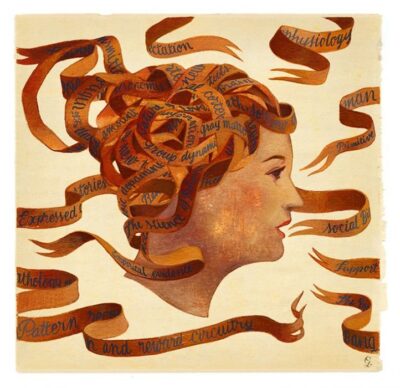 We are all storytellers; we make sense out of the world by telling stories. And science is a great source of stories. Not so, you might argue. Science is an objective collection and interpretation of data. I completely agree. At the level of the study of purely physical phenomena, science is the only reliable method for establishing the facts of the world.
 I’ve been studying, teaching, coaching and writing about transformation for the last 35 years. It fascinates me … always has, even as teenager. How can someone fulfill their potential and become the best of themselves in life?
 I finally realised joy in my life and began to play with effortless abundance. I laugh a lot now and am breathtaken by the beauty of this world and the people and life forms in it. I am undefinable, ever morphing into the next new levels of what is possible for me and for us all. As I do this I realise that I am part of the redesign of what it is is to be human on Earth. I call us Earthians as a new way to talk about loving being alive on Earth while being an infinite creator of possibilities for life. The term Earthian also allows me to feel a kinship with other life forms on Earth, whereas the term human tends, in my view, to make us feel separate from other inhabitants of this wonderful world.
 The belief that everything in the universe is part of the same fundamental whole exists throughout many cultures and philosophical, religious, spiritual, and scientific traditions, as captured by the phrase ‘all that is.’ The Nobel winner Erwin Schrodinger once observed that quantum physics is compatible with the notion that there is indeed a basic oneness of the universe. Therefore, despite it seeming as though the world is full of many divisions, many people throughout the course of human history and even today truly believe that individual things are part of some fundamental entity.