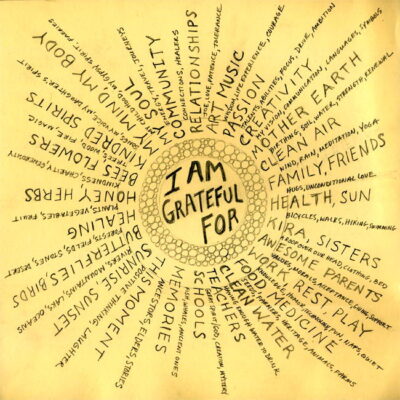
 In Sidetracked: Why Our Decisions Get Derailed, and How We Can Stick to the Plan, Francesca Gino, an associate professor at Harvard Business School, explores a range of fascinating subjects, including how emotions influence decisions and the often-thorny matter of understanding the perspectives of others. Blending social science and real-world examples, Gino’s book also highlights the science of gratitude.
“The message of ‘Sidetracked,’” Gino said in an interview, “is that a lot of these forces happen even though we are unaware of them. People might just not realize how powerful expressions of gratitude are.”
In two of the gratitude experiments, Gino worked with Professor Adam Grant of the Wharton School. They first asked 57 students to give feedback to a fictitious student, Eric, regarding his sloppy cover letter for a job. Half were emailed a terse confirmation: “I received your feedback on my cover letter.” The other half received gratitude: “I received your feedback on my cover letter. Thank you so much! I am really grateful.”
When Gino and Grant measured the students’ sense of self-worth afterward, 25 percent of the group that received just an acknowledgment felt higher levels of self-worth, compared with 55 percent of the group that received thanks.
In a follow-up experiment, participants received a message from another fictitious student, Steven, asking for feedback on his cover letter. Would participants who had received thanks from Eric be more likely to help Steven? Indeed. More than double the percentage of students in the gratitude group (66 percent) helped Steven, versus just 32 percent of those in the no-gratitude contingent.
“Receiving expressions of gratitude makes us feel a heightened sense of self-worth, and that in turn triggers other helpful behaviors toward both the person we are helping and other people, too,” Gino said. She described the scope of the “gratitude effect” as “the most surprising part” of her research.
Gino built on the research in a field study that looked at 41 fundraisers at a university, all receiving a fixed salary. The director visited half of the fundraisers in person, telling them, “I am very grateful for your hard work. We sincerely appreciate your contributions to the university.” The second group received no such expressions of gratitude.
What was the impact of the director’s thanks? Gino said that “the expression of gratitude increased the number of calls by more than 50 percent” for the week, while fundraisers who received no thanks made about the same number of calls as the previous week.
By missing chances to express gratitude, organizations and leaders lose relatively cost-free opportunities to motivate, Gino said.
“I spend a lot of time working inside organizations and see teams working together to accomplish a task, usually with a deadline,” she said. “Oftentimes, you don’t see the leaders going back and actually thanking the team members. Those are situations where expressions of gratitude from leaders could have wonderful effects.”
Gino has seen those effects up-close, in both her own behavior and that of those close to her.
“My husband is now working for a start-up. I received flowers and a note from his company’s CEO thanking me for my understanding because my husband had been up all night working on a big project.” The gesture was a motivator for her husband, Gino said.
The work behind her book, she said, “really makes me think more carefully every time I am the one expressing gratitude to others. I don’t want to miss opportunities. … I learned from my own research and now try to say ‘thank you’ much more often.”
Original article here

 Amid the human crush of Old Delhi, on the edge of a medieval bazaar, a red structure with cages on its roof rises three stories above the labyrinth of neon-lit stalls and narrow alleyways, its top floor emblazoned with two words: birds hospital.
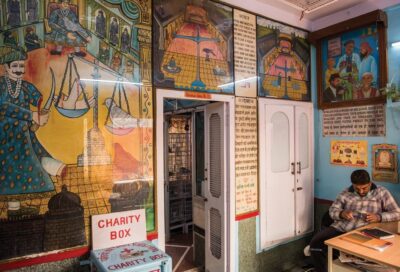 I’d come to the bird hospital, and to India, to see firsthand the Jains’ moral system at work in the world. Jains make up less than 1 percent of India’s population. Despite millennia spent criticizing the Hindu majority, the Jains have sometimes gained the ear of power. During the 13th century, they converted a Hindu king, and persuaded him to enact the subcontinent’s first animal-welfare laws. There is evidence that the Jains influenced the Buddha himself. And when Gandhi developed his most radical ideas about nonviolence, a Jain friend played philosophical muse.
 In the West, consciousness was long thought to be a divine gift bestowed solely on humans. Western philosophers historically conceived of nonhuman animals as unfeeling automatons. Even after Darwin demonstrated our kinship with animals, many scientists believed that the evolution of consciousness was a recent event. They thought the first mind sparked awake sometime after we split from chimps and bonobos. In his 1976 book, The Origin of Consciousness in the Breakdown of the Bicameral Mind, Julian Jaynes argued that it was later still. He said the development of language led us, like Virgil, into the deep cognitive states capable of constructing experiential worlds.
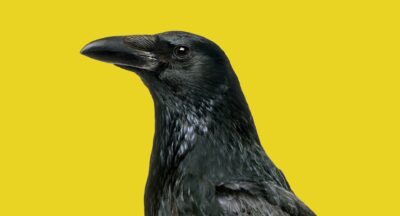
 Crows are not among the shoulder-perchers, but Singh sometimes sees former crow patients hovering around the hospital. They might be looking for him. Crows recognize individual human faces. They are known to blare vicious caws at people they dislike, but for favored humans, they sometimes leave gifts—buttons or shiny bits of glass—where the person will be sure to notice, like votive offerings.
 The trail was only 50 miles from Gir National Park, where, the day before, I’d seen two Asiatic lions, nearly indistinguishable cousins of Africa’s lions. Once the region’s apex predator, the Asiatic lion almost went extinct during the British empire’s colonization of India, when no viceroy could visit a maharaja’s palace without a hunt in the local forest. Even today, the Asiatic lion still ranks among the rarest of the large feline predators, rarer even than its neighbor to the north, the snow leopard, which is so scarce that a glimpse of one padding down a jagged Himalayan crag is said to consummate a spiritual pilgrimage.
 The monk was a white dot some six switchbacks up by the time I hopped off the wall and continued the climb, my legs stiffened by the break. I reached the entrance to the temple complex with only 15 minutes to spare. Its marble courtyard shone brilliant white, as though bleached by the mountain sun.
 At a conference in 2012, Luc van Loon was presenting some exciting data from a newly published study. After a heroic research effort that took 2.5 years and 500,000 euros, he and his colleagues had managed to shepherd a large group of frail, elderly subjects through a six-month strength-training program. Those who had taken a daily protein supplement managed to pack on an impressive 2.9 pounds of new muscle. Success! Old people could be strong!
 We often think of amino acids as the “building blocks” of muscle. That’s true, but the amino acids derived from protein actually play a dual role in muscle growth: In addition to being a source of raw materials, protein acts as a signaling molecule, triggering the growth of new muscle. One amino acid in particular, leucine, seems to be the most potent anabolic signaler, but you need all the amino acids together to effectively build muscle.
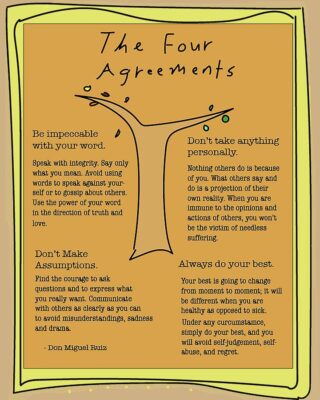 Spiritual teacher Don Miguel Ruiz brought The Four Agreements into Western awareness. A new thought author versed in ancestral knowledge, Ruiz says the agreements come from Toltec wisdom. The Toltecs were a pre-Hispanic culture living in central Mexico, talented artists and builders as well as warriors.
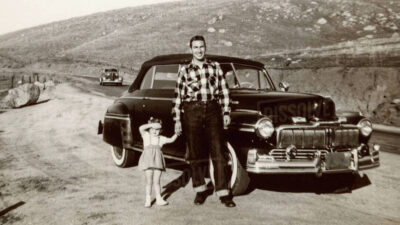 Recovering from a happy childhood can take a long time. It’s not often that I’m suspected of having had one. I grew up in Norman, Oklahoma, a daughter of immigrants. When I showed up at college and caught sight of other childhoods, I did pause and think: Why didn’t we grow our own tomatoes? Why did I watch so many episodes of “I Dream of Jeannie”? Who is Hermes? What is lacrosse? Was my childhood a dud? An American self-inspection was set in motion. Having lived for more than forty-five years, I finally understand how happy my childhood was.
 In the run-up to marriage, many couples, particularly those of a more progressive bent, will encounter a problem: What is to be done about the last name?
 In a forthcoming study, Kristin Kelley, a doctoral student working with Powell, presented people with a series of hypothetical couples that had made different choices about their last name, and gauged the subjects’ reactions. She found that a woman’s keeping her last name or choosing to hyphenate changes how others view her relationship. “It increases the likelihood that others will think of the man as less dominant—as weaker in the household,” Powell says. “With any nontraditional name choice, the man’s status went down.” The social stigma a man would experience for changing his own last name at marriage, Powell told me, would likely be even greater.
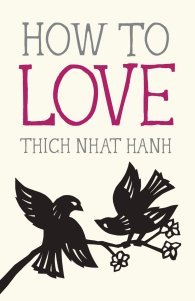 That’s what legendary Vietnamese Zen Buddhist monk, teacher, and peace activist Thich Nhat Hanh (October 11, 1926–January 22, 2022) explored in How to Love — a slim, simply worded collection of his immeasurably wise insights on the most complex and most rewarding human potentiality.
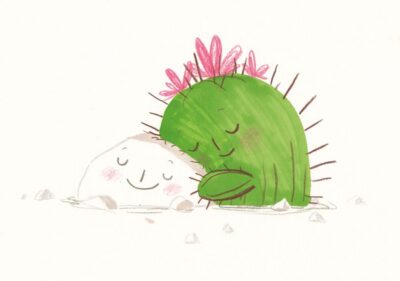 And yet because love is a learned “dynamic interaction,” we form our patterns of understanding — and misunderstanding — early in life, by osmosis and imitation rather than conscious creation. Echoing what Western developmental psychology knows about the role of “positivity resonance” in learning love, Nhat Hanh writes: