
- The process of human evolution has resulted in bodies that are optimized for successful reproduction and child-rearing but are not necessarily designed for healthy, long lives.
- Medical problems associated with aging are often described as diseases that are our own fault, but it is unfair to blame people for inheriting bodies that were not designed for extended use. We can shorten our lives, but not prolong them indefinitely.
- If humans were built primarily for longevity and perpetual health, our anatomies and even our bodies’ molecular processes would look very different than they currently do.
- The single-minded pursuit of life extension could actually be harmful to our species’ long-term survival.
Bulging disks, fragile bones, fractured hips, torn ligaments, varicose veins, cataracts, hearing loss, hernias and hemorrhoids: the list of bodily malfunctions that plague us as we age is long and all too familiar. Why do we fall apart just as we reach what should be the prime of life?
The living machines we call our bodies deteriorate because they were not designed for extended operation and because we now push them to function long past their warranty period. The human body is artistically beautiful and worthy of all the wonder and amazement it evokes. But from an engineer’s perspective, it is a complex network of bones, muscles, tendons, valves and joints that are directly analogous to the fallible pulleys, pumps, levers and hinges in machines. As we plunge further into our post-reproductive years, our joints and other anatomical features that serve us well or cause no problems at younger ages reveal their imperfections. They wear out or otherwise contribute to the health problems that become common in the later years.
In evolutionary terms, we harbor flaws because natural selection, the force that molds our genetically controlled traits, does not aim for perfection or endless good health. If a body plan allows individuals to survive long enough to reproduce (and, in humans and various other organisms, to raise their young), then that plan will be selected. That is, individuals robust enough to reproduce will pass their genes—and therefore their body design—to the next generation. Designs that seriously hamper survival in youth will be weeded out (selected against) because most affected individuals will die before having a chance to produce offspring. More important, anatomical and physiological quirks that become disabling only after someone has reproduced will spread. For example, if a body plan leads to total collapse at age 50 but does not interfere with earlier reproduction, the arrangement will get passed along despite the harmful consequences late in life.
Had we been crafted for extended operation, we would have fewer flaws capable of making us miserable in our later days. Evolution does not work that way, however. Instead it cobbles together new features by tinkering with existing ones in a way that would have made Rube Goldberg proud.
The upright posture of humans is a case in point. It was adapted from a body plan that had mammals walking on all fours. This tinkering undoubtedly aided our early hominid ancestors: standing on our own two feet is thought to have promoted everything from food gathering and tool use to enhanced intelligence. Our backbone has since adapted somewhat to the awkward change: the lower vertebrae have grown bigger to cope with the increased vertical pressure, and our spine has curved a bit to keep us from toppling over. Yet these fixes do not ward off an array of problems that arise from our bipedal stance.
What If?
The three of us have pondered what the human body would look like had it been constructed specifically for a healthy long life. The anatomical revisions depicted on these pages are fanciful and incomplete. Nevertheless, we present them to draw attention to a serious point. Aging is frequently described as a disease that can be reversed or eliminated. Indeed, many purveyors of youth-in-a-bottle would have us believe that the medical problems associated with aging are our own fault, arising primarily from our decadent lifestyles. Certainly any fool can shorten his or her life. But it is grossly unfair to blame people for the health consequences of inheriting a body that lacks perfect maintenance and repair systems and was not built for extended use or perpetual health. Our bodies would still wear out over time even if some mythical, ideal lifestyle could be identified and adopted.
This reality means that aging and many of its accompanying disorders are neither unnatural nor avoidable. No simple interventions can make up for the countless imperfections that permeate our anatomy and are revealed by the passage of time. We are confident, however, that researchers will be able to ease some of the maladies of aging. Investigators are rapidly identifying (and discerning the function of) our myriad genes, developing pharmaceuticals to control them, and learning how to harness and enhance the extraordinary repair capabilities that already exist inside our bodies. These profound advances will eventually help compensate for many of the design flaws contained within us all.
Health and Longevity
Our research interest in redesigning the Homo sapiens body is a reaction to the health and mortality consequences of growing old. We focus on anatomical “oddities” and “design flaws” not only because they would be familiar to most readers, but because they represent a small sample of lethal and disabling conditions that threaten the length and quality of life. It is important to recognize that we live in a world in which human ingenuity has made it possible for an unprecedented number of people to grow old. Our redesign goal is thus to draw attention to the health consequences associated with the aging of individuals and populations.
Even the term “flaw” requires clarification. Living things, and everything they make, eventually fail. The cause of failure is a flaw only when the failure is premature. A racecar that fails beyond the end of the race has no engineering flaws. In the same way, bodies that fail in the post-reproductive span of life may contain numerous design oddities, but they have no design flaws as far as evolution goes.
There are countless other aspects of human biology that would merit modification if health and longevity were nature’s primary objective.
For example, gerontologists theorize that aging is caused, in part, by a combination of the molecular damage that inevitably arises from operating the machinery of life within cells and the imperfect mechanisms for molecular surveillance, maintenance and repair that permit damage to accumulate over time. If this view of the aging process is correct, then modifying these molecular processes to lessen the severity or accumulation of damage, or to enhance the maintenance and repair processes, should have a beneficial impact on health and longevity. These wondrous modifications, however, would have little effect unless the common sense that is needed to avoid destructive lifestyles becomes more widespread among people.
Living things are exceedingly complex, and experience teaches us that undesirable consequences invariably arise whenever humans have taken over the reins of evolution to modify organisms (microbes, plants and animals) to suit their purposes. The most worrisome trade-off for genetic manipulation directed toward living longer would be an extension of frailty and disability rather than an extension of youthful health and vitality.
Though cobbled together by the blind eye of evolution, humans have proved to be a remarkably successful species. We have outcompeted almost every organism that we have encountered, with the notable exception of microbes. We have blanketed the earth and even walked on the moon. We have even figured out how to escape premature death and survive to old age.
At this point in history, we need to exploit our expanding knowledge of evolution to enhance the quality of our lives as we grow older because the single-minded pursuit of life extension without considering health extension could be disastrous.
Our fanciful designs of anatomically “fixed” humans are not intended as a realistic exercise in biomechanical engineering. Given what is known today about human aging, if the task of designing a healthy, long-lived human from scratch were given to a team comprising the father of evolution, Charles Darwin, the great painter Michelangelo, and the master engineer and scientist Leonardo da Vinci, they most certainly would have fashioned a living machine that differs from the one we now occupy. Indeed, anyone who tries his hand at redesign would probably construct a human body that would look unlike the ones we have created on these pages. Yet we invoke this approach as an instructive way of communicating the important message from evolutionary theory that, to a significant degree, the potential length of our lives and, to a lesser degree, the duration of health and vitality are genetic legacies from our ancient ancestors, who needed to mature quickly to produce children before they were killed by the hostile forces of nature.
Original article here
 Being the most talkative person in the room may be a good way to get people’s attention, but it doesn’t necessarily mean you have the best ideas.
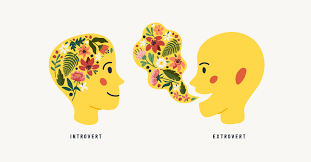 Here’s how managers can create an introvert-friendly workplace:
 Chances are, you learned to walk when you were just a toddler and you haven’t really thought about it much since. It’s easy to nerd out on other fitness activities, like running or weight lifting. But, walking is something we often take for granted.
 Time travel makes regular appearances in popular culture, with innumerable time travel storylines in movies, television and literature. But it is a surprisingly old idea: one can argue that the Greek tragedy Oedipus Rex, written by Sophocles over 2,500 years ago, is the first time travel story.
 Kurt Vonnegut’s anti-war novel Slaughterhouse-Five, published in 1969, describes how to evade the grandfather paradox. If free will simply does not exist, it is not possible to kill one’s grandfather in the past, since he was not killed in the past. The novel’s protagonist, Billy Pilgrim, can only travel to other points on his world line (the timeline he exists in), but not to any other point in space-time, so he could not even contemplate killing his grandfather.
 Tina was at a crossroads. Her daughter had recently left for college, and her husband had his own pursuits. And although she’d once enjoyed banking, she now bore little interest in her work. For some time, she had been asking herself whether she should quit. But what would her colleagues and bosses think of her?
 If there is too great a discrepancy between the “true” and the “false” self, it will make for a vulnerable sense of identity. And if we are unable to acquire a stable sense of identity—we may end up one day unraveling as Tina did. After a lifetime of complying to others’ expectations, Tina was experiencing what Erikson would call a delayed identity crisis. At a certain point in her life, it became difficult for her keep up the lie.
 For 30 years Isabelle Arnulf, head of the sleep disorders clinic at Pitié-Salpêtrière Hospital in Paris, has studied sleep and its associated disorders. During her career, Arnulf, who is also a professor of neurology at Sorbonne University in France, has researched a broad range of sleep conditions: sleepwalking, rapid eye movement (REM) sleep behavior disorder, lucid dreaming, sleep in Parkinson’s disease and hypersomnia, or excessive daytime sleepiness. As part of these studies, Arnulf investigated how these disorders affect dream states. In an interview with Scientific American’s French-language sister publication Pour la Science, the neurologist talks about whether depression or trauma affects dreaming and whether one should worry about recurring nightmares.
 In depression, dreams are very negative, mirroring the mental state of depressed people during the day. This parallel was brought to light in the early 2000s by researcher Dieter Riemann and his colleagues at the University of Freiburg in Germany. By analyzing the dreams of depressed patients treated with antidepressants, they discovered that as the treatment began to take effect after several weeks, the content of these dreams became less and less gloomy, and the mood of the patients improved.
 For a long time, we approached recurring nightmares through the prism of psychoanalysis, [which explained them as] unresolved trauma that we would have to work to resolve. But the fact is: we don’t know.
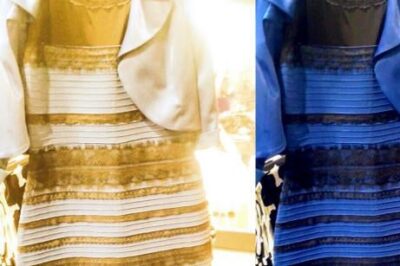 In February 2015, a Scottish woman uploaded a photograph of a dress to the internet. Within 48 hours the blurry snapshot had gone viral, provoking spirited debate around the world. The disagreement centred on the dress’s colour: some people were convinced it was blue and black while others were adamant it was white and gold.
 “It fits with the tendency of the Dutch language to create verbs out of nouns. From from ‘voetbal’ (football) to voetballen (playing football), from ‘internet’ to internetten, from ‘whatsapp‘ to whatsappen etc. I think this is something that happens in Dutch in particular,” said Monique Flecken, a psycholinguist at the University of Amsterdam, who researches how the languages we speak affect the way we see the world. Essentially, it’s much less work to say “niksen” instead of “to do nothing”. “The Dutch are a practical, direct people and their language reflects that,” she said.
 Locals like spending their time in active ways, such as cycling or hiking, allowing time for clearing the mind. And each time the sun comes out, the Dutch flock to cafes and terraces en masse, even in the winter. For me, these are perfect places for doing nothing.