

 If you’ve ever tried to meditate and found yourself growing restless or struggling to clear your mind, you’re not alone. “It’s the nature of the mind to have this ongoing conversation in the background,” says mindfulness practitioner and author, Joy Rains.
“I call this ‘stuff’, which is an acronym for stories, thoughts, urges, frustrations and feelings. When you’re in a meditative state, you’re in the here and now and you’re releasing your stuff. You’re not getting caught up in judgments, thoughts about the past, worries about the future.”
When we think of traditional meditation techniques, we picture sitting cross-legged in a quiet room. But for many of us, there are much better ways of clearing our heads of mental ‘noise’.
Psychologist Suzy Reading believes that you don’t have to be brilliant at sitting still and focusing on breathing to get the benefits of meditation. Suzy is also a yoga teacher, but admits to having struggled with traditional meditation practices: “They are inaccessible for a lot of people. But that’s not to say that meditation is not for them.”
Joy agrees, and believes that you can bring mindfulness to a range of daily activities, instead of solely relying on traditional seated meditation. “The whole idea with mindfulness is training your brain,” she says. “You can do this just as well by being intentionally mindful throughout the day. I don’t think there’s a right or wrong way, and it’s important to do practices that resonate with you.”
7 non-traditional meditative ideas to try…
Clear your head by walking
We all know that going for walks in the fresh air is a guaranteed mood-booster, but it’s also an excellent time to practice mindfulness. Joy says: “When we’re walking, we’re not doing much else other than maybe being caught up in our stuff. That’s a great time to bring awareness, instead, to your feet as they connect with the ground.”
When you realise your mind has wandered, guide it back to the sound of your steps, the way the sun feels on your skin, or the sound of your breathing. The idea is to refocus your attention and allow thoughts to flow right past you.
For dog owners, Joy suggests: “Notice the dog’s tail wagging, the sound of the dog’s feet clicking on the pavement, the clouds of breath coming out of your dog’s mouth on a cold day”.
Let nature inspire a feeling of awe
 From murmurations to sunrises, the world around us is breathtaking. We all know what it’s like to be captivated by nature, but did you know that encountering awe is an established element of mindfulness practice?
“There is a lot of research around awe,” says Suzy, “and we can experience its blissful sense of transcendent connection in as little as 15 seconds. That’s an incredible mood booster. You don’t have to be in a national park to experience that – just look up at the trees and sky, watch the sunrise.”
When we’re in nature, Suzy explains that we: “Engage in a panoramic gaze, which is different to when you’re on a Zoom call or focusing on a screen. The panoramic gaze allows peripheral vision in, and it’s soothing for your nervous system.”
Watching a spectacular performance or seeing something incredible can also inspire a feeling of awe. “These things can anchor us in a sense of being part of something bigger than ourselves.”
Practice your drawing skills
Hobbies that force us to focus on the task at hand – particularly creative ones like arts and crafts – can be incredibly soothing and help to calm the mind. Drawing is a great example, as it engages the brain and directs our attention away from other thoughts.
Joy explains: “You can really flow at the moment… and your attention is here and now – that’s why this kind of activity can be relaxing and restorative.”
Don’t overlook housework
Mindfulness as a whole is all about feeling present in the moment, or the task at hand. This is where housework comes in – the often-repetitive nature allows us to achieve a meditative state. Familiar tasks can be completed almost as though on autopilot whilst we direct our attention away from distracting thoughts and emotions, back to the process in front of us.
“Folding the washing can be a form of meditation,” says Suzy. “Don’t rush it, inhale the fresh laundry scent, notice the textures of the fabrics, and apply yourself to working neatly. You’ll be doing mindfulness training, relaxing a little.”
You can apply mindfulness to anything from vacuuming or washing the dishes says Suzy: “You can turn just about any activity into a meditative pursuit by really listening to your senses.”
Put pen to paper
 Although we may need a break from our thoughts and emotions from time to time, there are also moments when it’s important to both acknowledge and reflect on them. Suzy says: “Meditation can be reflective writing, sitting with our feelings.”
Joy adds: “Often when people write, they will be judgmental and their thoughts interfere with their voice.” She says that instead, you should aim to: “Set all judgments aside and write what’s true in the here and now, without getting distracted by other tasks that need to be done”.
Setting five minutes of undisturbed time aside is an easy way to get started, whether it’s whilst you drink your morning coffee, or before you turn the lights out at night. There are many different types of journaling to try, so experiment until you find a format that works best for you.
Take a trip to the cinema
Similar to the feeling of awe we get from being in nature, whilst we’re captivated by the plot of a film, we give ourselves the opportunity to take a break from our thoughts.
This is especially true in a cinema, in which we’re cocooned from the outside world (not to mention, forced to take a break from our mobile phones). It also gives us the chance to build self-awareness in terms of a wandering mind and helps us to learn how to redirect our thoughts.
For example, you might start jumping to conclusions about the plot or try to guess the film’s ending, which, says Joy: “Takes you out of the present and away from watching the story unfold as it was written. Instead, stay with the story and the unknown of what’s going to happen next.”
Try a challenging craft
Learning a new skill, especially one that challenges us, helps us to stay in the moment. It’s also an opportunity to refocus our minds when self-critical thoughts arise.
A spin on a pottery wheel is a great example, explains Joy: “There are so many different sensory experiences while learning to set judgments aside – this bowl is crooked, or this person isn’t going to like this thing I made for them, or I’m having trouble with the wheel and I’m getting frustrated.
“Notice what these judgments feel like in your body, the texture and temperature of the clay, the sound of the wheel, and you will shift from the brain whirring to the potter’s wheel whirring.”
Original article here
 Consciousness permeates reality. Rather than being just a unique feature of human subjective experience, it’s the foundation of the universe, present in every particle and all physical matter.
 Interest in panpsychism has grown in part thanks to the increased academic focus on consciousness itself following on from Chalmers’ “hard problem” paper. Philosophers at NYU, home to one of the leading philosophy-of-mind departments, have made panpsychism a feature of serious study. There have been several credible academic books on the subject in recent years, and popular articles taking panpsychism seriously.

 Walking does great things for your mental health and cardiovascular fitness, but did you know that a good walk can also help you build the muscles in your legs and abs?
 The sky was a classic California cloudless blue. The light, February soft. The sea breeze, easy, fragrant, and chilly. The waves, mellow laps against the rocky arch at the Natural Bridges State Marine Reserve, about 75 miles south of San Francisco.
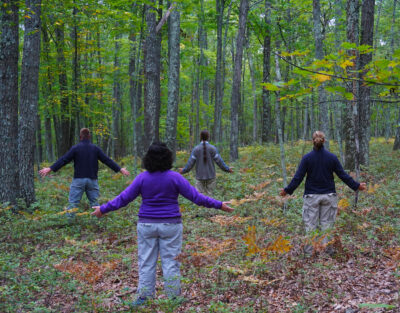 Doing it before school or work would be a beautifully irreverent and rebellious thing to do: to remind yourself that this is our most important work as human beings, rather than something that is done after our jobs or homework or housework are complete, and only then if we are not yet completely weighed down by exhaustion.

 “The core features of social anxiety were not evident in loneliness,” Lieberz said. Those results suggest, she said, that treating loneliness simply by telling lonely people to go out and socialize more (the way you can treat a phobia of snakes with exposure) will often not work because it fails to address the root cause of the loneliness. In fact, a recent meta-analysis confirmed that simply providing lonely people with easier access to potential friends has no effect on subjective loneliness.
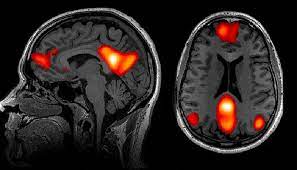
 Bzdok and his team showed that some regions of the default network are not only larger in chronically lonely people but also more strongly connected to other parts of the brain. Moreover, the default network seems to be involved in many of the distinctive abilities that have evolved in humans — such as language, anticipating the future and causal reasoning. More generally, the default network activates when we think about other people, including when we interpret their intentions.
 Primate studies and the results of the Neumayer III polar station experiment show that experience and social environment can exert a powerful influence on the structure of an individual’s brain, hard-wiring the changes that loneliness can cause. On the other hand, studies of twins have shown that loneliness is partly heritable: Almost 50% of the variation in individuals’ feelings of loneliness can be explained by genetic differences.
 The good life is the simple life. Among philosophical ideas about how we should live, this one is a hardy perennial; from Socrates to Thoreau, from the Buddha to Wendell Berry, thinkers have been peddling it for more than two millennia. And it still has plenty of adherents. Magazines such as Real Simple call out to us from the supermarket checkout; Oprah Winfrey regularly interviews fans of simple living such as Jack Kornfield, a teacher of Buddhist mindfulness; the Slow Movement, which advocates a return to pre-industrial basics, attracts followers across continents.
 Somewhat paradoxically, then, the case for living simply was most persuasive when most people had little choice but to live that way. The traditional arguments for simple living in effect rationalise a necessity. But the same arguments have less purchase when the life of frugal simplicity is a choice, one way of living among many. Then the philosophy of frugality becomes a hard sell.
 As a teenager, I remember being moved almost to tears by the sound of a family member chewing muesli. A friend eating dumplings once forced me to flee the room. The noises one former housemate makes when chomping popcorn mean I have declined their invitations to the cinema for nearly 20 years.
 Only about 14% of the UK population are aware of misophonia, according to the King’s College London paper. Perhaps one of the reasons, Gregory suggests, is simply that it is hard to talk about. “You are essentially telling someone: ‘The sound of you eating and breathing – the sounds of you keeping yourself alive – are repulsing me.’ It’s really hard to find a polite way to say that.” Maybe the movie Tár will help: its protagonist, played by Cate Blanchett, has an extreme reaction to the sound of a metronome.