 In 2007, a group of researchers began testing a concept that seems, at first blush, as if it would never need testing: whether more happiness is always better than less. The researchers asked college students to rate their feelings on a scale from “unhappy” to “very happy” and compared the results with academic (GPA, missed classes) and social (number of close friends, time spent dating) outcomes. Though the “very happy” participants had the best social lives, they performed worse in school than those who were merely “happy.”
The researchers then examined a data set from another study that rated incoming college freshmen’s “cheerfulness” and tracked their income nearly two decades later. They found that the most cheerful in 1976 were not the highest earners in 1995; that distinction once again went to the second-highest group, which rated their cheerfulness as “above average” but not in the highest 10 percent.
As with everything in life, happiness has its trade-offs. Pursuing happiness to the exclusion of other goals–known as psychological hedonism–is not only an exercise in futility. It may also give you a life that you find you don’t want, one in which you don’t reach your full potential, you’re reluctant to take risks, and you choose fleeting pleasures over challenging experiences that give life meaning.
The way to understand the study above is not to deny that happiness is good; rather, it is to remember that a little bit of unhappiness has benefits. For instance, gloom has been found to aid in problem-solving. The author Emmy Gut argued in 1989 that some depressive symptoms can be a functional response to problems in the environment, leading us to pay appropriate attention and come up with solutions. In other words, when we are sad about something, we may be more likely to fix it. Psychologists call this the “analytical rumination hypothesis,” and it is supported by research.
Obviously, this is not to argue that clinical depression is good—misery can quickly render people incapable of solving problems. Nor am I saying that depression passes a cost-benefit analysis. Rather, the analytical-rumination hypothesis is evidence that getting rid of bad feelings does not necessarily make us more effective in our tasks. And if these emotions can help us assess threats, it stands to reason that too much good feeling can lead us to disregard them. The literature on substance use suggests that this is so: In some people, very high degrees of positive emotion have been connected to dangerous behaviors such as alcohol and drug use and binge eating.
An aversion to unhappiness can lead us to forgo a meaningful life. Indeed, as one group of researchers that surveyed college students in 2018 found, fear of failure is positively correlated with meaning derived from romance, friendship, and (to a lesser extent) family. When I talk with people about their fear of negative outcomes in life, their true source of fear in many cases centers on how they will feel about having failed, not about the consequences of the failure itself. This is similar to the way discomfort with uncertainty causes more anxiety than guaranteed bad news. To avoid these bad feelings, people give up all kinds of opportunities that involve the possibility of failure.
But bringing good things into your life, whether love, career success, or something else, usually involves risk. Risk doesn’t necessarily make us happy, and a risky life is going to bring disappointment. But it can also bring bigger rewards than a life played safe, as the study of happiness, academic achievement, and income suggests. Those with the highest performance at work and school made decisions that were probably unpleasant at times, and even scary.
None of this is to say that we should shun good feelings, or that we’re foolish for wanting to be happy. On the contrary, the desire for happiness is natural and normal. However, making the quest for positive feelings—and the fight to banish negative ones—your highest or only goal is a costly life strategy. Unmitigated happiness is impossible to achieve (in this mortal coil at least), and chasing it can be dangerous and deleterious to our success. But more important, doing so sacrifices many of the elements of a good life. As Paul Bloom, a psychologist and the author of The Sweet Spot: The Pleasures of Suffering and the Search for Meaning, has written, “It is the suffering that we choose that affords the most opportunity for pleasure, meaning, and personal growth.”
Happiness itself would lose its meaning were it not for the contrast that we inevitably experience with sadness. “Even a happy life cannot be without a measure of darkness,” Carl Jung said in an interview in 1960. “The word ‘happy’ would lose its meaning if it were not balanced by sadness.” You can take Jung’s words to heart by committing to a regular practice of gratitude in which you give thanks not only for the things that make you happy but also for the ones that challenge you. It feels unnatural at first, but it will come easier each day.
Some of the most meaningful parts of our lives are a direct result of negative feelings that slipped through, despite our best efforts to block them out. For example, I am the father of three young adults; it was not long ago that my wife and I were going mano a mano with three teenagers. We lost a lot of sleep then, but I wouldn’t trade away a moment of those experiences (now that they are safely behind us).
Some people take these lessons to lengths that might seem unimaginable. One is Andrew Solomon, the author of The Noonday Demon: An Atlas of Depression. “If one imagines a soul of iron that weathers with grief and rusts with mild depression, then major depression is the startling collapse of a whole structure,” he wrote. But as he told an interviewer several years ago, he eventually found a way to love his depression. “I love it because it has forced me to find and cling to joy,” he said.
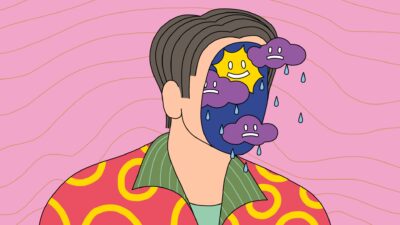
This, in a nutshell, is the paradox of being fully alive. To strive for relentless positivity is to aim for the dimensionality of a Hollywood movie or children’s book. So though suffering should never be anyone’s goal, each of us can strive for a rich life in which we not only seek the sunshine but fully experience the rain that inevitably falls as well.
Original article here
 Life has sped up. A never-ending stream of stimuli is vying for your attention every minute of the day. Some of it is fabulous and some of it is time wasting.
 In a world where it is almost impossible to lose contact with friends, thanks to the likes of social media, this regret may seem irrelevant. You can send someone a text to say you’re thinking of them, comment on their Facebook feed or Instagram photo, or chat via Messenger. But how long is it since you’ve really connected with these people in real life? How long since you’ve laughed together, cried together, eaten together or just hung out?

 There’s a conversation you’re avoiding. It feels important, the stakes are high, there are strong feelings involved and you are putting it off: “The time isn’t right”; “I can’t find the words”; “I don’t want to get emotional”.
 Over the course of human history, scientists believe that humans have cultivated more than 6,000 different plant species. But over time, farmers gravitated toward planting those with the largest yields. Today, just three crops – rice, wheat and corn – provide nearly half of the world’s calories.
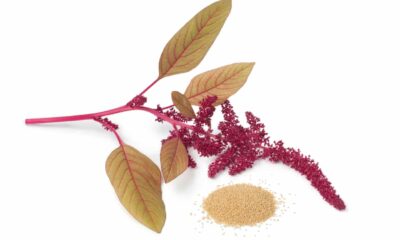 From leaf to seed, the entirety of the amaranth plant is edible. Standing up to eight feet tall, amaranth stalks are topped off with red, orange or green seed-filled plumes. Across Africa and Asia, amaranth has long been eaten as a vegetable – whereas Indigenous Americans also ate the plant’s seed: a pseudo-cereal like buckwheat or quinoa.
 For thousands of years, farmers across West Africa have cultivated fonio – a kind of millet that tastes like a slightly nuttier couscous or quinoa. Historically, fonio is considered to be Africa’s oldest cultivated cereal and was regarded by some as the food of chiefs and kings. In countries such as Senegal, Burkina Faso and Mali, fonio would be served on holy days, like at weddings and during the month of Ramadan.
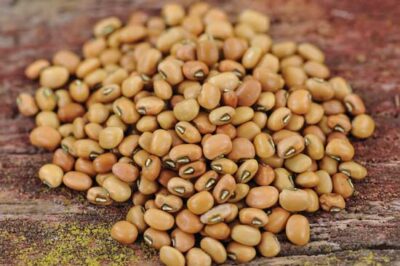 In the 1940s, more than 5m acres of cowpeas were grown in the US – the majority, as their name suggests, for hay to feed livestock. But long before cowpeas – also called southern peas or black-eyed peas – came to the Americas, they were grown for human consumption in West Africa. Although cowpea production has declined in the US in recent decades, the crop is hugely important in much of Africa. Nigeria is the world’s largest cowpea producer.
 In the tropics of Southeast Asia and Polynesia, taro has long been grown as a root vegetable, not unlike the potato. But as rising temperatures threaten cultivation of the crop in its natural habitat, farmers in the continental US are trying to adapt the tropical perennial to grow as a temperate annual, because it cannot survive the cold of US winters.
 While many alternative crops are just plants that were grown somewhere else in the world generations ago, others have been cultivated specifically to withstand climate change.
 The night is going well. Everyone is laughing, and there is a happy energy in the air. The conversation flows easily and you’re the merry, relaxed kind of drunk. Then Josh swaggers over with a tray of something. Then you see what it is. Oh no.
 Our eyes are continuously bombarded by an enormous amount of visual information – millions of shapes, colours and ever-changing motion all around us. For the brain, this is no easy feat. On the one hand, the visual world alters continuously because of changes in light, viewpoint and other factors. On the other, our visual input constantly changes due to blinking and the fact that our eyes, head and body are frequently in motion.
 The effect of exercise on health is profound. It can protect you from a range of conditions, including heart disease, type 2 diabetes and some cancers. But the type and amount of exercise you should do changes as you age. To ensure that you are doing the right type of exercise for your age, follow this simple guide.
 Most people start to put on weight in their 40s. Resistance exercise is the best way to optimise calorie burning to counteract fat accumulation and reverse the loss of three to eight percent of muscle mass per decade. Ten weeks of resistance training could increase lean weight by 1.4kg, increase resting metabolic rate by 7 percent and decrease fat weight by 1.8kg.
 Typically, people accumulate more chronic conditions as they get older, and ageing is a major risk factor for cancer. Maintaining a high level of physical activity can help prevent cancers, such as post-menopausal breast cancer, colon cancer and cancer of the womb, and it reduces the risk of developing chronic conditions, such as heart disease and type 2 diabetes.