
 Carving out time for mindfulness often feels like an indulgence, but it’s necessary. And unlike everything else on your to-do list, there are simple ways to pause and reset—like the 4-7-8 breathing technique. A controlled breathing pattern intended to help the mind and body relax, the 4-7-8 technique has helped many transition from a stressful storm into a more focused, present self.
“Breath work is an active meditation that helps reframe the nervous system’s response to trauma and triggers,” says Jasmine Marie, founder and CEO of Black Girls Breathing. “Decreasing anxiety and stress and regulating the nervous system’s response to anxiety and stress are some of the many benefits experienced by those who incorporate the practice into their daily and weekly routines.”
The benefits of deep breathing are plentiful. Research has found that slow, conscious breathing exercises, like the 4-7-8 technique, are linked to mental function, in that they can enhance emotional control and psychological well-being.
So what is 4-7-8 breathing?
The 4-7-8 breathing method, also referred to as “relaxing breath,” is based on principles of pranayama, the ancient yogic ritual of directing energy through control of the breath. While breathing techniques of this nature have been developed over centuries, the technique known as 4-7-8 breathing specifically is credited to American doctor Andrew Weil, who had a particular focus on alternative medicine. The simple technique involves breathing in for four seconds, holding the breath for seven seconds, and then breathing out for eight seconds.
“The 4-7-8 breathing method is a well-known and widely practiced technique that involves breath regulation,” explains Caroline Leaf, Ph.D., cognitive neuroscientist and host of Cleaning Up the Mental Mess podcast. “With the 4-7-8 method you are controlling the duration of your breathing, how long you hold or release your breath, as well as the frequency of your exhales and inhales, which can help calm many neurophysiological reactions in the brain and body.”
It’s in this sense that breathing exercises for anxiety are often used as a tool. Many practitioners find belly breathing and lung exercises have a relaxing, centering effect; others use deep breathing to help them fall asleep. Those who find themselves waking up with anxiety may try 4-7-8 breathing to see how it might help reframe their morning, but more on that later.
First, how to perform the 4-7-8 breathing technique
As we mentioned earlier, the exercise is straightforward: Breathe in for four, hold for seven, and then release for eight.
But there are ways to get the most out of it. Thimela Garcia, author, yoga teacher, and certified holistic practitioner, suggests finding the right time and place as a start. “I usually choose a suitable time during the day and place where to perform this breathing technique,” says Garcia. “I practice at nighttime before I go to bed as this is a very relaxing breathing technique.”
Choose whatever and whenever works best for you, though Garcia warns there are some exceptions: “4-7-8 breathing can be practiced at any time and anywhere except while driving or while executing a task that requires full attention.”
Also helpful: Get low and comfortable. The technique can be done while standing up, but experts say it helps to be as physically relaxed as possible. “I find a comfortable sitting position, whether on my bed or the floor sitting on a cushion,” says Garcia. “I like to rest my palms facing up over my knees or clasped hands over my lap. This breathing technique can be performed with the eyes either open or closed.”
You might not always be in an environment where you can close your eyes, but Garcia recommends choosing a time and place whenever possible because it helps block out any potentially distracting visual stimuli and allows one to immerse deeper into the exercise.
Once situated in the right environment, there’s one last thing someone can do to prepare. “Take a few conscious breaths and fully empty the lungs before beginning 4-7-8 breathing,” says Garcia. “Despite it being a very simple exercise, it has a very specific way to be executed.” After that, it’s time for the main event. “Inhale through the nose for a count of four, hold the breath for seven, and then exhale forcefully for a count of eight through a pursed lip, making the whooshing sound and keeping the tip of the tongue on the tissue behind the top front teeth.”
What you do afterward is totally up to you. Garcia prefers to do a few cycles of 4-7-8 breathing and then simply remain still and relaxed. “Once I finish, I breathe normally and stay there for a couple of minutes simply enjoying the stillness and total relaxation I feel after performing this breathing technique,” says Garcia. “Slowly I start opening my eyes.”
Garcia notes that people new to the technique might feel a little lightheaded at first, so it helps to remember that it takes practice and knowing one’s limits. “Please be aware that this technique should only be performed up to four times at one time and for at least one month before attempting to increase the number of cycles,” says Garcia.
And there are ways to modify the practice to fit an individual’s preference. According to Dr. Leaf, our minds are constantly in action. So when she performs the 4-7-8 breathing technique, she likes to add three words to incorporate deliberate and conscious mind-in-action thinking: “When our mind is chaotic and unruly, the 4-7-8 breathing can help calm down our neurophysiology and neurochemistry,” she explains. “Adding the words, ‘think, feel, choose’ when I do this breathing technique highlights what my mind-in-action is doing while I am processing what is going on in the moment, and it can help me intentionally start to control the chaotic thinking, feeling, and choosing that has been triggered and is causing stress.”
Does the 4-7-8 breathing method really help someone fall asleep faster?
For those who feel like they jump into bed only to spend the next two to three hours entertaining every thought that flies into their head, don’t worry: You are not alone. These types of everyday anxieties are normal. But if you’re wondering how to fall asleep fast, experts say this breathing exercise can help.
“The breath work pattern used in the 4-7-8 technique can be a great practice coupled with a bedtime routine to decrease the stressors of the day and its impact on the body and mind, which can allow for a deeper, more uninterrupted sleep,” says Marie.
Just remember, it’s all a process, so it might involve patience and regular practice before it works. “This technique should be performed twice a day to see great results and to cultivate a regular practice that can be more useful as a prevention tool,” says Garcia. “I have practiced the 4-7-8 technique when I have woken up in the middle of the night and within minutes I have felt calmer and ready to go back to sleep.”
While there are many supposed hacks to falling asleep, the bedtime benefits of deep breathing are rooted in physiology, specifically how the brain responds to increased oxygen levels. “The combination of saying ‘think, feel, choose’ and breathing deeply results in increased oxygen in the frontotemporal lobe, which can lead to increased connectivity between the amygdala and frontal lobe,” explains Dr. Leaf. “This connectivity brings a balance of energy into the left and right sides of the brain, which can help calm anxiety and help to improve the sleep cycle by facilitating the release of melatonin and making it easier to enter into a state of relaxation.”
What are other deep breathing benefits?
As we’ve mentioned, 4-7-8 breathing is often cited as a way to help reduce anxiety. According to Dr. Leaf, people are often dysregulated when they encounter stressful or triggering stimuli, and the body can often occupy one of three states: fight, freeze, or flight mode. “There are many experiences that can lead to this heightened state, including trauma, a traumatic brain injury, or any mental health stressors,” she says. “When we feel distressed, we often can’t think clearly until we calm down our brains and bodies, which is what makes deep breathing so great—it can have a very soothing effect on the mind, brain, and body, which in turn can help us get into a mental state where we can get to the root of our stressors.”
Deep breathing can also be a way to increase feel-good hormones, a.k.a. endorphins. “When we pause our breathing and hold it in, we are filling our cells with oxygen,” says Dr. Leaf. “As we force the air out, we force oxygen into our brains. This increases the amount of oxygen that flows throughout our bodies in our blood. This oxygen goes to the heart and lungs and increases the number of endorphins in the brain.”
While the method is used by many as a way to prepare mentally for a stressful event or to prevent the onset of anxiety, the experts say it can also be helpful during a panic attack. “4-7-8 breathing allows people to feel in control of their breath,” says Garcia. “This technique can be performed during an anxiety episode and hyperventilation. Long and deep exhalations trigger the vagus nerve and calm the mind and body almost immediately.”
Another benefit of this approach to mindfulness is that it is simple, subtle—and free. It can be performed while passing time in a busy airport or at a work desk in between meetings. And it doesn’t require a yoga mat or a slew of meditation apps. Plus, it’s easy to remember: 4-7-8. The simple counted approach provides structure to the exercise, so one can properly focus on their breathing.
However, this approach might not work for everyone, as all our bodies and limits are different. “I personally do not teach any techniques that are based on counting,” says Marie, “as everyone has a different lung capacity and the focus on being able to hold or expand the breath for a certain amount of time most times makes the participants be in their head more than their body and trusting their body for the duration of the practice.”
Original article here
 Time is one of those things that most of us take for granted. We spend our lives portioning it into work-time, family-time and me-time. Rarely do we sit and think about how and why we choreograph our lives through this strange medium. A lot of people only appreciate time when they have an experience that makes them realise how limited it is.
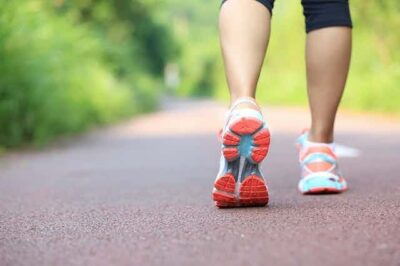 Walking doesn’t require any special equipment or gym memberships, and best of all, it’s completely free. For most of us, walking is something we do automatically. It doesn’t require conscious effort, so many of us fail to remember the benefits of walking for health. But what happens if we stop walking on autopilot and start challenging our brains and bodies by walking backwards? Not only does this change of direction demand more of our attention, but it may also bring additional health benefits.
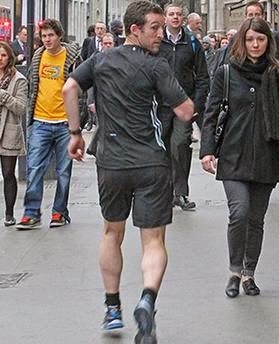 Sustained backward running decreases the energy we expend when we run forwards. These improvements in running economy are even beneficial for experienced runners with an already economical running technique.
 On 26 February 2015, Cates Holderness, a BuzzFeed community manager, posted a picture of a dress, captioned: ‘There’s a lot of debate on Tumblr about this right now, and we need to settle it.’ The post was accompanied by a poll that racked up millions of votes in a matter of days. About two-thirds of people saw the dress as white and gold. The rest, as blue and black. The comments section was filled with bewildered calls to ‘go check your eyes’ and all-caps accusations of trolling.
 Lastly, consider dreams. In a 1958 survey, Fernando Tapia and colleagues reported that only about 9 per cent of respondents indicated that their dreams contained colour. Other surveys done around this time reported similarly low proportions. A decade later, the tide turned and a large majority reported dreaming in colour. The philosopher Eric Schwitzgebel considers several explanations for this discrepancy. One possibility is that black-and-white photographs and television changed the content of dreams. As colour TV came to dominate, colour returned to people’s dreams (‘returned’ because, in a few studies from the more distant past, people did not claim to dream in black and white).
 Sci-fi author Brian Herbert once wrote, “The only guarantee in life is death, and the only guarantee in death is its shocking unpredictability.” These words ring true to researchers who investigate what happens in a person’s final moments—and the frustration that comes with these studies. One big problem almost always gets in the way: How do you ask people what dying feels like when they’re no longer here?
 When these comatose patients were taken off their ventilators, they could not breathe on their own. But, using EEGs, Borjigin noticed two people showed a surge in gamma brainwaves as their bodies started shutting down. Gamma brainwaves are usually a sign of consciousness, because they are mostly active when someone is awake and alert.

 I bike the same route to my job every morning. Turn right, over a bridge, gentle left, hard left, hard right, check for cars at the 4-way stop, left turn, gentle right, huff and puff up the same long hill… and on I go. I can recite the entire route from memory. Same streets, same houses, same trees, same lake, same parks, all whizzing by as I focus on the road ahead, keeping up my speed to get a good workout and get to work on time.
 I was asked recently how we can find happiness in this world that contains so much conflict and suffering. I find happiness because I look for it, right where I am, just like Joanne did. There are tiny flowers on the ground and funny bumper stickers on people’s cars. The person who walks past me has a face, and it might smile if I smile at them. When I look as a beginner looks — as if I haven’t already seen a million flowers, read all the bumper stickers, passed so many faces in my lifetime — I experience these little joys.