

 The world is full of outsiders: students away at a university far from home, immigrants to a new country, and people who go abroad for work or extended travel. Over the past year, more than 4.4 million American workers quit their jobs in the “Great Resignation,” and many of them became outsiders by joining a different company or moving to a new place, which they perhaps imagined might be friendlier to their personal needs and tastes.
But just because a journey to the unfamiliar was voluntary doesn’t make it easy: Being an outsider can be lonely and difficult, especially if all the strangers around you seem to know and understand one another. Your instincts might tell you that uprooting yourself was a terrible decision, that the benefits you sought are much smaller than the costs you are bearing. You might even wonder if you’ll ever be happy again.
The truth is, however, you almost certainly did not make a mistake. There is little evidence that being an outsider creates long-term problems for happiness or lowers your chance of success; on the contrary, people thrust between places and cultures tend to develop strength, flexibility, and resiliency. Being an outsider may be one of the best investments you will ever make, and you should embrace it, pain and all.
Scholars have studied outsiders, including immigrants, refugees, students, and foreign workers, to understand the long-term effects on well-being and personal success. Some of the most illuminating work has focused on so-called third-culture kids (TCKs): children who grow up outside their parents’ home culture and, as a result, are influenced partially by their parents’ home culture and partially by the culture in which they live, but mostly relate to a “third culture” made up of fellow sojourners. The term was coined in the 1960s by the sociologists Ruth Hill Useem and John Useem in studies of people who grow up in, for example, missionary and military families.
A lot of older theories of philosophy and psychiatry would predict tough outcomes for outsiders, especially TCKs—and indeed, would recommend against being one if you can avoid it. In Laws, Plato argued that people should not even travel abroad before age 40, and that visitors be restricted to port areas of cities to minimize their contact with citizens. He believed that acculturation—the psychological change that occurs when a person blends into an unfamiliar culture—was damaging to one’s sense of self. Plato’s reasoning carried on into the mid-20th century, and was shared by such eminent psychologists as Abraham Maslow, Erik Erikson, and Carl Rogers.
Outsiders do tend to face particular genres of hardships, especially distrust by insiders. Despite the biblical injunction “Do not oppress a foreigner,” even believers often disregard friendliness in favor of tribal instinct when it comes to immigrants. You don’t have to move to a new place to feel the ill effects. People at the margins of society, by virtue of the language they speak or the lifestyle they choose, often bear the brunt of hostility. Joseph Stalin, for example, felt a particular animosity for the people he and his supporters called “rootless cosmopolitans”—generally, Jewish intellectuals, who he considered to live outside of mainstream Soviet society despite the fact that they lived in Soviet cities.
However, with all due respect to Plato, outsiders can actually do very well. True, they generally suffer somewhat in the short term after a move. For example, one recent study showed that international college students rated their life satisfaction about 4 percent lower at the end of their first semester than at the beginning of the term. But a mountain of evidence shows that in the long run, being an outsider predicts well-being and emotional strength; it may even protect against depression.
For example, one 2018 study in the Journal of Cross-Cultural Psychology showed that TCKs grow up to be happier and more resilient than their peers who possess less multicultural experience, and are less prone to age-related declines in cognitive flexibility. A 2012 review found that being raised in at least two cultures leads, on average, to greater psychological and emotional well-being and higher social competence in adulthood. Also in 2013, scholars found that acculturation is negatively associated with depression, anxiety, psychological distress, and sadness.
Furthermore, TCKs don’t usually wind up insecure; they develop multiple cultural identities that they employ flexibly, the same way they switch between languages. This is almost like a superpower in a globalized, fast-changing world.
Spending time as an outsider is like any other big, taxing investment you can make in yourself: difficult and maybe painful, but with a positive, lifelong payoff. You might think of it as less like a fun vacation, and more akin to a voluntary personal challenge, like training for a triathlon. Here are a few ideas to incorporate an outsider ethos into your life.
1. Remember that being an outsider is a feature, not a bug.
When you are new to a place or a group of people, you might be tempted to think of your unfamiliarity as a cost of doing business, and something to get over as quickly as possible. And by all means, you should make friends, learn the language, and find common ground. But don’t forget that the uncomfortable friction that occurs while you are integrating is making you stronger and more resilient. No pain, no gain.
2. Find regular ways to be an outsider.
Given the benefits of bicultural experiences, don’t leave your outsider status up to circumstance. Find opportunities to be on the margins, looking in. In my profession of academia, for instance, we regularly take sabbaticals and go someplace completely new for a year or six months. Most people don’t have this luxury, but they can do something akin to it by changing jobs every few years, or transferring between cities. If that sounds too drastic, you can try switching up your regular haunts—go to a new church, club, or gym where you know no on
3. Make friends with outsiders, even if you aren’t one.
Remember that the third culture of TCKs is the one they form together as outsiders. Although no studies that I could find have looked at the therapeutic benefits of this third culture per se, it stands to reason that such bonding is crucial to the outsider’s superior adjustment capacity; it is a way to practice creating one’s own culture spontaneously. Even if you aren’t an outsider, you can learn these skills by joining those in your community who are. Look for the new people in your workplace or town, who are probably hanging out together. There’s always room for one more.
In candor, I’m approaching this topic with a fair amount of bias. Being an outsider early in my adulthood was the most positive experience I have ever had. At 25, I moved to a foreign country where I didn’t speak a word of the language, and knew not one soul save for a woman I hoped to marry, but who spoke little English. It was brutal, but life-changing in the best way. After a few years, I had lost my fear of new things, whether it was an unfamiliar language, working with strangers, new love, or a community hostile to foreigners.
That woman became my wife, and subsequently became an outsider in the United States. Over the past 30 years we have moved many times, as have our now-adult TCKs. Our youngest, who is adopted from China, attended three high schools during an especially peripatetic period in our family, and then chose a college in Pamplona, Spain. The changes were hard at first, but she is flourishing, just as the data would predict.
Original article here




 With tonight’s Mercury station direct, we have another equally substantial event: the Sun is conjunct Saturn at the midpoint of Aquarius. This is a combination of aspects that says: Slow Down and Pay Attention. Many more celestial events argue for the same approach.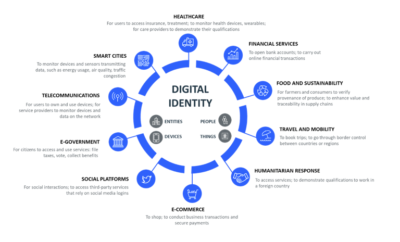
 These involve two things that are really one: social patterns, and the imposition of technology upon us. Aquarius is about electricity, and we now live in an entirely electrical society. We also live in a digital society. The patterns of our lives are now all but dictated by cellular technology. The “net” or the “web” now encompasses everything.
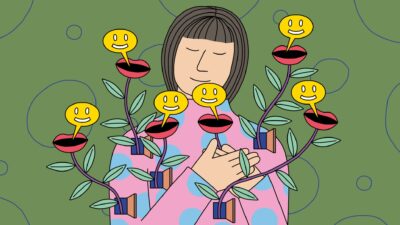 In 1896, a man in Dummerston, Vermont, was driven from his beloved home over what should have been a minor family dispute. He generally got along well with his brother-in-law, who lived next door. One day in an argument, however, the brother-in-law—who was a bit of a hothead—threatened to punch him. In reaction, the man had his brother-in-law arrested, which the neighbors saw as a massive overreaction. At the trial, the man acted haughty and “arrogant” toward others, according to newspaper accounts. He became so unpopular for his attitude and actions that, shunned by the local residents, he felt compelled to leave the town he loved, never to return.
 Last year, I had the pleasure and honour to meet His Eminence Shyalpa Tenzin Rinpoche, first via the platform Clubhouse, then via WhatsApp and phone calls. Finally, last September, H. E. Rinpoche stopped in the UK after touring the US.
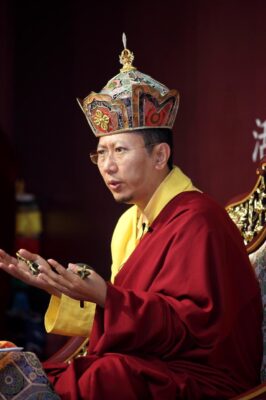 Veronica: Why is it important to build a Universal Peace Sanctuary and what is the inspiration behind this wonderful project?
 Many meditators, healers and people of goodwill are attracted to the idea of distant healing — that in meditation, contemplation and prayer we can help relieve suffering and pain at a distance.
 We may be slowly returning to our offices (more or less), but the strains of the pandemic are hardly over. As we enter a transitional stage after almost two years of trauma and strain, more than ever we need ways to refresh our energies, calm our anxieties, and nurse our well-being. One potentially powerful intervention is rarely talked about in the workplace: The cultivation of experiences of awe. Like gratitude and curiosity, awe can leave us feeling inspired and energized. It’s another tool in your toolkit and it’s now attracting increased attention due to more rigorous research.
 About 20 years ago, working for National Geographic, and with a grant from the National Institute on Aging, I started identifying and studying the longest-lived people, those who are in what we called the world’s Blue Zones. These are people who have eluded heart disease, diabetes, dementia, and several types of cancer.