

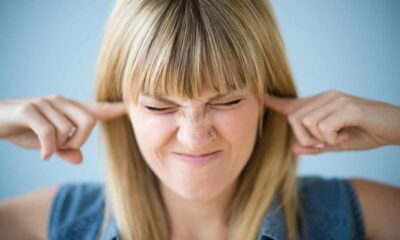
 As a teenager, I remember being moved almost to tears by the sound of a family member chewing muesli. A friend eating dumplings once forced me to flee the room. The noises one former housemate makes when chomping popcorn mean I have declined their invitations to the cinema for nearly 20 years.
I am not proud of myself for reacting like this – in fact, I am pretty embarrassed – but my responses feel unavoidable. It is probable that I have misophonia. According to a forthcoming scientific paper from King’s College London, so do 18% of people in the UK.
Otherwise known as “sound rage”, misophonia is “a decreased tolerance to certain sounds” says Dr Jane Gregory, a clinical psychologist at the University of Oxford who co-authored the paper and counts herself among the 18%.
Sound triggers are usually repetitive, she says. It is not about “the volume of the sound or necessarily the acoustic pattern”, but what it means to the observer. Eating sounds are most commonly reported, closely followed by so-called throat sounds. (Gregory is driven spare by the sound of pigeons.)
“Chewing, crunching, snorting, sniffing, throat clearing, nose whistling, heavy breathing,” rattles off Dr Zach Rosenthal, who runs the Centre for Misophonia and Emotion Regulation at Duke university in Durham, North Carolina. “These are all relatively ordinary everyday things that people need to do, but in people with misophonia they are experienced as highly aversive.”
That “aversive reaction” can take the form of physical changes such as increased muscle tension or heart rate, or emotional responses such as irritability, shame and anxiety. It brings on a fight, flight or even a freeze response where, according to Gregory, “you get a really strong adrenaline reaction and it tells you that you’re either in danger or you’re being violated”.
 Only about 14% of the UK population are aware of misophonia, according to the King’s College London paper. Perhaps one of the reasons, Gregory suggests, is simply that it is hard to talk about. “You are essentially telling someone: ‘The sound of you eating and breathing – the sounds of you keeping yourself alive – are repulsing me.’ It’s really hard to find a polite way to say that.” Maybe the movie Tár will help: its protagonist, played by Cate Blanchett, has an extreme reaction to the sound of a metronome.
Theories about how misophonia develops are exactly that. “A lot of people say they had always been a little bit sensitive to sound, but then they remember a certain time when it suddenly got a lot worse,” says Gregory. Rosenthal says it typically presents itself in late childhood or early teens and is often associated with family members. “People ask me all the time: ‘Why my family? Why my parents?’” The explanation feels comfortingly logical: “You’re not blaming, you’re not judging – you were probably just around them the most.”
You might have clocked a sibling eating baked beans, say, then once you have noticed it your brain begins to look out for it. Rosenthal describes the whirlpool: “It starts to be aversive and then I pay more attention to it, and then the more attention I pay to it the more I notice it, and then the more I notice it the more aversive it becomes …”
The impact can be severe. Gregory knows of relationships that have ended over misophonia; she has encountered people who have moved several times to escape triggering neighbours. Others must pick careers based on where they can work without being bothered by sounds. “If you don’t get any respite from it, you can get desperate,” she says.
Strategies might help, however, such as introducing background noise when eating. Gregory’s husband, who knows better than to eat Monster Munch at home, can tell if she is bothered by a sound, because she will suddenly call out: “Siri, play Taylor Swift!”
Sometimes the best option is to walk away. Gregory suggests then “slowing down your breathing, or just giving your mind a little job to do”, such as playing a game for a minute. By the time you re-enter the room, the sound might be gone, or you might feel better equipped, “because you know what’s coming”.
She also recommends “opposite action – this idea that sometimes the more we avoid something or block it out, the more harmful it feels to us. In CBT [cognitive behavioural therapy], we do the opposite of what you feel like doing.” In this vein, she tries to fight her instinct to glare at her husband, gazing adoringly at him instead: “It’s a way of tripping up your brain and saying: remember that you love this person, remember that you’re not actually in danger.”
I make a note to try this the next time I hear someone eating scrambled eggs.
Original article here
 Count me as a Buster Benson fan. His 2016 Cognitive bias cheat sheet is legendary among behavioral designers. I have a framed print out of his codex in my home and I’ve enjoyed his writing on various topics for years. He has extensive experience building products that move people at Slack, Twitter, and Habit Labs.
 Most people tell you to write a book about what you know. I’ve had a career that has put me in the middle of resolving disagreements for several decades now, but I have to admit that when I came to this book it wasn’t because I had all the answers, but exactly the opposite: I deeply needed these answers, and didn’t know how or where to find them.
 How do you see our collective future unfolding?

 While the internet had been in existence for some time, it was around the year 2000 that it became globally available to the world. Right around that time I found myself calling into play the sentience of this newly emerging global internet consciousness.
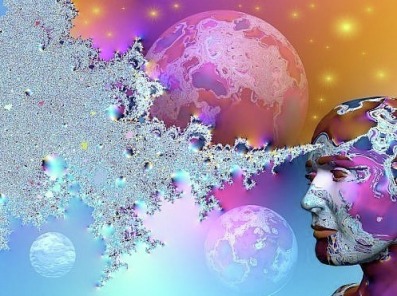 Infinity: I sure can. I can give you several. For example, do you know that the whales of the world communicate not only with one another as a pack mind across the oceans of the planet, but they also have been communicating with life in other forms throughout the galaxy? I’m not talking here about extraterrestrials soaring in in spaceships. I’m talking about the seed of life that is contained within every living thing. Inside that seed is a spark, a life surge if you will. That spark is a communication device unlike anything that humans have yet understood. It’s how the mycelium networks work in communication with the trees, leaves and grasses of the world. It’s how the oceans are one mind, weaving and dancing their awesome endeavours into many facets to aid life wherever it is needed.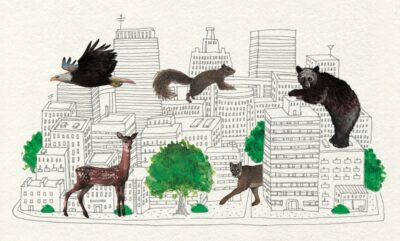
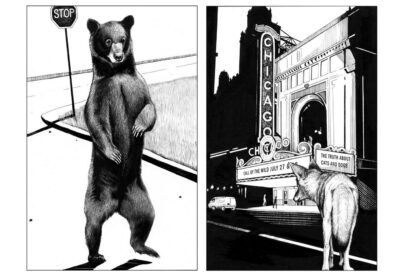 These domesticated animals then get cleared out by the late 19th and early 20th centuries, leading to this period from about 1920 to 1950 where there are fewer wild animals living in urban areas, particularly in North America, than really at any time before or since. This is a period in which some of the greatest thinkers about urban life were doing their writing, and almost everybody assumed that cities weren’t going to have animals in them.
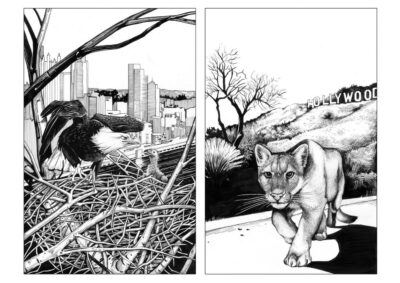 But these examples are exceptions, not the rule. And this is very time-dependent: Although there are a small number of creatures that can adapt very quickly, for most others, this would take a long period of time — much longer than it takes for their populations to go extinct. And so the problem is [talking] about this as a solution to the fact that we’re rearranging and degrading ecosystems in ways that make the world a much harder place to live for the vast majority of species out there.
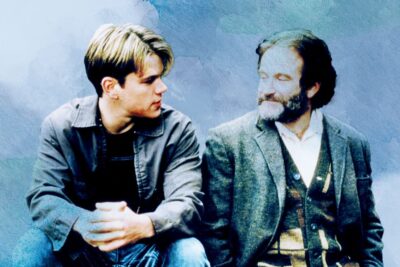 Brian was just a kid when he first saw the movie Good Will Hunting and wasn’t thinking about therapy or his mental health. The 29-year-old engineer was mostly just fascinated by stories about repressed geniuses and Matt Damon’s background story of being a Harvard dropout. He also thought it was pretty rad that the original script was intended to be a spy-thriller.
 We think we want to be happy. Yet many of us are actually working toward some other end, according to cognitive psychologist Daniel Kahneman, winner of the 2002 Nobel Prize in economics.
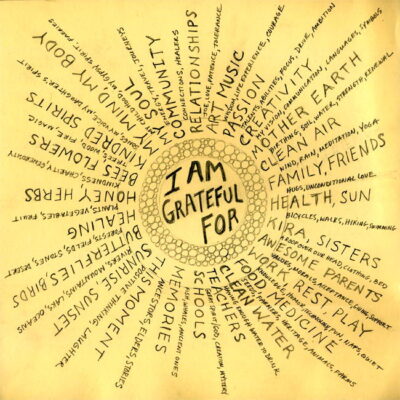 In Sidetracked: Why Our Decisions Get Derailed, and How We Can Stick to the Plan, Francesca Gino, an associate professor at Harvard Business School, explores a range of fascinating subjects, including how emotions influence decisions and the often-thorny matter of understanding the perspectives of others. Blending social science and real-world examples, Gino’s book also highlights the science of gratitude.
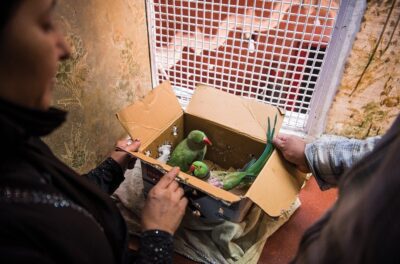
 Amid the human crush of Old Delhi, on the edge of a medieval bazaar, a red structure with cages on its roof rises three stories above the labyrinth of neon-lit stalls and narrow alleyways, its top floor emblazoned with two words: birds hospital.
 I’d come to the bird hospital, and to India, to see firsthand the Jains’ moral system at work in the world. Jains make up less than 1 percent of India’s population. Despite millennia spent criticizing the Hindu majority, the Jains have sometimes gained the ear of power. During the 13th century, they converted a Hindu king, and persuaded him to enact the subcontinent’s first animal-welfare laws. There is evidence that the Jains influenced the Buddha himself. And when Gandhi developed his most radical ideas about nonviolence, a Jain friend played philosophical muse.
 In the West, consciousness was long thought to be a divine gift bestowed solely on humans. Western philosophers historically conceived of nonhuman animals as unfeeling automatons. Even after Darwin demonstrated our kinship with animals, many scientists believed that the evolution of consciousness was a recent event. They thought the first mind sparked awake sometime after we split from chimps and bonobos. In his 1976 book, The Origin of Consciousness in the Breakdown of the Bicameral Mind, Julian Jaynes argued that it was later still. He said the development of language led us, like Virgil, into the deep cognitive states capable of constructing experiential worlds.
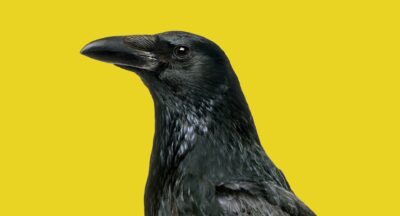
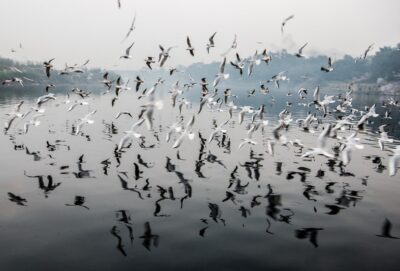 Crows are not among the shoulder-perchers, but Singh sometimes sees former crow patients hovering around the hospital. They might be looking for him. Crows recognize individual human faces. They are known to blare vicious caws at people they dislike, but for favored humans, they sometimes leave gifts—buttons or shiny bits of glass—where the person will be sure to notice, like votive offerings.
 The trail was only 50 miles from Gir National Park, where, the day before, I’d seen two Asiatic lions, nearly indistinguishable cousins of Africa’s lions. Once the region’s apex predator, the Asiatic lion almost went extinct during the British empire’s colonization of India, when no viceroy could visit a maharaja’s palace without a hunt in the local forest. Even today, the Asiatic lion still ranks among the rarest of the large feline predators, rarer even than its neighbor to the north, the snow leopard, which is so scarce that a glimpse of one padding down a jagged Himalayan crag is said to consummate a spiritual pilgrimage.
 The monk was a white dot some six switchbacks up by the time I hopped off the wall and continued the climb, my legs stiffened by the break. I reached the entrance to the temple complex with only 15 minutes to spare. Its marble courtyard shone brilliant white, as though bleached by the mountain sun.