

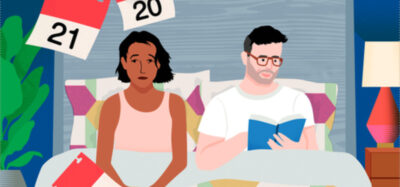
 If you’ve been stressed out and ignoring it—isn’t everyone stressed right now?— it could be time to do something about it. That’s because even though you may be basically healthy, tension is doing its stealthy damage. The latest evidence? Researchers have linked high levels of the stress hormone cortisol to brain shrinkage and impaired memory in healthy middle-aged adults. And get this: The effect was more pronounced in women than in men.
This research underscores an important point. Though stress affects your whole body, ground zero is your brain. It’s not just the effects of cortisol—it’s that teeth-grinders like traffic jams, personal snubs, and financial worries are perceived and interpreted by your gray matter. Fortunately, research focused on the brain is pointing to new, more effective ways to reduce your tension.
But first, let’s drill down and see how and why your brain’s natural reactions make you more vulnerable to the zings and arrows of tension.
How Stress Affects Your Brain
Aspects of the brain’s design that served us well thousands of years ago now make us susceptible to negative emotions and mental fatigue, both of which ratchet up our stress, says Amit Sood, M.D., professor of medicine at the Mayo Clinic and founder of the Mayo Clinic Resilience Program. Although our brains have evolved over time, “the speed of life today is the main stressor—it’s much faster than our brain’s ability to adapt,” he says. And that means we often end up with too little time and too few resources to address what life throws at us each day, which adds to a diminishing sense of control over our lives. Perceived lack of control has been shown to be a huge source of stress.
In his book Mindfulness Redesigned for the Twenty-First Century, Dr. Sood describes a number of traps that frequently ensnare our brains. Three of the most challenging:
Focus Problems
When giant predators roamed Earth, a scanning, outward-directed focus served us well—but today that focus is directed inward. Now, 80 percent of the time, our minds are wandering, stuck in an unfocused state even if we’re not aware of it.
Studies have found that this state makes us less happy, and the unhappier we are, the more our attention wanders and our thoughts pile up. It’s like having a huge set of open files on your computer, Dr. Sood says, only they’re in your brain, distracting you and demanding attention. Our tech dependence, a source of constant distraction, adds to our inability to focus.
Fear
Our survival depends on the ability of the brain (mostly the amygdala) to detect physical and emotional threats. Moments or events that elicit fear raise our heart rate, which the brain stores as information that might protect us from future danger. This so-called negativity bias makes us prone to paying more attention to bad news than to good. We readily remember bad things that happen to us because our brains also release hormones that strengthen those specific memories, and this further embeds them in our minds. The result? More stress.
Fatigue
While a number of body organs (e.g., the heart and the kidneys) can keep going like the Energizer bunny, the brain is not one of them. After working hard, it needs rest. The more boring and intense an activity is, the faster your brain will grow tired—and that can happen in as little as four minutes or as much as an hour or two. You can tell when your brain is fatigued (it has to signal this indirectly, since it has no pain receptors) because your eyes feel tired and stuff happens—you start making errors, become inefficient, lose your willpower, or see a dip in your mood. Brain fatigue leads to stress, and stress leads to fatigue, in a continuous closed loop.
Why Stress Hits Women Harder Than Men
Stress almost seems to have it out for women. In an annual survey by the American Psychological Association, women have repeatedly reported higher levels of tension than men and sometimes even more stress-related physical and emotional symptoms, including headache, upset stomach, fatigue, irritability, and sadness.
What’s more, midlife women have been found to experience more stressful events than both men and women of any other age, reports an ongoing study by the University of Wisconsin-Madison’s Institute on Aging. Stress overload may even lead to chronic disease: Long-term pressures at home and work plus stress from traumatic events almost doubles the risk of type 2 diabetes in older women, according to a recent study at the University of California, San Francisco. Women are also more prone to stress-induced mental health problems such as depression and anxiety disorders.
Here’s the why of it: A triple whammy makes women uniquely vulnerable to strain and pressure, says Dr. Sood. First, women’s brains make them more sensitive than men to stressors and a perceived lack of control. The limbic areas of women’s brains, which help control emotions and memories, are highly active, making them remember hurts and slights more readily. Stewing over these and having difficulty letting them go strengthens the brain circuits of those negative emotions—another example of the negativity bias at work—which also increases women’s stress.
In addition, the multiple demands of parenting and being in charge of the well-being of the household mean that women’s focus tends to be more diffuse. And an unfocused brain, as noted earlier, is another source of stress. A mom’s protective radar is always up for her kids too, which makes her sense a threat more quickly, and she’s more likely than her husband to get stuck and dwell on it, says Dr. Sood.
What Men Don’t Always Get
The differences in how men and women experience tension don’t play out in isolation, of course. They affect how husbands and wives, friends, and work colleagues experience and interpret the world—and yes, often the result is conflict. If you’re a woman, think of a time you had an upsetting disagreement with your boss. When you vented to your husband about it—how your boss looked at you, what she said, how you responded, how you felt, what she said next—maybe you saw his eyes glaze over, and maybe he said, “It’s over now; why don’t you just let it go and talk to her tomorrow?” Which made you feel hurt, angry, and dismissed—and depending on which feeling was uppermost, you either escalated the conversation into an argument or retreated to mull it over.
New studies are looking at how the genders process stress in the moment and coming up with reasons for the disconnect. Recently, using fMRI to measure brain activity, researchers at the Yale University School of Medicine found that while imagining a personalized, highly stressful event, the action- and planning-oriented parts of men’s brains were actively engaged, while women’s brains were busy visualizing and also cognitively and emotionally processing the experience.
In the second part of the study, when men and women were experiencing intense anxiety, brain regions that were active in women were inactive in men. This suggests that women tend to get caught up in processing their stress, turning it over and over in their minds and reimagining it, says Rajita Sinha, Ph.D., director of the Yale Interdisciplinary Stress Center.
“Women cope by talking about being anxious and describing their emotions and stressors,” she says. This could put them at risk for ruminating about the issues. Men seem not to access that cognitive-processing part of their brains and “are more likely to quickly think about doing something, taking an action, as opposed to expressing their distress verbally. It’s just the difference in the way we’re wired.”
That might explain why women tend to provide emotional support to someone who is stressed, whereas men might offer advice or something tangible like money or physical help. Ironically, what both genders want is emotional support when they’re tense, says Jennifer Priem, Ph.D., associate professor of communication at Wake Forest University. So men and women who are stressed out prefer to get support from women.
Bridging the Gender Stress Gap
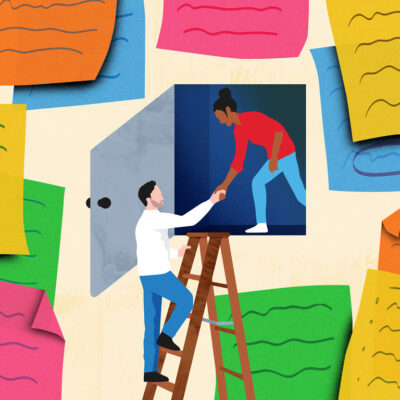 Priem has found that problems arise between couples when each person has a different perception of what’s stressful. The result: When people are really tense, their partners aren’t necessarily motivated to offer support if they think, If I were in this situation, I wouldn’t consider it that big a deal. So how do you get the response you want when you need it?
Ask your partner to just listen
“That’s number one—listening to and validating the other person’s feelings,” says Sinha. “So even just saying ‘You’re really frustrated by this’ in a nonjudgmental way is validating and will ease someone’s anxiety.”
Explain that you feel defensive when he dismisses your experience
“When a partner downplays the significance of something, the person who’s stressed may hold on to it more or feel they have to convince the other person it’s true and that they have a right to feel that way,” says Priem. “You might say, ‘I’m really upset right now, and I feel frustrated when it seems you’re making light of my feelings. It would make me feel better if you’d be more responsive to the fact that I’m upset, even if you don’t understand it.’”
Treat yourself with compassion
“Women tend to be more self-critical about not being able to control their emotions,” says Sinha. So they may see a partner’s comment as judgmental even when he didn’t mean it that way. If that’s the case, forgive yourself and let it go—and hug it out, which can reduce tension and boost positive feelings.
Learning to negotiate conflicts is a big step in easing pressures. Also important: figuring out strategies to deal with the distractions, fears, and fatigue your brain naturally accumulates (see below for four smart ones). These can help you take stress in stride, with a terrific payoff: better health and greater happiness, plus a more resilient brain.
How to Control Stress and Calm Your Brain
To keep stress in check, you should of course be eating healthfully, exercising regularly, and getting enough sleep to improve your mood, emotions, and cognition. But those are just the basics—and they’re not always easy to accomplish, especially when life is throwing lots of tension your way. Dr. Sood has advice that can up your stress-reducing game, based on the successful resilience program he runs at the Mayo Clinic. Here, four of his brain-focused, research-based strategies that work in just minutes a day.
Give your brain some RUM
That stands for Rest, Uplifting emotions, and Motivation. You need all three to help energize your brain and head off fatigue. So when you’re engaged in a task, take three to five minutes every couple of hours (or sooner, if you start getting fidgety) and pause for RUM.
How-to: Get up from your computer, or stop what you’re doing, and look at photos of your kids or of your favorite vacation spot, read inspiring quotes, text or call a friend, or watch a happy short video. Choose an activity that makes you feel good and is motivating.
Begin a morning gratitude practice
Take control of your brain before it gets hijacked by the day’s concerns and greet the morning in a happier, more connected frame of mind.
How-to: When you first wake up, before you get out of bed, spend a few minutes thinking of some people who care about you and silently send them your gratitude. Another reason it’s a good idea: A recent study found that anticipating a stressful day when you first wake up affects your working memory later that day—even if nothing stressful actually happens. (Working memory is what helps you learn things and retain them even when you’re distracted.)
Be mindfully present
Meditation is a great stress reliever, but not everyone can sit still, looking inward, for 20-plus minutes. Good news for the fidgety: Research has shown that focusing your attention outward engages the same brain network, so you can get similar stress-easing benefits by consciously giving the world your attention.
How-to: Challenge yourself to be curious and notice details—the color of the barista’s eyes at the coffee shop, the pattern of your boss’s necktie, which flowers are blooming in your neighborhood. Curiosity feeds the brain’s reward network, which makes you feel good; it also augments memory and learning.
Focus on kindness
Even the nicest among us are quick to judge others, especially if they’re different from us (thank the amygdala, a region of the brain that interprets difference as a threat).
How-to: To calm the amygdala, focus on two things when you’re feeling judgy about someone: that every person is special, and that everyone has struggles. Start a practice of sending silent good wishes to people you pass on the street or in the halls at work. The benefits for you: Your oxytocin, the hormone of connectedness, rises; your heart rate slows; and you feel more benevolent. All of which makes you healthier and happier.
Original article here
 A dear friend — a friend I admire for her ability to guide others — recently admitted to suffering from a bout of the “shoulds.” She pointed out that every time she told herself she “should” have done something or “should” be doing something, she was essentially flagellating and shaming herself.
 A propensity toward a “should” mindset can come from early neural imprinting within fear-driven cultures, says neuroscientist Tara Swart, author of The Source: The Secrets of the Universe, the Science of the Brain. “Cultures can mean family, society, school, or religion. Even in adulthood, the ‘shoulds’ are about the things you had to do to survive without punishment, which can be literal or be shame, guilt, or humiliation.” Telling ourselves we “should” be doing this or “should” be doing that subconsciously brings up the shame or guilt that would have been the punishment for not behaving as expected during childhood, says Swart.
 Barna Abel says, situation permitting, her first step in quelling the inner “shoulds” is to check in with herself and ask what would it look like to let go of what she thinks she should do and actually start to do what she wants to do. “It’s just stopping and being honest with yourself about your resistance. A lot of times, what gets stuck in the ‘shoulds’ are things that we’re not good at. There are things you may have been putting off because they aren’t things you really want to do, or are things that you may find difficult,” Barna Abel says. Then, actually plot out your options. “Ask yourself: If I knew I couldn’t fail, success was assured, and money was no object, what would happen? This gets you to open up in terms of possibility and alternate solutions,” she adds.
 Welcome to Summer! Welcome to Winter! Completely depends on whether you’re in the Northern or Southern Hemispheres, doesn’t it? Still, happy Solstice to one and all.
 We are currently the only species on this planet in which everyone must “earn” their living. Do you even ever question that assumption? I do…a lot. Jobs were created when the Industrial Age started. Before that everyone had a trade or vocation. People specialized, whether they were the baker, butcher, or candlestick maker. Everyone was sort of an entrepreneur. Before that, we lived in cooperative communities in which everyone contributed to the mutual welfare and survival of all the members of the group. Concepts such as hoarding and “not enough” were unknown. Yes, there were tough times; when the hunting was poor, or there was a drought. But the fluctuations were part of the planetary ecosphere evolving, not because someone somewhere saw a way to make a quick buck speculating in the commodities market. We might well ask what changed to cause us to abandon the natural equilibrium we had with Nature and when and how did it change. Is what we see in front of us now really fair and working for you and me?
 A new thought teacher by the name of Catherine Ponder once said, “abundance is having just enough to share.” When we share from our blessings, no matter how meager, we are sending out a message to the Universe. We have cast our “bread on the waters” which will return to us when we may be in need. As we give to others, we give to ourselves.
 Alchemy has always seemed a somewhat mysterious ability to many people. The word itself evokes a level of power that, in the past, many have been frightened to step into.
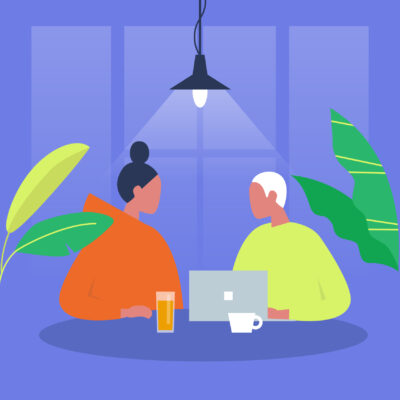 What’s the point of networking if not to get other people to like you? Sure, you need new contacts to see you as interesting, competent, professional, and potentially valuable to them—but if they don’t also find you likable, nobody will feel motivated to reach out later and work with you.
 The first time I put up a one person show, I didn’t know what I was doing.

 I am the mother of twins, a lovely daughter and a sweet son. They will be 19 years old in August. They are starting to live independent lives, one is going to university and the other one is already working.
 My spiritual path has allowed me to share with my kids those internal powers we all have, and I have made sure to repeat myself many times over. Of course, on several occasions I get those teenage looks and eyes rolling, but I know that one day, they will remember my words and tools and apply them.
 Forgiveness is often viewed as the “happily ever after” ending in a story of wrongdoing or injustice. Someone enacts harm, the typical arc goes, but eventually sees the error of their ways and offers a heartfelt apology. “Can you ever forgive me?” Then you, the hurt person, are faced with a choice: Show them mercy — granting yourself peace in the process — or hold a grudge forever. The choice is yours, and it’s one many of us assume starts with remorse and a plea for grace.
 Enright defines forgiveness as a moral virtue. Moral virtues (like kindness, honesty, and patience) are typically focused on how they benefit others; these are things you do primarily for another person’s sake, regardless of whether or not they have “earned” it.
 Enright has studied forgiveness extensively. He says his research group at the University of Wisconsin Madison was the first to publish a scientific study on forgiveness, in 1989; in 1993, they became the first to publish a scientific study of forgiveness therapy. Their research has led to the development of a step-by-step process for forgiveness, which can happen in therapy (ideally with someone who is trained in forgiveness therapy), or through a self-guided process using his workbook.