
- You feel calm inside … and that calmness offers an ease of genius flow and vitality.
- You have emotive bursts popping up from inside.
- Sometimes they’re purposeful and other times you might cry over nothing at all. I believe this is your power offering itself to you to elevate the world.
- You fall in love with nature, animals, people, the Earth.
- You see wonders everywhere you look. And you want to put more of that wonderfulness into the world around you for others to thrive upon.
- It becomes effortless to energetically zing others up. The more you do this, the greater you feel.
- You see the potential in people and situations and aim straight for the new possibilities on offer in every circumstance.
- You feel younger than your years and look in the mirror to find that’s showing up in you physically too.
- You love easily with zero concern for a broken heart because this kind of love comes from a greater place with greater purpose and offers itself readily to all.
- You understand things at greater levels, eliminating the reactive responses that come along with a lack of comprehension of greater purpose at play.
- You feel more like the greater being you really are, finding ways to live this here on Earth.
- You discover you can talk to animals, trees, oceans, the universe, etc. and they energetically talk back to you with brilliant insights into how life is unfolding right now. We are increasingly interconnected as Source beings in a symbiotic version of reality.
- You become an alchemical elevancer of Life naturally and instinctively.
May grace, genius and greatness flow through us all now with wonder and joy.
About the Author:

Soleira Green is a visionary author, quantum coach, ALLchemist & future innovator. She has been creating leading edge breakthroughs in consciousness, quantum evolution, transformation, innovation, intelligence and more over the past 25 years, has written and self-published eleven books, and taught courses all over the world on these topics.
 In what now feels like an annual update, crows are even more surprisingly smart than we thought. But do they have true consciousness? Research shows that crows and other corvids “know what they know and can ponder the content of their own minds,” according to STAT. This is considered a cornerstone of self-awareness and shared by just a handful of animal species besides humans.


 I fast once a month. It’s hard. Even though I’ve been doing it for years, I start dreading my fast day the night before; fretting about how I’m going to be able to pass through the discomfort. And where I’m typically not hungry until around 11am, on a fasting day I wake up hungry. Then, I stumble through what I need to get done as best as I can, given how lousy I’m feeling. Even though I know what to expect, it never seems to get easier.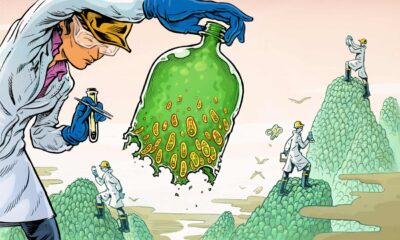


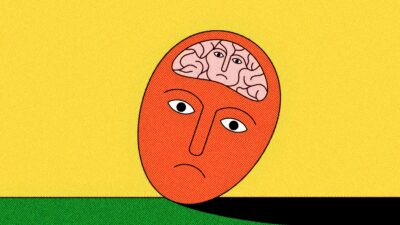 Ever had someone tell you to just cheer up? Did it drive you crazy? Well, turns out that someone telling you to “be happy” isn’t just annoying—it’s also wildly unhelpful.
 I think the good thing about meditation—mindfulness, concentrating on the present, detaching—is as good anti-anxiety, anti-anger tools. But one of the costs of accepting fate, accepting that you can’t go on and do something good in the future, correlates highly with physical illness, shorter life span, less accomplishment at work. So, it’s a good anti-anxiety tool often, but it’s got a lot of costs as well.
 Whenever I am faced with life’s uncertainty, I ask myself the following questions: Why is this happening? What can I do to make it go away? How can I navigate this effectively? What can I learn from this experience?
 The chorus of the theme song for the movie Fame, performed by actress Irene Cara, includes the line “I’m gonna live forever.” Cara was, of course, singing about the posthumous longevity that fame can confer. But a literal expression of this hubris resonates in some corners of the world—especially in the technology industry. In Silicon Valley, immortality is sometimes elevated to the status of a corporeal goal. Plenty of big names in big tech have sunk funding into ventures to solve the problem of death as if it were just an upgrade to your smartphone’s operating system.
 The researchers also found that with age, the body’s response to insults could increasingly range far from a stable normal, requiring more time for recovery. Whitson says that this result makes sense: A healthy young person can produce a rapid physiological response to adjust to fluctuations and restore a personal norm. But in an older person, she says, “everything is just a little bit dampened, a little slower to respond, and you can get overshoots,” such as when an illness brings on big swings in blood pressure.
 Many people cheat on taxes — no mystery there. But many people don’t, even if they wouldn’t be caught — now, that’s weird. Or is it? Psychologists are deeply perplexed by human moral behavior, because it often doesn’t seem to make any logical sense. You might think that we should just be grateful for it. But if we could understand these seemingly irrational acts, perhaps we could encourage more of them.
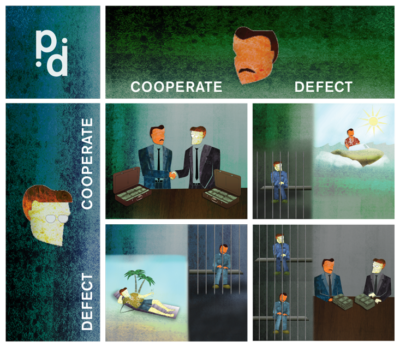
 When it comes to getting people to cooperate more, Rand’s work brings good news. Our intuitions are not fixed at birth. We develop social heuristics, or rules of thumb for interpersonal behavior, based on the interactions we have. Change those interactions and you change behavior.