
Networks are the rule of nature; not the exception.
The story of fungi is the story of our essential unity. The more we understand and respect this third kingdom, the more solutions we’ll uncover for the many challenges that face us. It’s not surprising that we are latecomers to the discovery of the usefulness of mushrooms, because our encounters with them are very short; they pop up suddenly and then they’re gone. With plants and animals, by comparison, which are visible for weeks, months, years, the embodied knowledge we have of them is naturally much greater. Mushrooms can feed you and heal you, they can kill you, and they can send you on a spiritual journey. Then they disappear. It’s very hard to understand them, but understand them we must.
It doesn’t really help to tell people that the sky is falling or the soil is collapsing without some options for solving the situation. This is what fungi and mycelium bring to the table: They represent ecological remedies that literally lie beneath our every footstep. To take just one example, consider agriculture. The new standard for sustainability is “no-till” farming, a process that features minimal disturbance of the soil in order to maintain its ability to absorb water and sequester carbon. How does one do that? By keeping the mycelium intact and planting seeds that are dusted with mycorrrhizal fungi. Ten years ago, you couldn’t find a single bag of such seeds; now you can’t find any without it. Ninety percent of the soil now sold in garden centers is fortified with mycorrhizal fungi.
The qualities of these fungi have largely gone unnoticed in the past, but we are noticing them now. We’ve identified several hundred species and cultures that have different talents for solving a lot of environmental challenges, and that’s just the beginning. It’s a matter of matching those talents specifically with a targeted concern. And as we keep doing that, we are building what I call an arma-mentarium of solutions, which is unprecedented in our time. We can dial in solutions using fungi with specific skillsets to address many of the environmental challenges we face.
This has been my mission all along, and it turns out that a lot of my early ideas have proven to be factually correct and scientifically supported. When I do research experiments, I look for my biggest critics, often those working in universities, and invite them to prove me wrong. “Do this research on your own,” I suggest. “Design the experiment and the protocol, test the hypothesis, and get back to me.” Many of my most vocal skeptics have become big supporters.
And so, we shouldn’t underestimate the intelligence of nature and the many organisms that have evolved to this day. We are here today because of very smart choices made along the evolutionary path, and because of our ability to communicate with other species and enlist them to our benefit. And this doesn’t just work for humans. The communities of nonhuman species working together across the planet are the true architects of the ecosystems that maintain the circle of life.
Strength In Numbers
What’s been missing in the scientific conversation is the impact of the third kingdom, the mycelial and fungal networks. They are the foundation of the food web. Seventy percent of the biological carbon in soil is fungi, both living and dead. I’ve been attending conferences for years trying to engage the scientific community in acknowledging this vital piece of the puzzle, and it took a long time to register. Everyone’s looking above ground for solutions to our environmental problems. They’re looking at oil, at concrete, using mechanistic and conventional ways of thinking, without understanding that the biology of nature has already solved many of these problems. Unless we come to terms with our fungal underlords, our biological myopia may be the downfall of us all.
Humans indulge the idea that we are the highest species, the top of the food chain, and that the main purpose of the biosphere is to support us. But is this “highest species” worth protecting? This illusion of biological grandeur is the cause of our suffering because of the egocentricity it covers up. We’re still very much in kindergarten when it comes to understanding how to co-create a sustainable future for all beings — and all beings are necessary to make that future possible.
A core concept of evolution is that, through natural selection, the strongest and fittest survive. In truth (and scientifically proven), communities survive better than individuals, especially communities that rely on cooperation. Acting on such a principle, people want to give in order to receive, which I think reflects the power of an essential goodness. I see this as a major force of nature — that evolution is based on the concept of mutual benefit and generosity.
It’s certainly true in the world of fungi and plants and trees. Yes, there are negative influences in the human domain. We do have some bad actors. But I think their appearance reminds the majority that it’s far better to base our actions on the values we strive to attain, on the principles we want to carry forward into future generations. Who wants to teach their children to be greedy, mean, and violent? Benevolence, kindness, trust, forgiveness — the fact that these concepts exist is, to me, de facto proof that the evolution of life has been based on the concept of goodness.
Fungi build soil, which expands the carrying capacity of the ecosystem, and thus the capacity for adding biodiversity. The more complex your biodiversity, the larger your cast of characters, the more opportunities for plants and other creatures to collaborate on providing maximum benefit to all. It’s like anything else: the larger your selection pool, the more likely your successes. True wealth is not measured in material possessions but by the abundance of options and choices.
Mycology (the study of fungi) is capable of offering so many solutions. Yet the field is underfunded, underappreciated, and underutilized. I think this shows the chasm of knowledge we have to overcome. But it’s also a perfect opportunity to create an “integrative science,” building bridges of knowledge between researchers of fungal networks and other scientists to develop an applied mycology grounded in practical solutions. We need to be engaging fungi purposefully, because they are the agents of sustainability, they will give us resilience.
The Truth Of Our Interconnectedness
The problem we face today is that we live in artificial realities wherein we invent our own facts. The more artificial the reality (for example, “Climate change is a hoax”), the more divorced from the truth one gets.
These bubbles of false realities are often constructed to serve the interests of certain groups and people who are trying to hijack your consciousness. It’s like getting stuck in a video game. You end up believing in and playing by the rules of that game, but the problem is that those rules don’t apply outside the video game. Once you embed yourself in nature and start working in the real world, you’ll encounter a new set of well-established rules and a knowledge base that’s been tested for millennia. We won’t solve our most pressing problems unless enough people leave the video games they’re immersed in and fully reengage in the consciousness of nature.
We all have a deeply embedded yearning to experience nature. Can you imagine what someone would be like if they had never been exposed to the natural world? If their reality had been limited to bricks and buildings, to straight lines and asphalt? If that is your only view of reality, how many truly creative ideas can come from that?
Unfortunately, most people are, to some degree, ecologically impoverished, aptly coined the “nature-deficit disorder” by Richard Louv. But it’s not too late. We can still use our best technology and the tools of science to respectfully and humbly unlock nature’s secrets and reveal the depths of her knowledge. With fungi and mushrooms, we’ve only scratched the surface of how they work and what they know. There are literally thousands of unknown species, each with unique properties that may hold answers to the massive challenges we face.
Five or ten years ago, the idea that “everything is connected” sounded like New Age nonsense. Now it is less controversial, but we still need to develop more ways to show that this interconnectedness is real and that anyone can participate in a solution and have a meaningful impact.
A Time For Therapeutic Intervention
Like it or not, we’re actively involved in our evolution. The challenge is that we have to evolve faster because the problems we’re creating are eclipsing our ability to adapt. And if we don’t adapt and get ahead of this curve, we will lose the race and our species will instead simply race toward extinction. It’s happened to countless species before ours. I do think it’s a challenge we’re well-equipped to meet, but it will require a different mindset, a paradigm shift in consciousness that looks at everything holistically.
When you consider the webs of dark matter showing up in hi-tech scans of the universe, the webs of mycelium branching out through the planetary biosphere, the webs of capillaries in our bodies, and the neural structure in our brains — these, to me, are central to this new paradigm. It’s all connected, it’s all co-evolving. Networks are the rule of nature; not the exception.
Excerpted with permission from Fantastic Fungi: How Mushrooms Can Heal, Shift Consciousness, and Save the Planet, the companion book to the acclaimed “Fantastic Fungi” documentary. ©2019, Earth Aware Editions.
Paul Stamets is the preeminent mycologist in the United States. He has discovered several new species of mushrooms, pioneered countless new techniques, published several best-selling books, and won numerous awards. Visit www.fungi.com
Original article here
 The night is going well. Everyone is laughing, and there is a happy energy in the air. The conversation flows easily and you’re the merry, relaxed kind of drunk. Then Josh swaggers over with a tray of something. Then you see what it is. Oh no.

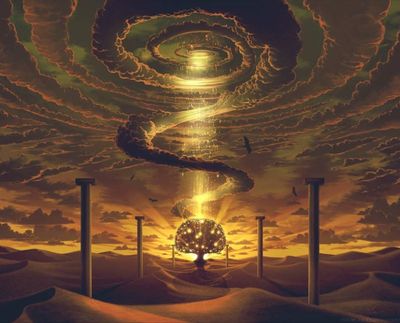 Yes, I know there are many realities, but let’s just for a moment distinguish them as two … normal reality and NEW reality.
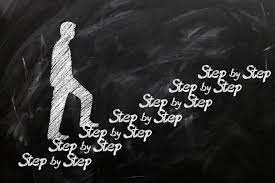 Self-regulation, within the space of wellbeing, is actually emotional self-regulation. In other words, the capacity of managing our emotions on a daily basis. During the day, we experience a range of different emotions, from joy, love, and peace to anger, frustration, anxiety — and the way we respond to events will determine our state of being. The important point here is that we have a choice, we always have a choice: we can choose to give free rein to negative emotions and dwell on them, or we can choose to acknowledge these emotions, find a solution, and move on.
 The third step is when consciousness comes into play. When I say “consciousness” I am talking about that inner awareness of being more than flesh, being part of something larger, where we are one and unique, where there is peace and there is freedom. As conscious beings we know that our inner self plays a role in our wellbeing, and if we are able to go to that internal place, then we can receive the benefits of understanding that everything comes from within and that we are in charge of our own life.
 Tina was at a crossroads. Her daughter had recently left for college, and her husband had his own pursuits. And although she’d once enjoyed banking, she now bore little interest in her work. For some time, she had been asking herself whether she should quit. But what would her colleagues and bosses think of her?
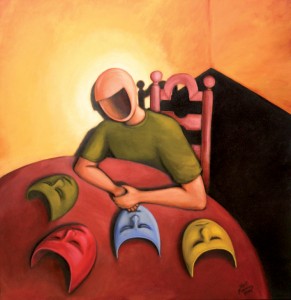 The idea of a “true self” and a “false” or “shadow” self has long preoccupied psychologists. For example, Carl Jung introduced the notion of the shadow side of our personality. He viewed “the shadow” as our unknown, dark side—made up of the primitive, negative, socially depreciated human emotions such as sexuality, striving for power, selfishness, greed, envy, jealousy, and anger. But although the shadow personifies everything that we fear, and therefore refuse to acknowledge, it remains a part of us. Jung believed that unless we come to terms with our shadow side, we are condemned to become its unwitting victim.
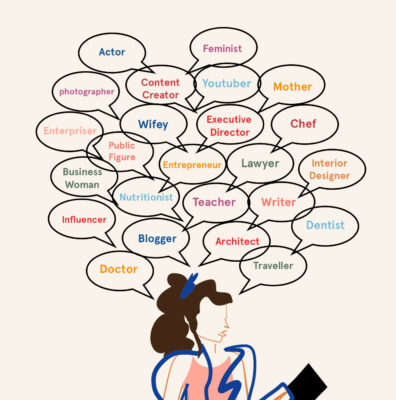 If there is too great a discrepancy between the “true” and the “false” self, it will make for a vulnerable sense of identity. And if we are unable to acquire a stable sense of identity—we may end up one day unraveling as Tina did. After a lifetime of complying to others’ expectations, Tina was experiencing what Erikson would call a delayed identity crisis. At a certain point in her life, it became difficult for her keep up the lie.
 Yesterday I was chatting with a friend and I found myself saying the words ‘tipping over the vibrational horizon’. I had never used those words before so I set out to discover exactly what I meant by this.
 Alchemy has always seemed a somewhat mysterious ability to many people. The word itself evokes a level of power that, in the past, many have been frightened to step into.
 I am always careful when using phrases and sentences saying something like, “Be you”, “Discover yourself “, or “Be authentic”. I admit that this kind of statement puts me off. However, sometimes it is difficult to express experiences that happen to us at a deep inner level, and I have come to the conclusion that, no matter what, words are here to be used the way we know and when adding the feeling from which they are expressed, any word gets validated.
 Everything is energy and science has been talking about it for quite some time now: think of Einstein and his famous formula, E=mc2. Remember Nikola Tesla as well, who said, “If you want to find the secrets to the universe, think in terms of energy, frequency and vibration.”