
 Sometimes we must turn to other languages to find le mot juste. Here are a whole bunch of foreign words with no direct English equivalent.
- Kummerspeck (German)
Excess weight gained from emotional overeating. Literally, grief bacon.
- Shemomedjamo (Georgian)
You know when you’re really full, but your meal is just so delicious, you can’t stop eating it? The Georgians feel your pain. This word means, “I accidentally ate the whole thing.”
- Tartle (Scots)
The nearly onomatopoeic word for that panicky hesitation just before you have to introduce someone whose name you can’t quite remember.
- Mamihlapinatapai (Yaghan language of Tierra del Fuego)
This word captures that special look shared between two people, when both are wishing that the other would do something that they both want, but neither want to do.
- Backpfeifengesicht (German)
A face badly in need of a fist.
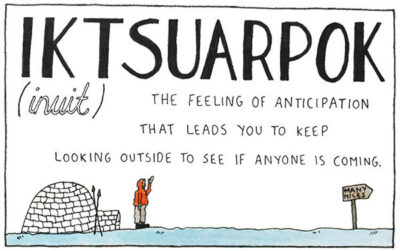
- Iktsuarpok (Inuit)
You know that feeling of anticipation when you’re waiting for someone to show up at your house and you keep going outside to see if they’re there yet? This is the word for it.
- Pelinti (Buli, Ghana)
Your friend bites into a piece of piping hot pizza, then opens his mouth and sort of tilts his head around while making an “aaaarrrahh” noise. The Ghanaians have a word for that. More specifically, it means “to move hot food around in your mouth.”
- Greng-jai (Thai)
That feeling you get when you don’t want someone to do something for you because it would be a pain for them.
- Mencolek (Indonesian)
You know that old trick where you tap someone lightly on the opposite shoulder from behind to fool them? The Indonesians have a word for it.
- Faamiti (Samoan)
To make a squeaking sound by sucking air past the lips in order to gain the attention of a dog or child.
- Gigil (Filipino)
The urge to pinch or squeeze something that is irresistibly cute.
- Yuputka (Ulwa)
A word made for walking in the woods at night, it’s the phantom sensation of something crawling on your skin.
- Zhaghzhagh (Persian)
The chattering of teeth from the cold or from rage.
- Vybafnout (Czech)
A word tailor-made for annoying older brothers—it means to jump out and say boo.
- Fremdschämen (German); Myötähäpeä (Finnish)
The kinder, gentler cousins of Schadenfreude, both these words mean something akin to “vicarious embarrassment.”
- Lagom (Swedish)
Maybe Goldilocks was Swedish? This slippery little word is hard to define, but means something like, “Not too much, and not too little, but juuuuust right.”
- Pålegg (Norwegian)
Sandwich Artists unite! The Norwegians have a non-specific descriptor for anything – ham, cheese, jam, Nutella, mustard, herring, pickles, Doritos, you name it – you might consider putting into a sandwich.
- Layogenic (Tagalog)
Remember inCluelesswhen Cher describes someone as “a full-on Monet … from far away, it’s OK, but up close it’s a big old mess”? That’s exactly what this word means.
- Bakku-shan (Japanese)
Or there’s this Japanese slang term, which describes the experience of seeing a woman who appears pretty from behind but not from the front.
- Seigneur-terraces (French)
Coffee shop dwellers who sit at tables a long time but spend little money.
- Ya’arburnee (Arabic)
This word is the hopeful declaration that you will die before someone you love deeply, because you cannot stand to live without them. Literally, may you bury me.
- Pana Po’o (Hawaiian)
“Hmm, now where did I leave those keys?” he said, pana po’oing. It means to scratch your head in order to help you remember something you’ve forgotten.
- Slampadato (Italian)
Addicted to the UV glow of tanning salons? This word describes you.
- Zeg (Georgian)
It means “the day after tomorrow.” OK, we do have “overmorrow” in English, but when was the last time someone used that?
- Cafune (Brazilian Portuguese)
Leave it to the Brazilians to come up with a word for “tenderly running your fingers through your lover’s hair.”
- Koi No Yokan (Japanese)
The sense upon first meeting a person that the two of you are going to fall in love.
- Kaelling (Danish)
You know that woman who stands on her doorstep (or in line at the supermarket, or at the park, or in a restaurant) cursing at her children? The Danes know her, too.
- Boketto (Japanese)
It’s nice to know that the Japanese think enough of the act of gazing vacantly into the distance without thinking to give it a name.
- L’esprit de l’escalier (French)
Literally, stairwell wit—a too-late retort thought of only after departure.
- Cotisuelto (Caribbean Spanish)
A word that would aptly describe the prevailing fashion trend among American men under 40, it means one who wears the shirt tail outside of his trousers.
- Packesel (German)
The packesel is the person who’s stuck carrying everyone else’s bags on a trip. Literally, a burro.
- Hygge (Danish)
Denmark’s mantra, hygge is the pleasant, genial, and intimate feeling associated with sitting around a fire in the winter with close friends.
- Cavoli Riscaldati (Italian)
The result of attempting to revive an unworkable relationship. Translates to “reheated cabbage.”
- Bilita Mpash (Bantu)
An amazing dream. Not just a “good” dream; the opposite of a nightmare.
- Litost (Czech)
Milan Kundera described the emotion as “a state of torment created by the sudden sight of one’s own misery.”
- Luftmensch (Yiddish)
There are several Yiddish words to describe social misfits. This one is for an impractical dreamer with no business sense.
- 37 & 38. Schlemiel and schlimazel (Yiddish)
Someone prone to bad luck. Yiddish distinguishes between the schlemiel and schlimazel, whose fates would probably be grouped under those of the klutz in other languages. The schlemiel is the traditional maladroit, who spills his coffee; the schlimazel is the one on whom it’s spilled.
Original article here

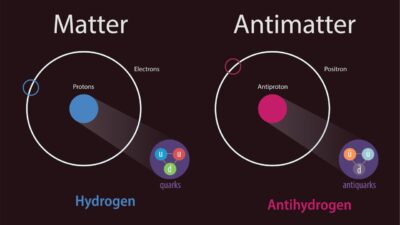
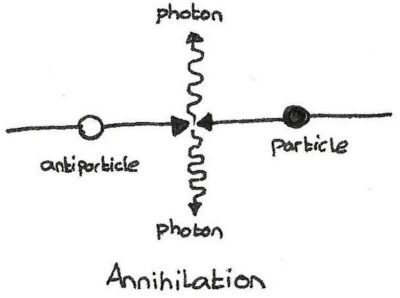 So that’s how the hot Big Bang starts off: with this hot particle-antiparticle soup made up of all allowable species. In the earliest stages, it’s the heaviest particle-antiparticle pairs that disappear first. It takes the most energy to create the most massive particles and antiparticles, so as the Universe cools, it gets progressively less and less likely that the quanta of energy that interact can spontaneously create new particle/antiparticle pairs.
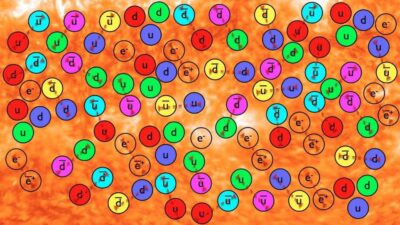 However, since there is somewhere around 1 extra proton (or neutron) for every 1.4 billion proton/antiproton pairs, we’re left over with a small excess of protons and neutrons.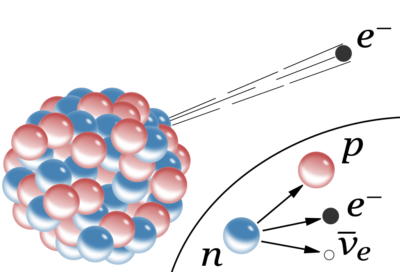
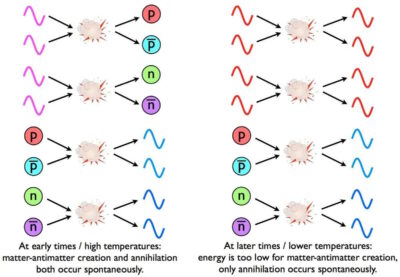
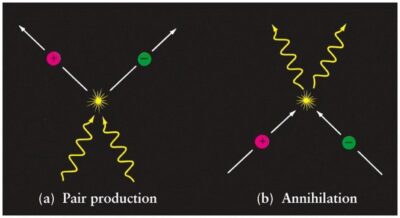 On the other hand, the Universe is still energetic enough that when two photons collide, they can still spontaneously produce electron-positron pairs, and where electron-positron pairs annihilate into two photons. This continues for just a tiny bit longer: until the Universe is about three seconds old (as opposed to the one second freeze out for neutrinos). This “second additional thing,” occurring just slightly after the weak interactions freeze out, means that all the matter-antimatter energy that was tied up in electrons and positrons goes exclusively into photons, and not into species of neutrinos-and-antineutrinos, when they annihilate.
 Time is one of those things that most of us take for granted. We spend our lives portioning it into work-time, family-time and me-time. Rarely do we sit and think about how and why we choreograph our lives through this strange medium. A lot of people only appreciate time when they have an experience that makes them realise how limited it is.


 Sci-fi author Brian Herbert once wrote, “The only guarantee in life is death, and the only guarantee in death is its shocking unpredictability.” These words ring true to researchers who investigate what happens in a person’s final moments—and the frustration that comes with these studies. One big problem almost always gets in the way: How do you ask people what dying feels like when they’re no longer here?
 When these comatose patients were taken off their ventilators, they could not breathe on their own. But, using EEGs, Borjigin noticed two people showed a surge in gamma brainwaves as their bodies started shutting down. Gamma brainwaves are usually a sign of consciousness, because they are mostly active when someone is awake and alert.