
Many many people (and animals and forests and oceans too) have become super conscious in these past few years. Is that you too? Here are what I see as the 12 sign of being super conscious now….
- We don’t get triggered by things in the way we used to. There’s a kind of calm understanding of what’s behind things and where they might lead if someone recognises its potential and greater purpose.
- We walk in awe of the natural world, going ‘look at that sky, the green of everything, the bursting wonder of flowers and the sheer joy of connecting with animals’.
- We KNOW things. Yup just simply know stuff we never learned or heard of before. I call this quantum intelligence and it seems to be catching on.
- We know who we are and at the same time it’s kind of irrelevant as we are now the source creators of ourselves. Identity has ceased to matter and fulfillment of greater purpose has taken its joyful place.
- We appear to be timeless in some way. Yes there are signs of aging, but at the same time there’s a radiant inner glow that supersedes any belief in getting older.
- We are radiant suns lighting up reality, not just in our close proximity, but in the greater field of us all.
- There is a strong sense of Source both within and without. We see source in everything and everyone. It seems we are now inner connected via what I like to call the Source mycelium network that connects all life now.
- We can commune with animals, trees, the stars, the universe. It’s more than telepathic, it’s communion at its most wonderful level.
- We are possibilitarians, apocaloptimists, transformers and transcenders of all that has come before. The past is maleable, we live in the presence of the present, co-creating a future too fabulous to even yet imagine.
- We talk with those who’ve gone on to the other side with great ease and grace, reveling in their next becoming. We are even watching a wave of loved ones being reborn right now as the next wave of super conscious beings on the planet.
- We are a collective force of wonder, of creation, of super connection, each with our own unique masteries and genius surging to the fore to innovate everything.
- We source new consciousness and quantum leap new possibilities into reality. We are future innovators, loving life, spreading Kindness with a capital K and living in a version of reality that is magical, synergistic, beautiful and naturally abundant.
About the Author:
Soleira Green is a visionary author, quantum coach, ALLchemist & future innovator. She has been creating leading edge breakthroughs in consciousness, quantum evolution, transformation, innovation, intelligence and more over the past 25 years, has written and self-published eleven books, and taught courses all over the world on these topics.
Original post here
 After that gig ended, Thomas was back to square one. But during the search process he’d reconnected with a couple of old friends and colleagues in similar straits who had pooled office space and launched freelance advisory businesses that allowed them to generate some income while searching for the next thing. Thomas collaborated with them on two start-up ideas, but neither really took off, so he and his family made some adjustments: His wife ramped up her career, and they moved to a less costly city and invested in profit-generating rental properties.
 The chorus of the theme song for the movie Fame, performed by actress Irene Cara, includes the line “I’m gonna live forever.” Cara was, of course, singing about the posthumous longevity that fame can confer. But a literal expression of this hubris resonates in some corners of the world—especially in the technology industry. In Silicon Valley, immortality is sometimes elevated to the status of a corporeal goal. Plenty of big names in big tech have sunk funding into ventures to solve the problem of death as if it were just an upgrade to your smartphone’s operating system.
 The researchers also found that with age, the body’s response to insults could increasingly range far from a stable normal, requiring more time for recovery. Whitson says that this result makes sense: A healthy young person can produce a rapid physiological response to adjust to fluctuations and restore a personal norm. But in an older person, she says, “everything is just a little bit dampened, a little slower to respond, and you can get overshoots,” such as when an illness brings on big swings in blood pressure.
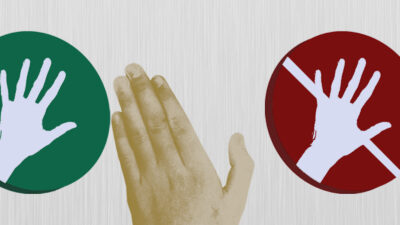 Many people cheat on taxes — no mystery there. But many people don’t, even if they wouldn’t be caught — now, that’s weird. Or is it? Psychologists are deeply perplexed by human moral behavior, because it often doesn’t seem to make any logical sense. You might think that we should just be grateful for it. But if we could understand these seemingly irrational acts, perhaps we could encourage more of them.
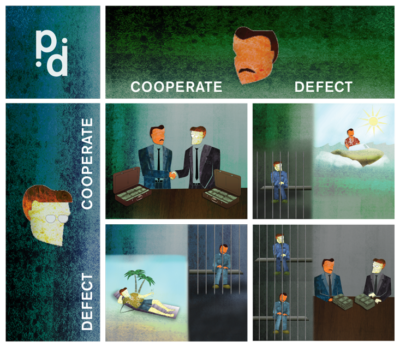
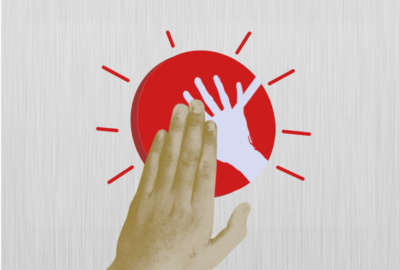 When it comes to getting people to cooperate more, Rand’s work brings good news. Our intuitions are not fixed at birth. We develop social heuristics, or rules of thumb for interpersonal behavior, based on the interactions we have. Change those interactions and you change behavior.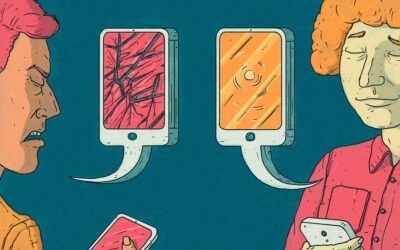
 If you want to learn something about change there is no better place to look than evolution. Nothing represents a continuous and unrelenting cycle of order, disorder, and reorder on a grander scale. For long periods of time, Earth is relatively stable. Sweeping changes—warming, cooling, or an asteroid falling from space, for example—occur. These inflection points are followed by periods of disruption and chaos. Eventually, Earth, and everything on it, regains stability, but that stability is somewhere new.
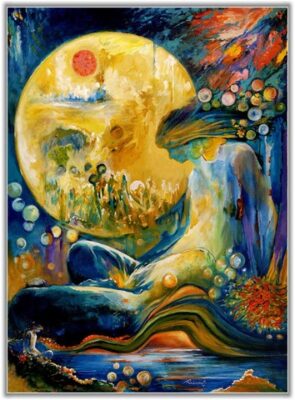 The more you define yourself by any one activity, the more fragile you become. If that activity doesn’t go well or something changes unexpectedly, you lose a sense of who you are. But with self-complexity, you have develop multiple components to your identity.
 In approximately one month and 10 days, I’ll be on my way to making one of the larger decisions of my adult life (so far, anyway); I’m moving to Austin, Texas, approximately 2,000 miles and one hell of a road trip away from my family and almost my entire friend group back in New York. While I have many questions about my move—chief among them, “How much should a mattress cost?” and “Will everyone hate me for being a Brooklyn transplant?”—nothing has loomed larger in my mind than the question of friendship, or, more specifically, how a full-grown adult goes about making new friends with no partner or kids to act as built-in buffers.
 For Hannah Smith, 27, friendship began at home—quite literally—when she moved to San Francisco in 2019 without knowing anyone. Smith sublet three different rooms through Craigslist before she finally signed a month-to-month lease in the perfect place (which she also found through Craigslist), eventually turning a roommate from her final apartment into one of her best friends. “Low-commitment living situations can be a great way to get to know people in a new place,” says Smith, although she adds that this strategy might be somewhat complicated by the ongoing effects of COVID-19.
 If Socrates was the wisest person in Ancient Greece, then large language models must be the most foolish systems in the modern world.
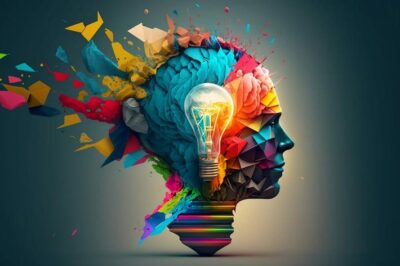 And bullshit is dangerous, warned Frankfurt. Bullshit is a greater threat to the truth than lies. The person who lies thinks she knows what the truth is, and is therefore concerned with the truth. She can be challenged and held accountable; her agenda can be inferred. The truth-teller and the liar play on opposite sides of the same game, as Frankfurt puts it. The bullshitter pays no attention to the game. Truth doesn’t even get confronted; it gets ignored; it becomes irrelevant.
 You might think that the impact of aging on the brain is something you can’t do much about. After all, isn’t it an inevitability?