 The first time I put up a one person show, I didn’t know what I was doing.
The first time I taught a workshop, I didn’t know what I was doing.
The first time I gave a sermon at the Church of the Pacific, I didn’t know what I was doing.
I learn by doing and hopefully, each time I get better.
I remember the evening I previewed LOVELAND, my one-person show at the Marsh Theater in San Francisco. The lead character, Frannie Potts, was incredibly challenging to perform.
Within 5 minutes of stepping on stage, I realized how limited my acting abilities were for Frannie. I couldn’t embody the emotional range required by the words I had written. I didn’t know what I was doing. Frannie sounded harsh and off putting, one note only. I could feel the audience recoil.
The next 75 minutes were excruciating. Minutes would go by of pin drop silence, a comedian’s worst nightmare. I couldn’t wait to get off stage.
Immediately following the performance, a former student came up to me and said,
Ann, it was so cool to see you fail. (This student was not known for her tact.)
She was right, I failed miserably and failing sucks, especially in front of a live audience. The next day, I had a two-hour rehearsal with my director, Joshua Townshend. The next night I failed again but not as bad as the first night. Improvement!
My friend and fellow solo performer, Heather Woodbury, has this great quote regarding her creative work.
“Over time, my suck level got less and less.”
This is what happened to me with LOVELAND. My suck level got less and less and a year later, LOVELAND won “Best Solo Show” in SF and LA.
As a storytelling teacher, I have shared this story with my students many times and I’m often requested to tell it again. I think people like hearing it because it gives them permission to suck, to make mistakes, and to grow from these so called “failures.” Ira Glass, host of This American Life, talks about this too in his video on being bad in the beginning.
Think about your own creative life. Where have you demanded perfection from yourself? Can you let yourself make mistakes? Can you acknowledge it’s all part of the creative process? We have a tendency to beat ourselves up when we “fail,” but what if instead, we gave ourselves immense credit for our willingness to put our work out into the world.
During Covid, I was unable to perform. I had to find a new way to express myself. I started making short videos and they were not very good in the beginning. I could feel the inner critic wanting to stop me at every turn, but I vowed to keep going. I knew from years of experience that the only way to beat the voice of the inner critic is to not give up and keep showing up for my art.
If you are feeling the voice of the inner critic to be overwhelming, I suggest letting it speak. Pick up the pen and ask the critic, “Why are you showing up today and what do you have to say to me?” This writing exercise is incredibly illuminating and can help you understand the relationship you have with this critic. On any creative journey, you will encounter this critic so it’s important to acknowledge it, but don’t let it stop you from achieving your goals. You can do it. You were born to create.
What helps me most when I make mistakes and “fail” is to know I’m not alone and to let myself receive support. We need each other to help us through these times.
Right now, I’m working on another one-person show, and as much as I’d like the development process to be perfect, it’s not. Writing first drafts is messy and trying out new material is always hit or miss. I have come to accept this as part of the creative process.
About the Author:
Ann Randolph is an award-winning writer and performer. Her current solo show, Inappropriate in All the Right Ways, has been described by The Huffington Post as “a show like no other.” Her show, Loveland, played for two years straight in San Francisco where it won the SF Weekly Award for Best Solo Show and garnered the SF Bay Critic’s Award for Best Original Script. Loveland also played to sold out audiences in LA and won the LA Weekly award for Best Solo Show.
Original article here



 In summary, I feel this eclipse cycle will usher in a resurgence of individual willpower, a will to not just resist an imposed order from the past, but to work in concert with a wider global awareness that if we can stand up for ourselves adequately, we can work in cooperation with others more effectively. The gaps are widening in many areas of our human family, and it will be necessary to remember that differences of opinion of mindset does not obviate the reality of our inherent oneness or divine origins.
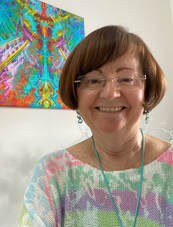
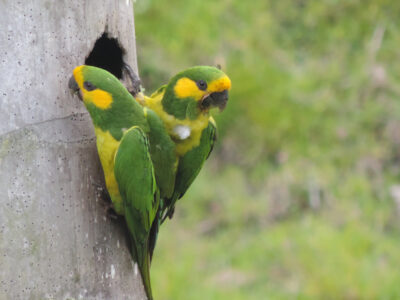
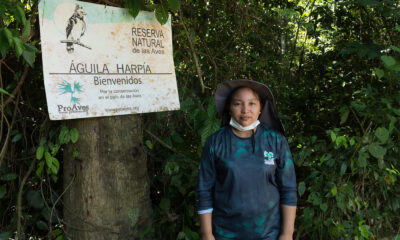 Sara Inés Lara, leader of Colombia-based bird conservation organization Fundación ProAves, got her first taste of conservation’s potential more than 30 years ago. She grew up in one of the most biodiverse places in the world, seeking refuge in the forests, mountains, and pools of the Andes. Then, in 1998, she learned about the yellow-eared parrot.
 Women for Conservation also faced resistance from its peers in the environmental world. Lara remembers other conservation leaders telling her that working with women was nice, but it was not a priority. Whenever she spoke about the link between a growing population, increasing poverty, and environmental impacts, she was told to avoid talking about population.
 Here we are, standing at long last smack dab in the new reality we’ve been dreaming of and co-creating for years now.
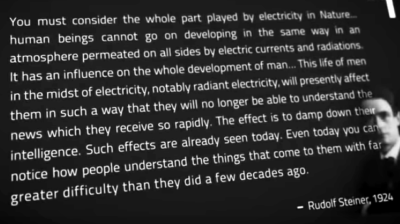
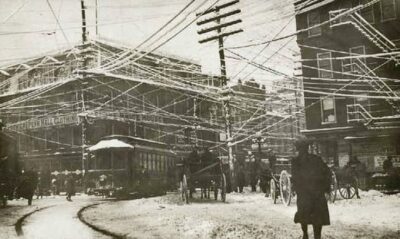 During these times the views of Louis Pasteur and Dr. Antoine Bechamp came into heated confrontation with one other. Pasteur maintained the new epidemics were caused by microorganisms, or viruses (literal translation — poisons). Bechamp claimed that they were the result of unsanitary living conditions of the times — contaminated water supplies, bad waste management, poor diet, etc. The debate went quiet after Pasteur’s death, with most western medical authorities aligning with his theories. The French medical authorities probed Pasteur’s legacy and found most of his findings were based on prejudicial opinions and thin on facts and proof. Many of his experiment’s results were found to be fraudulent. On Pasteur’s deathbed he declared Bechamp’s Terrain theory as everything and his own theory “as nothing.”
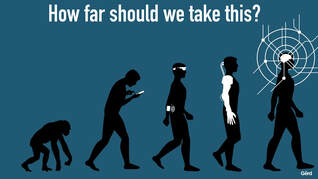 “The dream of the individual that his life could run automatically like an efficient machine, has begun to assume the proportions of a corporate nightmare in which automation unleashes its suffocating powers of standardization, over-regimentation, and depersonalization. Arthur Miller’s trenchant remark that we live in an “air-conditioned nightmare,” implies the unhappy co-existence of technological progress and spiritual regress. Like real nightmares, it takes place within a profound collective sleep therefore offering little chance of discovering either its cause or its cure. Technology can have an anaesthetic effect on man, dulling his moral consciousness and his capacity to enter fundamental, meditative thinking.”
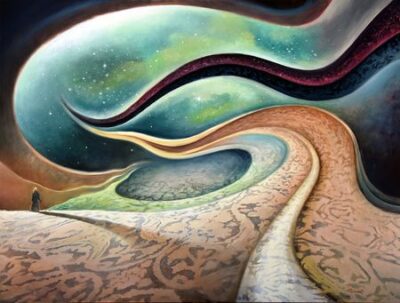
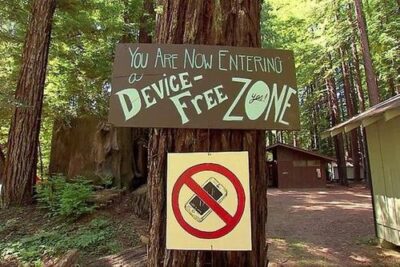 If you’re getting tired of the drudge of it all, then there is only one option. Opting out and going off grid. That may become a necessity as the new digital currency systems are rolled out, making all transactions trackable and not as anonymous as we are told. Everything will be stored in your digital I.D., and I do mean everything. Social credit systems are coming to the West courtesy of China’s experiment with it, and that is the stated agenda in the World Economic Forum’s “Great Reset”. It is possible to create a parallel economy, and it’s been done before, back before the 20th Century. The nightmarish artwork to the right was created by an A.I. program. It exemplifies everything that John Lash ascribes to Archontic consciousness…chaos is the agenda (link below). Is this what we truly want our lives to be ensconced in?
 The world is full of outsiders: students away at a university far from home, immigrants to a new country, and people who go abroad for work or extended travel. Over the past year, more than 4.4 million American workers quit their jobs in the “Great Resignation,” and many of them became outsiders by joining a different company or moving to a new place, which they perhaps imagined might be friendlier to their personal needs and tastes.
 “People think of laws being so objective and serious, and almost separate from the social norms,” says investigative climate journalist Amy Westervelt. “But it’s really just a handful of people’s beliefs that have gotten baked into law.”
 And it might just be working. She says the proof is in the pushback.