
Just one week after he graduated from Yale Law School, while he was training for the 2008 Beijing Olympic Games, Seun Adebiyi was diagnosed with lymphoma and leukemia. This forced him to put his Olympic dreams on the back burner as he rethought his life plans.
Adebiyi knows all about mental toughness and resilience. After experiencing firsthand the difficulty of finding stem cell donors (the odds of finding a genetically compatible donor is less than 17 percent for those of African descent, compared to 70 percent for Caucasians), Seun took it upon himself to found Nigeria’s first national bone marrow registry–the second ever in Africa.
And Adebiyi did eventually participate in the Olympics, carrying the torch for Nigeria in the 2018 Winter Olympic Games. Today, Adebiyi is cancer-free, and he has become an entrepreneur. He’s currently a self-employed, freelance attorney with InCloudCounsel, a legal technology company that automates and enhances high-volume legal processes.
Here, according to Seun Adebiyi, are five ways to develop unbeatable mental toughness.
- Never confuse who you are with what you do.
The most common mistake people make is to confuse their self-worth with their accomplishments. Says Adebiyi, “I remember when I first missed the Olympics–fracturing my spine from overtraining just months before the 2000 Games. It was my first major setback as an athlete, and I completely crumbled mentally–all because I had made the mistake of tying my self-worth to my sense of accomplishment.” In reality, nothing could be further from the truth.
- Master your inner dialogue.
What you say to yourself matters more than what the entire world together says about you. When he was fighting leukemia with intensive chemo and full body radiation, Adebiyi refused to wear a hospital gown. Instead, he wore workout sweats and did walking lunges up and down the linoleum hospital floors, pushing his surgically attached IV pole next to him. Says Adebiyi, “Doctors and nurses looked at me like I was crazy, but I never accepted their perspective that I was a ‘cancer patient.’ In my mind, I was an Olympic hopeful who just happened to be overcoming cancer.”
- Learn to live in the moment.
Let’s face it, sometimes life just kicks you in the teeth. Trying to avoid suffering is like trying to cross the Atlantic in a rowboat without getting wet. When the storms of life start tossing you around like a toy, you need an anchor–something you can cling to when all seems hopeless. According to Adebiyi, “That anchor was my breath. I just focused on surviving from breath to breath, and repeated the following words over and over like a mantra: ‘This too shall pass.’”
- Fortify your village, then build a moat.
In many African countries, there’s a popular saying, “It takes a village to raise a child.” This is true in life as well. Learn to pick your associates carefully. Find the handful of people who will support you no matter what, invest your time and energy in strengthening those relationships. As Adebiyi explains, you may also need to distance yourself from the toxic people in your life who tear down your self-confidence. “This might involve some painful conversations, spending less time on social media, and ending a few relationships,” says Adebiyi. “But trust me, it’s virtually impossible to master your inner dialogue and develop inner resilience with someone whispering doubts in your ear.”
- Be prepared, be prepared, be prepared.
As someone once said, never let a good crisis go to waste. Often, the biggest opportunities for personal and professional growth are found in times of upheaval and uncertainty. The time to “hurricane proof” your life isn’t when the shingles start to fly off the roof, but when the sky is still blue and sunny. Suggests Adebiyi, “Work on your self-image, inner dialogue, present-moment awareness, and key relationships now. It doesn’t take much: You can practice visualization/meditation every day, affirm your key relationships, and minimize negative influences with just a few minutes each day.”
And when life comes knocking, you’ll be ready to rock.
Original article here


 When I was at school in the UK in the 90s and early 2000s, there were no systematic campaigns to tackle the wider problem of bullying. Teachers would chastise certain behaviours – if they were observed. But the responsibility was on the student to report the problem, which means that many cases were ignored. Some teachers would tacitly endorse bullying by turning a blind eye to obvious issues, while others – a rare but toxic minority – actively sided with the bullies.
 At the level of the classroom, the children themselves hold meetings to discuss the nature of bullying – and the ways that they can help students who are the victims of bad behaviour. The aim, in all of this, is to ensure that the anti-bullying message is engrained in the institution’s culture.
 She emphasises that the adult must take the child’s concerns seriously – even if they seem trivial from an outside perspective – while also keeping a clear head. “Listen thoroughly and try to keep your emotions in check as you hear them out.” The caregiver should avoid making hasty suggestions of how the child can deal with the problem, since this can sometimes create the sense that the victim is somehow to blame for the experience.


 Everyone has a few comforting quirks that they only indulge in behind closed doors. For some, it’s lying on the floor to relax. For others, it’s talking to themselves out loud. These unhinged habits might seem embarrassing, especially if you get caught in the act, but then you go on social media and realize there are dozens — and sometimes even hundreds of thousands — of other people just like you.

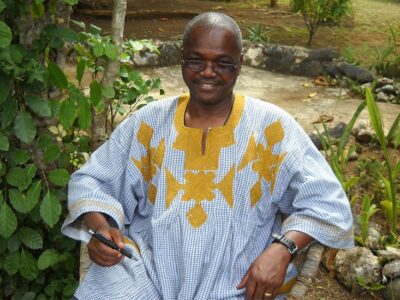
 Malidoma is from a collectivist society. Born into the Dagara tribe in Burkina Faso, he is the grandson of a renowned healer, who travels around the world but is based in the U.S. Malidoma sees himself as a bridge between his culture and the United States, existing to “bring the wisdom of our people to this part of the world.” Malidoma’s “career”—he chuckles at the term—is some combination of cultural ambassador, homeopath, and sage. He travels the country doing rituals and consultations, writing books, and giving speeches. He has three master’s degrees and two doctorates from Brandeis University. Sometimes he calls himself a “shaman,” because people know what that means (sort of) and it’s similar to his title back in Burkina Faso—a titiyulo, one who “constantly inquires with other dimensions.”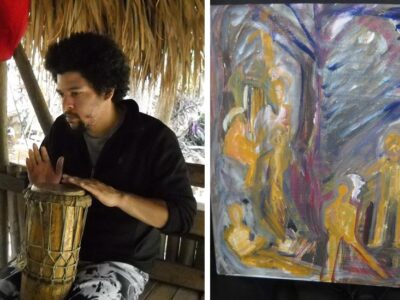

 I had grown up a good Sikh boy: I wore a turban, didn’t cut my hair, didn’t drink or smoke. The idea of a god that acted in the world had long seemed implausible, yet it wasn’t until I started studying evolution in earnest that the strictures of religion and of everyday conventions began to feel brittle. By my junior year of college, I thought of myself as a materialist, open-minded but skeptical of anything that smacked of the supernatural. Celebrationism came soon after. It expanded from an ethical road map into a life philosophy, spanning aesthetics, spirituality, and purpose. By the end of my senior year, I was painting my fingernails, drawing swirling mehndi tattoos on my limbs, and regularly walking without shoes, including during my college graduation. “Why, Manvir?” my mother asked, quietly, and I launched into a riff about the illusory nature of normativity and about how I was merely a fancy organism produced by cosmic mega-forces.