
I believe that the new reality is here now … that it’s liveable in wonderful ways, all while the old reality is seemingly crumbling around us. Here are some tips for brilliant living in the new ….
- Seek breathtaking beauty in the world around you. In nature, in your home, in the mirror, in the skies, everywhere! This kind of beauty rushes through you with an intake of breath, leaving you in an exhilarated state of feeling, with your cells and brains vibing excitedly. And that excitement calls great stuff towards you.
- Put yourself in FLOW. This is easily done. Think of something you love. Fall wildly in love with the world and the universe. Then align yourself to the right and brilliant flow state that will put your life in sync in the ways it’s meant to be. You’ll feel it as an energetic torrent of great energy that bursts through you and out into the world around you. If all else fails, tell the Universe you’re ready to be up to great things and then watch the energy move through you to source all that into play.
- Get yourself into the high vibe and stay there. Find what lights you up and do that loads. Be excited about the future. Allow yourself to feel the thrill of being alive on this glorious planet. Contribute to the things that matter to you. And don’t get distressed by the demise of the old ways. Give them grace. Send them love. And then BE THE NEW in every way you can.
- There’s a point where you ‘tip over the vibrational horizon’ and here you discover a world of synchronicity, a world of effortless, magical co-creation, a world of kindness and greatness all wrapped up in a wonderful package where reality can thrive for all life everywhere. This is exactly how the new reality occurs. We are interconnected here in a new design of interwoven collective creation and it is brilliant to be a part of.
- Laugh a lot and smile loads. Be full of certainty that the world is turning out brilliantly for us all. This is not about positive thinking. This is about you powering up the new reality with every laugh, every smile, every good thought and every dib of certainty you can muster. For you see, reality responds to the power of our collective beliefs. So believe brilliantly for us all.
- Make miracles with your life. Yes, that’s right. Make miracles. It’s easier than you might think. Don’t let the word daunt you. Miracles are sitting right there in the air around you just waiting for you to invite them onto your dance floor. Know your body is capable of wondrous things. Call genius into your creations. Source effortless and limitless abundance in everything you do. For that is the natural state of the world you see. Abundance, genius, ideas, possibilities … they are all there ripe for the plucking from the very air you breathe.
- Be bigger and bolder than you ever imagined you could be. By that I mean ‘be up to big things’, even if you do them from your couch and garden. Big things don’t necessarily mean loads of effort and weighty visions. It means be for greatness, for quantum leaps, for miracles in the world today and then find your own instinctive, genius way to make that so for us all.
- And finally, you could choose to become the ALL, the Universe, the Earth, the Oceans, Source … anything really. It’s amazing when you discover how freeing it is to be more than you already are. To find yourself in the experience of awe, wonder and Life power of the greater becoming of us all. There you discover an intelligence beyond our own individual brains. New kinds of power await us there … Life power, Source power, Universal power … powers that exhilarate and elevate life, powers that remake the world and source a brilliant new reality for us all.
About the Author:

Soleira Green is a visionary author, quantum coach, ALLchemist & future innovator. She has been creating leading edge breakthroughs in consciousness, quantum evolution, transformation, innovation, intelligence and more over the past 25 years, has written and self-published eleven books, and taught courses all over the world on these topics.
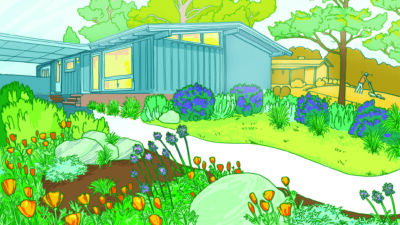
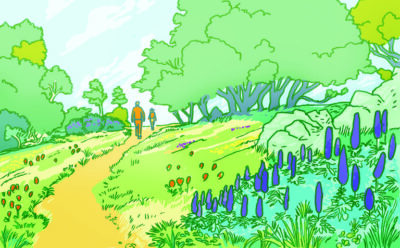 The great likelihood is that you’re going to be adapting to the conditions you already have. Those conditions might not appear to be “optimal” in the traditional horticultural sense. But plants grow in the wild without fertilizer. Survivors adapt, learning to love even marginal soil. They also forge relationships with other plants, animals, and the microbiology of the soil. These relationships become the foundation of a sustainable and resilient landscape.
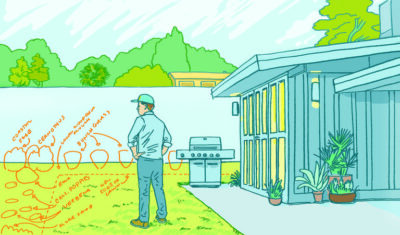 Now that you’ve observed, ask…What plants will thrive in my yard? In other words, what does nature want? And what do I want? Where these desires meet will be the foundation of your design.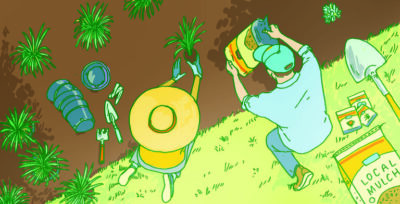
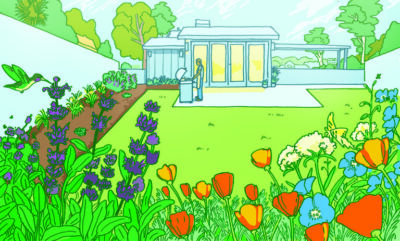 Watch how the landscape evolves. “Don’t be discouraged if some of the plants in your palette don’t do well, even though you did the research,” says Max Kanter, cofounder of Saturate, an ecologically minded gardening company in Los Angeles. Some might not be placed quite right, while others will thrive in ways you didn’t expect. “Start to practice the idea that the garden is a process,” he says. It’s not an installation or a transaction; it’s a relationship.
 Recovering from a happy childhood can take a long time. It’s not often that I’m suspected of having had one. I grew up in Norman, Oklahoma, a daughter of immigrants. When I showed up at college and caught sight of other childhoods, I did pause and think: Why didn’t we grow our own tomatoes? Why did I watch so many episodes of “I Dream of Jeannie”? Who is Hermes? What is lacrosse? Was my childhood a dud? An American self-inspection was set in motion. Having lived for more than forty-five years, I finally understand how happy my childhood was.
 In the run-up to marriage, many couples, particularly those of a more progressive bent, will encounter a problem: What is to be done about the last name?
 In a forthcoming study, Kristin Kelley, a doctoral student working with Powell, presented people with a series of hypothetical couples that had made different choices about their last name, and gauged the subjects’ reactions. She found that a woman’s keeping her last name or choosing to hyphenate changes how others view her relationship. “It increases the likelihood that others will think of the man as less dominant—as weaker in the household,” Powell says. “With any nontraditional name choice, the man’s status went down.” The social stigma a man would experience for changing his own last name at marriage, Powell told me, would likely be even greater.
 In 2007, a group of researchers began testing a concept that seems, at first blush, as if it would never need testing: whether more happiness is always better than less. The researchers asked college students to rate their feelings on a scale from “unhappy” to “very happy” and compared the results with academic (GPA, missed classes) and social (number of close friends, time spent dating) outcomes. Though the “very happy” participants had the best social lives, they performed worse in school than those who were merely “happy.”
 Life has sped up. A never-ending stream of stimuli is vying for your attention every minute of the day. Some of it is fabulous and some of it is time wasting.
 In a world where it is almost impossible to lose contact with friends, thanks to the likes of social media, this regret may seem irrelevant. You can send someone a text to say you’re thinking of them, comment on their Facebook feed or Instagram photo, or chat via Messenger. But how long is it since you’ve really connected with these people in real life? How long since you’ve laughed together, cried together, eaten together or just hung out?

 There’s a conversation you’re avoiding. It feels important, the stakes are high, there are strong feelings involved and you are putting it off: “The time isn’t right”; “I can’t find the words”; “I don’t want to get emotional”.
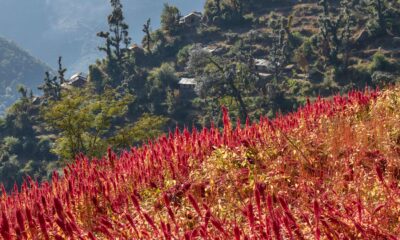 Over the course of human history, scientists believe that humans have cultivated more than 6,000 different plant species. But over time, farmers gravitated toward planting those with the largest yields. Today, just three crops – rice, wheat and corn – provide nearly half of the world’s calories.
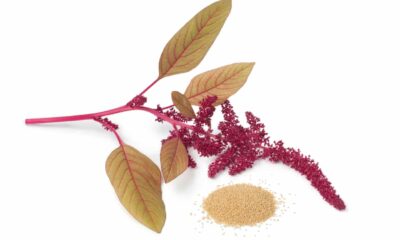 From leaf to seed, the entirety of the amaranth plant is edible. Standing up to eight feet tall, amaranth stalks are topped off with red, orange or green seed-filled plumes. Across Africa and Asia, amaranth has long been eaten as a vegetable – whereas Indigenous Americans also ate the plant’s seed: a pseudo-cereal like buckwheat or quinoa.
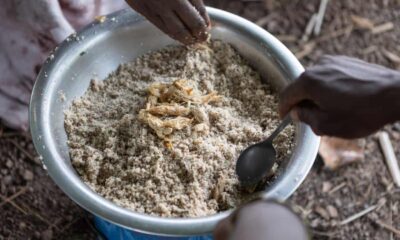 For thousands of years, farmers across West Africa have cultivated fonio – a kind of millet that tastes like a slightly nuttier couscous or quinoa. Historically, fonio is considered to be Africa’s oldest cultivated cereal and was regarded by some as the food of chiefs and kings. In countries such as Senegal, Burkina Faso and Mali, fonio would be served on holy days, like at weddings and during the month of Ramadan.
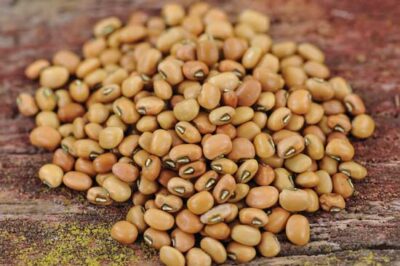 In the 1940s, more than 5m acres of cowpeas were grown in the US – the majority, as their name suggests, for hay to feed livestock. But long before cowpeas – also called southern peas or black-eyed peas – came to the Americas, they were grown for human consumption in West Africa. Although cowpea production has declined in the US in recent decades, the crop is hugely important in much of Africa. Nigeria is the world’s largest cowpea producer.
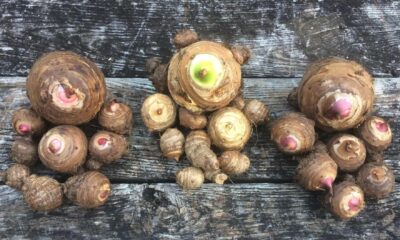 In the tropics of Southeast Asia and Polynesia, taro has long been grown as a root vegetable, not unlike the potato. But as rising temperatures threaten cultivation of the crop in its natural habitat, farmers in the continental US are trying to adapt the tropical perennial to grow as a temperate annual, because it cannot survive the cold of US winters.
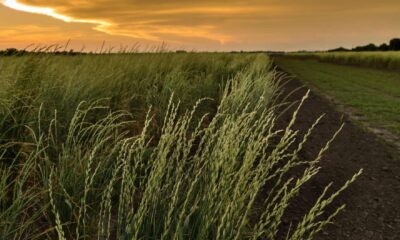 While many alternative crops are just plants that were grown somewhere else in the world generations ago, others have been cultivated specifically to withstand climate change.