

The 17th century philosopher Blaise Pascal is perhaps best known for Pascal’s Wager which, in the first formal use of decision theory, argued that believing in God is the most pragmatic decision. But it seems the French thinker also had a knack for psychology. As Brain Pickings points out, Pascal set out the most effective way to get someone to change their mind, centuries before experimental psychologists began to formally study persuasion:
When we wish to correct with advantage, and to show another that he errs, we must notice from what side he views the matter, for on that side it is usually true, and admit that truth to him, but reveal to him the side on which it is false. He is satisfied with that, for he sees that he was not mistaken, and that he only failed to see all sides. Now, no one is offended at not seeing everything; but one does not like to be mistaken, and that perhaps arises from the fact that man naturally cannot see everything, and that naturally he cannot err in the side he looks at, since the perceptions of our senses are always true.
People are generally better persuaded by the reasons which they have themselves discovered than by those which have come into the mind of others.
Put simply, Pascal suggests that before disagreeing with someone, first point out the ways in which they’re right. And to effectively persuade someone to change their mind, lead them to discover a counter-point of their own accord. Arthur Markman, psychology professor at The University of Texas at Austin, says both these points hold true.
“One of the first things you have to do to give someone permission to change their mind is to lower their defenses and prevent them from digging their heels in to the position they already staked out,” he says. “If I immediately start to tell you all the ways in which you’re wrong, there’s no incentive for you to co-operate. But if I start by saying, ‘Ah yeah, you made a couple of really good points here, I think these are important issues,’ now you’re giving the other party a reason to want to co-operate as part of the exchange. And that gives you a chance to give voice your own concerns about their position in a way that allows co-operation.”
Markman also supports Pascal’s second persuasive suggestion. “If I have an idea myself, I feel I can claim ownership over that idea, as opposed to having to take your idea, which means I have to explicitly say, ‘I’m going to defer to you as the authority on this.’ Not everybody wants to do that,” he adds.
In other words, if it wasn’t enough that Pascal is recognized as a mathematician, physicist, and philosopher, it seems he was also an early psychologist.
Original article here
 Of course, this is ridiculous. You cannot easily force yourself to forget something or someone. In fact, the more you try, the harder it becomes. But you can stop yourself from reliving those memories. This is what lies at the heart of this week’s question. When something bad happens to you — something traumatic, even — how far should we try to move on and how far should we try to unpack our past? I do not have a psychology degree, and I am not a psychotherapist, so I will approach this from a philosophical point of view and ask: How important is our past to our future? Should Kant try to forget Lampe or carry his memory as part of him? Should Dee let go of the past or dig it up and face it down?





 We should probably pin down what we mean by loneliness, as opposed to solitude, aloneness, social isolation, disconnectedness etc. For Henry Rollins, the former Black Flag frontman turned writer, it’s something that “adds beauty to life. It puts a special burn on sunsets and makes night air smell better.” I’m going to file that under Poetic Nonsense. The Campaign to End Loneliness (CEL), more usefully, defines it as “a subjective, unwelcome feeling of lack or loss of companionship. It happens when there is a mismatch between the quantity and quality of the social relationships that we have, and those that we want.”
 Not only do animals provide us with unconditional love and support; they also help to give structure to our days and even encourage us to get out and connect with others. Interaction with pets is also shown to help reduce stress levels.
 It was about three years ago, as I recall, that a fellow called into my radio/TV program to suggest that a great way to slow aging and normalize weight was an intermittent fasting program called the 5:2 diet.
 Through a process called autophagy, such zombie (senescent) cells are broken down, and their raw materials recycled for use by new and functional cells. It’s like a major housecleaning of the body, resulting in greater metabolic efficiency and less of a burden on the body’s systems.


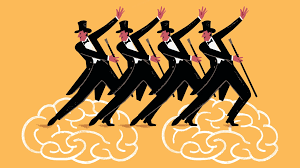

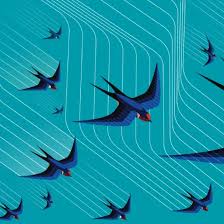


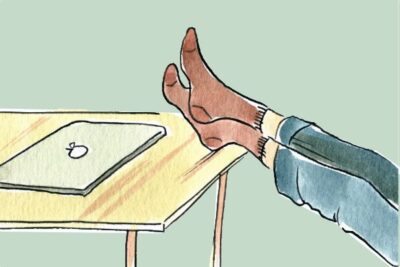 What rules are meaningful and valuable; which ones perpetuate inequality? At what point do we substitute deference to authority with our own autonomous consideration—and what might emerge if we were to choose our own distinct path? To hone our capacity for independent judgment, political scientist James Scott urges a daily practice of “anarchist calisthenics,” a form of small-scale rebellious action that cuts against the grain of authority; he envisions minor acts of law-breaking, in cases where this would not endanger others or undermine social well-being. Hierarchies that bring with them pogroms and violence, oppression and exploitation, are not easily overturned: such recognition of the stability of unjust systems requires him to “confront the paradox of the contribution of law-breaking and disruption to democratic political change”; law-breaking is needed to break the stranglehold of unjust rule. In Scott’s assessment, “Most of the great political reforms of the nineteenth and twentieth centuries”—among which he describes those for racial equality and civil rights—“have been accompanied by massive episodes of civil disobedience, riot, law-breaking, the disruption of public order, and, at the limit, civil war.” But, in societies defined by hierarchy, how do we develop the skills for anything else? Scott advises carefully chosen confrontations with imposed laws to assert and practise independence and autonomy without inflicting harm upon others.
 Mostly, the work of non-human entities—animal, plant, fungus, mineral, element—remains illegible to us. This is not for lack of effort: ecologists and physiologists and statisticians map territories and count offspring and track mates, overlay mealtimes and prey densities, measure brain activity and body fat and stomach enzymes. The result is ordered groups and categories of activity, confidently enumerated and named and labelled in terms of productivity. Least flycatchers engaged in aerial acrobatics to snag insects on the wing is sustenance, from this perspective, not entertainment. Wilson’s warblers hopping in the shrub birch branches, munching on little green inchworms, are engaged in functional foraging and not gustatory pleasure. The spruce grouse my black lab flushes from the woods is fleeing for survival, not searching for solitude and hermetic peace. But are we really seeing these lives in their entirety? The porcupine trundling along the trail; the lynx with its unhurried paces along the road; the moose, when not browsing willow, not surveying for wolves, just standing in the brush looking out at the mountains?