

Saudade, from Brazil
In [Brazilian] Portuguese, there’s something called saudade, which is a feeling of longing, melancholy, and nostalgia for a happiness that once was—or even a happiness you merely hoped for. The concept is so entrenched in Brazilian ideology that it’s celebrated every year on Saudade Day (January 30th).
Most of us will have experienced a bittersweet pleasure in moments of melancholy—flipping through old photos or caring about anyone enough to miss them when they’re gone. These sentimental moments can make us appreciate these memories even more and encourage us to pay attention to the details of the here and now. The concept of saudade reminds us to spend time remembering those we’ve loved and lost, then practice being a little more grateful for the ones still around.
Meraki, from Greece
Meraki refers to “an introspective, precise expression of care, usually applied to a cherished pastime.” The idea behind meraki is to challenge yourself to break up the monotony of your regular routine (say, your nine-to-five job) by intentionally carving out time to invest in activities that inspire and relax you.
Having a passion that you can take pride in can be of extra benefit to those who can’t say the same for their primary occupation,” says Russel. It can also give you something to look forward to throughout the day, which will surely boost your happiness.
Dolce far niente, from Italy
This Italian phrase translates to “the sweetness of doing nothing,” a concept that is all about savoring the moment and really enjoying the present.
While many western cultures tend to save up their ‘fun quota’ for an annual escape or a boozy weekend, Italians spread it over the minutes, hours, and days throughout the year. Adopting this attitude can remind you that you deserve to enjoy life all year round, not just while on vacation.
Friluftsliv, from Norway
The Norwegians have a concept of friluftsliv, or “free air life,” which is about enjoying outdoor socials, even in cold winter conditions. In Norway, time spent outdoors is central to their way of life—but the concept of friluftsliv isn’t just about being outside, it’s about engaging with nature in an intentional way.
Most Norwegians believe you have to work for things—to earn them with physical endeavors, or by battling the elements. Only once you’ve [literally] climbed a mountain in the rain and cold can you truly enjoy your dinner.
Now, not all of us will be climbing mountains regularly, or even live in a landscape where that’s an option but embrace the spirit of friluftsliv by going for a walk or sitting in your garden, watching the birds visit your birdfeeder.
Smultronstӓlle, from Sweden
The essence behind smultronstӓlle, which literally translated means “field of wild strawberries” or “wild strawberry patch,” is to establish a place to go when you’re feeling stressed or overwhelmed where you know you won’t be disturbed.
Even though the phrase is linked to the outdoors, you can also practice this indoors, as long as it’s your happy place that just makes you feel better. Having a smultronstӓllecan be a great way to stay calm, restore balance, and feel rejuvenated.
Wabi sabi and kintsugi, from Japan
Our society often values perfection, which may lead us to put a lot of pressure on ourselves and our performance in life and work, however, the Japanese philosophy of wabi sabi, which translates to “the beauty of imperfection,” can help relieve us of this weight. Accepting the beauty in imperfection can make us feel better when things don’t turn out exactly as planned.
Kintsugi is a physical manifestation of wabi sabi—it refers to the ancient Japanese art of repairing broken ceramics with gold or metallic lacquer. While many of us may discard a broken teacup, believing it has been rendered useless, kintsugi celebrates this imperfection by piecing the shattered pieces together extravagantly, highlighting the scar in a manner that makes it even more beautiful than when it was whole or “perfect.”
About the Author:
Helen Russell is a journalist and global happiness expert who wrote The Year of Living Danishly and The Atlas of Happiness.
Original article here
 Many meditators, healers and people of goodwill are attracted to the idea of distant healing — that in meditation, contemplation and prayer we can help relieve suffering and pain at a distance.

 You are experiencing incredible levels of sustained pressure and stress in the collective consciousness which can make you feel disconnected from God, Source, etc…. The human race is going through a dark night of the soul, and one often feels disconnected, disoriented, undecided, lost, and we might question the reason for our existence. It is part of the process. This is an age old, tempering process in which we are made to feel abandoned by God, only to realize that GOD has been within us all along. It is the way. We can never disconnect from God no matter what the circumstances, or which direction is taken. Those that are feeling a huge disconnect now are going through this incredibly powerful process. It does not mean that you did something wrong in any way, or that you missed your chance. It just means that you are right where you need to be. You are incredibly brave to face this void.


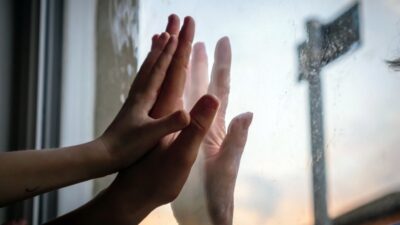 During this lockdown time when going out for a walk, I have observed that we participate in some sort of “avoiding dance”. Waiting for people to pass, crossing the street, walking on the street, lining up on the sidewalk, is a way of walking that we never experience before. However, this dance has an energetic feeling, it feels a little bit out of place, but at the same time it feels good to know that people actually care about others, although there is a bit of sadness and fear in the air. I try to smile at people from the distance and say thank you when someone stops to allow us to pass. Smiling and gratitude are high vibration feelings that take us far.
 One spring I volunteered at a botanical garden, spending many days uprooting what to my untrained eye looked like lovely flowers and plants, because they were “non-native.” This particular garden cultivates only indigenous plants, so any errant seeds that have the misfortune to blow in and bloom are routinely removed
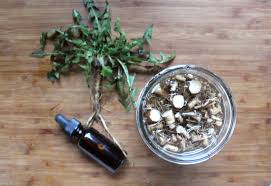 As we move ever deeper into our collective rebirth process, we’ll be releasing people and places that no longer resonate with our lives now, and preparing to welcome in the new. Doing this with lovingkindness is our mandate. It’s a ripe moment to ask, who or what in my life seems like an outsider? Am I willing to look again, to enlarge the lens, to see beyond imaginary borders, to become inclusive rather than exclusive?
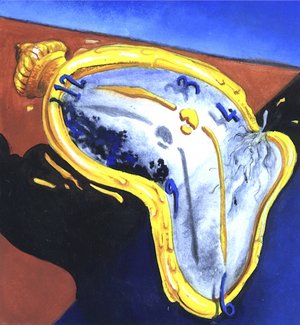
 This month, approximately 75 countries worldwide will create an annual illusion: saving time. We move the hands of our clocks ahead, and think we’ve harnessed the sun. In the U.S., our participation begins at 2 am on Sunday, March 14th.
 Holding the both/and