
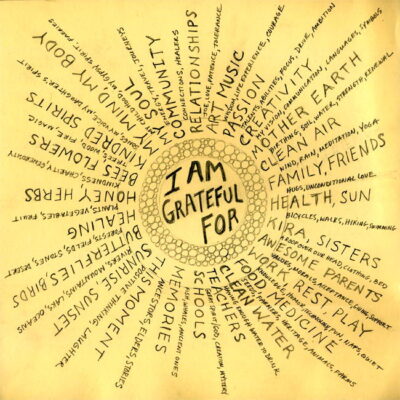
 In Sidetracked: Why Our Decisions Get Derailed, and How We Can Stick to the Plan, Francesca Gino, an associate professor at Harvard Business School, explores a range of fascinating subjects, including how emotions influence decisions and the often-thorny matter of understanding the perspectives of others. Blending social science and real-world examples, Gino’s book also highlights the science of gratitude.
“The message of ‘Sidetracked,’” Gino said in an interview, “is that a lot of these forces happen even though we are unaware of them. People might just not realize how powerful expressions of gratitude are.”
In two of the gratitude experiments, Gino worked with Professor Adam Grant of the Wharton School. They first asked 57 students to give feedback to a fictitious student, Eric, regarding his sloppy cover letter for a job. Half were emailed a terse confirmation: “I received your feedback on my cover letter.” The other half received gratitude: “I received your feedback on my cover letter. Thank you so much! I am really grateful.”
When Gino and Grant measured the students’ sense of self-worth afterward, 25 percent of the group that received just an acknowledgment felt higher levels of self-worth, compared with 55 percent of the group that received thanks.
In a follow-up experiment, participants received a message from another fictitious student, Steven, asking for feedback on his cover letter. Would participants who had received thanks from Eric be more likely to help Steven? Indeed. More than double the percentage of students in the gratitude group (66 percent) helped Steven, versus just 32 percent of those in the no-gratitude contingent.
“Receiving expressions of gratitude makes us feel a heightened sense of self-worth, and that in turn triggers other helpful behaviors toward both the person we are helping and other people, too,” Gino said. She described the scope of the “gratitude effect” as “the most surprising part” of her research.
Gino built on the research in a field study that looked at 41 fundraisers at a university, all receiving a fixed salary. The director visited half of the fundraisers in person, telling them, “I am very grateful for your hard work. We sincerely appreciate your contributions to the university.” The second group received no such expressions of gratitude.
What was the impact of the director’s thanks? Gino said that “the expression of gratitude increased the number of calls by more than 50 percent” for the week, while fundraisers who received no thanks made about the same number of calls as the previous week.
By missing chances to express gratitude, organizations and leaders lose relatively cost-free opportunities to motivate, Gino said.
“I spend a lot of time working inside organizations and see teams working together to accomplish a task, usually with a deadline,” she said. “Oftentimes, you don’t see the leaders going back and actually thanking the team members. Those are situations where expressions of gratitude from leaders could have wonderful effects.”
Gino has seen those effects up-close, in both her own behavior and that of those close to her.
“My husband is now working for a start-up. I received flowers and a note from his company’s CEO thanking me for my understanding because my husband had been up all night working on a big project.” The gesture was a motivator for her husband, Gino said.
The work behind her book, she said, “really makes me think more carefully every time I am the one expressing gratitude to others. I don’t want to miss opportunities. … I learned from my own research and now try to say ‘thank you’ much more often.”
Original article here
 I believe in angels. I feel their presence in my life every hour, minute and second, I know they are with me, with us, but how? From a rational point of view, it is probably impossible to explain their existence, however I can say that they are part of my experience.
 If you’ve been stressed out and ignoring it—isn’t everyone stressed right now?— it could be time to do something about it. That’s because even though you may be basically healthy, tension is doing its stealthy damage. The latest evidence? Researchers have linked high levels of the stress hormone cortisol to brain shrinkage and impaired memory in healthy middle-aged adults. And get this: The effect was more pronounced in women than in men.
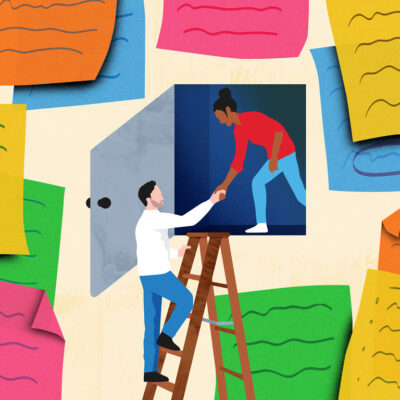 Priem has found that problems arise between couples when each person has a different perception of what’s stressful. The result: When people are really tense, their partners aren’t necessarily motivated to offer support if they think, If I were in this situation, I wouldn’t consider it that big a deal. So how do you get the response you want when you need it?
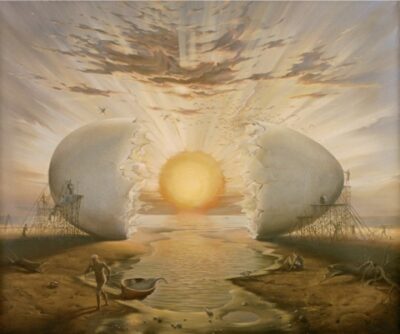 Welcome to Summer! Welcome to Winter! Completely depends on whether you’re in the Northern or Southern Hemispheres, doesn’t it? Still, happy Solstice to one and all.
 We are currently the only species on this planet in which everyone must “earn” their living. Do you even ever question that assumption? I do…a lot. Jobs were created when the Industrial Age started. Before that everyone had a trade or vocation. People specialized, whether they were the baker, butcher, or candlestick maker. Everyone was sort of an entrepreneur. Before that, we lived in cooperative communities in which everyone contributed to the mutual welfare and survival of all the members of the group. Concepts such as hoarding and “not enough” were unknown. Yes, there were tough times; when the hunting was poor, or there was a drought. But the fluctuations were part of the planetary ecosphere evolving, not because someone somewhere saw a way to make a quick buck speculating in the commodities market. We might well ask what changed to cause us to abandon the natural equilibrium we had with Nature and when and how did it change. Is what we see in front of us now really fair and working for you and me?
 A new thought teacher by the name of Catherine Ponder once said, “abundance is having just enough to share.” When we share from our blessings, no matter how meager, we are sending out a message to the Universe. We have cast our “bread on the waters” which will return to us when we may be in need. As we give to others, we give to ourselves.
 Alchemy has always seemed a somewhat mysterious ability to many people. The word itself evokes a level of power that, in the past, many have been frightened to step into.
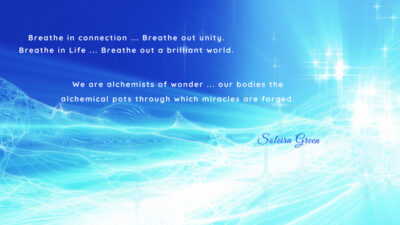 This past week I did a call with my Miraculous Maestro buddies where we explored next level Quantum Energy. I believe we have recently moved to a whole new level of energetic play, so thought I’d pass it on for you to enjoy . . .
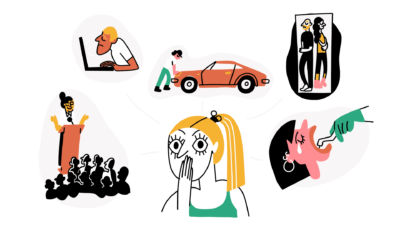 Let’s play a game of “would you rather.”
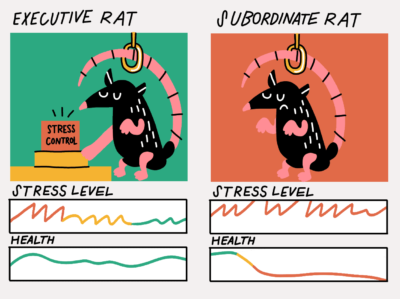 The rat with the lever in its cage is called “the executive rat,” because it has control. It has the power to turn off the electric current flowing through the cage. The rat with no control is called the “subordinate rat.”
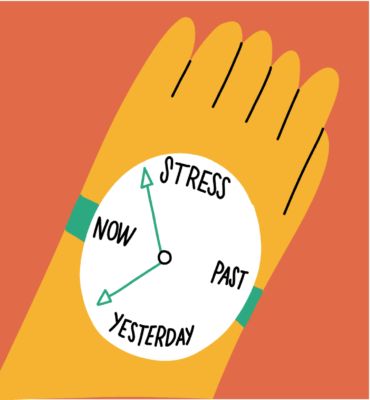 Are you facing the stress of an uncertain future? If so, it helps to focus on what you can control. Sometimes that means bringing the finish line closer by setting goals for today or this week instead of trying to figure out what you’ll do if you lose your job three months from now. Sometimes, it means making a list of 10 ways you can stay connected with friends and choosing the best one to put into action.
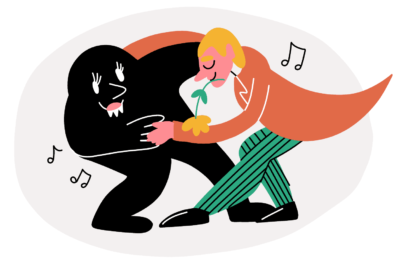 For example, an entrepreneur who feels constantly pressed for time during her nine-hour workday might experiment with doing a 14-hour workday once per week for three weeks. Each of these long workdays is followed by a shortened workday of only six hours. In this case, she is stretching her sense of what’s possible by working longer than what feels comfortable. Then she recovers, taking it easy the next day.
 No matter what is or isn’t happening in the world right now, you and I and all of Creation is loved beyond belief. No matter what is or isn’t happening in your life right now, you are loved beyond belief. No matter what will happen or won’t happen, it does not matter…we are loved beyond belief. No matter what, we are that Love, and we emerged from that Love by choice-desire-curiosity.