


Unless you’re an entomologist (and on the clock), you probably hate being surrounded by bugs, especially if they bite. While these creatures play important roles in the environment, they can be a real nuisance to humans in the outdoors, and some of these bugs do transmit diseases. Your favorite store-bought bug repellent can keep them away for awhile, but what happens when the DEET can runs dry? Worse yet, what about when you’re in a survival situation and the bugs won’t leave you alone? Thankfully, there are some natural options to beat the bugs without all the chemicals.
- Make Your Own Repellent
While it’s not the strongest option in the world, you can make your own bug repellent from essential oils and other household products. Make a trip to a health food store or similar shop for the essential oils (or order them online). Then you’ll be ready to blend and bottle your own bug repellent. You’ll need:
- A one-quart spray bottle
- 1 pint distilled white vinegar
- 1 pint water
- 25 drops of tea tree oil
- 25 drops of lavender essential oil
Add the ingredients into a clean spray bottle and shake well. Spray your boots, clothing and skin with a generous coating before heading outside. Reapply every two to four hours for best results.
- Check Often for Ticks
Ticks are more than a nuisance for our dogs. These troublesome arachnids are found in every habitat in the U.S., and we host more than 90 of the world’s 900 tick species. Many of these species pose a significant threat to outdoor enthusiasts, transmitting diseases such as Lyme disease, anaplasmosis, babesiosis, Powassan disease, Rocky Mountain spotted fever (RMSF), ehrlichiosis, STARI (Southern tick-associated rash illness), tularemia and other diseases. Spot them by wearing light colored clothing and doing frequent “tick checks” throughout the day. Remove embedded ticks quickly to limit your risk of contracting a tick-borne disease. Use tweezers or a tick removal tool to grab the tick by the mouth, pinching your own skin if necessary, then pull it straight out.
- Watch Where You Put Your Gear
Scorpions, spiders, centipedes and other venomous creatures may consider your unattended boots, gloves, or other garments as a fine new home, especially if they have been undisturbed for a few hours. Then guess what happens when you suddenly pick these items up and put them on? The animal gets pressed against your skin and it bites or stings you. The venom can range from mild to intense, depending on the creature that you’ve disturbed and its size.
Take scorpions as an example. With more than a thousand known scorpion species in the world, there are plenty we’ll encounter in our travels. Mercifully, there are only 25 known to carry venom that would kill a human. From that group, there’s just one that lives in the continental U.S. It’s the Arizona bark scorpion (Centruroides sculpturatus) and its venom is on the low end of the spectrum (fatalities are very rare, usually occurring in small children and those with health problems).
So how do we avoid the sting or bite? Don’t leave your clothing, gloves or footwear on the ground or outside overnight. Don’t hang your jacket on a tree. Don’t give them a chance to crawl into your open backpack. Gear that’s not being worn should be put away, closed up or otherwise moved out of the creature’s reach. Yes, it’s a pain, but it’s less painful than getting bitten or stung.
- Use Wild Plants as Repellents
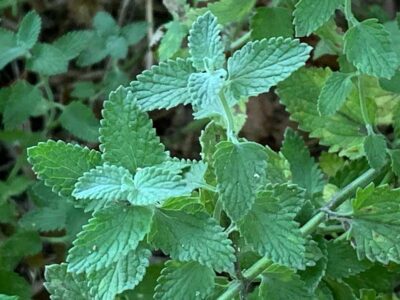
Depending on your environment, there may be many wild plants which contain bug repelling compounds. Some of these may be native species and others may have been brought to this continent for various purposes. Either way, it could be very helpful to learn about the plant species that can ward off pests in the outdoors. Before you start scrubbing wild plants all over yourself, use a wild plant field guide to make 100 percent positive identification of any plant or plant part.
Paw Paw (Asimina triloba): This native tree species is commonly found along rivers and waterways throughout the eastern U.S. It bears large tropical-looking fruits (edible to people) that ripen in late summer. The trees also bear large ovate leaves which can be crushed and wiped on your skin as a useful insect repellent. The leaves are at their best in the spring and early summer, when their strong scent can remind us of fresh asphalt.
Catnip (Nepeta cataria): This common mint family member is a non-native species, brought to these shores for more than just driving your cat insane. A tea from the leaves can have a calming effect in humans and the plant can repel mosquitoes and other flying insects. The easiest way to use the plant is to crush the fresh leaves and stems onto your skin and clothing.
- Don’t Forget The Net
They don’t have to be expensive and they won’t be pretty. They might just save your sanity though, and block the transmission of disease. Mesh bug suits and netted headwear can block the bugs when they come on strong.
This is much more effective than wearing multiple layers of clothing, as some people do, or by applying buckets of bug repellent. Make sure your exposed skin is covered and eliminate all gaps in your mesh suit and headwear. The only thing worse than having multiple bugs flying around inside your head net is not having a head net in the first place. Consider a sleeping net too, as these save lives in parts of the world. Mosquitos are more than just bothersome, they can transmit the malaria parasite (plasmodium, which kills over 1 million people per year globally), and many different viruses that cause encephalitis and dangerous fevers (like chikungunya, dengue, yellow fever, St. Louis encephalitis, West Nile virus and Zika).
- Smoke the Bugs Away
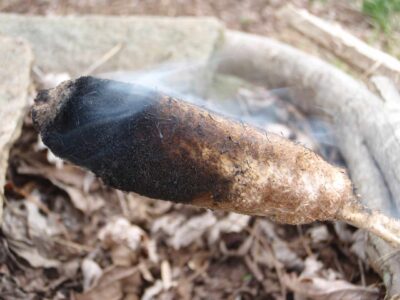
Some savvy fishermen know how to beat biting flies and other pests around the water. They smoke cheap (or very good) cigars when the air gets buggy. For non-smokers (and those who’ve run out of cigars), there are plenty of other options – ones that won’t get you hooked on nicotine. It turns out that any smoke can act like a natural bug repellent, though some are much better than others. Remember grandma’s cedar chest full of blankets? Cedar has long been known as a natural bug repellent and cedar bark is famous for smoldering (rather than bursting into flame). So a bundle of smoldering cedar bark can help to keep the bugs at bay, and it’s also a fine way to transport a fire in the form of embers (for example, if you were leaving one camp and moving to another).
Another option for smoke uses a plant that normally grows by the water, like cattails. The dead brown seed heads can be found atop the tall grass-like plants. Grab one of these “burnt corn dogs” and apply an open flame to one end of it. Once smoldering, smoke will begin to drift out of it. Place the seed head upwind from you with the glowing end into the wind, and sit where the smoke can bathe you. Similarly, a fireproof container of crumbly rotten wood (aka punk wood) can also be lit to provide smoke. This is especially useful for “smudging” primitive survival shelters. Place the container of burning punk wood on the bare dirt floor of your shelter and allow the smoke to fill the structure. This will drive out insects, spiders and other unwelcomed guests. Repeat every few days in warmer weather, weekly or as needed in cooler weather.
- Cover Up With Mud
You’re really serious if you go to this is extreme, but certain bug-infested environments may require this drastic solution. When smoke and wild plant scents aren’t strong enough to keep the bugs off your tender skin, you can create a physical barrier by coating your skin (and any thin clothing) with a layer of mud. Not only is this an effective camouflage against humans (remember the movie Rambo?), the mud suit is also effective when hiding from bugs. With the mud fresh and wet (and after it dries into a crusty shell), you’ll be wearing a surprisingly effective barrier that most bugs will not try to penetrate. It’s also useful for hiding your scent, which could come in handy while hunting.
- Avoid Chigger Habitats
Sometimes, avoidance is the best way to win a fight. Chiggers (red bugs and harvest mites) are tiny biting arachnids that are found globally. Here in the U.S., there are only two species that impact us as outdoor enthusiasts. Eutrombicula alfreddugèsi is the main culprit, and the recently hatched larvae are the troublemakers. Too small to see with the naked eye, these hatchlings are hungry for any blood they can find (human or animal). Though they don’t transmit diseases, the intense itching of their bites can last for weeks. This has led to the popular (and incorrect) belief that these creatures burrow under your skin. In actuality, the larvae inject an enzyme into your skin, dissolving some skin cells (for them to drink) and hardening other skin cells (to make a “drinking straw” known as a stylostome). It’s this transformed tissue that causes such a severe itch, not a bug under your skin.
The best defense is to avoid likely breeding grounds where the larvae would be plentiful. Since they dry out easily, damp grassy areas, swampy spots, low lying and riverine environments are hot spots. Avoid these in late spring and early summer. If you do suspect you’ve wandered through their domain (due to a sensation of tiny prickly bites under your clothes), change your clothing immediately. They can crawl around in your clothes for hours, biting you in many different places. If you only had one set of clothes (say, in a survival setting), take the clothing off and hang them to dry for 30 minutes by a hot fire (socks and underwear too). This dry heat will kill the larvae.
Original article here

 I love my family. I was brought up in a very close family. Of course we fight, but we also laugh together. We share everything — all the joys and the pains. And I know the pain I am feeling, my family will feel the same thing. We confide in each other and find comfort in that. When I want to be happy, my family is always there for me.
 I’ve been working in rural areas for the last ten years. And in the women, peasants and farmers I’ve met there, I’ve found another kind of genius. They help me understand that the future is possible.



 It’s common to wonder whether talking to yourself is “normal.” Let me be the first to tell you—it’s what got me through the pandemic.
 At first, I was reluctant. I asked my body audibly, “How are you feeling?” when my migraines worsened. Often, my body would flood with anxiety or freeze up with stress. When that happened, I’d ask, “What do you need in order to feel more relaxed?” I would wait and listen, then act on what my body “said” back to me. If my body felt tired, I would nap. If I was anxious, I would meditate. If I needed more information about what my body needed, I asked follow-up questions.
 Chances are, you learned to walk when you were just a toddler and you haven’t really thought about it much since. It’s easy to nerd out on other fitness activities, like running or weight lifting. But, walking is something we often take for granted.
 For 30 years Isabelle Arnulf, head of the sleep disorders clinic at Pitié-Salpêtrière Hospital in Paris, has studied sleep and its associated disorders. During her career, Arnulf, who is also a professor of neurology at Sorbonne University in France, has researched a broad range of sleep conditions: sleepwalking, rapid eye movement (REM) sleep behavior disorder, lucid dreaming, sleep in Parkinson’s disease and hypersomnia, or excessive daytime sleepiness. As part of these studies, Arnulf investigated how these disorders affect dream states. In an interview with Scientific American’s French-language sister publication Pour la Science, the neurologist talks about whether depression or trauma affects dreaming and whether one should worry about recurring nightmares.
 In depression, dreams are very negative, mirroring the mental state of depressed people during the day. This parallel was brought to light in the early 2000s by researcher Dieter Riemann and his colleagues at the University of Freiburg in Germany. By analyzing the dreams of depressed patients treated with antidepressants, they discovered that as the treatment began to take effect after several weeks, the content of these dreams became less and less gloomy, and the mood of the patients improved.
 For a long time, we approached recurring nightmares through the prism of psychoanalysis, [which explained them as] unresolved trauma that we would have to work to resolve. But the fact is: we don’t know.
 “It fits with the tendency of the Dutch language to create verbs out of nouns. From from ‘voetbal’ (football) to voetballen (playing football), from ‘internet’ to internetten, from ‘whatsapp‘ to whatsappen etc. I think this is something that happens in Dutch in particular,” said Monique Flecken, a psycholinguist at the University of Amsterdam, who researches how the languages we speak affect the way we see the world. Essentially, it’s much less work to say “niksen” instead of “to do nothing”. “The Dutch are a practical, direct people and their language reflects that,” she said.
 Locals like spending their time in active ways, such as cycling or hiking, allowing time for clearing the mind. And each time the sun comes out, the Dutch flock to cafes and terraces en masse, even in the winter. For me, these are perfect places for doing nothing.
 One of the simplest ways we can help our bodies thrive and prevent over-eating is to change the order in which we eat our food. Reaching for the bread basket or bowl of crisps at the start of a meal results in a rapid increase in blood glucose levels and a subsequent insulin response. This will likely leave you feeling tired, hungry and irritable just a few hours later. This is because glucose is rapidly absorbed from starchy foods, and this is even quicker on an empty stomach.
 The colours in our plants are there thanks to chemicals called polyphenols, also known as phytonutrients. These chemicals are produced by plants to protect themselves against environmental stressors, including drought, cold weather, hot weather, insects and parasites. A great example of this is the dark red colour of the oranges which grow in the foothills of Mount Etna in Sicily, where the nights are very cold and the days are very hot and dry.
 Before doing the ZOE programme, I thought my breakfast of muesli with skimmed milk was exactly what I needed for the day ahead. I soon learned that this breakfast, washed down with a glass of orange juice, pushed my blood sugar to diabetic levels and I quickly changed the menu. Adding mixed nuts and seeds to plain natural yoghurt with some polyphenol-rich berries is a great way to enjoy a nutritious breakfast that won’t spike your blood sugar.
 Not getting enough sleep is detrimental to both your health and productivity. Yawn. We’ve heard it all before. But results from one study impress just how bad a cumulative lack of sleep can be on performance. Subjects in a lab-based sleep study who were allowed to get only six hours of sleep a night for two weeks straight functioned as poorly as those who were forced to stay awake for two days straight. The kicker is the people who slept six hours per night thought they were doing just fine.
 If you think you sleep seven hours a night, as one out of every three Americans does, it’s entirely possible you’re only getting six.