
About the Artist:
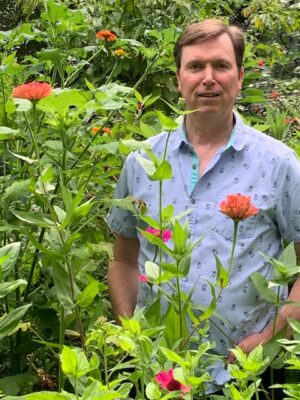
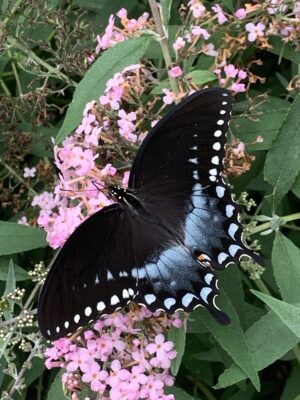
With so much biodiversity in North Carolina, it’s fun to go outside and encounter nature’s constant offering of interesting and beautiful surprises. A daily routine started a few years ago as a strategy to “get my steps in,” to move my body, and to connect with nature. A windfall was that it also became an artistic endeavor when I started taking pictures along the way.
Self-taught, I’ve noticed over time some improvement as a photographer. I’ve learned to give more attention to various perspectives, distances, angles, color, lighting, as well as “the macro and the micro.” That said, I don’t suspect I’ll ever pursue high tech photography—it’s just my simple iPhone camera and Mother Nature collaborating.
This artistic endeavor is an outgrowth of other experiences. I was a classroom teacher throughout the 1990’s and well into the 2000’s, an experience that piqued in me an interest in human development and holistic well-being. Those years led to marriage, a growing family, and my ongoing vocation as Life Coach.
Daily outings to observe nature, to take pictures, and to share them have been part of my exploration in the art of authentic living, another topic that allures me. Sharing the pictures in social media has put me in touch with other artists, nature lovers, and many kind people. I imagine that everyone at their core is an artist, a conduit through which the universe can reveal, express, and celebrate itself in endless, unique forms.
Connect with Thomas:
Website – CollaborateWithThomas.com
Email – CollaborateWithThomas@gmail.com
Twitter: @Collabor8tor
Rumble: Collaborate With Thomas (videos coming soon)






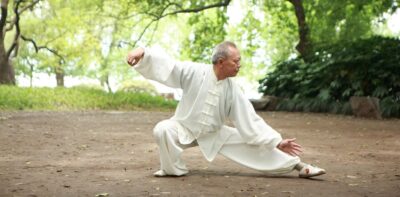 The effect of exercise on health is profound. It can protect you from a range of conditions, including heart disease, type 2 diabetes and some cancers. But the type and amount of exercise you should do changes as you age. To ensure that you are doing the right type of exercise for your age, follow this simple guide.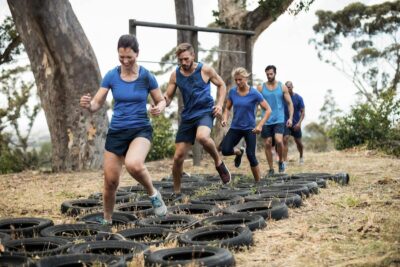
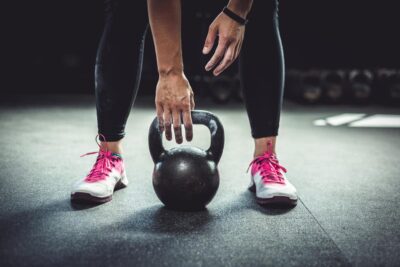 Most people start to put on weight in their 40s. Resistance exercise is the best way to optimise calorie burning to counteract fat accumulation and reverse the loss of three to eight percent of muscle mass per decade. Ten weeks of resistance training could increase lean weight by 1.4kg, increase resting metabolic rate by 7 percent and decrease fat weight by 1.8kg.
 Typically, people accumulate more chronic conditions as they get older, and ageing is a major risk factor for cancer. Maintaining a high level of physical activity can help prevent cancers, such as post-menopausal breast cancer, colon cancer and cancer of the womb, and it reduces the risk of developing chronic conditions, such as heart disease and type 2 diabetes.
 As the director of the Energy Metabolism Laboratory at the USDA Nutrition Center Tufts University, Massachusetts, Susan Roberts has spent much of the past two decades studying ways to fight the obesity epidemic that continues to plague much of the western world.
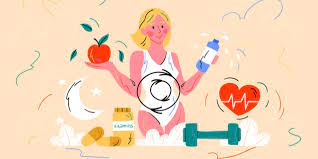 But this may not actually be true. Over the past few years, Herman Pontzer, an associate professor of evolutionary anthropology at Duke University, North Carolina, and more than 80 other scientists have compiled data from more than 6,400 individuals – from eight days to 95 years old – that shows something very different.
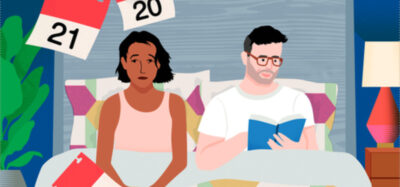 If you’ve been stressed out and ignoring it—isn’t everyone stressed right now?— it could be time to do something about it. That’s because even though you may be basically healthy, tension is doing its stealthy damage. The latest evidence? Researchers have linked high levels of the stress hormone cortisol to brain shrinkage and impaired memory in healthy middle-aged adults. And get this: The effect was more pronounced in women than in men.
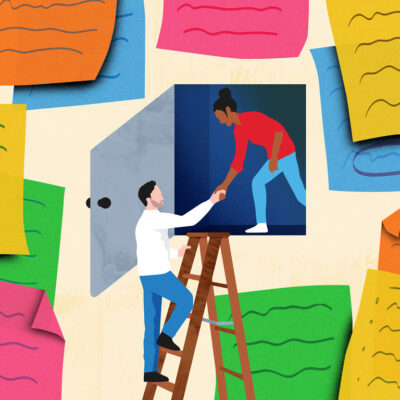 Priem has found that problems arise between couples when each person has a different perception of what’s stressful. The result: When people are really tense, their partners aren’t necessarily motivated to offer support if they think, If I were in this situation, I wouldn’t consider it that big a deal. So how do you get the response you want when you need it?
 There are a number of different factors in your day-to-day life that can make it difficult to get to sleep, from stress to our central heating. People are reporting sleep disturbances more than ever: the average person is losing two hours of sleep a night and 37% of people in Britain are sleep deprived, according to 2021 research from fitness tech brand Zepp.
 Some ingredients may not always be a good idea to eat close to bedtime due to their energising nature. Both Brielle and Dr Iqbal particularly warn against the consumption of caffeine too late in the day, “because it stimulates the brain and gives you energy, thus keeping you awake”, says Brielle.
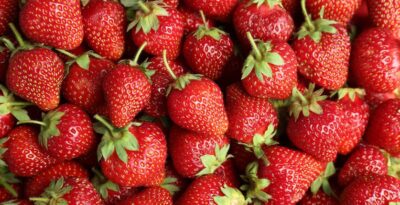 Believe it or not, strawberry tops—the part you cut off and toss into the garbage or compost—can be repurposed in a variety of creative ways. While munching on the green tops itself doesn’t sound all that appetizing, you’ll be surprised at how they can be used.
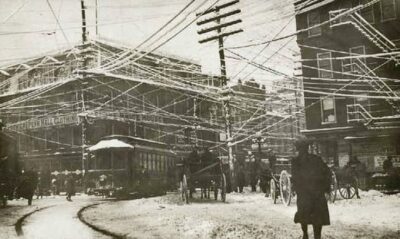 During these times the views of Louis Pasteur and Dr. Antoine Bechamp came into heated confrontation with one other. Pasteur maintained the new epidemics were caused by microorganisms, or viruses (literal translation — poisons). Bechamp claimed that they were the result of unsanitary living conditions of the times — contaminated water supplies, bad waste management, poor diet, etc. The debate went quiet after Pasteur’s death, with most western medical authorities aligning with his theories. The French medical authorities probed Pasteur’s legacy and found most of his findings were based on prejudicial opinions and thin on facts and proof. Many of his experiment’s results were found to be fraudulent. On Pasteur’s deathbed he declared Bechamp’s Terrain theory as everything and his own theory “as nothing.”
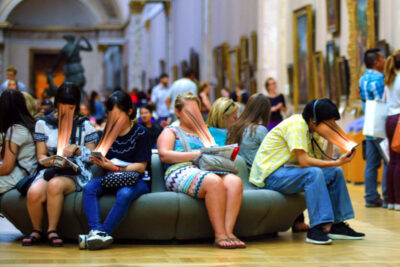
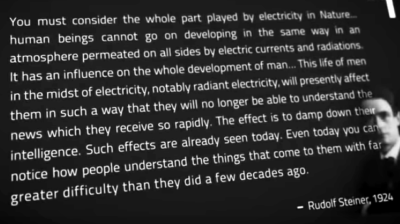
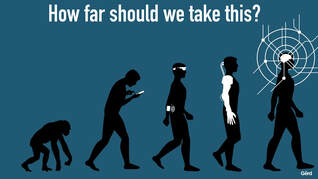 “The dream of the individual that his life could run automatically like an efficient machine, has begun to assume the proportions of a corporate nightmare in which automation unleashes its suffocating powers of standardization, over-regimentation, and depersonalization. Arthur Miller’s trenchant remark that we live in an “air-conditioned nightmare,” implies the unhappy co-existence of technological progress and spiritual regress. Like real nightmares, it takes place within a profound collective sleep therefore offering little chance of discovering either its cause or its cure. Technology can have an anaesthetic effect on man, dulling his moral consciousness and his capacity to enter fundamental, meditative thinking.”
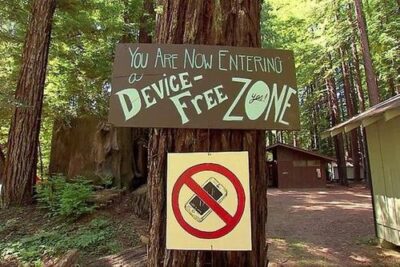 If you’re getting tired of the drudge of it all, then there is only one option. Opting out and going off grid. That may become a necessity as the new digital currency systems are rolled out, making all transactions trackable and not as anonymous as we are told. Everything will be stored in your digital I.D., and I do mean everything. Social credit systems are coming to the West courtesy of China’s experiment with it, and that is the stated agenda in the World Economic Forum’s “Great Reset”. It is possible to create a parallel economy, and it’s been done before, back before the 20th Century. The nightmarish artwork to the right was created by an A.I. program. It exemplifies everything that John Lash ascribes to Archontic consciousness…chaos is the agenda (link below). Is this what we truly want our lives to be ensconced in?
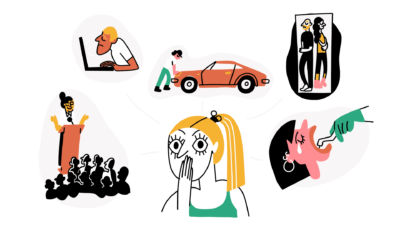 Let’s play a game of “would you rather.”
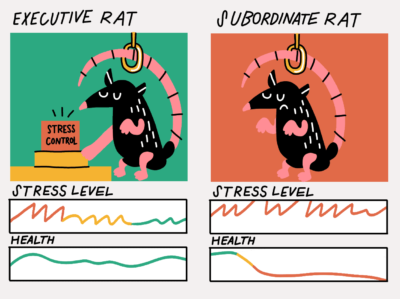 The rat with the lever in its cage is called “the executive rat,” because it has control. It has the power to turn off the electric current flowing through the cage. The rat with no control is called the “subordinate rat.”
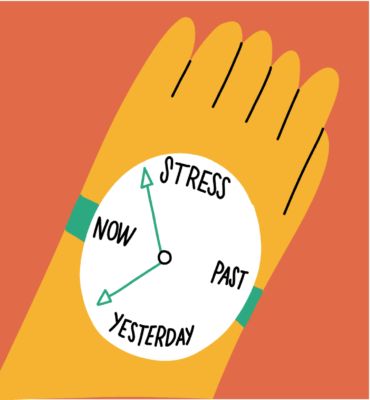 Are you facing the stress of an uncertain future? If so, it helps to focus on what you can control. Sometimes that means bringing the finish line closer by setting goals for today or this week instead of trying to figure out what you’ll do if you lose your job three months from now. Sometimes, it means making a list of 10 ways you can stay connected with friends and choosing the best one to put into action.
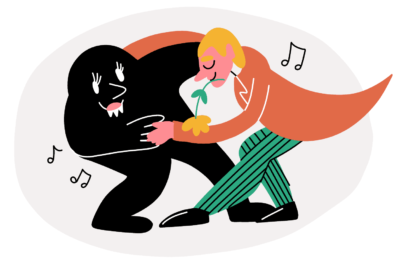 For example, an entrepreneur who feels constantly pressed for time during her nine-hour workday might experiment with doing a 14-hour workday once per week for three weeks. Each of these long workdays is followed by a shortened workday of only six hours. In this case, she is stretching her sense of what’s possible by working longer than what feels comfortable. Then she recovers, taking it easy the next day.