

After months in pandemic solitary without connecting to any other living thing, I felt that my body would explode.
With no one around, I felt stymied. But then, I thought of a clever ruse.
I’d call my brother and tell him that my dog-niece, Sophia, asked to see me.
My brother replied that he didn’t know Sophia used the phone, but in any case, she was busy.
Desperate to get my hands on something, I devised another clever plan.
I’d go to the park and hug a tree.
Canophilia in action
I didn’t acknowledge it at the time, but deep down, I must have realized that, at the park, chances were good I’d find a doggie or two to use for my personal petting purposes.
Walking toward the park, I notice a doggie right away. He and his person are playing on the (fenced-off) ballfield. I could open the gate and say hello, but that would be odd. Suspicious. Awkward.
I nix that idea and continue walking toward the tree. Slowly.
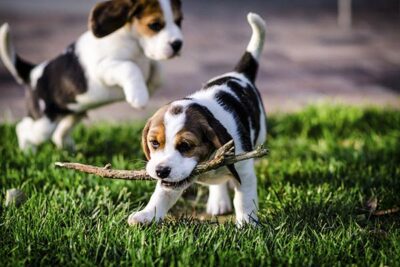 As luck would have it, the puppy and his person are exiting the ballfield just as I am (very slowly) walking by the gate.
“Can I say hello to your dog?” I ask, trying to remain calm and not start jumping up and down.
“Sure!” the guy says. (By this time I’m already deeply involved in puppy nuzzling.)
“He’s so cute!” I yelp. “A puppy puppy!”
“Yep. Just 16 weeks old.”
The puppy, Rufus, and I were both squealing and wriggling with delight. Rufus got so excited he peed. I managed to hold that part of myself intact.
“OK, that’s enough,” says his dad.
We both strike big puppy-eye looks in Dad’s direction asking for more time – but it doesn’t work.
We go our opposite ways, casting longing looks behind us.
Tree-mendous insight
I take a deep breath, shake it off, and continue down the path to go talk to the tree. Tree gives me a warm hello as soon as I come under its branches. I stroke its rough bark and feel calm immediately.
“Good to see you!” Tree greets me. “You used to come here with your dog, Bailey. It’s been a long time. I was wondering when you’d be back!”
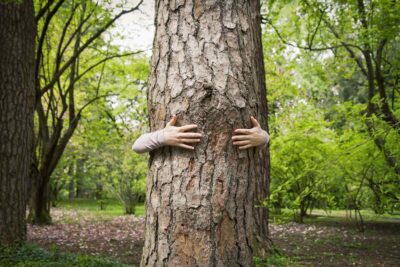 “You remember me?” I exclaim, moving in closer so Tree and I can be heart-to-heart. “How do you do it?” I ask. “How do you stand everything that’s going on?”
“You just ‘be’,” says Tree. “You listen. You watch. You grow. Things go by. Things change. You’re still here.”
You’re right. I am here, I realize.
I stand, eyes closed, front-to-front with Tree, then back-to-back. Tree’s presence is strong, centered, serene.
I take a deep breath…then open my eyes…and see….the picnic table.
No picnic
The picnic table, covered with crap! Litter! Garbage! On the table and all over the ground!
“I don’t understand!” I yell. (I don’t think I yelled out loud, but I can’t be sure.) “Who are these people? How can they come to a public place and leave all this crap behind?”
I storm away from Tree and go to get a closer look at the crap.
Food wrappers. Labels. Paper. Cigarette butts.
I stare at it. I fume. And then I think – I have to fix this! So I start picking up the crap. And with every piece, I yell and grouse and complain and judge and fume a little more.
It probably takes me at least four minutes to pick it up. Maybe less. Two minutes. (So I guess there wasn’t as much crap as I thought.)
But it does look a lot better when I finish picking it up and throwing it all away. And I feel better. For at least a minute. Maybe 30 seconds…before I notice something else. How had I missed it? What is that? On the ground? Coming out of the grass?!
Wild, unwanted plants
A weed! Not just a weed, but a sprawling weed. With flowers! Encroaching on the lawn!
“You don’t belong here!” I yell at the weed. Then I get down on my knees and pull it out. (It wasn’t easy.) And then…I see another weed just like it. And I pull that one out, too.
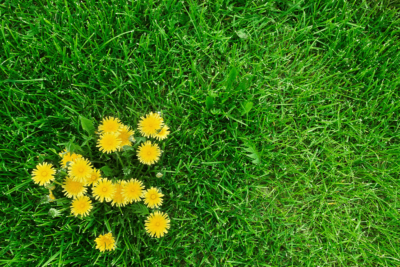 And then another. And another. And another. Soon, I have a whole big pile of weed-parts.
“The gardeners are going to wonder who was digging up the grass,” I think. But I left the shredded weeds in a big pile anyway.
Then, I kept pulling up some more.
“Why shouldn’t we be here?” one of the weeds asks me.
“This is a lawn!” I shout. This is supposed to be grass. You can’t just take over! You don’t belong here!”
For every weed I take out, there is another one. And then I notice that these weeds are entrenched all over the grass. There is no way I could pull them all out. And what difference would it make if I did? They would just come back. Or another one would.
I realize I can’t stop the weeds. But I wanted to. I really, really wanted to.
“Maybe I’m not as tolerant as I think,” I thought.
“Maybe you’re not,” I agreed.
By this time, my hands are filthy and dirt is packed into my nails. In the distance, across the park, puppies are playing. But it doesn’t feel right to go after them. I don’t think it would be very nice to rub dirt into some poor puppy’s fur.
Feeling slightly disgusted with myself, I head back to my car, brushing off my hands and picking the dirt out of my nails as I walk. I know it’s time to go home, but I’m not quite ready to leave.
As I get close to the ballfield, I see two fuzzy bodies playing chase. I notice they’re making their way toward the side field gate. I start brushing my hands off a bit more vigorously.“If I time it right I can meet them on the walkway just as they come out”, I surmise.
Canophilia, Part 2
Sure enough, as I come down the path, two adorable goldendoodles are heading right toward me. BINGO!
 “Can I say hello to your puppies?” I ask, crouching down to doggie-reception level. Before either their mom or dad can say yes, I’m ready to receive sloppy kisses.
The dogs, Starbucks and Cappuccino (who does that?) feel just as soft as they look. I indulge in every second of nuzzling I can grab.
Their parents stand by patiently, but I don’t want to push it.
“Thanks for letting me say hello to your puppies,” I say, trying to sound casual.
“Sure!’ they reply and walk off.
“Ahhhh…” The tension that had been building in my body finally releases. I got what I so desperately needed.
As I walk back to my car with a skip in my step I’m suddenly brought up short with a thought that strikes me like a nasty thwack on the nose: “I am a puppy predator! I came to the park with the specific intention of getting my puppy needs met.”
“What if I hadn’t found any doggies?” I ask myself. “How would I have felt then?”
“You would have been one hell of a cranky banana,” I answer back.
I imagine how painful it must be to have serious urges that are not as easily and acceptably met. I think of what a few months of social isolation did to me. What about people who have a lifetime of isolation and rejection?
“Imagine what that leads to,” I think.
I don’t want to think about it. But I do feel a surge of compassion for the pain that drives people to do unreasonable things, just to make the hurting stop.
Then, another thwack!
I realize that I’m not just a puppy predator, I’m also a judgmental specist (one who is prejudiced against particular species). Who am I to decide what plants do or do not belong in a particular place – especially public grounds? Those poor plants were minding their own business until I came along and ripped them out of the ground!
“That must be how some people feel when they see people they feel don’t belong,” I think. “They want to rip them out. I guess I have those kinds of feelings, too. Different situation – same feelings.”
So I have to acknowledge that as angry and frustrated as I get at all the people I think of as dangerous, intolerant, judgmental assholes, I have more in common with them than I’d like to believe or admit.
Except I now believe and admit it.
So, maybe I’m not as bad as I think.
And maybe they’re not as bad as I think, either.
And maybe there’s more than a little hope for us all.
* dog-loving
About the Author:
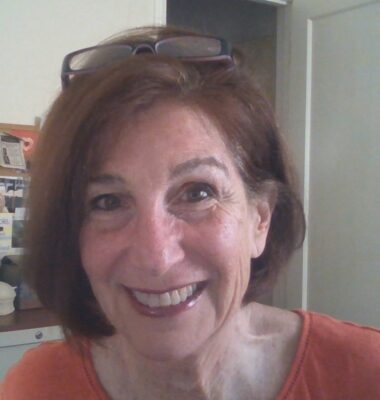
Susan E. Schwartz is a writer and consultant living in San Mateo, California.
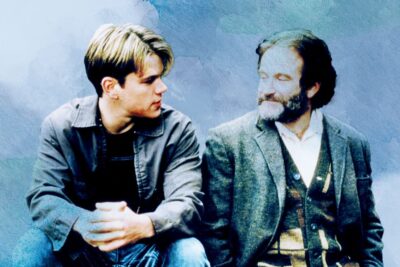 Brian was just a kid when he first saw the movie Good Will Hunting and wasn’t thinking about therapy or his mental health. The 29-year-old engineer was mostly just fascinated by stories about repressed geniuses and Matt Damon’s background story of being a Harvard dropout. He also thought it was pretty rad that the original script was intended to be a spy-thriller.
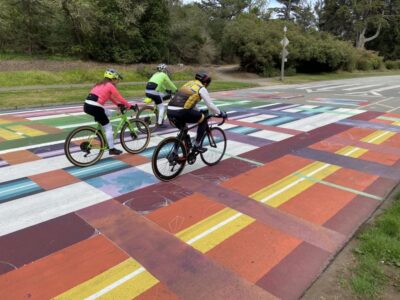 What happens when you close down a city street to cars? More people do non-driving things, like walking, biking, strolling, skating and frolicking in the space normally reserved for motor vehicles. Car-free advocates would say that as greenhouse gas emissions and traffic violence go down, happiness and connection go up — it’s hard to connect with your neighbors while ensconced in two tons of steel.
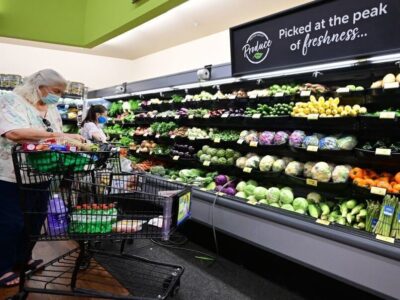 The data are stark: the typical American diet is shortening the lives of many Americans. Diet-related deaths outrank deaths from smoking, and about half of U.S. deaths from heart disease – nearly 900 deaths a day – are linked to poor diet. The pandemic highlighted the problem, with much worse outcomes for people with obesity and other diet-related diseases.
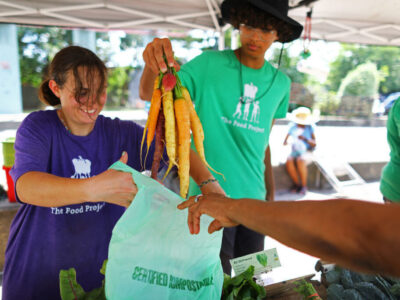 Expand access to dietary and lifestyle counseling
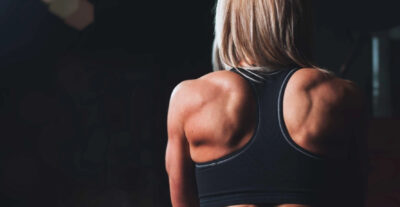 At a conference in 2012, Luc van Loon was presenting some exciting data from a newly published study. After a heroic research effort that took 2.5 years and 500,000 euros, he and his colleagues had managed to shepherd a large group of frail, elderly subjects through a six-month strength-training program. Those who had taken a daily protein supplement managed to pack on an impressive 2.9 pounds of new muscle. Success! Old people could be strong!
 We often think of amino acids as the “building blocks” of muscle. That’s true, but the amino acids derived from protein actually play a dual role in muscle growth: In addition to being a source of raw materials, protein acts as a signaling molecule, triggering the growth of new muscle. One amino acid in particular, leucine, seems to be the most potent anabolic signaler, but you need all the amino acids together to effectively build muscle.
 Over the course of human history, scientists believe that humans have cultivated more than 6,000 different plant species. But over time, farmers gravitated toward planting those with the largest yields. Today, just three crops – rice, wheat and corn – provide nearly half of the world’s calories.
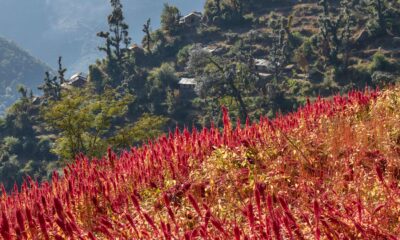
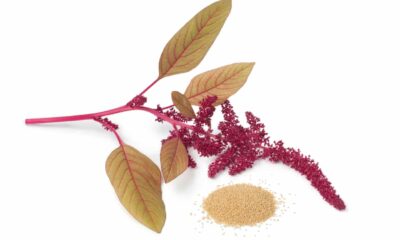 From leaf to seed, the entirety of the amaranth plant is edible. Standing up to eight feet tall, amaranth stalks are topped off with red, orange or green seed-filled plumes. Across Africa and Asia, amaranth has long been eaten as a vegetable – whereas Indigenous Americans also ate the plant’s seed: a pseudo-cereal like buckwheat or quinoa.
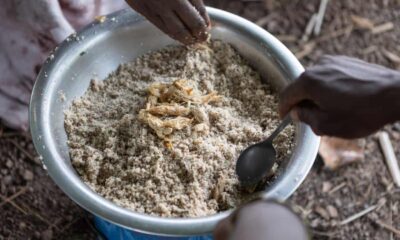 For thousands of years, farmers across West Africa have cultivated fonio – a kind of millet that tastes like a slightly nuttier couscous or quinoa. Historically, fonio is considered to be Africa’s oldest cultivated cereal and was regarded by some as the food of chiefs and kings. In countries such as Senegal, Burkina Faso and Mali, fonio would be served on holy days, like at weddings and during the month of Ramadan.
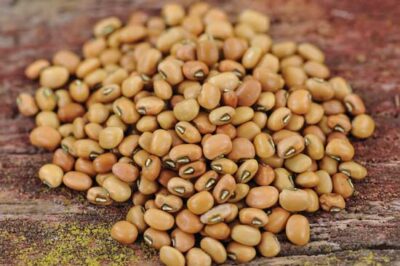 In the 1940s, more than 5m acres of cowpeas were grown in the US – the majority, as their name suggests, for hay to feed livestock. But long before cowpeas – also called southern peas or black-eyed peas – came to the Americas, they were grown for human consumption in West Africa. Although cowpea production has declined in the US in recent decades, the crop is hugely important in much of Africa. Nigeria is the world’s largest cowpea producer.
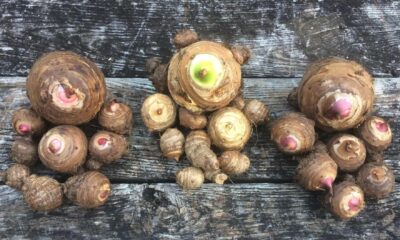 In the tropics of Southeast Asia and Polynesia, taro has long been grown as a root vegetable, not unlike the potato. But as rising temperatures threaten cultivation of the crop in its natural habitat, farmers in the continental US are trying to adapt the tropical perennial to grow as a temperate annual, because it cannot survive the cold of US winters.
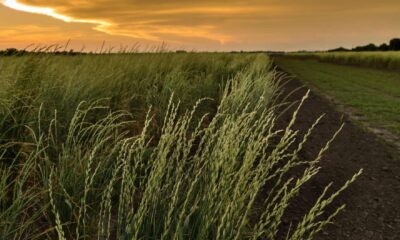 While many alternative crops are just plants that were grown somewhere else in the world generations ago, others have been cultivated specifically to withstand climate change.