 It’s probably been a long time since you lay on your back in the grass, looked up and wondered, Why is the sky blue? Or since you took the time to consider a question as difficult as, Where does the universe begin, and where does it end?
In 2013, education innovator Sugata Mitra received the million-dollar TED Prize to develop an online learning platform for schoolkids, based around big questions like these. But the big secret is: It’s actually fun for adults. By tweaking Mitra’s idea, you can get in touch with your inner child — while building important skills. Here’s how to do it.
Step 1: Set aside an hour to recharge your curiosity.
At the heart of Mitra’s School in the Cloud is a simple method known as a SOLE session. SOLE stands for Self-Organized Learning Environment, and it capitalizes on two incredibly abundant commodities: curiosity, and information on the Internet. A session begins with an open-ended, thought-provoking question — for example, What would happen if insects disappeared? or, Why do languages die out? Kids spend 40 minutes doing online research in groups of four or five, sharing one computer and jotting down their findings. Then all the groups come together for 20 minutes and discuss their discoveries.
Why should a busy adult take the time to pursue a blue-sky question like this? Because most of us spend our days living in our own information silos, and it’s good to step outside of them. In pursuing knowledge for knowledge’s sake, you’ll undoubtedly learn something new — or maybe you’ll revisit a subject you’ve avoided since high school (hello calculus!) and shake the cobwebs off your old learning, or reignite a passion you’d forgotten about. In doing research for the session, you’ll be forced to consult multiple sources and quickly find credible information — skills that are essential for critical thinking. And in the process of working with others, you could pick up tips, whether it’s a keyboard shortcut you never knew existed or a great YouTube channel to follow.
Step 2: To come up with a question, think big — really big.
By the time we’ve reached adulthood, we’ve long since stopped posing knotty, complicated queries — there are just so many more pressing professional and personal questions to answer. “Adults are more curious about the practical aspects of life,” says Mitra. “If somebody says, ‘Here’s a cheaper way to buy a house,’ we’re interested. But if the same person asks, ‘Why do we live in houses? What made us move out of caves?’ that isn’t as intriguing.”
So how can you find your own meaty questions to unpack and explore? The easiest way: Ask a kid, or think of the last stumper — Why do we hiccup? How does a car work? — that a child threw at you. What’s essential is to use a question that no one in the group can answer easily. It’s OK to pick one that’s related to your work, just as long as it’s not one that goes through your mind on any given day. For example, Mitra recently ran a SOLE for school principals in Hong Kong and their question was, What is the future of exams?
Step 3: Agree to disagree.
A SOLE is a safe space to practice what management expert Margaret Heffernan calls “constructive conflict.” Disagreement and friction, far from being forces to avoid, can fuel learning and innovation by making you consider alternate opinions and approaches. Before beginning a SOLE, participants should be reminded to speak their minds and not worry about butting heads, Mitra says. This prompting can help us adults transcend standard politeness, and get us over another potent fear: looking dumb in front of others. “With adults, there’s often an initial period where everybody’s stiff. Someone will say, ‘I’m not very tech-savvy’ or ‘I don’t know anything about this’ and takes a back seat,” Mitra says. Assure people that any and all answers are welcome.
Step 4: Draw on the wisdom of the crowd.
One other major obstacle you may encounter: competition. Many adults are simply accustomed to working solo — to us, working together often means doing our own tasks while colleagues focus on theirs — not, usually, all of us doing the same thing together. If we have the same duties, we tend to compete, consciously or subconsciously. A SOLE, on the other hand, is about discovering and deploying the expertise of the entire group of people. “When ants build a bridge, it’s not each ant working alone,” Mitra says. “It’s a thousand of them building it together.”
In a session that Mitra ran with a group of 15 professors at the UK’s Newcastle University (where he is a professor of educational technology), he spotted a problem right away: “After getting their question, they each took out their computer and started working alone.” His quick fix: He restricted the group to a single computer per small group — the same setup as in the eight School in the Cloud learning labs in India, the UK and the US — and the dynamic changed. “They appreciated the fact that in a group, they could get to a more nuanced answer more quickly,” says Mitra.
Step 5: Repeat as needed.
Besides using SOLE as a team-building exercise at work, you could focus a session on brainstorming potential uses for a new piece of software, device or tool, says Mitra. Another potential application that he is exploring: SOLE in senior centers. At a nursing home in the UK, the participants in a session impressed him with how adeptly they drew on each other’s strengths while researching the question, What will be the effects of Brexit? “In one group, there was one woman and three men. The woman had Parkinson’s and said, ‘My hand shakes too much to use the mouse, but I can read very well,’” recalls Mitra. “So one of the men operated the mouse, and she read out loud.” The group ended up having a lively discussion that pushed far beyond standard answers.
“It’s a strange thing, how our minds change over time,” says Mitra. “Life seems to take away that wild curiosity we have as kids.” This, he says, is a shame. “I’d rather hold on to the big questions.” Wouldn’t you?
Original article here

 “I don’t like resting,” I tell her. “I get listless and sad and feel a failure.” She is not surprised. “For some people, rest is almost uncomfortable. It’s almost as if their psyche fights back against it because of the new sensation.” She would never, she says, recommend a three-day silent retreat to a completely frazzled patient. “For someone who is actively burned out, that’s almost traumatic.”
 This is no surprise to Dalton-Smith. Analysing data from her quiz during the pandemic, she saw “a huge uptick in the number of people who were experiencing sensory rest deficits”. People confined to the house with small children in particular, she says, were exposed to constant noise and even some adults “irritated each other to death. That non-stop hum of somebody talking in the background causes you to get agitated. That’s what sensory overload does to us.”
 Withdrawing my hands reluctantly from the slowly spinning bowl, I watched its uneven sides slowly come to a stop, wishing I could straighten them out just a little more. I was in the ancient pottery town of Hagi in rural Yamaguchi, Japan, and while I trusted the potter who convinced me to let it be, I can’t say I understood his motives.
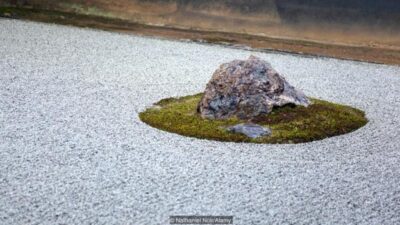 Wabi, which roughly means ‘the elegant beauty of humble simplicity’, and sabi, which means ‘the passing of time and subsequent deterioration’, were combined to form a sense unique to Japan and pivotal to Japanese culture. But just as Buddhist monks believed that words were the enemy of understanding, this description can only scratch the surface of the topic.
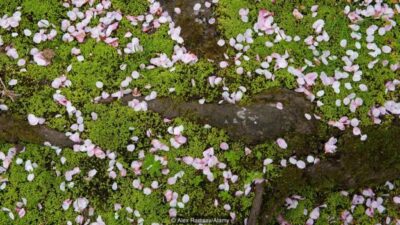
 It is the inevitable mortality embound in nature, however, that is key to a true understanding of wabi-sabi. As author Andrew Juniper notes in his book Wabi Sabi: The Japanese Art of Impermanence, “It… uses the uncompromising touch of mortality to focus the mind on the exquisite transient beauty to be found in all things impermanent”. Alone, natural patterns are merely pretty, but in understanding their context as transient items that highlight our own awareness of impermanence and death, they become profound.
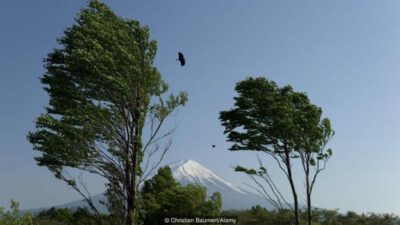 “You have different feelings when you’re young – everything new is good, but you start to see history develop like a story. After you’ve grown up, you see so many stories, from your family to nature: everything growing and dying and you understand the concept more than you did as a child.”
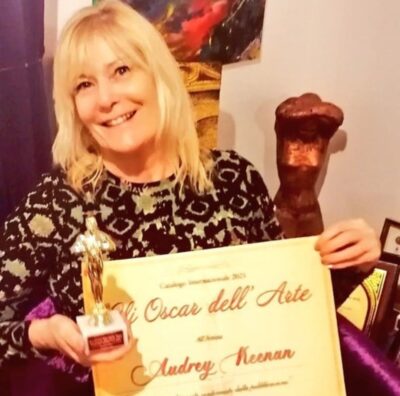 Audrey is a Scottish artist who paints abstract Expressionism angel art. She began painting on the anniversary of her daughter’s death, and found it was healing and therapeutic. In the last three years she’s been awarded 13 international art awards, including The World Golden Cup 2020 Art Award, Oscar dell Arte, Golden Palm 2020, and Leonardo da Vinci 2020.

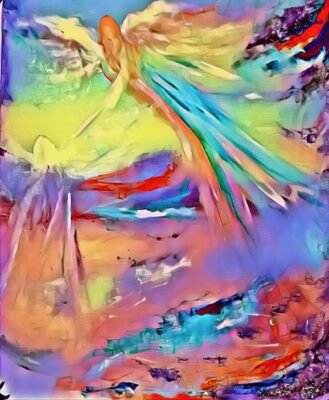
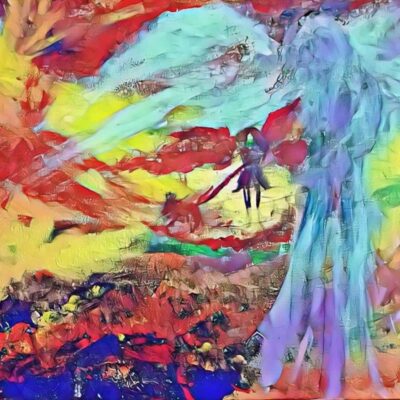
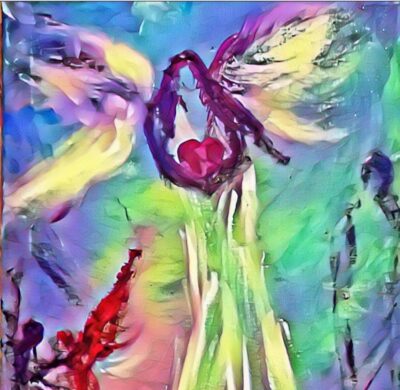

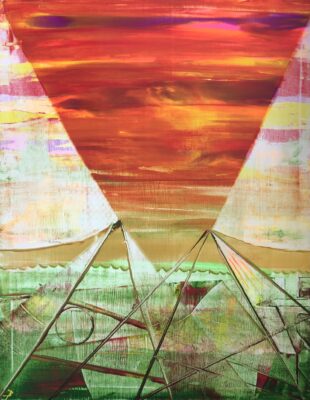

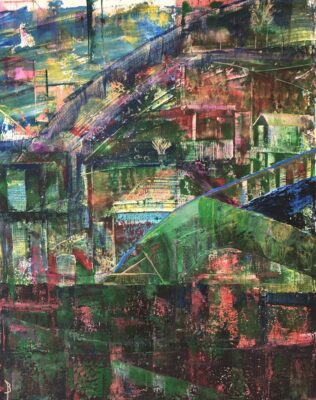

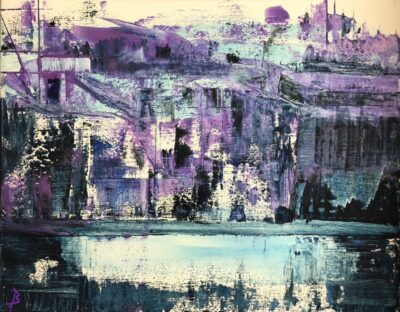

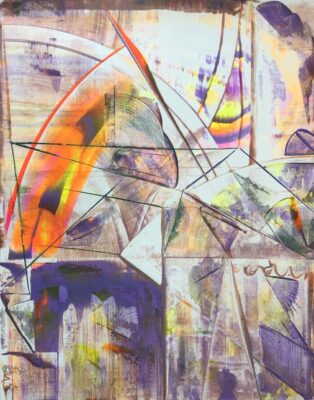
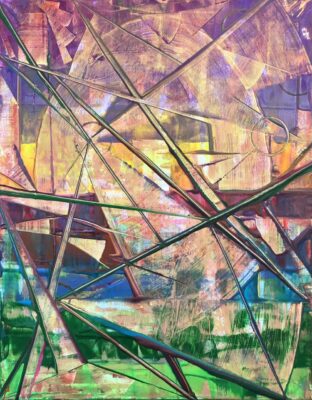
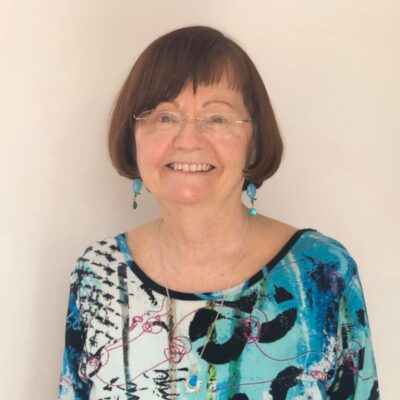
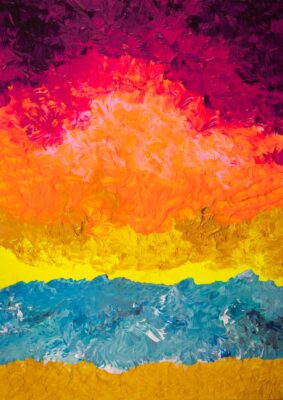
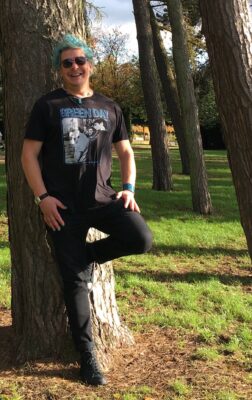 I am a self-taught artist who picked up my first brush in lockdown, August 2020. I just felt an instant peace as I brushed the paint in different directions. I have taken elements of my life and principles and applied them to acrylics on canvas.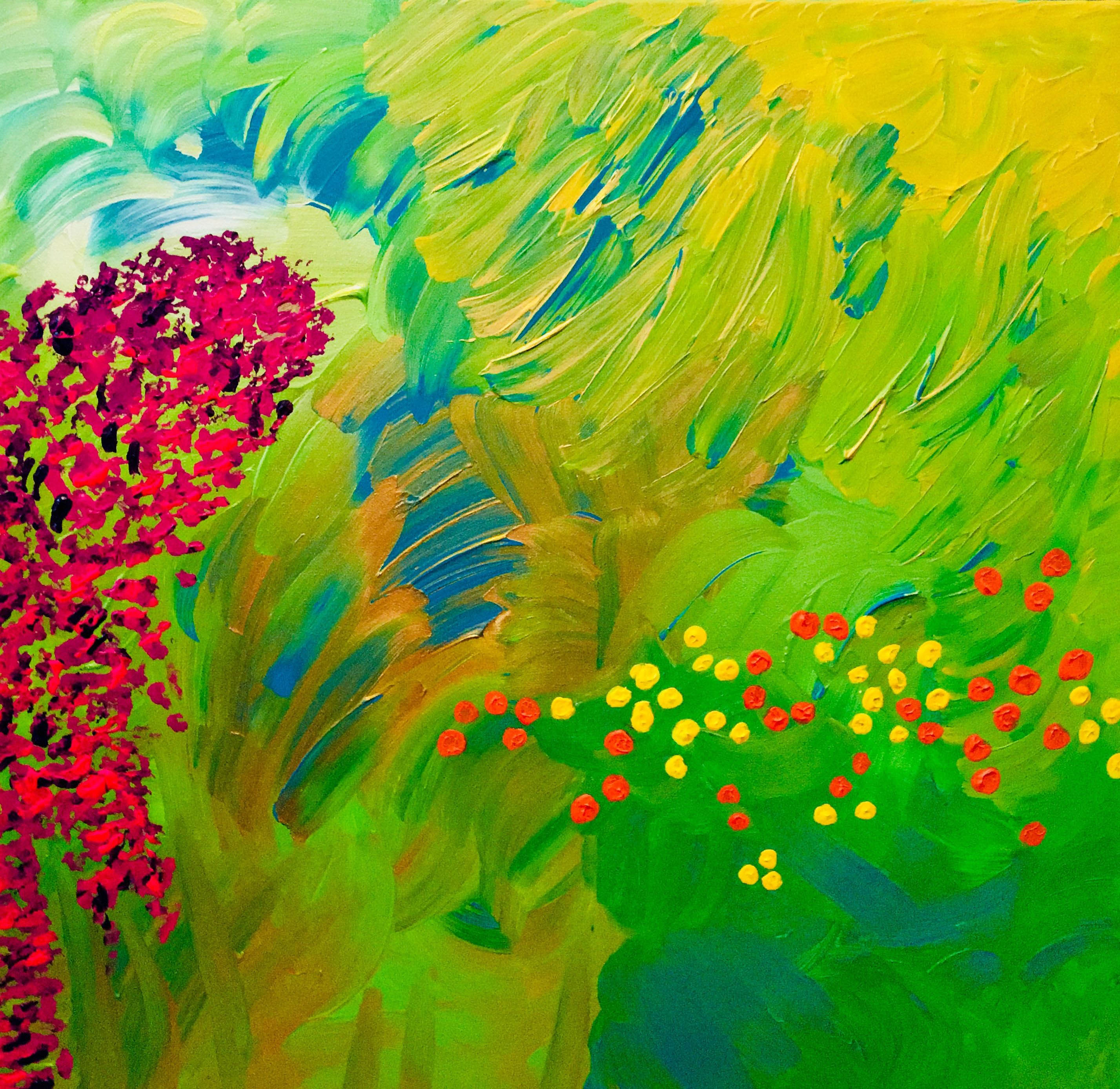
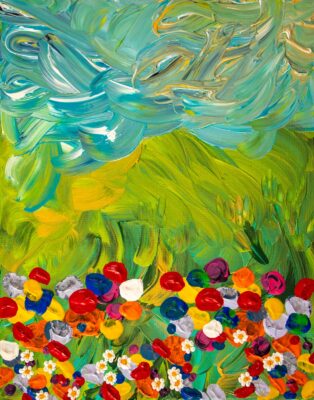
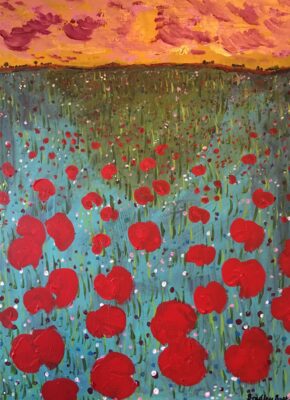
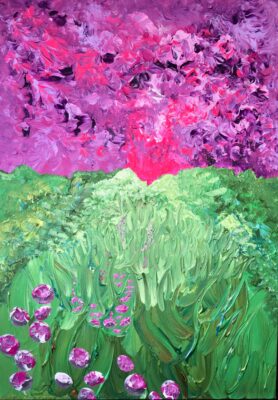
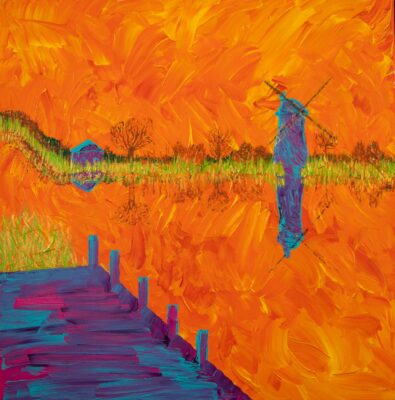
 One spring I volunteered at a botanical garden, spending many days uprooting what to my untrained eye looked like lovely flowers and plants, because they were “non-native.” This particular garden cultivates only indigenous plants, so any errant seeds that have the misfortune to blow in and bloom are routinely removed
 As we move ever deeper into our collective rebirth process, we’ll be releasing people and places that no longer resonate with our lives now, and preparing to welcome in the new. Doing this with lovingkindness is our mandate. It’s a ripe moment to ask, who or what in my life seems like an outsider? Am I willing to look again, to enlarge the lens, to see beyond imaginary borders, to become inclusive rather than exclusive?