About the Artist:
I am an artist with a background in typographic design, often combining lettering with my artwork. I live and work in Southwest Dorset in the UK (near the seaside).
 I began selling locally at first back in 2012, and now sell more and more online with the help of social media.
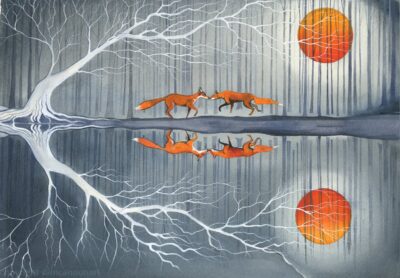
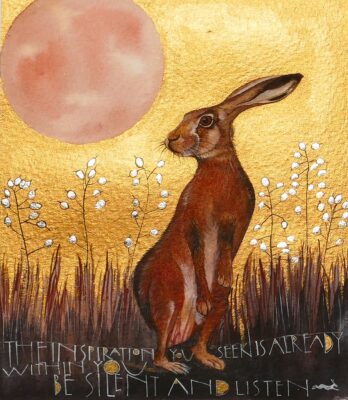
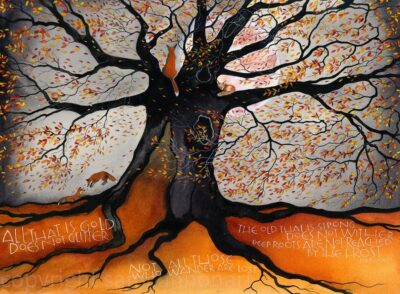
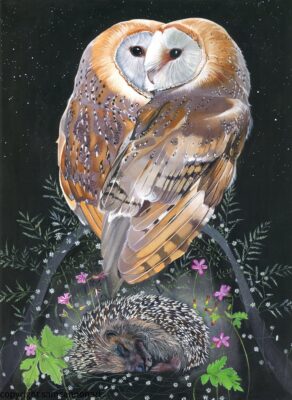
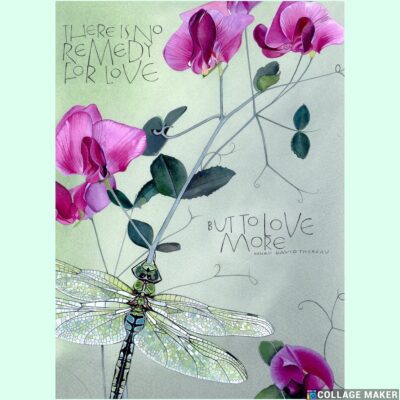
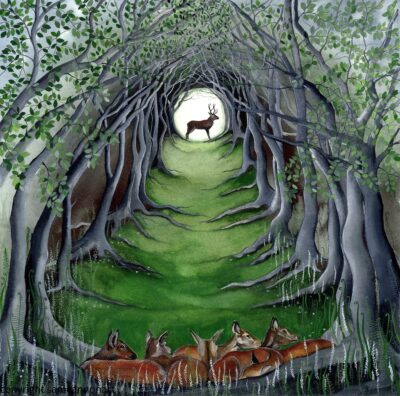
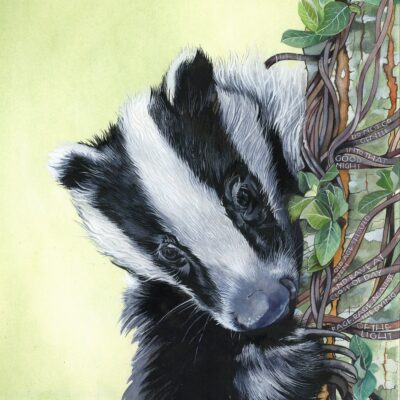
I love working with colour pencils, but it is my watercolours that I’m best known for. And though I have lots of local landscape paintings, my real loves are British mammals, birds and insects.
I really enjoy fine detail, paint with very tiny brushes and spend on average 30 to 40 hours on most paintings. And these days, for a bit of variety, I also paint straight onto little slates, pebbles and petal paper from Thailand. Once again, incorporating lettering.
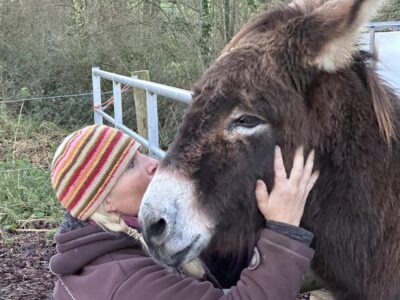
I love my work and am very lucky to get so much inspiration from the 8 acres of rewilded land that I share with my parents, my son and our three donkeys.
Website: www.samcannonart.co.uk
Twitter: @samcannonart
Instagram: @samcannonart
Facebook: @samcannonart
And my donkey’s page is @thethreedonkeyboys on Instagram
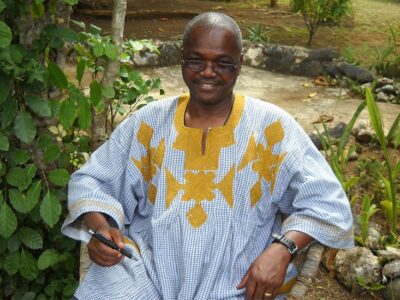
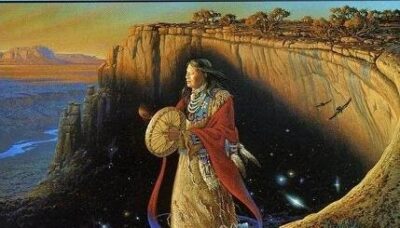 Malidoma is from a collectivist society. Born into the Dagara tribe in Burkina Faso, he is the grandson of a renowned healer, who travels around the world but is based in the U.S. Malidoma sees himself as a bridge between his culture and the United States, existing to “bring the wisdom of our people to this part of the world.” Malidoma’s “career”—he chuckles at the term—is some combination of cultural ambassador, homeopath, and sage. He travels the country doing rituals and consultations, writing books, and giving speeches. He has three master’s degrees and two doctorates from Brandeis University. Sometimes he calls himself a “shaman,” because people know what that means (sort of) and it’s similar to his title back in Burkina Faso—a titiyulo, one who “constantly inquires with other dimensions.”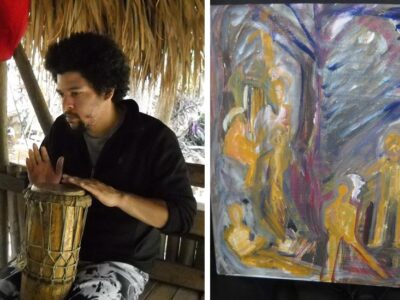




 What rules are meaningful and valuable; which ones perpetuate inequality? At what point do we substitute deference to authority with our own autonomous consideration—and what might emerge if we were to choose our own distinct path? To hone our capacity for independent judgment, political scientist James Scott urges a daily practice of “anarchist calisthenics,” a form of small-scale rebellious action that cuts against the grain of authority; he envisions minor acts of law-breaking, in cases where this would not endanger others or undermine social well-being. Hierarchies that bring with them pogroms and violence, oppression and exploitation, are not easily overturned: such recognition of the stability of unjust systems requires him to “confront the paradox of the contribution of law-breaking and disruption to democratic political change”; law-breaking is needed to break the stranglehold of unjust rule. In Scott’s assessment, “Most of the great political reforms of the nineteenth and twentieth centuries”—among which he describes those for racial equality and civil rights—“have been accompanied by massive episodes of civil disobedience, riot, law-breaking, the disruption of public order, and, at the limit, civil war.” But, in societies defined by hierarchy, how do we develop the skills for anything else? Scott advises carefully chosen confrontations with imposed laws to assert and practise independence and autonomy without inflicting harm upon others.
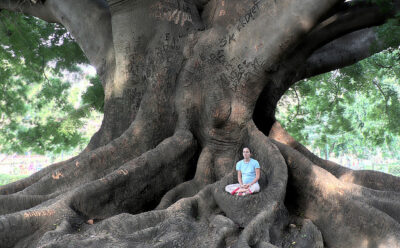 Mostly, the work of non-human entities—animal, plant, fungus, mineral, element—remains illegible to us. This is not for lack of effort: ecologists and physiologists and statisticians map territories and count offspring and track mates, overlay mealtimes and prey densities, measure brain activity and body fat and stomach enzymes. The result is ordered groups and categories of activity, confidently enumerated and named and labelled in terms of productivity. Least flycatchers engaged in aerial acrobatics to snag insects on the wing is sustenance, from this perspective, not entertainment. Wilson’s warblers hopping in the shrub birch branches, munching on little green inchworms, are engaged in functional foraging and not gustatory pleasure. The spruce grouse my black lab flushes from the woods is fleeing for survival, not searching for solitude and hermetic peace. But are we really seeing these lives in their entirety? The porcupine trundling along the trail; the lynx with its unhurried paces along the road; the moose, when not browsing willow, not surveying for wolves, just standing in the brush looking out at the mountains?
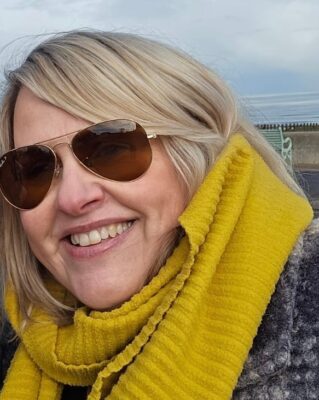 I have always loved art and gained a degree in illustrations and animation from Edinburgh College of Art. I started to work in finance but have always continued to draw, paint and craft.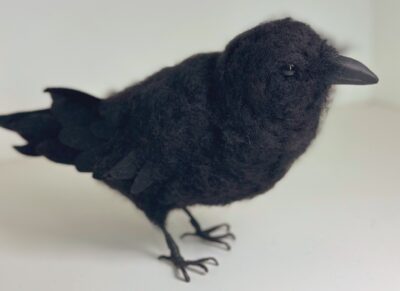
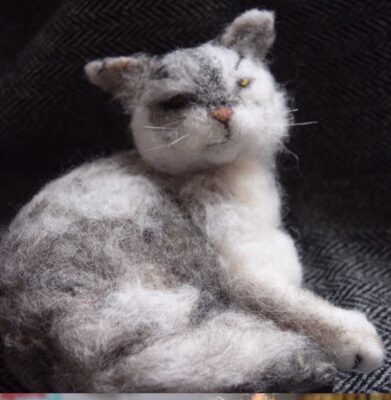
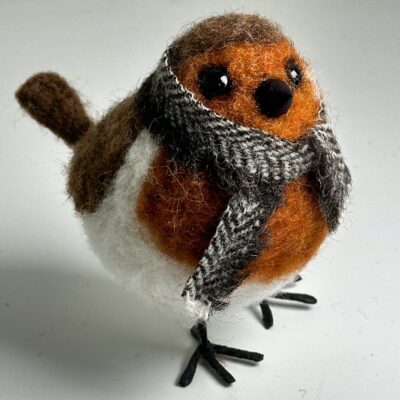
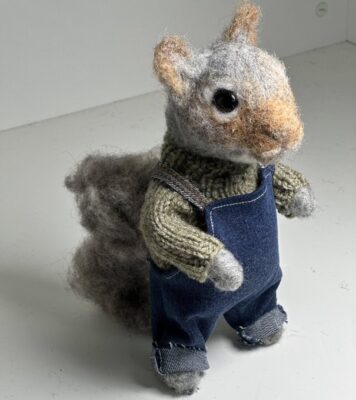
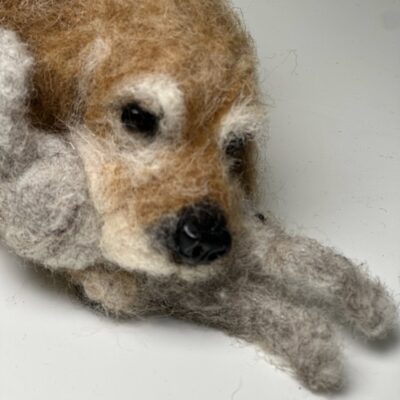
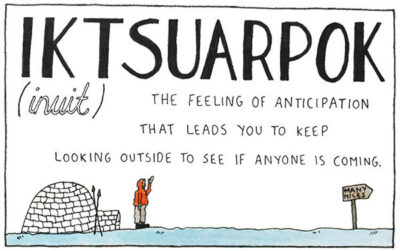 Sometimes we must turn to other languages to find le mot juste. Here are a whole bunch of foreign words with no direct English equivalent.