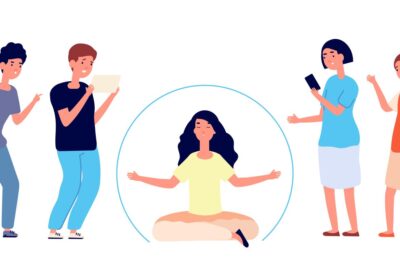
A friend overstepping, a family member oversharing or a work colleague who you’re fed up with talking to you like crap. It may feel like these are just the occasional, yet inevitable, less-than-ideal parts of life, but really there’s an answer to minimising them all: better boundaries.
We all have boundaries, but many of us struggle to express them, particularly in tense situations where we want to avoid conflict as much as possible. However, it’s true that, like a muscle, the more you practice setting boundaries, the stronger you feel doing so.
Why are boundaries so important?
In an Instagram post, Nawal Mustafa, aka The Brain Coach, set out the importance of clear, firm and supportive boundaries in every aspect of our lives. “Boundaries are a way for us to honour our needs, set realistic expectations, and teach others how to treat us,” she explains. “They are a form of self-care and self-love that allow us to protect our energy and psychological health.”
Physical boundaries
Mustafa explains that this includes who is allowed in your personal space, who can touch you and how close someone can get to you, as well as what you choose to put into your body. Subtle violations of this boundary might look like pressure to drink alcohol when you’ve said you don’t want to (“Go one, one won’t hurt”) to unsolicited comments on your appearance (“You’ve lost weight since I last saw you!”).
Even in situations where these breaches are more annoying than damaging, remember that you are always within your right to ask someone to stop.
Emotional boundaries
Some of the hardest to maintain, emotional boundaries can look like not taking on other people’s emotional burdens (aka trauma dumping) and not engaging in triggering topics.
Especially in close relationships like with family and friends, it can be awkward and difficult to express your need for some distance. Mustafa suggests helpful phrases like “I want to support you but I have too much on my plate right now” and “I don’t have the emotional capacity to talk about politics” as ways you can kindly but firmly reclaim your emotional space.
Communication boundaries
These can often be most apparent in the workplace, where you may have to raise issues with how someone is speaking to you, as well as what you yourself can and cannot say. However, they also come into play in other areas of our lives, such as wanting to maintain privacy.
Being clear on what you deem acceptable is the best route to success, Mustafa indicates. If you’re not ready to talk about something, dislike the tone you’re being spoken to in or feel demeaned by name-calling or being dismissed, be explicit about your barriers.
While you can’t guarantee they will react in kind, you’ll know that you’ve done everything you can to protect your wellbeing.
Financial boundaries
Money has long been taboo, particularly with family and friends, but amid a cost of living crisis and rising inflation, now is also the time when we’re feeling the most stretched and need to put limits in place.
Whether you’ve been invited somewhere that’s too expensive, need to ask a friend to pay you back or want to politely decline loaning someone money, try not to let any feelings of guilt or embarrassment overpower you.
The reality is that every person has different spending priorities, salaries and financial boundaries, so it’s time we all stopped being so awkward about communicating them.
Mental boundaries
We often forget how important it is to set boundaries with ourselves, too. Instead of a punishment or indication that we’ve done something wrong, it helps to see personal boundaries as practice in self-trust and confidence.
Mustafa shares that important mental boundaries include allowing ourselves to have personal thoughts, beliefs and opinions that differ from others, and being OK with others not agreeing with us.
If you have people-pleasing tendencies, these may be hard to maintain, but the mantra: “It’s OK if you don’t agree with me” is a good one to keep in mind.
Time boundaries
If you’re the kind of person that gets sucked in helping out a friend before realising you’ve no time left to work on yourself, take note. Mustafa explains that we should also monitor how much time we choose to spend with others, as well as how others should respect our time.
A family member that’s always late? Tell them. A friend that will call and call and call until you pick up? Let them know that you can chat, but only for 15 minutes.
The same goes for rejecting invitations. Don’t feel pressured to spend your time somewhere you don’t want or need to be.
Energy boundaries
Similarly, continually putting the wants and needs of others before our own can be seriously draining, leading us to emotional exhaustion.
While “protect your energy” might sound like just another therapy slogan, it’s actually a valuable lesson in how the people you surround yourself with can impact your mood.
If a family member, friend or colleague is going beyond needy and veering into enmeshed relationship territory, it may be time to set some firmer boundaries.
Relationship boundaries
Encompassing all of the previous elements, relationship boundaries relate to how people can treat us, how they behave around us and what they can expect from us.
“Boundaries can be applied in many different aspects of life, such as our time, our emotions, our physical space, and our mental energy,” adds Mustafa.
“Setting boundaries is not easy to do, especially if you have lived most of your life in an environment where we don’t see other people setting or respecting boundaries. It may feel very uncomfortable at first, but with time, it will get easier and you will feel more confident and at peace.”
Original article here

 Tina was at a crossroads. Her daughter had recently left for college, and her husband had his own pursuits. And although she’d once enjoyed banking, she now bore little interest in her work. For some time, she had been asking herself whether she should quit. But what would her colleagues and bosses think of her?
 If there is too great a discrepancy between the “true” and the “false” self, it will make for a vulnerable sense of identity. And if we are unable to acquire a stable sense of identity—we may end up one day unraveling as Tina did. After a lifetime of complying to others’ expectations, Tina was experiencing what Erikson would call a delayed identity crisis. At a certain point in her life, it became difficult for her keep up the lie.
 Every once in a while I wonder how my life can get any better. And then it does! Over and over again. How is it that that can happen without much effort on my part to make it so? Here are my #lovinglife suggestions for joy seekers everywhere.
 In the summer of 2021, I experienced a cluster of coincidences, some of which had a distinctly supernatural feel. Here’s how it started. I keep a journal and record dreams if they are especially vivid or strange. It doesn’t happen often, but I logged one in which my mother’s oldest friend, a woman called Rose, made an appearance to tell me that she (Rose) had just died. She’d had another stroke, she said, and that was it. Come the morning, it occurred to me that I didn’t know whether Rose was still alive. I guessed not. She’d had a major stroke about 10 years ago and had gone on to suffer a series of minor strokes, descending into a sorry state of physical incapacity and dementia.
 While some coincidences seem playful, others feel inherently macabre. In 2007, the Guardian journalist John Harris set out on ‘an intermittent rock-grave odyssey’ visiting the last resting places of revered UK rock musicians. About halfway through, he went to the tiny village of Rushock in Worcestershire to gather thoughts at the headstone of the Led Zeppelin drummer John Bonham, who died at the age of 32 on 25 September 1980, after consuming a prodigious quantity of alcohol. A Guardian photographer had visited the grave a few days earlier to get a picture to accompany the piece. It was, writes Harris, ‘an icy morning that gave the churchyard the look of a scene from The Omen’ and, fitting with one of the key motifs of that film, the photographer was ‘spooked by the appearance of an unaccompanied black dog, which urinates on the gravestone and then disappears’. ‘Black Dog’ (1971) happens to be the title of one of the most iconic songs in the Led Zeppelin catalogue.
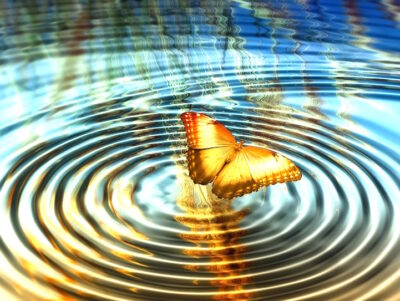
 Jung was the first to bring coincidences into the frame of psychological enquiry, and made use of them in his analytic practice. He offers an anecdote about a golden beetle as an illustration of synchronicity at work in the clinic. A young woman is recounting a dream in which she was given a golden scarab, when Jung hears a gentle tapping at the window behind him and turns to see a flying insect knocking against the windowpane. He opens the window and catches the creature as it flies into the room. It turns out to be a rose chafer beetle, ‘the nearest analogy to a golden scarab that one finds in our latitudes’. The incident proved to be a transformative moment in the woman’s therapy. She had, says Jung, been ‘an extraordinarily difficult case’ on account of her hyper-rationality and, evidently, ‘something quite irrational was needed’ to break her defences. The coincidence of the dream and the insect’s intrusion was the key to therapeutic progress. Jung adds that the scarab is ‘a classic example of a rebirth symbol’ with roots in Egyptian mythology.
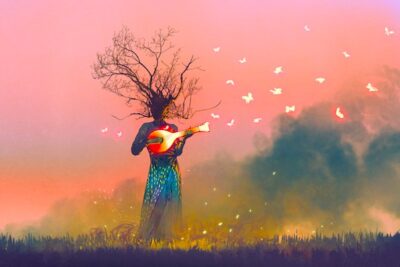 I have come far in my life, farther than I ever dreamed was even possible. And yet my dreaming continues, urging me ever onward.
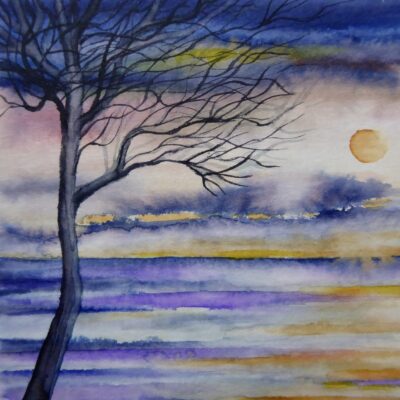
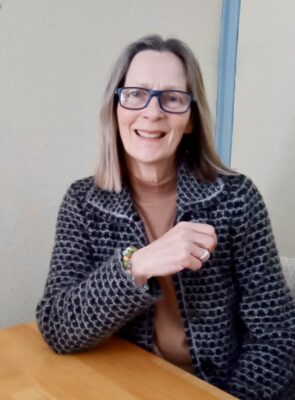 I’ve been artistic all my life, but I don’t think of myself as an artist. I mainly write spiritual poetry; exploring our shared human condition. I paint small watercolour and ink paintings to accompany them on my website.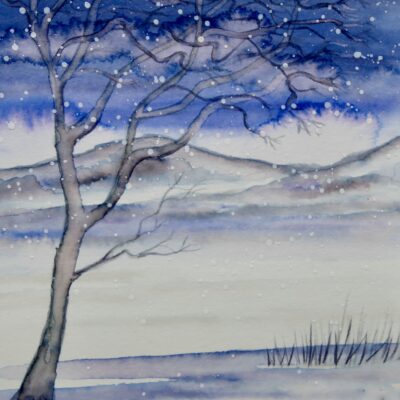
 The sky was a classic California cloudless blue. The light, February soft. The sea breeze, easy, fragrant, and chilly. The waves, mellow laps against the rocky arch at the Natural Bridges State Marine Reserve, about 75 miles south of San Francisco.
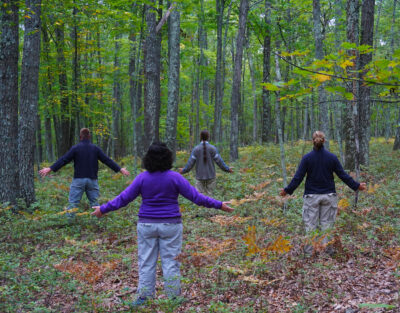 Doing it before school or work would be a beautifully irreverent and rebellious thing to do: to remind yourself that this is our most important work as human beings, rather than something that is done after our jobs or homework or housework are complete, and only then if we are not yet completely weighed down by exhaustion.