

- You feel calm inside … and that calmness offers an ease of genius flow and vitality.
- You have emotive bursts popping up from inside.
- Sometimes they’re purposeful and other times you might cry over nothing at all. I believe this is your power offering itself to you to elevate the world.
- You fall in love with nature, animals, people, the Earth.
- You see wonders everywhere you look. And you want to put more of that wonderfulness into the world around you for others to thrive upon.
- It becomes effortless to energetically zing others up. The more you do this, the greater you feel.
- You see the potential in people and situations and aim straight for the new possibilities on offer in every circumstance.
- You feel younger than your years and look in the mirror to find that’s showing up in you physically too.
- You love easily with zero concern for a broken heart because this kind of love comes from a greater place with greater purpose and offers itself readily to all.
- You understand things at greater levels, eliminating the reactive responses that come along with a lack of comprehension of greater purpose at play.
- You feel more like the greater being you really are, finding ways to live this here on Earth.
- You discover you can talk to animals, trees, oceans, the universe, etc. and they energetically talk back to you with brilliant insights into how life is unfolding right now. We are increasingly interconnected as Source beings in a symbiotic version of reality.
- You become an alchemical elevancer of Life naturally and instinctively.
May grace, genius and greatness flow through us all now with wonder and joy.
About the Author:

Soleira Green is a visionary author, quantum coach, ALLchemist & future innovator. She has been creating leading edge breakthroughs in consciousness, quantum evolution, transformation, innovation, intelligence and more over the past 25 years, has written and self-published eleven books, and taught courses all over the world on these topics.



 I fast once a month. It’s hard. Even though I’ve been doing it for years, I start dreading my fast day the night before; fretting about how I’m going to be able to pass through the discomfort. And where I’m typically not hungry until around 11am, on a fasting day I wake up hungry. Then, I stumble through what I need to get done as best as I can, given how lousy I’m feeling. Even though I know what to expect, it never seems to get easier.
 Whenever I am faced with life’s uncertainty, I ask myself the following questions: Why is this happening? What can I do to make it go away? How can I navigate this effectively? What can I learn from this experience?
 Many people cheat on taxes — no mystery there. But many people don’t, even if they wouldn’t be caught — now, that’s weird. Or is it? Psychologists are deeply perplexed by human moral behavior, because it often doesn’t seem to make any logical sense. You might think that we should just be grateful for it. But if we could understand these seemingly irrational acts, perhaps we could encourage more of them.
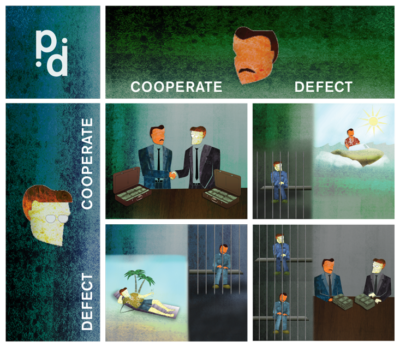
 When it comes to getting people to cooperate more, Rand’s work brings good news. Our intuitions are not fixed at birth. We develop social heuristics, or rules of thumb for interpersonal behavior, based on the interactions we have. Change those interactions and you change behavior.
 We called them fairy rocks. They were just colorful specks of gravel—the kind you might buy for a fish tank—mixed into my preschool’s playground sand pit. But my classmates and I endowed them with magical properties, hunted them like treasure, and carefully sorted them into piles of sapphire, emerald, and ruby. Sifting the sand for those mystical gems is one of my earliest memories. I was no older than 3 at the time. My memory of kindergarten has likewise been reduced to isolated moments: tracing letters on tan paper with pink dashed lines; watching a movie about ocean creatures; my teacher slicing up a giant roll of parchment so we could all finger-paint self-portraits.
 I believe this with every fibre of my being and I live it, in myself and witnessing it in others, in every way I can. So what are some of these super powers that we’re seeing these days? I’ll try to encapsulate a few of the ones I’m aware of.
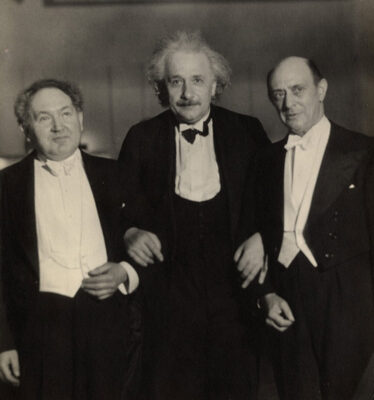 But in the second half of the 19th century, composers gradually began to deviate from a strict adherence to the principle of tonality, making it difficult to sense where the music stood in relation to the tonic. Schoenberg, believing that tonality had run its course, was determined to supplant it with the series, or tone row. In a series, each of the 12 notes of the chromatic scale of semitones appears exactly once; a note could be repeated only after the series had been completed. This gave a composer a staggering number of combinations to choose from: 1 x 2 x 3 x … x 12 = 479,001,600, to be exact (not counting shifts by octaves, which Schoenberg allowed). In serial music, complete democracy ruled: no single note held any preferred status over the others. Every note was related only to its immediate predecessor in the series; gone were the roles that different notes had played in relation to the tonic. At its heart it was a mathematical system, and Schoenberg was determined to impose it on music.