
It’s easy to get depressed and feel helpless in the face of the cascading effects of climate change we’re experiencing today: mega-wildfires, extreme heat and drought, flooding, hurricanes on steroids, and melting ice caps, to name a few. However, it’s not hopeless; we can change the trajectory of our future if we make the right choices individually and together — beginning today.
Back in 2017, Drawdown: The Most Comprehensive Plan Ever Proposed to Reverse Global Warming was published. Edited by environmentalist and best-selling author Paul Hawken, the book presents 100 different ecologically sound ways to “draw down” carbon from the atmosphere by working in cooperation with natural systems. This was the first product of Project Drawdown, which was co-founded in 2014 by Hawken and fellow environmentalist Amanda Joy Ravenhill to uncover the most substantive climate solutions and communicate them to the world.
Drawdown refers to the to the time when greenhouse gases in the atmosphere stop climbing and start to steadily decline, thereby stopping catastrophic climate change. Before Project Drawdown, the most widely stated climate goals were to slow down or stop greenhouse gas emissions, but to Hawken these were necessary but insufficient goals. “If you’re traveling down the wrong road, you are still on the wrong road if you slow down,” he opined. The only goal that makes sense is to reverse global warming, he believed — and there was no roadmap for that. Project Drawdown was the answer.
The solutions presented in the book and on the website were sourced from individual farms, communities, cities, companies and governments. A coalition of researchers and scientists selected those with the greatest potential to either reduce emissions or draw down and store carbon from the atmosphere, reviewed the literature on each solution, and devised climate and financial models for each. Then outside experts evaluated their work.
Both book and website are organized into eight sections: Energy, Food, Women and Girls, Buildings and Cities, Land Use, Transport, Materials, and Coming Attractions; and every solution contains information on its history and science, examples, a ranking in terms of its global emissions-reduction potential, an estimate of how many gigatons of greenhouse gases it avoids or removes from the atmosphere, and its costs.
 Who would have guessed that refrigerant management would be in the top ten? Or that educating girls and family planning would be the second most important things we could do to reduce carbon emissions? It turns out that hydrofluorocarbons (HFCs, the primary current refrigerant) have 1,000 to 9,000 times greater capacity to warm the atmosphere than carbon dioxide. As for making the means of family planning more accessible and educating girls, these two rights-based solutions are projected to reduce the future global population by about a billion people, with commensurate savings in greenhouse gas emissions.
It’s hopeful to see so many natural solutions already in practice, but even more hopeful to see how many of them we can individually affect. For instance, we can all reduce the amount of food we waste (the #1 emissions saver), we can add more plant-based food to our diets and reduce our intake of meat (#3), and we can see that our old refrigerators and air conditioners are recycled properly (#4). And those SUVs? Last year the International Energy Agency found that SUVs were the second largest cause of the global rise in carbon dioxide emissions over the past decade! An analysis commissioned by The Guardian found that all the SUVs sold in the U.S. just in 2018 will in one year emit 3.5 million tons more in CO2 than if they were smaller cars. Over a 15-year lifetime of the vehicles, the extra pollution is on par with the entire annual emissions of Norway — a huge hit to the climate.
This year Project Drawdown published their latest update — the Drawdown 2020 Review — available for free download from their website. Their bottom line: the world can still reach Drawdown by mid-century, if we make the best use of all existing climate solutions. Ultimately, we can build a completely regenerative society, because when we implement natural solutions to solve the climate emergency, we produce a plethora of added benefits to human and planetary well-being — such as clean air and water, more nutritious food, less disease, and more productive and meaningful jobs.
The main challenge with the Drawdown solutions is that scaling them up will require international cooperation and coordination at unprecedented levels — and that depends on our leaders seeing global warming as the existential threat it is and acting with the requisite speed and determination. Achieving the needed global transformation will require a new paradigm of cooperation, a vision of possibility, and the collective will to address the issue.
 Project Drawdown has produced a framework to guide us on a new pathway of ecological recovery and sustainability, but to act, we need to be able to touch, see, and feel the existing solutions at hand. In “Drawdown 2020 — The Time is Now,” the virtual event that introduced Climate Week in New York City in September, 2020, we experience the sight, sound, and feel of just a few of those solutions, and watching it for free on the website is electrifying.
There is so much in this inspiring presentation that one can get overwhelmed with possibility! At the end, clips of Academy Award-winning filmmaker Louis Psihoyos’ film “Racing Extinction” were shown as they were being projected onto the Empire State Building and then on the Vatican during the COP 21 international climate conference, creating 4.4 billion media impressions worldwide. Psihoyos says that, “Once you get 10 percent of the population 100% committed to a cause, it’s unstoppable.” With his films he aims to get 10 percent of the planet aware of the extinction crisis, and he’ll be doing similar projections of his film on iconic buildings worldwide in 2021.
Project Drawdown ultimately is a response to environmentalist Rachel Carson’s pioneering work beginning in the 1960s: “The human race is challenged more than ever before to demonstrate our mastery — not over nature but of ourselves.” Rather than feeling climate change is something that’s happening to us, Paul Hawken asks us to consider that “global warming is happening for us — an atmospheric transformation that inspires us to change and re-imagine everything we make and do.” If we do that, he says, we begin to live in a different world.
About the Author:
Cher Gilmore is a community organizer, writer, and editor living in Southern California.
Original article here
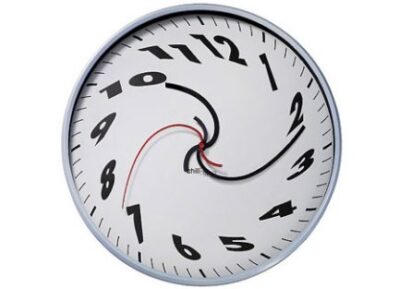 This month, approximately 75 countries worldwide will create an annual illusion: saving time. We move the hands of our clocks ahead, and think we’ve harnessed the sun. In the U.S., our participation begins at 2 am on Sunday, March 14th.
 Holding the both/and



 Many countries in the world have been going through lockdown and quarantine. In some places this has been the norm for almost a year now. During this period, I have been reflecting on the good and bad things about it.
 There are many effects or influences occurring that we can observe in the world now.
 Thoughts, influences, and experiences shape our perceptions. If we are unawares of how we are aligning, or entraining to anything, then we may unknowingly behave as the creators of those influences wish us to behave. Marketing and advertising have achieved untold levels of leverage over human consciousness via digital means. We know that via documentaries such as “The Social Dilemma.” What we need to become even more aware of is how we are influenced or imprinted on other levels of our mind, even in our own bodies. Entrainment, resonance, and imprinting is the way mammals operate and learn from each other. Unfortunately, these beautiful traits are now being used against humanity.
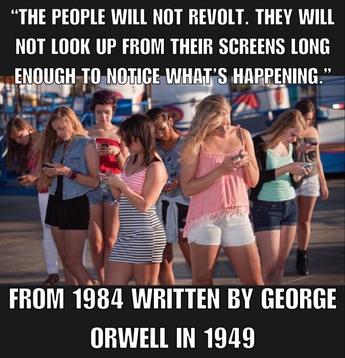 Witnessing the chaotic patterns and disintegration of patterns in our world now is difficult. So many seem so hypnotized, or plain lost. Millions have no other concern other than simply surviving. Did we really want it to be this way? Our understanding of how human consciousness works and interacts is the key to extricating ourselves. Creation is born out of chaos and resonance by informed choice, arrived at by meditation/spiritual hygiene, critical thought, and practical action, is necessary to reverse the direction we are now finding our world going towards. The disintegration of the old order must continue, even as there seems to be no new framework to rely upon to replace it. The old consciousness is simply unable to offer any solution to the problems it has created.
 Lastly, fastidiously monitor your interactions and usage of electricity and technology. Currently the Dual-Headed Gods are Science (orthodox) and Technology (digital), but they are false gods. How they came to dominate our world is a story for another time. Our task for now is to take responsibility for allowing it to happen thus far by compassionately understanding how we have been sleepwalking with it for so long…and then taking the necessary steps to change ourselves, and by extension, create the potential world we would all like to create and inhabit. Where everyone is healthy, where everyone thrives, where loving kindness, cooperation and creativity are paramount.
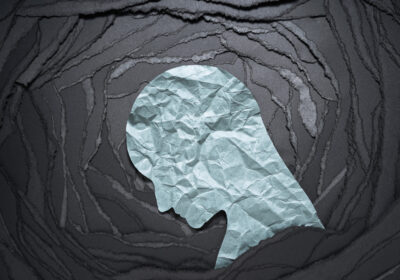 To believe that things that happen to us come from outside, alien to our intervention, shows how easily we fall into a comfortable area of thinking that we are powerless against those circumstances.
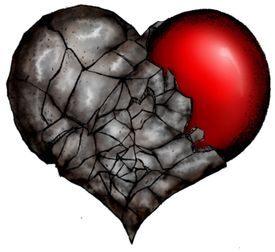 Fear and love are opposites because when we live in fear we are not loving — and when we don’t love, the word hate comes into play. Why do people hate something? Because they feel fear. Therefore, to really experience love, we have to erase the fears that right now are controlling our life. How? By having the courage to tackle them, one by one, until they disappear.
 We are in the midst of a struggle for our future, the future of countless species, and indeed future of this Planet. Much is at stake. Even so, there are very good reasons that we are at this juncture, and it is first and foremost an opportunity to remember what is essential about us, and all of Life.
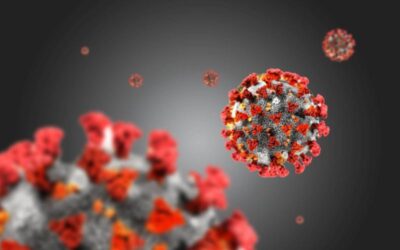 I have been noticing and observing that the predominant preoccupation with the Age of Science and Medicine is to classify micro-components of the natural world as hostile to human biology, when in fact our biology exists in a symbiotic relationship with trillions of bacteria and other organisms. There is mounting evidence that when we introduce toxins of any type into the natural order, these microorganisms will attempt to rid themselves of the toxicity, and in turn, this may appear in biology as illness, or dis-ease. When this happens, it should alert us that something has changed in the equilibrium, the balance of Nature within and without. Instead, we treat the manifestation of illness as an invader, mercilessly and coldly attacking us and killing some of us. The only question that remains is to identify and remove the sources of toxicity, whether it be in our air, water, food, or within our minds and emotions.
 We can no longer afford this sort of indulgence, not when we face multiple challenges in simultaneity. Even though the lockdowns during 2020 seemingly provided a brief respite, the collapse of the ecosystem is still accelerating. The Pandemic of 2020 has captivated most of human focus, drawing away attention to the looming crisis of the collapse of capitalism as we’ve known it, and the poverty that is being created because of it. There is a stated desire by the world’s most influential persons to establish a single digital transaction system to replace the currencies and through a digital “smart” infrastructure, manage most aspects of every human being’s life in the near future. Is this what we really want, or need?
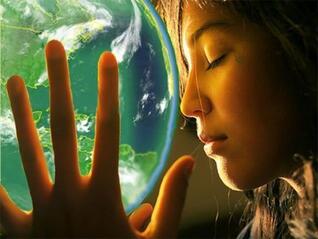 Challenge your own assumptions. Protect yourself and your loved ones from over-exposure to artificial EMF’s. Buy a water filter for your home. Learn deep breathing techniques, and perhaps grow a small veg garden. Dance more, make love…to everything. Meditate, reflect, spend time in Nature. Self-care is essential…always!