
 Ask people what they think they’ll look like in 25 years, and chances are they’ll mention how their parents looked at that age. And while genetics certainly play a part, research shows there’s more to the story. Only about 30% of what we see as aging is inherited, explains John Rowe, M.D., Julius B. Richmond Professor of Health Policy and Aging at Columbia Mailman School of Public Health.
When you look specifically at things above the neck — like cognitive function, vision, and hearing — that number goes up to about 50%. “People feel there’s some intrinsic clock playing out a program in their body that they don’t have influence over,” says Dr. Rowe. “It’s just not true.”
Yes, good news: We have real control over how our bodies age. Aging is happening on a cellular level at every moment, so for a long and healthy life, it’s vital to stay on top of the changes within your body and your mind. For a better understanding of these shifts through every decade, we talked to the experts.
In Your 20s
In our 20s, we’re generally at the peak of physical health. In several ways, our bodies are still on the upward curve of development — even our menstrual cycles maybe more regular than in our teens! — and our brains and bones are growing to their full potential.
Brain
Your brain is changing well into your 20s, says Shanna Levine, M.D., a New York City–based internist working in private practice for Goals Healthcare. Research has shown that your prefrontal cortex — the part responsible for factors like inhibition, high-level functioning, and attention — continues growing until around age 25.
POWER UP: It’s never too early to prioritize brain health! Keep your noggin sharp through the decades with these brain-boosting tricks:
- Plan to volunteer. One study found that giving back, even for less than two hours a week, could slow cognitive decline — likely because doing so promotes social connection and mental engagement, which research has proven can help stave off dementia.
- Study a new language. It may be easier to learn one when you’re young, but studying another language at any age can “promote thinking skills, increase mental agility, and delay the aging of the brain,” found one study. Plus, if you take group classes, you get the social benefit.
- Learn to play an instrument. Even if you don’t see yourself as musically inclined, give it a shot. In one study, people 60 and over showed improvement in cognitive functions after just four months of piano lessons.
Bones
By the time you’re 18, you already have up to 90% of your peak bone mass, including strength and density. However, you’re still adding more mass than you’re losing (that changes around age 30). While the amount you develop is primarily based on set factors like race and gender, about one-quarter of it is determined by things you can control.
POWER UP: Exercise regularly, get enough calcium in your diet (about 1,000 mg per day), limit alcoholic beverages, and don’t smoke.
In Your 30s
 Many people see this as their best decade. During our 30s, we’re likely getting more settled in our careers and families, and according to one study our happiness levels are still actively increasing. This is also when making real lifestyle changes can help stave off long-term issues.
Metabolism
You may notice that it takes extra effort to shed pounds. This is because of a slower metabolic rate — it can start to decline in our 20s and continues to decrease by 2% to 3% every 10 years. The reason you likely won’t realize that until now: This is also when we start losing muscle mass (3% to 8% per decade after age 30). This metabolic shift may translate into an increase in body fat around your middle. While you might be annoyed about how your jeans suddenly fit (or don’t), the deeper belly fat around your organs (called visceral fat) is more of a concern— it can increase your risk of things like type 2 diabetes, cardiovascular disease, and high blood pressure.
POWER UP: Eat healthfully and start a regular exercise routine; it’ll help build muscle mass, which gives your metabolism a boost.
Skin
Seeing new fine lines and wrinkles in the mirror? You can blame decreasing collagen and elastin levels. And cell turnover slows after your late 20s, so skin can look dull and tired without extra exfoliation. Our Beauty Lab recommends adding a facial peel to your weekly routine. This is also when damage from past unprotected sun exposure can start to rear its ugly head.
POWER UP: Prevent future sun damage by wearing SPF 30 or higher every day — even if you’re not hitting the beach or the pool.
In Your 40s
 Everything seems to come together when you hit your 40s. While your family life and career are likely at a high point, caring for aging parents and planning for the future can make it a stressful time.
Eyes
Struggling to read the restaurant menu? Eyesight begins to weaken at this age because of changes in the eyes’ focusing ability. But you won’t see the more profound consequences for two more decades, says Dr. Levine.
POWER UP: Focus on your diet. “Just one cup of kale has more than a whole day’s worth of the carotenoids zeaxanthin, lutein, and beta-carotene, which help shield ocular tissue from harmful UV damage and may also reduce your risk of developing cataracts,” says GH Nutrition Director Jaclyn London, M.S., R.D.
Height
“Every 10 years after the age of 40, we lose about half an inch of height” because of changes in bones, muscles, and joints, says Dr. Levine. But talk to your doctor about any rapid height loss — it could be a sign of osteoporosis.
POWER UP: Get exercise. There’s no way to fully stop shrinking, but a study found that people who did so regularly could cut the height they lost almost in half. This was true even for those who became moderately active only after 40 (compared with those who never exercised regularly and those who ended their activity as they got older).
In Your 50s
 As your children head off to high school and college, now is when you think about how you would like to spend your time. Whether you focus on a new hobby, a volunteer project, or a career change, this decade is all about starting to concentrate on your own wants and needs.
Hormones
The big health story during this decade? Menopause. It hits some women in their 40s, but the average age is 51. Menopause is diagnosed when you haven’t had your period for over a year — and when your ovaries stop producing estrogen, the effects can be challenging both physically and emotionally. The classic symptoms include hot flashes, insomnia, mood swings, and even anxiety or depression — but not all women will experience every one of these.
POWER UP: Keep cool! While there hasn’t been much research on supplements and herbal remedies, some women have found that black cohosh eases hot flashes; one study showed that listening to relaxing music or practicing slow-breathing exercises could reduce their frequency. For many women, the end of periods — and cramps, bloating and PMS-ing — is something to celebrate!
In Your 60s
 Welcome to a new concept: freedom! Whether it’s thanks to becoming an empty nester, being newly retired, or just shaking off societal expectations, it’s all about you from now on. Here’s to prioritizing your mental and physical well-being!
Hearing and Vision
Along with declining vision, hearing loss is an issue: One-third of Americans in their late 60s and early 70s have hearing loss. And after 75, half of us will have difficulty hearing.
POWER UP: Ask for help, especially since this can be socially isolating. Today’s hearing aids are often more discreet than previous models, so don’t hesitate to talk with your doc about whether you’re a candidate. Only 30% of adults 70 and older who could use them ever have, reports the National Institute on Deafness and Other Communication Disorders.
Bones
Women are at higher risk of developing osteoporosis (about one-quarter of women age 65 and older in the U.S. suffer from it, versus less than 6% of men) because of rapid loss of bone density during and after menopause.
POWER UP: Take a proactive approach and get screened regularly for bone disease. You can help lower your odds of it by starting an exercise plan with weight-bearing movements (like walking, hiking, jogging, climbing stairs, weight training, and even dancing) and making sure you get enough calcium and vitamin D.
The Future of Aging
Somewhere between early adulthood and middle age, a compound in your cells called nicotinamide adenine dinucleotide (NAD+) begins a gradual decline. NAD+ helps power hundreds of metabolic processes and keeps a group of proteins called sirtuins active. You want them to stay active, since they can contribute to overall health and longevity.
Leonard Guarente, Ph.D., director of the Paul F. Glenn Center for Biology of Aging Research at MIT and chief scientist and cofounder of Elysium Health, discovered their role and importance. He says sirtuins are the “guardians of health maintenance” in cells.
While experts are able to make some generalizations about growing older, it’s a different experience for everyone. “People are very diverse in terms of their aging rates, and the level that one person hits by age 50, another may not hit until 60,” says Morgan Levine, Ph.D., assistant professor of pathology at Yale School of Medicine.
Biological Age
This is why many researchers also talk about biological age, a measurement focusing on biological markers that show how your systems are actually aging. “About 68% of people will have a biological age within five years of their chronological age, but you can also find individuals who are 10 years older or younger,” she explains.
You can’t stop aging, of course, but lifestyle choices make a real difference. And research is focusing on what else can be done. “People want to play an active role in their own health maintenance,” says Dr. Guarente. He and his team at Elysium Health are looking to develop a test that will let people find out and monitor their NAD+ levels.
True Age
The hypothesis is that NAD+ levels are a better measure of aging than chronological age. And in theory, knowing them would help people make profound changes. “Successful aging is not the imitation of youth,” says Dr. Rowe. “Making yourself look better on the outside won’t impact what’s going on inside.” At the end of the day, it’s internal functions that actually matter for our health and life span.
Original article here
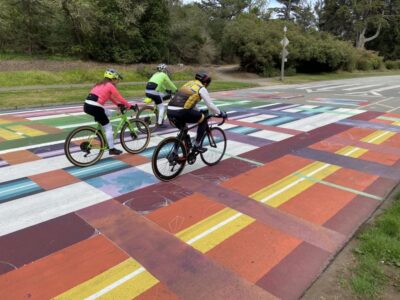 What happens when you close down a city street to cars? More people do non-driving things, like walking, biking, strolling, skating and frolicking in the space normally reserved for motor vehicles. Car-free advocates would say that as greenhouse gas emissions and traffic violence go down, happiness and connection go up — it’s hard to connect with your neighbors while ensconced in two tons of steel.
 Amid the human crush of Old Delhi, on the edge of a medieval bazaar, a red structure with cages on its roof rises three stories above the labyrinth of neon-lit stalls and narrow alleyways, its top floor emblazoned with two words: birds hospital.
 I’d come to the bird hospital, and to India, to see firsthand the Jains’ moral system at work in the world. Jains make up less than 1 percent of India’s population. Despite millennia spent criticizing the Hindu majority, the Jains have sometimes gained the ear of power. During the 13th century, they converted a Hindu king, and persuaded him to enact the subcontinent’s first animal-welfare laws. There is evidence that the Jains influenced the Buddha himself. And when Gandhi developed his most radical ideas about nonviolence, a Jain friend played philosophical muse.
 In the West, consciousness was long thought to be a divine gift bestowed solely on humans. Western philosophers historically conceived of nonhuman animals as unfeeling automatons. Even after Darwin demonstrated our kinship with animals, many scientists believed that the evolution of consciousness was a recent event. They thought the first mind sparked awake sometime after we split from chimps and bonobos. In his 1976 book, The Origin of Consciousness in the Breakdown of the Bicameral Mind, Julian Jaynes argued that it was later still. He said the development of language led us, like Virgil, into the deep cognitive states capable of constructing experiential worlds.
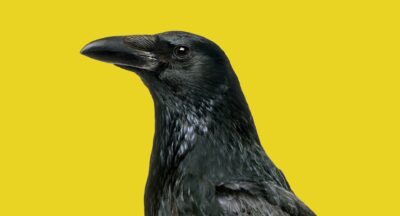
 Crows are not among the shoulder-perchers, but Singh sometimes sees former crow patients hovering around the hospital. They might be looking for him. Crows recognize individual human faces. They are known to blare vicious caws at people they dislike, but for favored humans, they sometimes leave gifts—buttons or shiny bits of glass—where the person will be sure to notice, like votive offerings.
 The trail was only 50 miles from Gir National Park, where, the day before, I’d seen two Asiatic lions, nearly indistinguishable cousins of Africa’s lions. Once the region’s apex predator, the Asiatic lion almost went extinct during the British empire’s colonization of India, when no viceroy could visit a maharaja’s palace without a hunt in the local forest. Even today, the Asiatic lion still ranks among the rarest of the large feline predators, rarer even than its neighbor to the north, the snow leopard, which is so scarce that a glimpse of one padding down a jagged Himalayan crag is said to consummate a spiritual pilgrimage.
 The monk was a white dot some six switchbacks up by the time I hopped off the wall and continued the climb, my legs stiffened by the break. I reached the entrance to the temple complex with only 15 minutes to spare. Its marble courtyard shone brilliant white, as though bleached by the mountain sun.
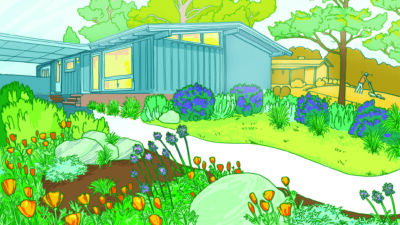
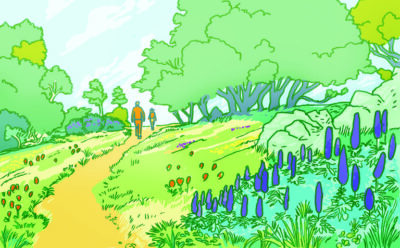 The great likelihood is that you’re going to be adapting to the conditions you already have. Those conditions might not appear to be “optimal” in the traditional horticultural sense. But plants grow in the wild without fertilizer. Survivors adapt, learning to love even marginal soil. They also forge relationships with other plants, animals, and the microbiology of the soil. These relationships become the foundation of a sustainable and resilient landscape.
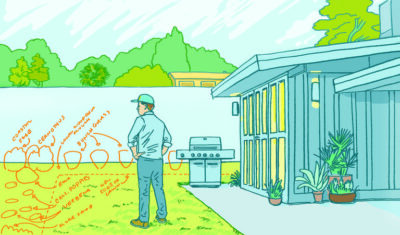 Now that you’ve observed, ask…What plants will thrive in my yard? In other words, what does nature want? And what do I want? Where these desires meet will be the foundation of your design.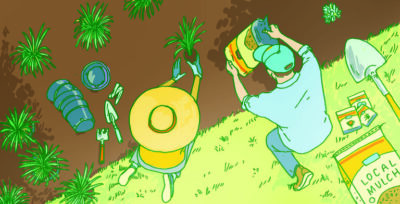
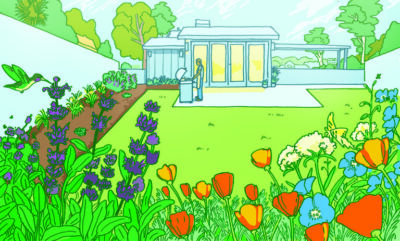 Watch how the landscape evolves. “Don’t be discouraged if some of the plants in your palette don’t do well, even though you did the research,” says Max Kanter, cofounder of Saturate, an ecologically minded gardening company in Los Angeles. Some might not be placed quite right, while others will thrive in ways you didn’t expect. “Start to practice the idea that the garden is a process,” he says. It’s not an installation or a transaction; it’s a relationship.
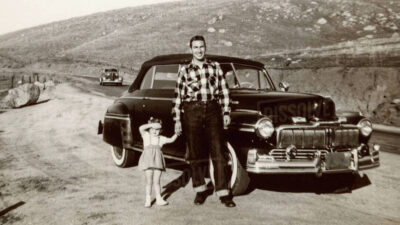 Recovering from a happy childhood can take a long time. It’s not often that I’m suspected of having had one. I grew up in Norman, Oklahoma, a daughter of immigrants. When I showed up at college and caught sight of other childhoods, I did pause and think: Why didn’t we grow our own tomatoes? Why did I watch so many episodes of “I Dream of Jeannie”? Who is Hermes? What is lacrosse? Was my childhood a dud? An American self-inspection was set in motion. Having lived for more than forty-five years, I finally understand how happy my childhood was.
 In the run-up to marriage, many couples, particularly those of a more progressive bent, will encounter a problem: What is to be done about the last name?
 In a forthcoming study, Kristin Kelley, a doctoral student working with Powell, presented people with a series of hypothetical couples that had made different choices about their last name, and gauged the subjects’ reactions. She found that a woman’s keeping her last name or choosing to hyphenate changes how others view her relationship. “It increases the likelihood that others will think of the man as less dominant—as weaker in the household,” Powell says. “With any nontraditional name choice, the man’s status went down.” The social stigma a man would experience for changing his own last name at marriage, Powell told me, would likely be even greater.
 Life has sped up. A never-ending stream of stimuli is vying for your attention every minute of the day. Some of it is fabulous and some of it is time wasting.
 In a world where it is almost impossible to lose contact with friends, thanks to the likes of social media, this regret may seem irrelevant. You can send someone a text to say you’re thinking of them, comment on their Facebook feed or Instagram photo, or chat via Messenger. But how long is it since you’ve really connected with these people in real life? How long since you’ve laughed together, cried together, eaten together or just hung out?
 The effect of exercise on health is profound. It can protect you from a range of conditions, including heart disease, type 2 diabetes and some cancers. But the type and amount of exercise you should do changes as you age. To ensure that you are doing the right type of exercise for your age, follow this simple guide.
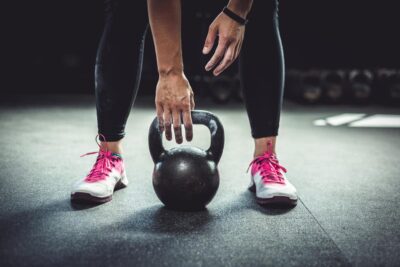 Most people start to put on weight in their 40s. Resistance exercise is the best way to optimise calorie burning to counteract fat accumulation and reverse the loss of three to eight percent of muscle mass per decade. Ten weeks of resistance training could increase lean weight by 1.4kg, increase resting metabolic rate by 7 percent and decrease fat weight by 1.8kg.
 Typically, people accumulate more chronic conditions as they get older, and ageing is a major risk factor for cancer. Maintaining a high level of physical activity can help prevent cancers, such as post-menopausal breast cancer, colon cancer and cancer of the womb, and it reduces the risk of developing chronic conditions, such as heart disease and type 2 diabetes.