 In approximately one month and 10 days, I’ll be on my way to making one of the larger decisions of my adult life (so far, anyway); I’m moving to Austin, Texas, approximately 2,000 miles and one hell of a road trip away from my family and almost my entire friend group back in New York. While I have many questions about my move—chief among them, “How much should a mattress cost?” and “Will everyone hate me for being a Brooklyn transplant?”—nothing has loomed larger in my mind than the question of friendship, or, more specifically, how a full-grown adult goes about making new friends with no partner or kids to act as built-in buffers.
Of course, a big move is hardly the only circumstance in which an otherwise reasonably socialized adult might find herself craving new friendships. The COVID-19 pandemic shrunk our social circles considerably, with many of us spending the last year-plus in the company of family and only our absolute closest BFFs. As the world slowly reopens, it stands to reason that we might want to seek out new connections—and feel somewhat unsure about where to start (especially as COVID-19 rates continue to climb in many cities).
Anxiety about friend-making isn’t so uncommon, according to clinical psychologist and friendship researcher Dr. Miriam Kirmayer, although some of these nerves may be linked to misconceptions about how meaningful friendships actually come about. “There does seem to be, for many people, this belief that friendships should just happen—whether we’re in a new city or a new phase of life—and that our people, so to speak, will magically show up. As beautiful as that is, that isn’t the reality for most people,” explains Kirmayer. “My best advice is to be very intentional with how we approach making friends; seek out opportunities, experiences and activities where we are likely to meet new people with whom we share something in common. My second piece of advice is to try and choose wisely, or, in other words, choose opportunities where we will have more frequent interactions, because we know that friendships often require that frequency of interaction in order to develop.”
Conventional wisdom has it that you should pick popular yet slightly off-the-beaten path activities, like a running group or a knitting club, to meet new people. But what about those of us for whom a good Friday night hinges on the strength of a gummy edible and the availability of a new episode of The Bold Type on Hulu? I’m not trying to paint myself as a total couch potato, but…let’s just say my social style is definitely on the “chill” side, not so much the “go hiking and meet new people on top of a mountain at 7:00 a.m.” side. My quest for new friendships almost feels like dating, something I’m meh at yet very enthusiastic about, except that I don’t have a great frame of reference for what “success” would look like. Does friendship success equal a hangout invite? A standing Saturday-night bar crawl? Godparent-ing each other’s children? How will I know when I’ve cracked it, socially speaking?
For some people, social success—however they define it—can spring from a source as prosaic as social media. Mijal Tenenbaum, 27, moved to Los Angeles with only a few loose acquaintances at her disposal. She DM-ed one of them on Twitter and invited them out to brunch, and while that plan never came to be, Tenenbaum’s new friend did invite her to Disneyland, of all places. Today, the two are best friends, and Tenenbaum’s advice to people in similar situations (whether they’re in a new city or just feeling socially stagnant) would be: “If you get good vibes from an acquaintance or Twitter mutual, reach out and give them a chance! Even if you’re a little insecure and you don’t know them well, just go for it.”
 For Hannah Smith, 27, friendship began at home—quite literally—when she moved to San Francisco in 2019 without knowing anyone. Smith sublet three different rooms through Craigslist before she finally signed a month-to-month lease in the perfect place (which she also found through Craigslist), eventually turning a roommate from her final apartment into one of her best friends. “Low-commitment living situations can be a great way to get to know people in a new place,” says Smith, although she adds that this strategy might be somewhat complicated by the ongoing effects of COVID-19.
One popular method for friend-making endorsed by Kirmayer is volunteering, which is exactly how Courtney Gustafson, 31, ended up meeting her two best friends. “During the pandemic, I happened upon a colony of feral cats, started caring for them, made them an Instagram, and then two different people reached out to offer help with the cats,” says Gustafson. “The three of us turned out to be around the same age and have a lot in common, and now we are a cat rescue/best friend team of 3!”
Ultimately, there’s no perfect way to predict the success of a new friendship. After all, you could join a volunteer effort or a cooking club and meet absolutely nobody you bond with, or you could meet your all-time, Elena Ferrante–novel–level soulmate at a random party you almost skipped. Still, as more people get vaccinated and life ever-so-creepingly returns to “normal,” it’s worth thinking about whether the friendships in your life are giving you what you need and want. If they’re not, maybe you should DM that cool-seeming Twitter person, sublet with a friendly acquaintance, or bond over a mutual love of feral cats—because after all, without true and lasting friendships, who would have the courage tell us when we were being annoying on the internet?
Original article here
 We called them fairy rocks. They were just colorful specks of gravel—the kind you might buy for a fish tank—mixed into my preschool’s playground sand pit. But my classmates and I endowed them with magical properties, hunted them like treasure, and carefully sorted them into piles of sapphire, emerald, and ruby. Sifting the sand for those mystical gems is one of my earliest memories. I was no older than 3 at the time. My memory of kindergarten has likewise been reduced to isolated moments: tracing letters on tan paper with pink dashed lines; watching a movie about ocean creatures; my teacher slicing up a giant roll of parchment so we could all finger-paint self-portraits.
 You might think that the impact of aging on the brain is something you can’t do much about. After all, isn’t it an inevitability?
 Need to know

 Dr. James McGaugh remembers that day too. At the time, he was director of UC Irvine’s Center for the Neurobiology of Learning and Memory, the research institute that he founded in 1983. In her email, Jill Price said that she had a problem with her memory. McGaugh responded almost immediately, explaining that he worked at a research institute and not a clinic, and that he’d be happy to direct her to somewhere she could find help.
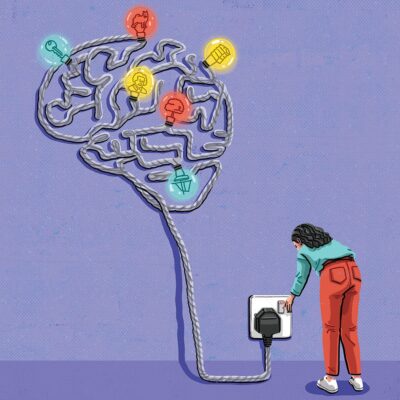 Still, he started from a position of scepticism. “In interrogating her, I started with the scientific assumption that she couldn’t do it,” he told me. And even though Price showed that she could, repeatedly, McGaugh was still unmoved. “Yeah, it got my attention, but I didn’t say, ‘Wow.’ We had to do a lot more. So we did a lot more.” (In Price’s recollection, however, her ability to remember “really freaked Dr McGaugh out.”)
 In May 2012, the journal Neurobiology of Learning and Memory published a follow-up study by UCI neuroscience graduate student Aurora LePort and neurobiologist Dr Craig Stark, then the director of the UCI Center for the Neurobiology of Learning and Memory. It was now nearly 12 years since Price first reached out to McGaugh, but researchers were only fractionally closer to finding the answer she was looking for.
 For both Price and Petrella, there is a specific point in their lives that they feel triggered their ability to remember things with extraordinary clarity. For Petrella, it was when he was seven years old and playing a deliriously fun game in his backyard with a childhood friend. The next day, Petrella invited his friend over to play it again, but they only played for a few minutes before getting bored. Petrella realised then that nothing ever stays the same and that it was important that he remember things before they changed. For Price, it was her family’s traumatic move to the West coast. In each case, Price and Petrella say they already had strong memories before this decisive moment, but after it, their ability to remember was transformed.
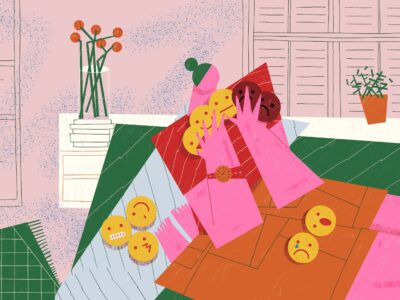 It’s common to wonder whether talking to yourself is “normal.” Let me be the first to tell you—it’s what got me through the pandemic.
 At first, I was reluctant. I asked my body audibly, “How are you feeling?” when my migraines worsened. Often, my body would flood with anxiety or freeze up with stress. When that happened, I’d ask, “What do you need in order to feel more relaxed?” I would wait and listen, then act on what my body “said” back to me. If my body felt tired, I would nap. If I was anxious, I would meditate. If I needed more information about what my body needed, I asked follow-up questions.