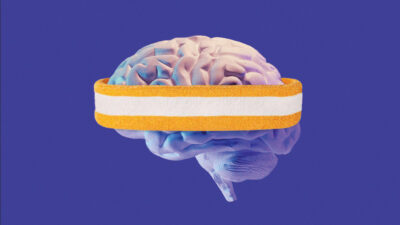
We’ve often thought about muscle as a thing that exists separately from intellect—and perhaps that is even oppositional to it, one taking resources from the other. The truth is, our brains and muscles are in constant conversation with each other, sending electrochemical signals back and forth. In a very tangible way, our lifelong brain health depends on keeping our muscles moving.
Skeletal muscle is the type of muscle that allows you to move your body around; it is one of the biggest organs in the human body. It is also an endocrine tissue, which means it releases signaling molecules that travel to other parts of your body to tell them to do things. The protein molecules that transmit messages from the skeletal muscle to other tissues—including the brain—are called myokines.
Myokines are released into the bloodstream when your muscles contract, create new cells, or perform other metabolic activities. When they arrive at the brain, they regulate physiological and metabolic responses there, too. As a result, myokines have the ability to affect cognition, mood, and emotional behavior. Exercise further stimulates what scientists call muscle-brain “cross talk,” and these myokine messengers help determine specific beneficial responses in the brain. These can include the formation of new neurons and increased synaptic plasticity, both of which boost learning and memory.
In these ways, strong muscles are essential to healthy brain function.
In young muscle, a small amount of exercise triggers molecular processes that tell the muscle to grow. Muscle fibers sustain damage through strain and stress, and then repair themselves by fusing together and increasing in size and mass. Muscles get stronger by surviving each series of little breakdowns, allowing for regeneration, rejuvenation, regrowth. As we age, the signal sent by exercise becomes much weaker. Though it’s more difficult for older people to gain and maintain muscle mass, it’s still possible to do so, and that maintenance is critical to supporting the brain.
Even moderate exercise can increase metabolism in brain regions important for learning and memory in older adults. And the brain itself has been found to respond to exercise in strikingly physical ways. The hippocampus, a brain structure that plays a major role in learning and memory, shrinks in late adulthood; this can result in an increased risk for dementia. Exercise training has been shown to increase the size of the hippocampus, even late in life, protecting against age-related loss and improving spatial memory.
Further, there is substantial evidence that certain myokines have sex-differentiated neuroprotective properties. For example, the myokine irisin is influenced by estrogen levels, and postmenopausal women are more susceptible to neurological diseases, which suggests that irisin may also have an important role in protecting neurons against age-related decline.
Studies have shown that even in people with existing brain disease or damage, increased physical activity and motor skills are associated with better cognitive function. People with sarcopenia, or age-related muscle atrophy, are more likely to suffer cognitive decline. Mounting evidence shows that the loss of skeletal muscle mass and function leaves the brain more vulnerable to dysfunction and disease; as a counter to that, exercise improves memory, processing speed, and executive function, especially in older adults. (Exercise also boosts these cognitive abilities in children.)
There’s a robust molecular language being spoken between your muscles and your brain. Exercise helps keep us fluent in that language, even into old age.
Original article here
 Over the course of human history, scientists believe that humans have cultivated more than 6,000 different plant species. But over time, farmers gravitated toward planting those with the largest yields. Today, just three crops – rice, wheat and corn – provide nearly half of the world’s calories.
 From leaf to seed, the entirety of the amaranth plant is edible. Standing up to eight feet tall, amaranth stalks are topped off with red, orange or green seed-filled plumes. Across Africa and Asia, amaranth has long been eaten as a vegetable – whereas Indigenous Americans also ate the plant’s seed: a pseudo-cereal like buckwheat or quinoa.
 For thousands of years, farmers across West Africa have cultivated fonio – a kind of millet that tastes like a slightly nuttier couscous or quinoa. Historically, fonio is considered to be Africa’s oldest cultivated cereal and was regarded by some as the food of chiefs and kings. In countries such as Senegal, Burkina Faso and Mali, fonio would be served on holy days, like at weddings and during the month of Ramadan.
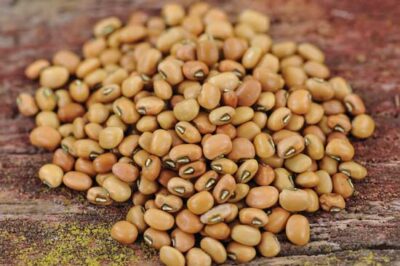 In the 1940s, more than 5m acres of cowpeas were grown in the US – the majority, as their name suggests, for hay to feed livestock. But long before cowpeas – also called southern peas or black-eyed peas – came to the Americas, they were grown for human consumption in West Africa. Although cowpea production has declined in the US in recent decades, the crop is hugely important in much of Africa. Nigeria is the world’s largest cowpea producer.
 In the tropics of Southeast Asia and Polynesia, taro has long been grown as a root vegetable, not unlike the potato. But as rising temperatures threaten cultivation of the crop in its natural habitat, farmers in the continental US are trying to adapt the tropical perennial to grow as a temperate annual, because it cannot survive the cold of US winters.
 While many alternative crops are just plants that were grown somewhere else in the world generations ago, others have been cultivated specifically to withstand climate change.
 At this point, it’s obvious that our smartphones and computers are data-leakers. Plenty of us now cover our laptops’ webcams (although we always forget about the mics), while our smartphones track our locations with us wherever we go. Unfortunately, these tools are so indispensable in modern life, we accept the privacy hit in order to function with the rest of society, and do what we can to keep our data secure.
 From a privacy perspective, these settings pages are essential to comb through if you want to limit the amount of data you’re feeding your smart home. Don’t forget to check the systems setting for the app as well: On iPhone, for example, you need to go to the app’s name in Settings to find additional privacy settings, including network connections like Bluetooth, Local Network, and Cellular Data. If I could, I would disable all these connections for my smart lights, but then, unfortunately, I wouldn’t be able to adjust my lights from my phone, defeating the purpose. (Although I don’t give them my location, so that’s something, right?)
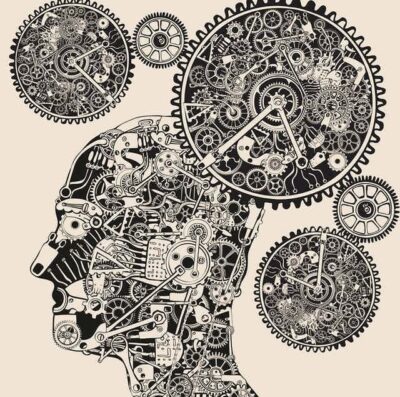 Our eyes are continuously bombarded by an enormous amount of visual information – millions of shapes, colours and ever-changing motion all around us. For the brain, this is no easy feat. On the one hand, the visual world alters continuously because of changes in light, viewpoint and other factors. On the other, our visual input constantly changes due to blinking and the fact that our eyes, head and body are frequently in motion.
 For many of us, decluttering serves as a sort of mental palette cleanser. Stressed out? Tidy your apartment. Unfocused and frazzled? Clear the mess on your desk. Down in the dumps? Reorganize your closet for a sense of accomplishment.
 Believe it or not, you may find yourself looking for your next organizational project after just seven days or so. “System creation can provide ongoing motivation—it builds on itself,” Dorfman notes. “If you design an entryway space equipped with a place for your coat, keys, and bag, you’ve mitigated future misplacements. The sense of mastery and competence prompts the mind to want more.”

 During these times the views of Louis Pasteur and Dr. Antoine Bechamp came into heated confrontation with one other. Pasteur maintained the new epidemics were caused by microorganisms, or viruses (literal translation — poisons). Bechamp claimed that they were the result of unsanitary living conditions of the times — contaminated water supplies, bad waste management, poor diet, etc. The debate went quiet after Pasteur’s death, with most western medical authorities aligning with his theories. The French medical authorities probed Pasteur’s legacy and found most of his findings were based on prejudicial opinions and thin on facts and proof. Many of his experiment’s results were found to be fraudulent. On Pasteur’s deathbed he declared Bechamp’s Terrain theory as everything and his own theory “as nothing.”
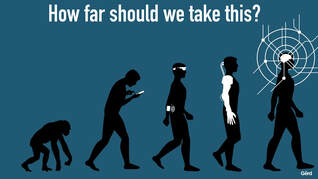 “The dream of the individual that his life could run automatically like an efficient machine, has begun to assume the proportions of a corporate nightmare in which automation unleashes its suffocating powers of standardization, over-regimentation, and depersonalization. Arthur Miller’s trenchant remark that we live in an “air-conditioned nightmare,” implies the unhappy co-existence of technological progress and spiritual regress. Like real nightmares, it takes place within a profound collective sleep therefore offering little chance of discovering either its cause or its cure. Technology can have an anaesthetic effect on man, dulling his moral consciousness and his capacity to enter fundamental, meditative thinking.”
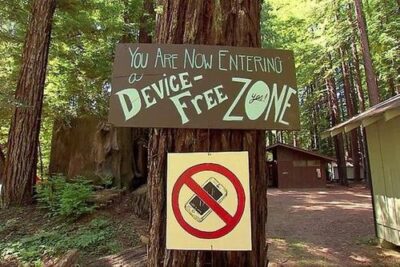 If you’re getting tired of the drudge of it all, then there is only one option. Opting out and going off grid. That may become a necessity as the new digital currency systems are rolled out, making all transactions trackable and not as anonymous as we are told. Everything will be stored in your digital I.D., and I do mean everything. Social credit systems are coming to the West courtesy of China’s experiment with it, and that is the stated agenda in the World Economic Forum’s “Great Reset”. It is possible to create a parallel economy, and it’s been done before, back before the 20th Century. The nightmarish artwork to the right was created by an A.I. program. It exemplifies everything that John Lash ascribes to Archontic consciousness…chaos is the agenda (link below). Is this what we truly want our lives to be ensconced in?
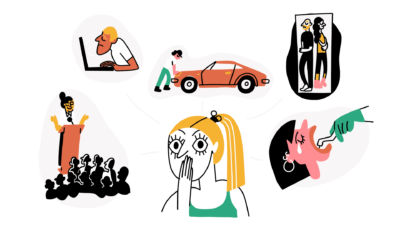 Let’s play a game of “would you rather.”
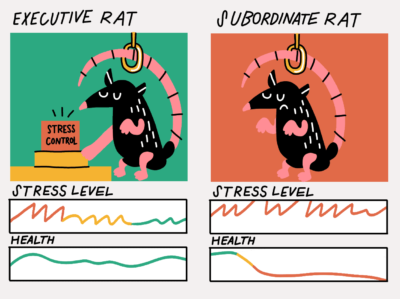 The rat with the lever in its cage is called “the executive rat,” because it has control. It has the power to turn off the electric current flowing through the cage. The rat with no control is called the “subordinate rat.”
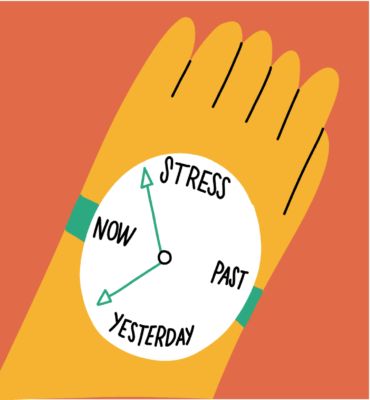 Are you facing the stress of an uncertain future? If so, it helps to focus on what you can control. Sometimes that means bringing the finish line closer by setting goals for today or this week instead of trying to figure out what you’ll do if you lose your job three months from now. Sometimes, it means making a list of 10 ways you can stay connected with friends and choosing the best one to put into action.
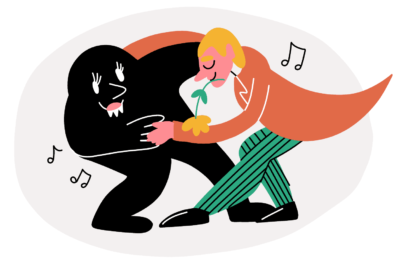 For example, an entrepreneur who feels constantly pressed for time during her nine-hour workday might experiment with doing a 14-hour workday once per week for three weeks. Each of these long workdays is followed by a shortened workday of only six hours. In this case, she is stretching her sense of what’s possible by working longer than what feels comfortable. Then she recovers, taking it easy the next day.
 A friend of mine spends 20 to 30 minutes a day solving Sudoku puzzles. He says it improves his speed of mental processing and makes him, well, smarter.