
One could be forgiven for a little genetic déjà vu.
Launched in 1990, the Human Genome Project unveiled its first readout of the human DNA sequence with great fanfare in 2000. The human genome was declared essentially complete in 2003—but it took nearly 20 more years before the final, complete version was released.
This did not mark the end of humankind’s genetic puzzle, however. A new study has mapped the yawning gap between reading our genes and understanding them. Vast parts of the genome—areas the study authors have nicknamed the “Unknome”—are made of genes whose function we still don’t know.
This has important implications for medicine: Genes are the instructions for making the protein building blocks of the body. Plenty of those still shrouded in darkness could have profound medical significance and may hold the keys to disorders of development, cancer, neurodegeneration, and more.
The study makes it embarrassingly clear just how many important genes we know little to nothing about. It estimates that a fifth of human genes with a vital function are still essentially a mystery. The good news is that the research also outlines how scientists can focus on those mystery genes. “We might now be at the beginning of the end of the Unknome,” says Matthew Freeman of the Dunn School of Pathology at the University of Oxford, a coauthor of the study.
The research team used two tools to find the gaps in our knowledge. First, using the plethora of existing databases of genetic information, they compared the genetic codes of many different species to reveal genes that look roughly similar.
These riffs on a genetic theme are known as conserved genes, and even if we don’t understand what they do, we know that they must be important because nature is parsimonious and tends to use the same genetic machinery to do important jobs in different organisms. “The one thing we could be confident of is that, if important, these genes would be quite well-conserved across evolution,” says Freeman.
Once they had found similar genetic riffs in worms, humans, flies, bacteria, and other organisms, the researchers could look at what was known about the function of these clearly important genes and score them accordingly, with a high “knownness” score reflecting solid understanding.
Because so much genetic information is already available on hundreds of genomes and recorded in a standardized way, it was possible to automate this scoring process. “We then asked how many of those [conserved genes] have a score of less than one, where essentially nothing is known about them,” says Freeman. “To our surprise, two decades after the first human genome, it is still an extraordinary number.”
In all, the total number of human genes with a knownness score of 1 or less is currently 1,723 out of 19,664.
By the same token, the top 10 genes identified by the team’s rummage through genetic databases corresponded with “all the most famous genes, which is reassuring,” says Sean Munro of the Laboratory of Molecular Biology in Cambridge, a study coauthor. “We recognized every single one of them, and there are already thousands of papers about each of them.”
When it came to the substantial number that were unknown, the team conducted one more study, using the best understood (at the genetic level) organism of all: Drosophila melanogaster. These fruit flies have been the subject of research for more than a century because they are easy and inexpensive to breed, have a short life cycle, produce lots of young, and can be genetically modified in numerous ways.
The team used gene editing to dial down the use of around 300 low-scoring genes found in both humans and fruit flies. “We found that one-quarter of these unknown genes were lethal—when knocked out, they caused the flies to die, and yet nobody had ever known anything about them,” says Freeman. “Another 25 percent of them caused changes in the flies—phenotypes—that we could detect in many ways.” These genes were linked with fertility, development, locomotion, protein quality control, and resilience to stress. “That so many fundamental genes are not understood was eye-opening,” Freeman says. It’s possible that variation in these genes could have very big impacts on human health.
All of this “unknomics” information is held on a database, which the team is making available for other researchers to use to discover new biology. The next step may be to hand the data on these mystery genes and the mystery proteins they create over to AI.
DeepMind’s AlphaFold, for example, can provide important insights into what mystery proteins do, notably by revealing how they interact with other proteins, says Alex Bateman of the European Bioinformatics Institute, based near Cambridge, UK. So can cryo-EM, which is a way of producing images of large, complex molecules, he says. And a University College London team has shown a systematic way to use machine learning to figure out what proteins do in yeast.
The Unknome is unusual in that it’s a biology database that will shrink as we understand it better. The paper shows that over the past decade “we have moved from 40 percent to 20 percent of the human proteome having a certain level of unknownness,” says Bateman. However, at current progress rates, working out the function of all human protein-coding genes could take more than half a century, Freeman estimates.
The discovery that so many genes remain misunderstood reflects what is called the streetlight effect, or the drunkard’s search principle, an observational bias that occurs when people only search for something where it is easiest to look. In this case, it has caused what Freeman and Munro call a “bias in biological research toward the previously studied.”
The same goes for researchers, who tend to get funding for research in relatively well-understood areas, rather than going off into what Freeman calls the wilderness. This is why the database is so important, Munro explains—it fights back against the economics of academia, which avoids things that are very poorly understood. “There is a need for a different type of support to address these unknowns,” says Munro.
But even with the database becoming available and researchers picking through it, there will still be some knowledge blind spots. The study focused on genes that are responsible for proteins. Over the past two decades, uncharted areas of the genome have also been found to harbor the code for small RNAs—scraps of genetic material that can affect other genes, and which are critical regulators of normal development and bodily functions. There may be more “unknown unknowns” lurking in the human genome.
For now, there’s still plenty to get into, and Freeman hopes this work will encourage others to study the genetic Terra Incognita: “There’s more than enough Unknome for anyone who wants to explore genuinely new biology.”
Original article here
 If Socrates was the wisest person in Ancient Greece, then large language models must be the most foolish systems in the modern world.
 And bullshit is dangerous, warned Frankfurt. Bullshit is a greater threat to the truth than lies. The person who lies thinks she knows what the truth is, and is therefore concerned with the truth. She can be challenged and held accountable; her agenda can be inferred. The truth-teller and the liar play on opposite sides of the same game, as Frankfurt puts it. The bullshitter pays no attention to the game. Truth doesn’t even get confronted; it gets ignored; it becomes irrelevant.
 You might think that after centuries of studying light, we know pretty much everything about it. It’s true we’ve had breakthrough after breakthrough in using it, from illumination to communication, from examining the micro- and macro-universes to scanning our own bodies. We understand that light is an electromagnetic wave, thanks to James Clerk Maxwell, whose equations established that in 1865; and that it also appears as quantum packets of electromagnetic energy called photons, as Albert Einstein recognized in 1905. But the more we look into light, the more we see and the more we learn. The classical view of light as a wave still produces new science as light waves interact with artificial “metamaterials”; and we are still exploring light as a quantum particle. Both approaches provide ways to manipulate light that were once only science fiction. Here are five recent marvels.
 In ghost imaging, one of each of a swarm of entangled photon pairs interacts with the object and encounters a detector that simply registers its arrival. A second beam of the corresponding entangled partners never touches the object but goes straight to a sensitive multi-pixel detector. Computer analysis of the correlations between the two detector results creates a high-quality image of the object, even with weak illumination. This approach has uses such as converting images covertly taken by invisible infrared light to visible images detected by a high-resolution camera; or obtaining good quality X-ray images from a patient exposed to a low, relatively safe X-ray dose.
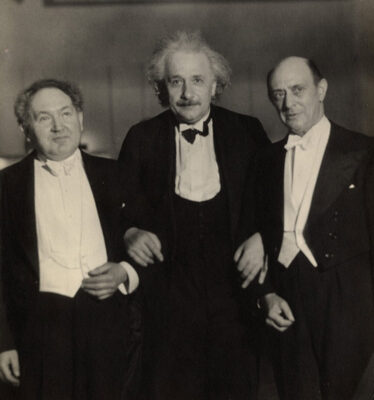 But in the second half of the 19th century, composers gradually began to deviate from a strict adherence to the principle of tonality, making it difficult to sense where the music stood in relation to the tonic. Schoenberg, believing that tonality had run its course, was determined to supplant it with the series, or tone row. In a series, each of the 12 notes of the chromatic scale of semitones appears exactly once; a note could be repeated only after the series had been completed. This gave a composer a staggering number of combinations to choose from: 1 x 2 x 3 x … x 12 = 479,001,600, to be exact (not counting shifts by octaves, which Schoenberg allowed). In serial music, complete democracy ruled: no single note held any preferred status over the others. Every note was related only to its immediate predecessor in the series; gone were the roles that different notes had played in relation to the tonic. At its heart it was a mathematical system, and Schoenberg was determined to impose it on music.
 Dr. James McGaugh remembers that day too. At the time, he was director of UC Irvine’s Center for the Neurobiology of Learning and Memory, the research institute that he founded in 1983. In her email, Jill Price said that she had a problem with her memory. McGaugh responded almost immediately, explaining that he worked at a research institute and not a clinic, and that he’d be happy to direct her to somewhere she could find help.
 Still, he started from a position of scepticism. “In interrogating her, I started with the scientific assumption that she couldn’t do it,” he told me. And even though Price showed that she could, repeatedly, McGaugh was still unmoved. “Yeah, it got my attention, but I didn’t say, ‘Wow.’ We had to do a lot more. So we did a lot more.” (In Price’s recollection, however, her ability to remember “really freaked Dr McGaugh out.”)
 In May 2012, the journal Neurobiology of Learning and Memory published a follow-up study by UCI neuroscience graduate student Aurora LePort and neurobiologist Dr Craig Stark, then the director of the UCI Center for the Neurobiology of Learning and Memory. It was now nearly 12 years since Price first reached out to McGaugh, but researchers were only fractionally closer to finding the answer she was looking for.
 For both Price and Petrella, there is a specific point in their lives that they feel triggered their ability to remember things with extraordinary clarity. For Petrella, it was when he was seven years old and playing a deliriously fun game in his backyard with a childhood friend. The next day, Petrella invited his friend over to play it again, but they only played for a few minutes before getting bored. Petrella realised then that nothing ever stays the same and that it was important that he remember things before they changed. For Price, it was her family’s traumatic move to the West coast. In each case, Price and Petrella say they already had strong memories before this decisive moment, but after it, their ability to remember was transformed.
 Being the most talkative person in the room may be a good way to get people’s attention, but it doesn’t necessarily mean you have the best ideas.
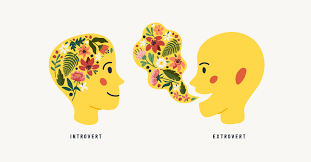 Here’s how managers can create an introvert-friendly workplace:
 Time travel makes regular appearances in popular culture, with innumerable time travel storylines in movies, television and literature. But it is a surprisingly old idea: one can argue that the Greek tragedy Oedipus Rex, written by Sophocles over 2,500 years ago, is the first time travel story.
 Kurt Vonnegut’s anti-war novel Slaughterhouse-Five, published in 1969, describes how to evade the grandfather paradox. If free will simply does not exist, it is not possible to kill one’s grandfather in the past, since he was not killed in the past. The novel’s protagonist, Billy Pilgrim, can only travel to other points on his world line (the timeline he exists in), but not to any other point in space-time, so he could not even contemplate killing his grandfather.
 For 30 years Isabelle Arnulf, head of the sleep disorders clinic at Pitié-Salpêtrière Hospital in Paris, has studied sleep and its associated disorders. During her career, Arnulf, who is also a professor of neurology at Sorbonne University in France, has researched a broad range of sleep conditions: sleepwalking, rapid eye movement (REM) sleep behavior disorder, lucid dreaming, sleep in Parkinson’s disease and hypersomnia, or excessive daytime sleepiness. As part of these studies, Arnulf investigated how these disorders affect dream states. In an interview with Scientific American’s French-language sister publication Pour la Science, the neurologist talks about whether depression or trauma affects dreaming and whether one should worry about recurring nightmares.
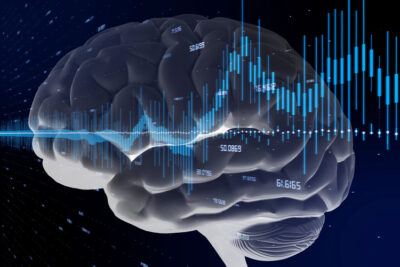 In depression, dreams are very negative, mirroring the mental state of depressed people during the day. This parallel was brought to light in the early 2000s by researcher Dieter Riemann and his colleagues at the University of Freiburg in Germany. By analyzing the dreams of depressed patients treated with antidepressants, they discovered that as the treatment began to take effect after several weeks, the content of these dreams became less and less gloomy, and the mood of the patients improved.
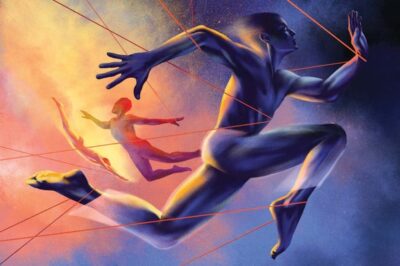 For a long time, we approached recurring nightmares through the prism of psychoanalysis, [which explained them as] unresolved trauma that we would have to work to resolve. But the fact is: we don’t know.
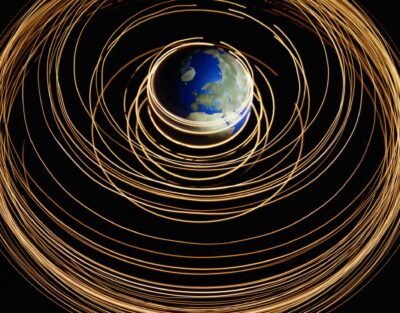 Atomic clocks, combined with precise astronomical measurements, have revealed that the length of a day is suddenly getting longer, and scientists don’t know why.
 A comparison between these estimates and an atomic clock has revealed a seemingly ever-shortening length of day over the past few years.