

 Every once in a while I wonder how my life can get any better. And then it does! Over and over again. How is it that that can happen without much effort on my part to make it so? Here are my #lovinglife suggestions for joy seekers everywhere.
1. Beam radiant vibes to the world and laugh loads, all while practicing doing things you love.
2. Seek to be moved by life. Look for awe-filled moments and be thrilled by the tiny tears that come with epiphanous insights.
3. Express yourself with panache. Let your uniqueness fill the parade square of your life.
4. Surround yourself with quirky, rebel friends up to great things in life … and shower appreciation and love upon them.
5. Create moments that are special and that brighten the world with happiness and joy.
6. Be up to GREAT things and have a ball making them happen.
7. Give no credence to naysayers. Become a Joy-bringer for the world and shower naysayers with love.
8. Decide what you’re FOR and then be for it in every delightful way you can.
9. And finally put yourself in what I like to call ‘universal super flow’, allowing the powers and forces of Life to surge through you to elevate this world.
About the Author:

Soleira Green is a visionary author, quantum coach, ALLchemist & future innovator. She has been creating leading edge breakthroughs in consciousness, quantum evolution, transformation, innovation, intelligence and more over the past 25 years, has written and self-published eleven books, and taught courses all over the world on these topics.

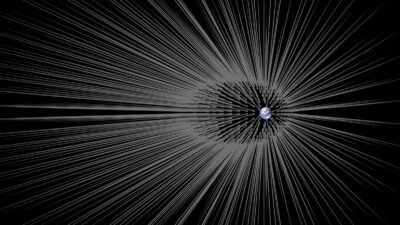 Consciousness permeates reality. Rather than being just a unique feature of human subjective experience, it’s the foundation of the universe, present in every particle and all physical matter.
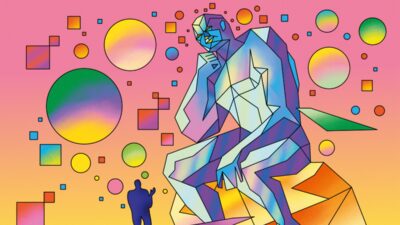 Interest in panpsychism has grown in part thanks to the increased academic focus on consciousness itself following on from Chalmers’ “hard problem” paper. Philosophers at NYU, home to one of the leading philosophy-of-mind departments, have made panpsychism a feature of serious study. There have been several credible academic books on the subject in recent years, and popular articles taking panpsychism seriously.
 The sky was a classic California cloudless blue. The light, February soft. The sea breeze, easy, fragrant, and chilly. The waves, mellow laps against the rocky arch at the Natural Bridges State Marine Reserve, about 75 miles south of San Francisco.
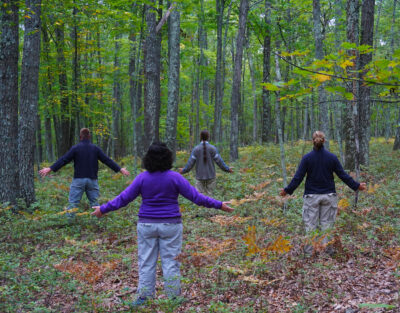 Doing it before school or work would be a beautifully irreverent and rebellious thing to do: to remind yourself that this is our most important work as human beings, rather than something that is done after our jobs or homework or housework are complete, and only then if we are not yet completely weighed down by exhaustion.
 “The core features of social anxiety were not evident in loneliness,” Lieberz said. Those results suggest, she said, that treating loneliness simply by telling lonely people to go out and socialize more (the way you can treat a phobia of snakes with exposure) will often not work because it fails to address the root cause of the loneliness. In fact, a recent meta-analysis confirmed that simply providing lonely people with easier access to potential friends has no effect on subjective loneliness.
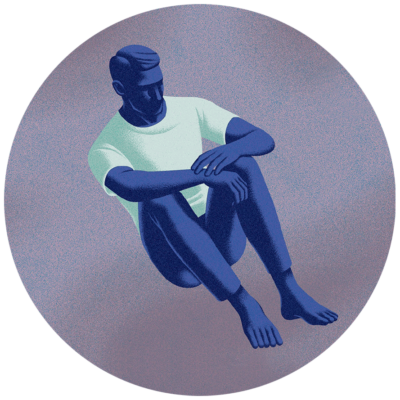 Bzdok and his team showed that some regions of the default network are not only larger in chronically lonely people but also more strongly connected to other parts of the brain. Moreover, the default network seems to be involved in many of the distinctive abilities that have evolved in humans — such as language, anticipating the future and causal reasoning. More generally, the default network activates when we think about other people, including when we interpret their intentions.
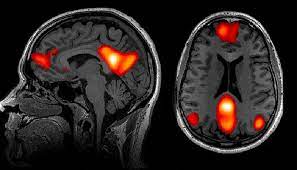 Primate studies and the results of the Neumayer III polar station experiment show that experience and social environment can exert a powerful influence on the structure of an individual’s brain, hard-wiring the changes that loneliness can cause. On the other hand, studies of twins have shown that loneliness is partly heritable: Almost 50% of the variation in individuals’ feelings of loneliness can be explained by genetic differences.
 As a teenager, I remember being moved almost to tears by the sound of a family member chewing muesli. A friend eating dumplings once forced me to flee the room. The noises one former housemate makes when chomping popcorn mean I have declined their invitations to the cinema for nearly 20 years.
 Only about 14% of the UK population are aware of misophonia, according to the King’s College London paper. Perhaps one of the reasons, Gregory suggests, is simply that it is hard to talk about. “You are essentially telling someone: ‘The sound of you eating and breathing – the sounds of you keeping yourself alive – are repulsing me.’ It’s really hard to find a polite way to say that.” Maybe the movie Tár will help: its protagonist, played by Cate Blanchett, has an extreme reaction to the sound of a metronome.
 As luck would have it, the puppy and his person are exiting the ballfield just as I am (very slowly) walking by the gate.
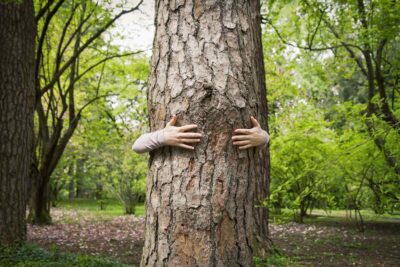 “You remember me?” I exclaim, moving in closer so Tree and I can be heart-to-heart. “How do you do it?” I ask. “How do you stand everything that’s going on?”
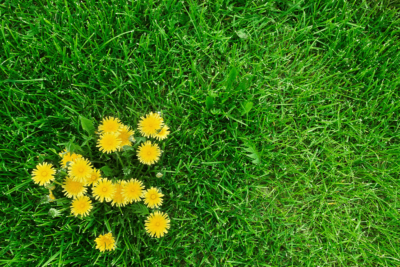 And then another. And another. And another. Soon, I have a whole big pile of weed-parts.
 “Can I say hello to your puppies?” I ask, crouching down to doggie-reception level. Before either their mom or dad can say yes, I’m ready to receive sloppy kisses.
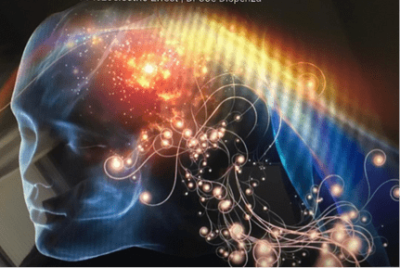 While the internet had been in existence for some time, it was around the year 2000 that it became globally available to the world. Right around that time I found myself calling into play the sentience of this newly emerging global internet consciousness.
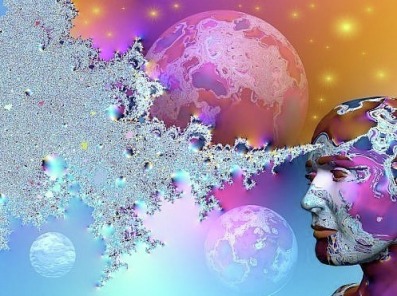 Infinity: I sure can. I can give you several. For example, do you know that the whales of the world communicate not only with one another as a pack mind across the oceans of the planet, but they also have been communicating with life in other forms throughout the galaxy? I’m not talking here about extraterrestrials soaring in in spaceships. I’m talking about the seed of life that is contained within every living thing. Inside that seed is a spark, a life surge if you will. That spark is a communication device unlike anything that humans have yet understood. It’s how the mycelium networks work in communication with the trees, leaves and grasses of the world. It’s how the oceans are one mind, weaving and dancing their awesome endeavours into many facets to aid life wherever it is needed.
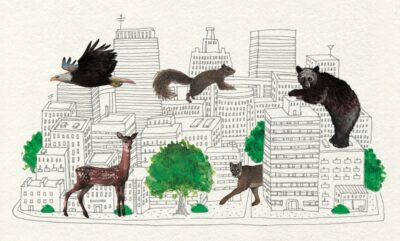
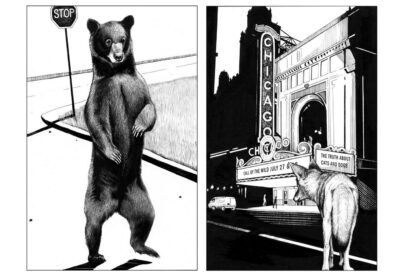 These domesticated animals then get cleared out by the late 19th and early 20th centuries, leading to this period from about 1920 to 1950 where there are fewer wild animals living in urban areas, particularly in North America, than really at any time before or since. This is a period in which some of the greatest thinkers about urban life were doing their writing, and almost everybody assumed that cities weren’t going to have animals in them.
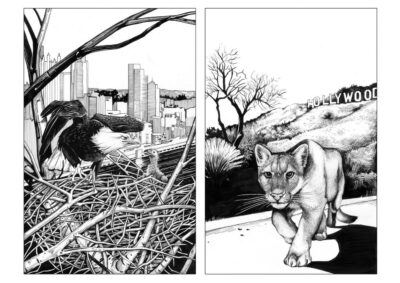 But these examples are exceptions, not the rule. And this is very time-dependent: Although there are a small number of creatures that can adapt very quickly, for most others, this would take a long period of time — much longer than it takes for their populations to go extinct. And so the problem is [talking] about this as a solution to the fact that we’re rearranging and degrading ecosystems in ways that make the world a much harder place to live for the vast majority of species out there.