
We’re now 7 months into 2023 and I’ve been noticing some things that are quite different from previous years.
- People are curious for something new, something fresh and different. Almost like folks have stopped saying that’s woowoo and started saying ‘Whatcha got?’
- There are most definitely two distinct realities emerging. The old hierarchical one where everything is scary and scarce. And the new quantum one where everything is available for you to create your own version of life and reality.
- While the weather might seem unpredictable, at the same time there’s an increase in the miraculousness of Nature. One wonders if the weather gods aren’t putting purpose in people’s faces and saying ‘Time to act.’, while at the same time the Nature gods are enticing us into a more wondrous interconnection with all of life.
- The quantum field is present all around us now. The air we breathe is packed with great possibilities. Super flow of genius, ideas & innovation have become easy to access.
- We believe … we create. In other words, you think a subtle thought and minutes later whoosh there it is staring you in the face in your reality. So make your thoughts and beliefs great ones! Coz they’re gonna become real real fast from now on.
- There is Joy, oh so much Joy, if you just let yourself experience it. It’s really just a matter of raising your vibration and poof a smile comes on your face with laughter bubbling up from inside. One wonders if that godness that dwells within us all isn’t eager to burst through into our daily lives now. Big smile at that thought.
- And the animals … omg! Spectacular. Sentiently more conscious than ever before. Perhaps they have an ability to let that inner godness burst free more easily than humans.
All that to say that while this might be a really weird year so far, in my books it’s truly an awesome one. Here’s to more great wonders to come.
About the Author:
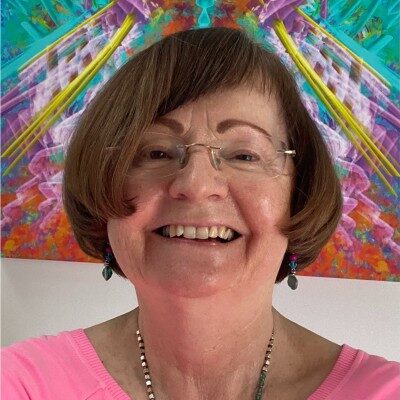
Soleira Green is a visionary author, quantum coach, ALLchemist & future innovator. She has been creating leading edge breakthroughs in consciousness, quantum evolution, transformation, innovation, intelligence and more over the past 25 years, has written and self-published eleven books, and taught courses all over the world on these topics.

 Dr. James McGaugh remembers that day too. At the time, he was director of UC Irvine’s Center for the Neurobiology of Learning and Memory, the research institute that he founded in 1983. In her email, Jill Price said that she had a problem with her memory. McGaugh responded almost immediately, explaining that he worked at a research institute and not a clinic, and that he’d be happy to direct her to somewhere she could find help.
 Still, he started from a position of scepticism. “In interrogating her, I started with the scientific assumption that she couldn’t do it,” he told me. And even though Price showed that she could, repeatedly, McGaugh was still unmoved. “Yeah, it got my attention, but I didn’t say, ‘Wow.’ We had to do a lot more. So we did a lot more.” (In Price’s recollection, however, her ability to remember “really freaked Dr McGaugh out.”)
 In May 2012, the journal Neurobiology of Learning and Memory published a follow-up study by UCI neuroscience graduate student Aurora LePort and neurobiologist Dr Craig Stark, then the director of the UCI Center for the Neurobiology of Learning and Memory. It was now nearly 12 years since Price first reached out to McGaugh, but researchers were only fractionally closer to finding the answer she was looking for.
 For both Price and Petrella, there is a specific point in their lives that they feel triggered their ability to remember things with extraordinary clarity. For Petrella, it was when he was seven years old and playing a deliriously fun game in his backyard with a childhood friend. The next day, Petrella invited his friend over to play it again, but they only played for a few minutes before getting bored. Petrella realised then that nothing ever stays the same and that it was important that he remember things before they changed. For Price, it was her family’s traumatic move to the West coast. In each case, Price and Petrella say they already had strong memories before this decisive moment, but after it, their ability to remember was transformed.
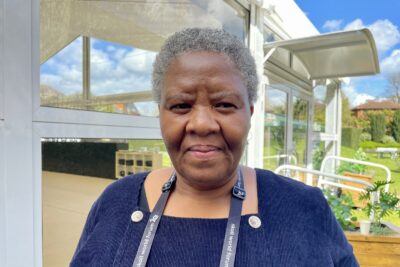 I love my family. I was brought up in a very close family. Of course we fight, but we also laugh together. We share everything — all the joys and the pains. And I know the pain I am feeling, my family will feel the same thing. We confide in each other and find comfort in that. When I want to be happy, my family is always there for me.
 I’ve been working in rural areas for the last ten years. And in the women, peasants and farmers I’ve met there, I’ve found another kind of genius. They help me understand that the future is possible.

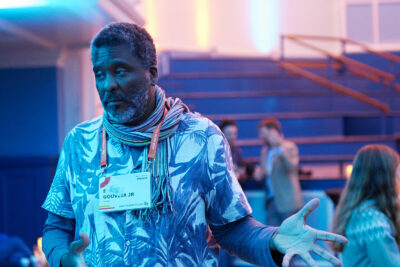



 Being the most talkative person in the room may be a good way to get people’s attention, but it doesn’t necessarily mean you have the best ideas.
 Here’s how managers can create an introvert-friendly workplace:
 Time travel makes regular appearances in popular culture, with innumerable time travel storylines in movies, television and literature. But it is a surprisingly old idea: one can argue that the Greek tragedy Oedipus Rex, written by Sophocles over 2,500 years ago, is the first time travel story.
 Kurt Vonnegut’s anti-war novel Slaughterhouse-Five, published in 1969, describes how to evade the grandfather paradox. If free will simply does not exist, it is not possible to kill one’s grandfather in the past, since he was not killed in the past. The novel’s protagonist, Billy Pilgrim, can only travel to other points on his world line (the timeline he exists in), but not to any other point in space-time, so he could not even contemplate killing his grandfather.