
A Mayan Report for the year beginning on 2 IK and 8 MANIK.
Equinox cycle from 3-21-2023 to 3-20-2024
A forecast blending the energies of two sacred Mayan Calendars.
Flowing in the Power Of Pure Spirit
Mayan Kiche’ “Cholq’ij Traditional Calendar.
The Calendar of the Heart. (Spirit Reality)
Mayan year of 2 IK (Wind)
The numbers in the Mayan calendar are the power that drives the cycles of time. With the power of 2 (KIEB), we will begin to see forward movement where we will find ways to balance the polarities. We will begin to feel much needed relief as we move away from the 1 (Jun) year where we were in a semi stalled situation and it was hard to make anything manifest. But also the year before that was a 13 year period where it triggered a lot of powerful endings and clearings of old programs. The last age will begin to move into the rear view mirror as we enter the second half of the very first Katun in this new cycle (20 years). There is so much possibility in front of us now. We may not know what is coming for us yet, but it is going to be fresh, new and full of surprises. We will find empowering ways to navigate and heal the huge polarities that the last few years of major endings had created. The old polarized state of mind always accelerates with the falling of an old age.
The day sign of IK (Wind), is hard to contain in a boundary. It is the wind and in an instant the winds can kick up and change everything. We are learning to become comfortable with uncertainty and this year will test that wisdom. It will be a year that if we hang on to anything that is out of balance, the wind will simply beat us up. There are always those who hang on and want to keep things the same and feed their illusion of safety. But then there are the courageous warriors who are not afraid of the unknown and the huge potential out in front of us. Being flexible and going with the flow will make life less stressful and less painful especially when we stay open to all the surprising new possibilities. It will be a good year for ones who can tune into the subtleness of spirit. Also those who are creative by nature, you could initiate loads of new life altering ideas. Both the number 2 and IK are about spirit, and not the material world. If your spiritual life has felt stalled the last few years this could change now as well. We are being birthed into a new cycle and anything is possible.
Birthing a New Community of Creative Cooperation
Mayan Astrology Yucatec Calendar.
The Calendar of the Mind (Physical Reality)
Mayan year of 8 Manik (Hand)
The number 8 will bring the much-needed essence of harmonization, healing and community spirit. This will assist humanity in finding a new balance in all areas of life and bring spirit into manifestation. It is a gracious bridge between what was and what will be, and a step beyond old polarities. It is about restructuring and the new world will begin to take form. It is a time of being experimental and learning what will manifest now and what will not. It is also a number where we become more open to other perspectives and belief systems where in the past cycle it was very polarizing. We will be able to breathe easier in this energy and all the changes and budding new creations will be easier to adjust to.
The day sign of MANIK is known for its ability to dive deep into community work. But it also serves as a healing bridge between opposite desires. We may want freedom but we are also not too fond of responsibility. We could be torn between two opposites a lot this year. It is a good time to listen to the heart, as the heart does not lie, but the overactive mind will. The lesson for this equinox cycle is to find a bridge between the need for freedom and being interdependent in a community project. This cycle could bring the birth of innovative projects. The choice to move forward in any new endeavors will feel overwhelming this year as we will be in new territory with no roadmap, but once the choice is made it will only empower us.
Manik has the ability to be traditional and also embrace more eccentric focuses which can trigger unconventional live choices. It can be very creative. It can inspire the inner artist, musician, poet or writer, but we need to be flexible to see the new creations and not become distracted by outer or external tools. The extreme distraction with outer spiritual tools, (examples… crystals, books, workshops, etc) is a past echo of some of the issues we had in Atlantis, which caused the unbalanced energy that was the beginning of the fall of that age. We will need to move out of the head and the material world and come back into the heart over and over again.
This calendar cycle finishes up with 40 days+ of extremely powerful days. We will travel through the second 20 Core Day Ascension Portal, flanked on either side with 10 galactic portal days. Hang on to your hiking boots! This cycle will end with a bang!
(The astronomical equinox is March 20th at 2:24 pm MST. But the Maya Elders in Guatemala always celebrate in various sacred sites in Mexico and Guatemala, etc, on the 21st. Let us send these Elders our heart energy and give thanks for them remembering and maintaining this cosmic wisdom.)
via Aluna Joy
 The good life is the simple life. Among philosophical ideas about how we should live, this one is a hardy perennial; from Socrates to Thoreau, from the Buddha to Wendell Berry, thinkers have been peddling it for more than two millennia. And it still has plenty of adherents. Magazines such as Real Simple call out to us from the supermarket checkout; Oprah Winfrey regularly interviews fans of simple living such as Jack Kornfield, a teacher of Buddhist mindfulness; the Slow Movement, which advocates a return to pre-industrial basics, attracts followers across continents.
 Somewhat paradoxically, then, the case for living simply was most persuasive when most people had little choice but to live that way. The traditional arguments for simple living in effect rationalise a necessity. But the same arguments have less purchase when the life of frugal simplicity is a choice, one way of living among many. Then the philosophy of frugality becomes a hard sell.
 Ask people what they think they’ll look like in 25 years, and chances are they’ll mention how their parents looked at that age. And while genetics certainly play a part, research shows there’s more to the story. Only about 30% of what we see as aging is inherited, explains John Rowe, M.D., Julius B. Richmond Professor of Health Policy and Aging at Columbia Mailman School of Public Health.
 Many people see this as their best decade. During our 30s, we’re likely getting more settled in our careers and families, and according to one study our happiness levels are still actively increasing. This is also when making real lifestyle changes can help stave off long-term issues.
 Everything seems to come together when you hit your 40s. While your family life and career are likely at a high point, caring for aging parents and planning for the future can make it a stressful time.
 As your children head off to high school and college, now is when you think about how you would like to spend your time. Whether you focus on a new hobby, a volunteer project, or a career change, this decade is all about starting to concentrate on your own wants and needs.
 Welcome to a new concept: freedom! Whether it’s thanks to becoming an empty nester, being newly retired, or just shaking off societal expectations, it’s all about you from now on. Here’s to prioritizing your mental and physical well-being!
 As luck would have it, the puppy and his person are exiting the ballfield just as I am (very slowly) walking by the gate.
 “You remember me?” I exclaim, moving in closer so Tree and I can be heart-to-heart. “How do you do it?” I ask. “How do you stand everything that’s going on?”
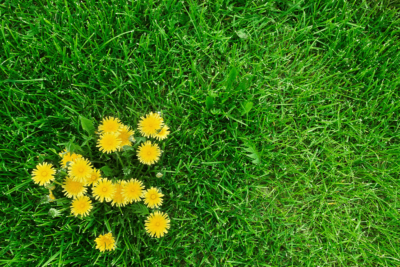 And then another. And another. And another. Soon, I have a whole big pile of weed-parts.
 “Can I say hello to your puppies?” I ask, crouching down to doggie-reception level. Before either their mom or dad can say yes, I’m ready to receive sloppy kisses.
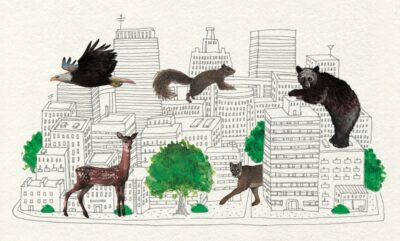
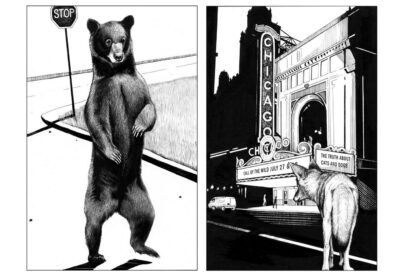 These domesticated animals then get cleared out by the late 19th and early 20th centuries, leading to this period from about 1920 to 1950 where there are fewer wild animals living in urban areas, particularly in North America, than really at any time before or since. This is a period in which some of the greatest thinkers about urban life were doing their writing, and almost everybody assumed that cities weren’t going to have animals in them.
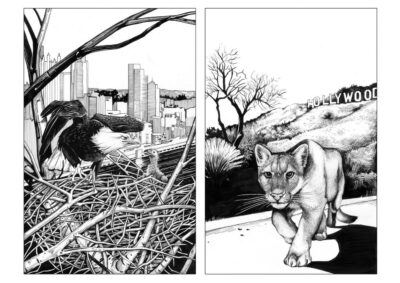 But these examples are exceptions, not the rule. And this is very time-dependent: Although there are a small number of creatures that can adapt very quickly, for most others, this would take a long period of time — much longer than it takes for their populations to go extinct. And so the problem is [talking] about this as a solution to the fact that we’re rearranging and degrading ecosystems in ways that make the world a much harder place to live for the vast majority of species out there.
 In 1905, the 26-year-old Albert Einstein proposed something quite outrageous: that light could be both wave or particle. This idea is just as weird as it sounds. How could something be two things that are so different? A particle is small and confined to a tiny space, while a wave is something that spreads out. Particles hit one another and scatter about. Waves refract and diffract. They add on or cancel each other out in superpositions. These are very different behaviors.
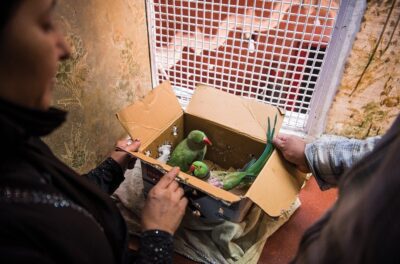
 Amid the human crush of Old Delhi, on the edge of a medieval bazaar, a red structure with cages on its roof rises three stories above the labyrinth of neon-lit stalls and narrow alleyways, its top floor emblazoned with two words: birds hospital.
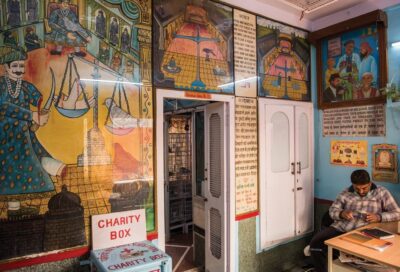 I’d come to the bird hospital, and to India, to see firsthand the Jains’ moral system at work in the world. Jains make up less than 1 percent of India’s population. Despite millennia spent criticizing the Hindu majority, the Jains have sometimes gained the ear of power. During the 13th century, they converted a Hindu king, and persuaded him to enact the subcontinent’s first animal-welfare laws. There is evidence that the Jains influenced the Buddha himself. And when Gandhi developed his most radical ideas about nonviolence, a Jain friend played philosophical muse.
 In the West, consciousness was long thought to be a divine gift bestowed solely on humans. Western philosophers historically conceived of nonhuman animals as unfeeling automatons. Even after Darwin demonstrated our kinship with animals, many scientists believed that the evolution of consciousness was a recent event. They thought the first mind sparked awake sometime after we split from chimps and bonobos. In his 1976 book, The Origin of Consciousness in the Breakdown of the Bicameral Mind, Julian Jaynes argued that it was later still. He said the development of language led us, like Virgil, into the deep cognitive states capable of constructing experiential worlds.
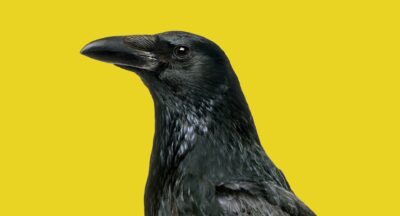
 Crows are not among the shoulder-perchers, but Singh sometimes sees former crow patients hovering around the hospital. They might be looking for him. Crows recognize individual human faces. They are known to blare vicious caws at people they dislike, but for favored humans, they sometimes leave gifts—buttons or shiny bits of glass—where the person will be sure to notice, like votive offerings.
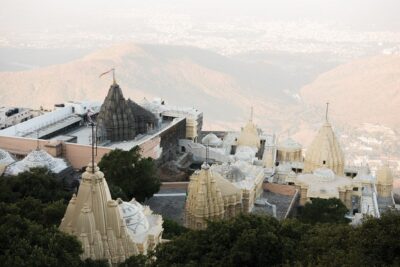 The trail was only 50 miles from Gir National Park, where, the day before, I’d seen two Asiatic lions, nearly indistinguishable cousins of Africa’s lions. Once the region’s apex predator, the Asiatic lion almost went extinct during the British empire’s colonization of India, when no viceroy could visit a maharaja’s palace without a hunt in the local forest. Even today, the Asiatic lion still ranks among the rarest of the large feline predators, rarer even than its neighbor to the north, the snow leopard, which is so scarce that a glimpse of one padding down a jagged Himalayan crag is said to consummate a spiritual pilgrimage.
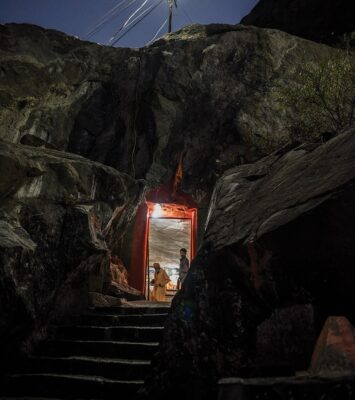 The monk was a white dot some six switchbacks up by the time I hopped off the wall and continued the climb, my legs stiffened by the break. I reached the entrance to the temple complex with only 15 minutes to spare. Its marble courtyard shone brilliant white, as though bleached by the mountain sun.