
 I bike the same route to my job every morning. Turn right, over a bridge, gentle left, hard left, hard right, check for cars at the 4-way stop, left turn, gentle right, huff and puff up the same long hill… and on I go. I can recite the entire route from memory. Same streets, same houses, same trees, same lake, same parks, all whizzing by as I focus on the road ahead, keeping up my speed to get a good workout and get to work on time.
I vary the return trip a bit at the end of the day because I have more time to explore. But do I get bored with the morning ride? Never! A few days ago, for example, those “same” streets were very much not the same, because it was still dark out, rain was smearing my glasses, and the road was covered in bright yellow, wet autumn leaves. I felt deep gratitude for the “beginner’s mind” that steered carefully and kept my speed under control through those slippery crash hazards. In the moment, I appreciated my bike, my legs, and my bright headlight. It all made me smile, to be awake and aware, and the sun was rising when I pulled into my destination.
Often we think we need something new and different in order to be happy; we think we can only be stimulated by change. Maybe you have walked the path 1,000 times between your home and your car, or the bus stop, or wherever you keep your bicycle. So you think you’ve done it, seen it, nothing is new. You may sigh and say “Been there, done that” and feel unhappy.
But in reality, we’ve never experienced this moment before. Not this one either. Nor this one.
In the eyes of a beginner, our path has many wondrous things to notice, smile at, even celebrate. Because with every moment things are changing. What are you looking at? Are you stopping to look with fresh eyes?
Joanne Friday writes beautifully about this in her story “Freedom from My Own Mind,” in the book Tears Become Rain: Stories of Transformation and Healing Inspired by Thich Nhat Hanh. When a brain injury after a car accident left her with no memory and the inability to manage her stress hormones, she writes, “I was trapped in a constant state of anxiety and fear.” Spontaneously joining a retreat with the Zen master Thich Nhat Hanh, Joanne learned the joy of looking with fresh eyes at what was right in front of her. “Since I had no memory of the past and was in fear of going forward in my life with no ability to think or function well, I loved the idea of focusing fully on the present moment.”
This new way of seeing the world also applied to how Joanne viewed her own injured body. Daily walks prescribed by her doctor were torment, as she focused on the pain from her ruptured discs and her mind filled with fear and speculation that she couldn’t return to the healthy self she once knew. But then Joanne tried walking meditation, taking slow steps outdoors and focusing on the miracle of being a part of everything. “The trees exhaled what we inhaled, and we exhaled what the trees inhaled. When we focus on what a miracle this precious lifetime is, we are walking in the kingdom of heaven,” she writes. “I realized that where I chose to place my mind determined my experience. I had a choice!”
 I was asked recently how we can find happiness in this world that contains so much conflict and suffering. I find happiness because I look for it, right where I am, just like Joanne did. There are tiny flowers on the ground and funny bumper stickers on people’s cars. The person who walks past me has a face, and it might smile if I smile at them. When I look as a beginner looks — as if I haven’t already seen a million flowers, read all the bumper stickers, passed so many faces in my lifetime — I experience these little joys.
My wife still makes me laugh, after 22 years. Yes, we’ve struggled, and we still have our struggles, but because of that we also notice and cherish our happy moments. We’ve never been here before, with all that brought us to this point, with all the challenges swirling in our brains, with whatever is going on in our work lives, our community, and the world. We truly have never been here before. And in this moment at the dinner table, I see her make a silly face, hear her bad pun or her intentionally obtuse question that makes our kids and me stop and wonder if she’s all there.
I could think with exasperation, “Oh there she goes again being silly.” Or look at her and roll my eyes, as our teenage kids sometimes do. But instead I get to laugh at her lightness, as if this is the first time, because it is! What a wonderful feeling when we pause and look in each other’s eyes, and catch the eyes of our kids, and know we are enjoying this moment together.
And that lightness then spreads. Laughter is like yoga, making happy chemicals move around in our brains. Our teenagers may even admit that smiling feels way better than eye rolling. They see my glee at their other mom’s silliness, and it’s contagious. Finding joy isn’t a crime, even when others around us are suffering. I see it as the opposite: Our happiness waters our seeds of compassion because we know that others want happiness too. Instead of getting lost in our own dissatisfaction at the “same old same old,” we can look and see those around us who need our smiling face, open to the possibility of this new moment.
Original article here


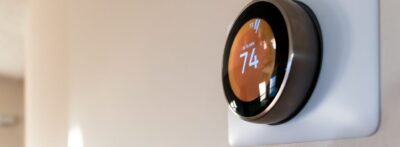
 Some utilities now offer incentives to customers in exchange for the ability to control the smart thermostat when power demand is high. The utility’s control is often minimal and customers can typically override the utility setting, but a utility in Colorado recently locked thousands of customer thermostats during an “energy emergency.” If you enroll in this kind of program, be sure you understand what you may give up as a participant.
 How close is the smartphone or laptop you’re reading this on from your eyes? Probably just a few inches. How long have you spent looking at a screen today? If you’re close to the average it’s likely to be over nine hours.
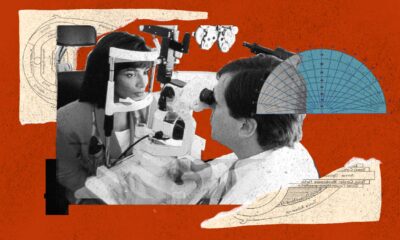 Straining vision introduces a host of eye-related health problems. And it’s more than just kids needing prescriptions. “People say ‘oh, it’s just glasses,’” says Dr Aaron Miller, a pediatric ophthalmologist at Houston Eye Associates. “The nearsighted have much higher chances of retina tears and glaucoma, bigger issues secondary to nearsightedness. It’s the long game we worry about.”
 After that gig ended, Thomas was back to square one. But during the search process he’d reconnected with a couple of old friends and colleagues in similar straits who had pooled office space and launched freelance advisory businesses that allowed them to generate some income while searching for the next thing. Thomas collaborated with them on two start-up ideas, but neither really took off, so he and his family made some adjustments: His wife ramped up her career, and they moved to a less costly city and invested in profit-generating rental properties.
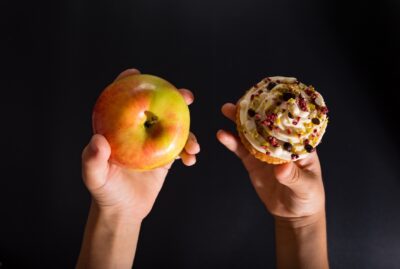 I fast once a month. It’s hard. Even though I’ve been doing it for years, I start dreading my fast day the night before; fretting about how I’m going to be able to pass through the discomfort. And where I’m typically not hungry until around 11am, on a fasting day I wake up hungry. Then, I stumble through what I need to get done as best as I can, given how lousy I’m feeling. Even though I know what to expect, it never seems to get easier.
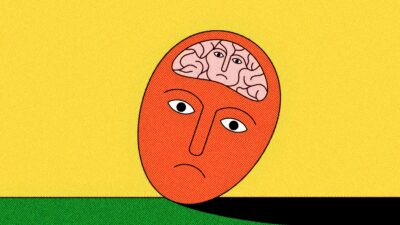 Ever had someone tell you to just cheer up? Did it drive you crazy? Well, turns out that someone telling you to “be happy” isn’t just annoying—it’s also wildly unhelpful.
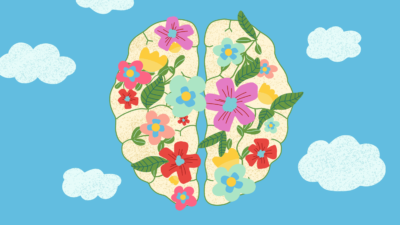 I think the good thing about meditation—mindfulness, concentrating on the present, detaching—is as good anti-anxiety, anti-anger tools. But one of the costs of accepting fate, accepting that you can’t go on and do something good in the future, correlates highly with physical illness, shorter life span, less accomplishment at work. So, it’s a good anti-anxiety tool often, but it’s got a lot of costs as well.