
 I have a pain in my neck. Usually such a statement will open up the floor to all kinds of “witty” responses, but the truth is, I really do. My neck pain started at university, ahem, some years ago while typing my dissertation from bed (this makeshift desk was the norm, even in life pre-Covid) – which meant I would find myself looking down at my laptop for hours on end. Although my degree is now stowed away, gathering dust, the pain is not – and it’s continued to be a not-so-friendly companion in my everyday life.
I’ve tried deep-tissue massages, hot stone therapy, acupuncture and orthopaedic pillows in mission to rid my body of this nagging ache, but none have seemed to work. It wasn’t until I had an MRI scan that I learned I have a hypermobile neck. This means that my neck is super flexible and allows me to do a mean Exorcist impression (a great party trick during Halloween). The downside is that neck pain has become part and parcel of my daily existence – often made worse by working on a computer or a smartphone for 90% of my working day.
I enlisted the help of Mike Tanner, head of education & learning at Bodyism to equip me with some key stretches and exercises to alleviate my neck pain. “There are many reasons you might be experiencing neck pain,” he explains. “It could be short, tight muscles caused by spending too much time in the same position or a long taut muscle which can feel tight but are actually longer and stretched to their limits. Typically, you want to stretch a short tight muscle and exercise the long taut ones. And it’s important to note that your neck is affected by not only muscles in your neck, but also muscles in your chest and back – so it’s best to cover all these areas for the most effective results.
Tanner instructed me to perform the below five stretches every day in order to alleviate my neck pain – even twice a day for extra brownie points.
For one week, I performed each of the five stretches every day morning and evening to see if my nagging pain would go away.
I have to say, after day one, I found myself actually looking forward to these daily stretches. Although they felt slightly painful, it was the best kind of discomfort – the kind you’d experience during a sports massage that feels uncomfortable in the moment, yet leaves you feeling utterly loose and limber afterwards. Each stretch sent a tingle down my back and into my head as the tension began to ease and my posture began to correct itself.
What I didn’t realise was how stiff my adjoining muscles had become – my chest, shoulders, and even my forearms had seized up and were contributing to my neck pain. With every stretch, I could feel them pull and loosen, relieving my neck and leaving my upper body feeling like I’d just spent an hour on the massage table.
It’s only been a week, but with a daily plan in place, I’m already more aware of my posture and the growing range of movement I have. I’m going to try to maintain this routine going forward to prevent my neck from seizing up again.
Here’s the stretching routine that Tanner prescribed to me.
5 Essential Stretches to Reduce and Prevent Neck Pain
1. Chest stretch against door frame
A tight chest can contribute towards a rounded thoracic spine, this then tends to put your cervical spine (neck) into a bad position.
- Place your forearm on a vertical door frame and keep the elbow at shoulder height or slightly above.
- Step forward through the door, leaving your arm where it is so your chest feels a nice stretch.
2. Lat stretch “in child’s pose”
Lats connect into the arm and can pull your shoulders forward so this helps to pull them back into place.
- Start on your hands and knees and place your left hand outside your right.
- As you lower into child’s pose, curve into your left side to stretch the lat.
3. Scalenes stretch
- While sitting on a chair, use your right hand to hold the base of the chair next to your right thigh.
- Bring your left hand over your head, touching just above the ear.
- Gently pull your head to the left.
- Repeat on the other side.
4. Levator Scapular stretch
- This is very similar to the scalene stretch, but instead, use your left hand to pull gently pull to the left and also forwards.
- In this stretch the fingers tips can hold the bottom back corner of your skull behind the ear.
- Repeat on the other side.
5. Thoracic mobility 90/90 stretch
- Lying on your side in “spoon” position with your legs in a 90 degree angle, put both arms straight out in front with your palms together.
- As you breathe out, take your top hand over to the opposite side of your body leaving the bottom hand on the floor.
- Repeat on the other side.
In addition to these stretches, Tanner suggested that I complete the below five exercises daily in order to strengthen my long taut muscles mentioned previously, as well as to strengthen the adjoining muscles (such as my chest and back).
The exercises were slightly uncomfortable to begin with and I definitely felt it the following day, but after day four my neck felt more stable and supported.
5 Best Exercises to Reduce and Prevent Neck Pain
1. Lower trapezius Ys with small water bottles as weights
- Stand leaning forwards with a flat back at 45 degrees.
- Start with both hands between your knees, with your palms together, and slowly lift up with straight arms until your arms are in a Y position above your head (moving arms only).
- Lower and repeat.
- 2-3 sets of 10 reps
2. Rhomboid Ts with small water bottles as weights
- This is the same as the Ys above, but start with your hands at chest height and palms facing up.
- Bring your straight arms out to the side while squeezing your shoulder blades together.
3. Scapula wall slides
- Stand with your back against a wall and your arms up in a 90 degree angle (also against the wall).
- Keep your hands and elbows touching the wall while extending your arms above your head. Don’t arch your lower back – instead, keep it flat up against the wall.
- Lower and repeat.
- 2-3 sets of 10 reps
4. Prone cobra
- Lay on the floor face down with your hands by your hips and palms down.
- Squeeze your glutes as you lift your shoulders and chest off the ground.
- While lifting your hands high behind you, rotate your hands outwards.
5. Sitting up straight
Sitting up straight automatically strengthens the muscles you need for good posture.
- Make sure your ears are over your shoulders and your shoulders are over hips.
- Your knees should be bent at 90 degrees with your feet flat on the ground.
Original article here
 If there’s one thing we as humans seem to have in common, it’s that most of us have felt lonely at one time or another. But is the pain that comes with feeling socially isolated simply a part of being human? Why does the world seem so different when we’re feeling lonely?
 However, given the design of the study, it’s unclear whether the findings suggest loneliness causes this way of thinking or if considering fictional characters in this way causes people to feel lonely. And there’s always the possibility that a third factor causes both outcomes.
 By the time you open a container of yogurt, the food has taken a long journey to reach your spoon. You may have some idea of that journey: From cow to processing to packaging to store shelves. But at each step, there is a chance for a little something extra to sneak in, a stowaway of sorts that shouldn’t be there.
 Carving out time for mindfulness often feels like an indulgence, but it’s necessary. And unlike everything else on your to-do list, there are simple ways to pause and reset—like the 4-7-8 breathing technique. A controlled breathing pattern intended to help the mind and body relax, the 4-7-8 technique has helped many transition from a stressful storm into a more focused, present self.
 Time is one of those things that most of us take for granted. We spend our lives portioning it into work-time, family-time and me-time. Rarely do we sit and think about how and why we choreograph our lives through this strange medium. A lot of people only appreciate time when they have an experience that makes them realise how limited it is.


 Walking doesn’t require any special equipment or gym memberships, and best of all, it’s completely free. For most of us, walking is something we do automatically. It doesn’t require conscious effort, so many of us fail to remember the benefits of walking for health. But what happens if we stop walking on autopilot and start challenging our brains and bodies by walking backwards? Not only does this change of direction demand more of our attention, but it may also bring additional health benefits.
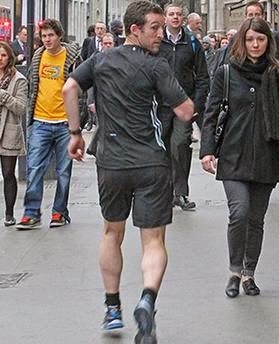 Sustained backward running decreases the energy we expend when we run forwards. These improvements in running economy are even beneficial for experienced runners with an already economical running technique.
 On 26 February 2015, Cates Holderness, a BuzzFeed community manager, posted a picture of a dress, captioned: ‘There’s a lot of debate on Tumblr about this right now, and we need to settle it.’ The post was accompanied by a poll that racked up millions of votes in a matter of days. About two-thirds of people saw the dress as white and gold. The rest, as blue and black. The comments section was filled with bewildered calls to ‘go check your eyes’ and all-caps accusations of trolling.
 Lastly, consider dreams. In a 1958 survey, Fernando Tapia and colleagues reported that only about 9 per cent of respondents indicated that their dreams contained colour. Other surveys done around this time reported similarly low proportions. A decade later, the tide turned and a large majority reported dreaming in colour. The philosopher Eric Schwitzgebel considers several explanations for this discrepancy. One possibility is that black-and-white photographs and television changed the content of dreams. As colour TV came to dominate, colour returned to people’s dreams (‘returned’ because, in a few studies from the more distant past, people did not claim to dream in black and white).